// Contents
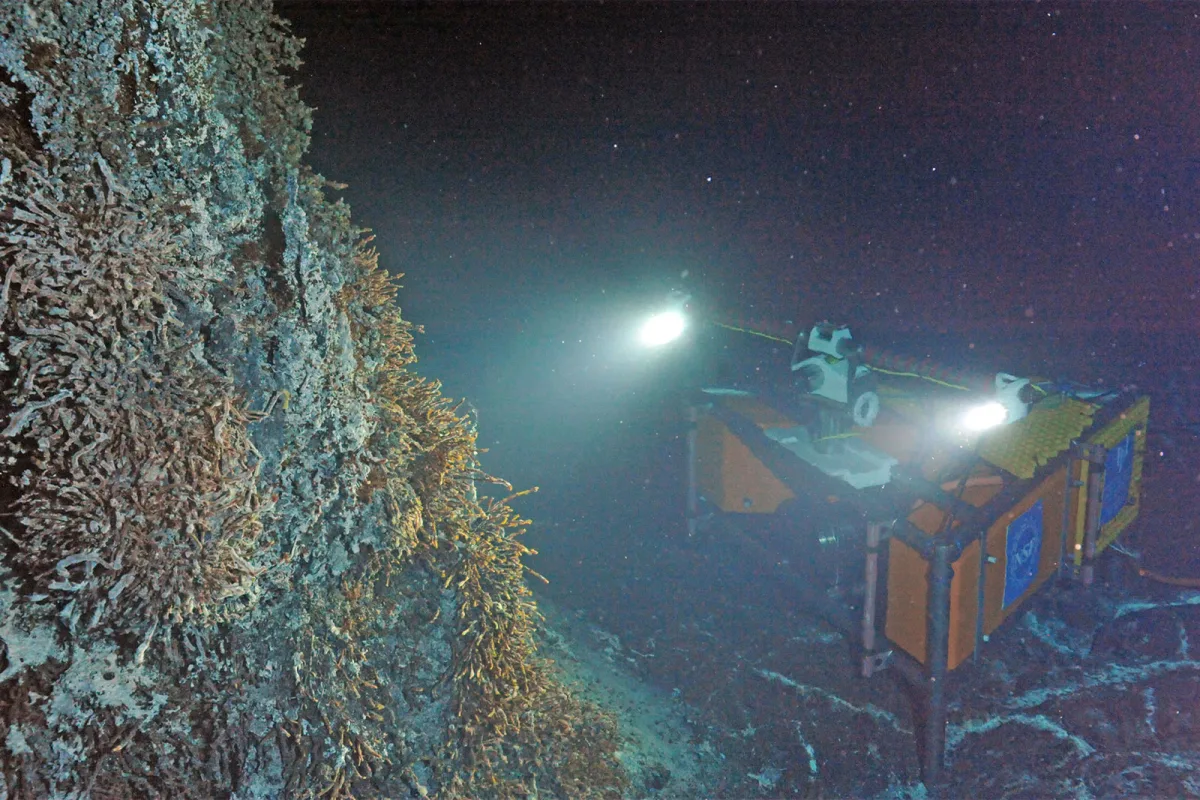
On September 27, 2026, a turbine spun up on the flank of an underwater volcano 300 miles off the coast of Oregon. The three-ton machine sat almost a mile down, and its operators watched from Seattle as temperature and flow readings came in live over a fiber-optic cable. It ran for about 29 seconds. For 8.7 of them, it produced more power than it used. That surplus would cover roughly a third of a smartphone charge. The extra current flowed into the plant’s backup battery until the battery’s overcurrent protection cut the run short. Ten minutes later, as the crew tried to restart, the cable feeding a pump failed.
Seattle startup Endurance Energy announced the result on October 19 as the first end-to-end demonstration of subsea geothermal power: drill a well, set a plant on the seafloor, get a net surplus. Andrew Redd, a former SpaceX engineer, founded the company in January 2025, and this was already its fifth deep-sea deployment. He compared his nine seconds to Robert Goddard’s first liquid-fueled rocket flight. That one lasted two and a half.
Nobody is claiming the volcano can power a city. The goal is round-the-clock electricity from the Earth’s heat for islands that now burn imported diesel. Tonga is lined up as the first customer, with power promised for 2027. So what does it take to turn nine seconds into years?
Boiling water that doesn’t boil
?Where does the energy come from?
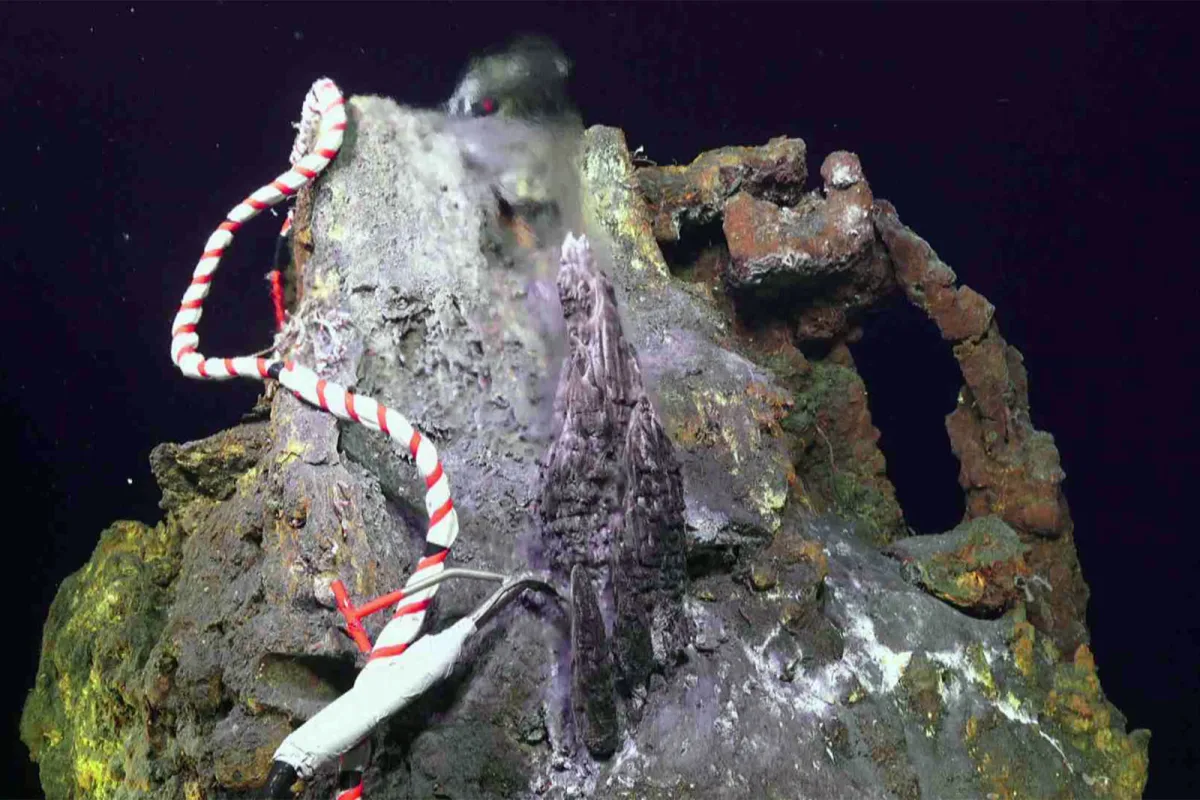
Seawater seeps into cracks in the ocean floor, picks up heat from magma and gushes back out through hot springs called hydrothermal vents. According to NOAA, vent water can top 700°F (about 370°C) without boiling, because the weight of the ocean above keeps it liquid. The vent that fed the turbine ran at about 538°F (281°C).
?How does hot water become electricity?
Much as it does at many geothermal plants on land. The hot water hands its heat to a fluid that boils at a low temperature, a bit like the refrigerant in your fridge. That fluid’s vapor spins a turbine, and the turbine drives a generator. Engineers call this an organic Rankine cycle, and there is nothing exotic about it. The exotic part is the address.
The site was no accident. Axial Seamount is arguably the best-instrumented underwater volcano on the planet. Since 2014, fiber-optic cables have carried data from roughly 150 instruments on the volcano to shore in real time. The engineers in Seattle watched the turbine over that same network, the University of Washington’s Regional Cabled Array. This lab comes with one awkward feature: volcanologists expect it to erupt again soon.
The well that wouldn’t flow
The plan was tidier than the outcome. The team lowered a drill about 5,000 feet and bored two holes less than two feet apart. Both hit hot fluid. The crew cased and cemented the second one, leaving a 52-foot well that delivered water at 500°F (260°C).
It just didn’t deliver enough. The plant needs flow, and the narrow well couldn’t supply it. So the crew hauled the plant, which the company calls Adélie, back aboard, serviced it and, within 16 hours, had it sitting on a natural vent nearby, Redd told Gizmodo. That is where the turbine hit 26,000 rpm. In other words, the surplus came not from the well the team had drilled for the job, but from a hole nature drilled on its own. So far, the drilling proves you can reach the hot water. It doesn’t yet prove a well can deliver the flow a plant needs.
// Nine seconds in numbers
A third of a phone charge
Where does “a third of a phone charge” come from? Roughly, multiply the median output by the time: two kilowatts for 8.7 seconds is about five watt-hours, and a typical smartphone battery holds 15 to 19. Over its half-minute run, the turbine generated about 60 watt-hours in total, according to Canary Media. Only a small slice of that was surplus: for the rest of the run, the plant’s own pumps and electronics drew more than it made. And none of these figures count the energy spent sailing the ship out and drilling into the seafloor.
Still, it’s too early to laugh. In March 1926, Goddard’s rocket climbed just over 40 feet; 43 years later, people walked on the Moon. The field’s previous result was humbler still. In 2016, a Chinese team described a device in the journal Applied Energy that drew 2.6 to 3.9 watts from the gap in temperature between hot vent water and cold seawater. That is a night-light.
“Adélie made it exist, and now we know it’s possible,” Redd told Canary Media. None of the failures, he said, “point to a problem with the resource or physics.”

Acid, salt and repairs under a mile of water
Outside engineers agree the physics holds up. Asked whether a plant like this could run for more than 10 seconds, Dani Merino-Garcia, vice president of research at the nonprofit Project Innerspace, told Gizmodo, “I believe the answer is yes.” Then he named the catch. The vent is very hot and its fluid very acidic, a combination that eats metal and leaves mineral crusts behind. The heat exchanger suffers most, and every bit of heat has to pass through it.
Roland Horne, who directs Stanford’s geothermal program, also thinks the system is feasible but warns that putting it underwater will be expensive. It’s easy to see why. On land, a mechanic with a wrench swaps a broken pump. Here, you send a ship, winch a three-ton machine up to the surface and lower it almost a mile back down. Endurance has shown it can turn that around in under 16 hours, but every trip up still means a ship at sea.
There is a precedent, as Gizmodo notes. In Iceland, a government-backed project drilled a geothermal well near the Mid-Atlantic Ridge, and corrosive seawater gave its engineers serious trouble. Redd says Endurance is building its hardware from scratch for deep-sea pressure and corrosion, using a lot of titanium.

?Could the drilling wake the volcano?
Endurance’s well is about 2 inches wide. Casings for oil, gas and onshore geothermal wells typically run 20 to 36 inches. The team drilled away from the vent chimneys and the animals living around them, and used filtered seawater instead of drilling mud. Eleven instruments run by outside scientists picked up no unusual seismic activity and no change in seafloor life. The loudest sound recorded during the work was the ship’s engine. More than 40 water and rock samples are still at independent labs. Nobody can yet say what a big plant would do over the long run.
The volcano hardly needs waking anyway. Axial Seamount last erupted in 2015. Volcanologist Bill Chadwick of Oregon State University expected the next eruption in 2025, then pushed the forecast to 2026. In a November 2, 2026, update, his group wrote that the volcano’s floor has been rising faster over the past three months, at about 3.7 inches (9.4 centimeters) a year. Meanwhile, the pressure sensor at the center of the caldera, the collapsed crater at the volcano’s summit, went silent on October 28. The suspected culprit: seawater in a connector. Same enemy Endurance is fighting.
Tonga, diesel and a solar panel
The next plant, Gentoo, is due to go down this winter. Like Adélie, it’s named after a penguin, but the goals are serious: Redd promises redesigned cables, tougher electronics and up to 100 kilowatts. The current drill reaches about 260 feet (80 meters) into the seafloor. A new one coming online in 2027 will reach about 1,600 feet (500 meters), Redd said, meaning deeper wells and more flow.
Tonga, a Pacific island kingdom, runs its grid largely on imported diesel. Endurance wants to build a 2-megawatt commercial plant there. The company has the money to try: $63 million raised so far, including a $54 million round led by Founders Fund. Redd’s pitch is that many of the places with the strongest offshore heat also lean heavily on imported fuel.
Emily Pope, a geologist and senior fellow at the Center for Climate and Energy Solutions, called Endurance’s approach “eyebrow-raising.” Offshore geothermal is scientifically intriguing, she says, but hard to make pay: the harsh, salty environment and the long cables to customers cost a lot. In her view, island nations would find it easier to adopt cheap solar panels and batteries.
Tonga could end up with both. But if a solar panel can arrive by ship and go up on a roof in a day, how many years does a titanium turbine have to survive in scalding, acidic water before it comes out ahead?