// Contents
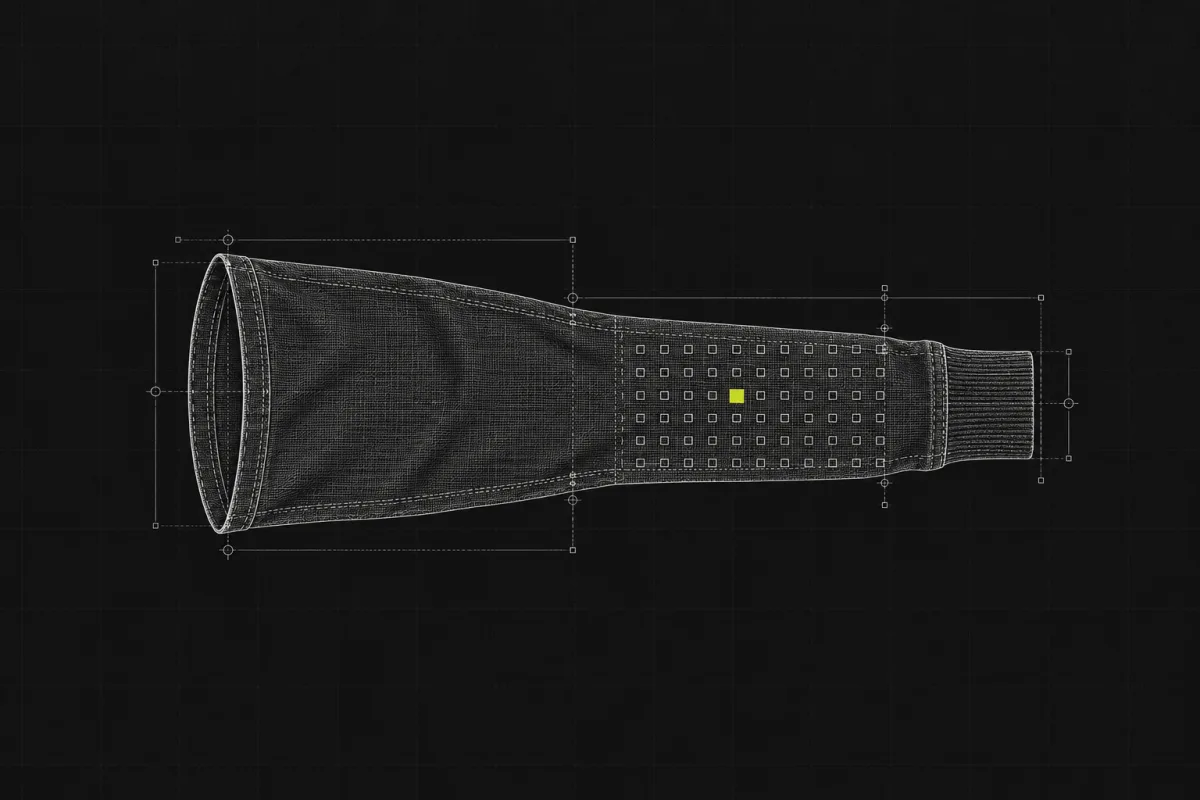
This screen went through an ordinary washing machine with detergent fifty times and barely dimmed. It is woven into a sleeve and is a little bigger than a postcard. On it you can open a calculator or a compass. Photos flip by. Video plays. It even takes voice commands. Press a picture with your finger and the sleeve responds like a phone. There is no detachable electronics module: the LEDs and chips hidden inside the threads go into the drum themselves.
Engineers at the National University of Singapore described the sleeve in a paper in Nature on 21 October 2026. The most surprising thing about it is how modest it is. The screen has 5,184 pixels, almost a third more than a Nokia 3310 button phone. Even so, the authors call it the world’s first touchscreen woven from the garment’s own threads. Every thread both lights up and feels your touch.
Fifty washes sounds abstract. If you wash something once a week, that is almost a year of wear: a record for electronics, but not yet the years an ordinary piece of clothing lasts. Smart clothing has been promised for about a decade, and it has kept tripping over two things: the laundry and the software. The new sleeve makes progress on the first. Nobody has dealt with the second yet.
A thread one millimetre thick
The screen is made of 54 threads laid along the forearm. Each carries 96 LEDs, which gives a picture of 96 by 54 dots. Beneath the LEDs, inside the same thread, sits a second layer that senses pressure. A fingertip closes a circuit, the controller works out where, and the nearest pixel lights up.
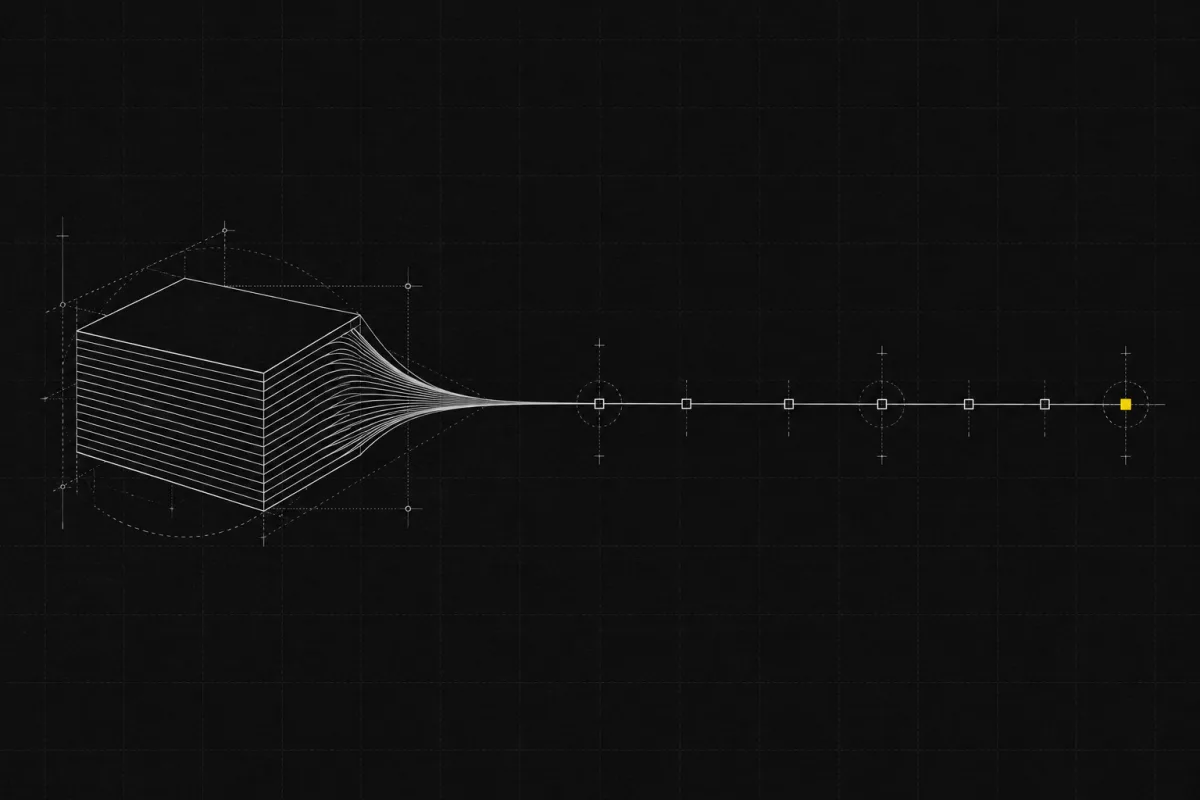
The thread is made by thermal drawing, the same trick used to pull optical fibre. Roughly speaking, you first build a thick, layered preform, a kind of oversized model of the future thread. Then you heat it until it goes soft like toffee and pull. The layers keep their order, and the result is a fibre about a millimetre thick and up to ten metres long . For scale: the sleeve’s 54 rows of 17 centimetres add up to about nine metres. A single draw would be enough for the whole screen.
The hard part was the wiring. A thread is essentially one-dimensional, so there is almost no room to lay out complex circuitry, explains the group’s leader, Tural Khudiyev, an assistant professor at the NUS College of Design and Engineering. The screen only came together because the team learned to turn fibre into “electronic building blocks” that behave like ordinary yarn.
How to solder 20,000 contacts inside a thread
The fibre contains extremely fine insulated wires. A laser strips the insulation at exactly the points where a contact is needed. Molten solder then spreads along the wire and sticks only to the exposed spots, the way water beads on clean glass between greasy patches. That is how the sleeve’s screen links more than 5,000 chips through over 20,000 electrical connections.
The resolution of a button phone
Each dot on the sleeve is nearly the size of a pinhead, about two millimetres across. On the Nokia 3310 screen the dots were more than four times smaller, and on a modern smartphone you can no longer make them out with the naked eye.
That is enough for a calculator or a compass needle. It is not enough for a long chat message, and the university does not pretend otherwise. The team sees the next step in smaller chips and thinner threads: the method allows for both, which would sharpen the picture and let the thread be knitted and embroidered on ordinary factory machines.
In return, every dot here is in colour, and the picture changes 30 times a second, like ordinary video. And the screen fabric breathes as well as cotton or denim. That matters more than it sounds. Nobody will wear clothing that makes them sweat under a plastic film, however cleverly it glows.
Glowing fabric, incidentally, has been shown before. In 2021 Huisheng Peng’s group at Fudan University in Shanghai described in Nature a display textile six metres long and 25 centimetres wide. It was woven on an industrial loom like ordinary cloth, but its keyboard and power supply were separate pieces of fabric. In the Singapore sleeve, light and touch fit into a single thread along with the wiring, which is why it gets called a touchscreen.
The jacket built for ten washes
There have been attempts to take smart clothing mainstream, and the loudest one ended quietly. In 2015 Google unveiled Project Jacquard: conductive threads that can be woven into normal fabric. Levi’s was the first partner, and in autumn 2017 a $350 denim jacket reached the shops. The jacket was designed for urban cyclists. Swipe the left cuff and the track in your earphones skipped, while the phone in your pocket took a call or told you where to turn.
All the electronics lived in a removable plastic tag on the cuff, and you unclipped it before washing. Only the conductive threads went into the drum, and Google promised about ten washes . The company later clarified that ten cycles was the minimum the jacket had passed in tests harsher than a home wash. The real difference with the Singapore sleeve lies elsewhere: there, the LEDs and chips themselves go into the washing machine.
// Timeline
- Google unveils Project Jacquard and names Levi’s as its first partner.
- The Levi’s jacket with Jacquard goes on sale for $350.
- Google shuts down the Jacquard app, and the touch-sensitive cuffs stop working.
- Singapore engineers publish a sleeve in which every thread lights up and senses touch.
The laundry did not kill the jacket: Google shut down the Jacquard app , and the cuffs went silent. They were still there, but nothing answered them any more. A $350 smart jacket turned back into a jacket.
What the sleeve still lacks
The university’s announcement says nothing about what any buyer would ask first: the battery, and when the sleeve might go on sale at all. There is no price either. This is a lab prototype, and the washing and bending figures were measured by the team itself in the lab. The threads survived 1,000 bends at a five-millimetre radius, but nobody has tested how they cope with a winter in a backpack. Nor is it known what happens to the screen after the hundredth wash: it has not been washed that many times yet.
Khudiyev sees medicine as the first use. The sleeve already shows body temperature. In his words, clothing could continuously collect data about the body through sensors woven into the threads, and the wearer could look at it right on the sleeve, without a phone or a watch. For an older patient with blood pressure problems or for a runner, that sounds appealing.
That leaves the second weakness, the one a lab cannot fix. You can make a thread tough, but the app behind it lives exactly as long as a company wants to support it. The Levi’s jacket’s software lasted five and a half years. The thread has learned to survive the washing machine, but who will commit to supporting the software for clothes people wear for years?