// Contents
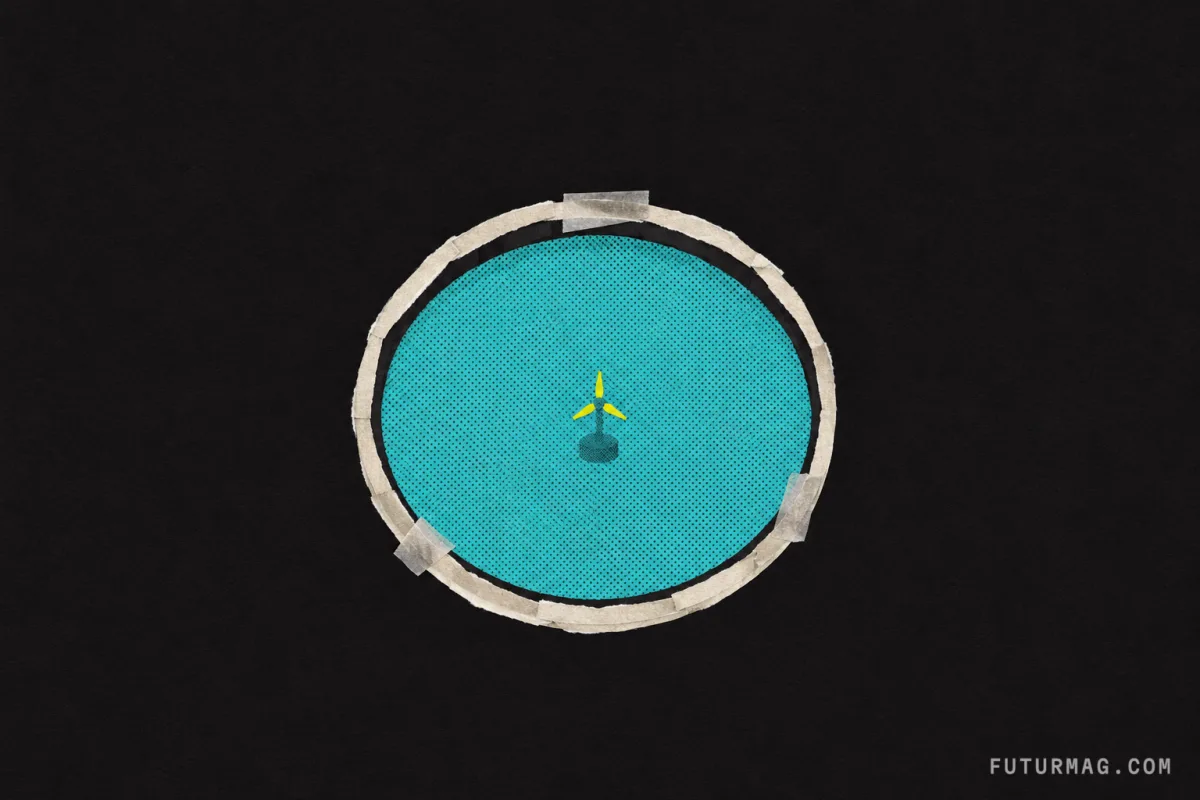
Water rushed past a three-bladed turbine in a round tank in Edinburgh. The current picked up. The blades flexed along their thin rubber edges, taking some of the force out of the jolts that wear turbines down. On November 11, 2026, engineers from the University of Edinburgh and tire maker Michelin reported in Nature that the flexible edges reduced some rapid swings in load by up to a third. Over one simulated tide, the flexible blades and the motor-controlled rigid blades harvested nearly identical amounts of energy.
The tide keeps a timetable. Eddies don’t.
A tidal turbine works like a wind turbine underwater. The moving water spins a rotor, the rotor drives a generator, and a cable carries the electricity ashore. The moon and sun drive the tides, so you can look up the time of the next turn well in advance. That timetable can’t tell you when a swirl of water will hit one blade a little harder than the others.
A part can shrug off any one of those jolts and still wear out if they keep coming. That’s material fatigue. Bend a paper clip back and forth and eventually it breaks at the fold. A motor can turn each rigid blade on its long axis so the water pushes less hard against it. That works well as the tide builds, but a sudden jolt can come and go before the motor catches up.
The current reshapes the blade
A few years earlier, Edinburgh engineer Ignazio Maria Viola and his colleagues tested a blade that could turn against a spring. The current turned the blade and the spring brought it back. That smoothed out some of the jolts, but the blade still had to overcome friction in its mounting before it could move.
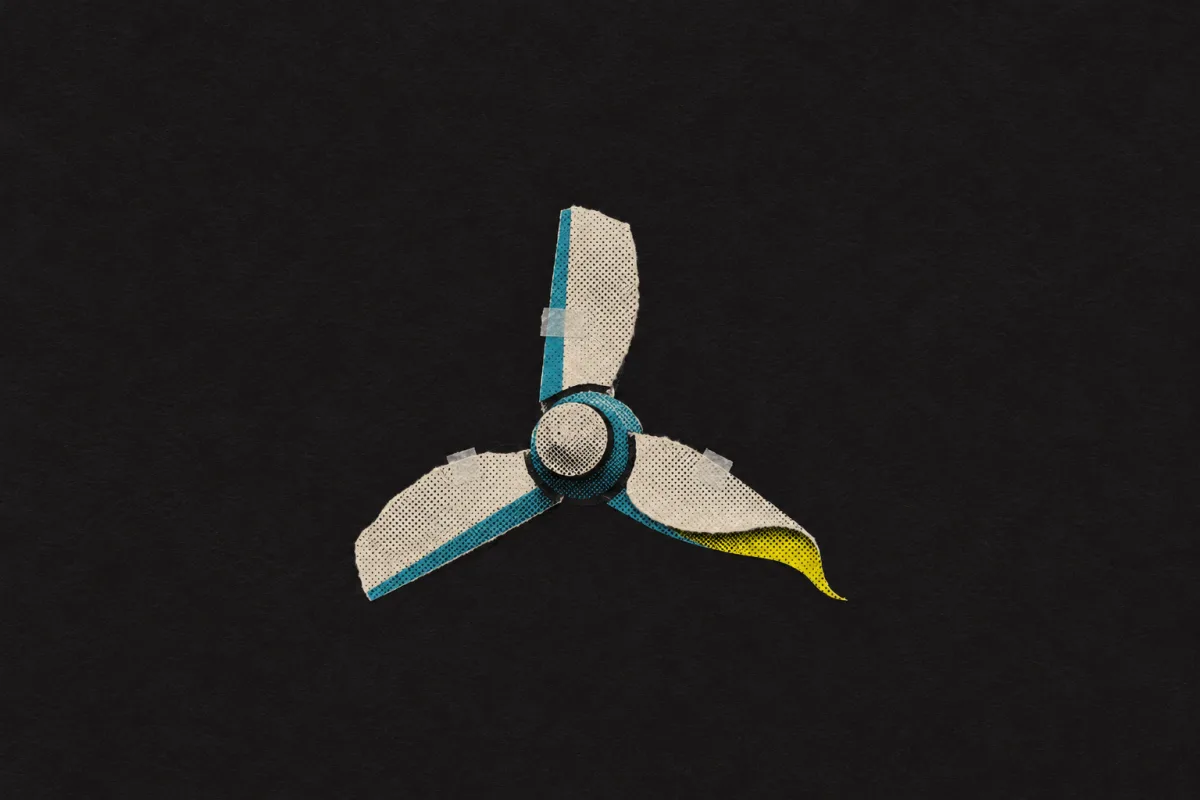
The new blade stays fixed to the hub. A steel spar stiffens the front, and the rubber tapers to a thin edge at the back. In still water, the blade has a curve to it. As the current strengthens, the blade flattens and deflects less water. As the push eases, the rubber springs back. A jolt can flex one spot along the edge and put less strain on the rest of the blade.
Less strain at the hub
The engineers mounted a rotor 1.26 meters across in the middle of FloWave’s 25-meter tank. They swapped blades and tested them at different current speeds. At the turbine’s rated flow speed, the rubber edges cut fluctuations in the bending moment by 28%. The bending moment measures how hard the current tries to bend the blade at its base, where it attaches to the hub. The push on the entire rotor got steadier, too. In the slowest water, loads on the flexible blades fluctuated more than on the rigid ones, though the forces there were small.
The team fed the tank measurements into a model of a current speeding up and slowing down over a full tide. One turbine changed the angle of its rigid blades. The other used flexible blades and adjusted only how fast the rotor spun. The two designs nearly tied.
A separate simulation at full scale put a 20-meter rotor in water moving three meters per second. Loads and power followed a similar pattern, though a blade that size needed rubber of a different stiffness. How long a full-size blade would last at sea is still an open question.
When repairs call for a ship
Off the northern tip of Scotland, tidal currents gather speed in the gap between the mainland and the island of Stroma. That’s where the MeyGen project installed its four turbines. Their rotors are 18 meters across, and the blades can turn to cope with strong currents. The operations plan calls for a crane ship to lift a turbine off its base. One of the vessels on the list is about 120 meters long.
On December 18, 2025, the operator reported that a crew had lifted two turbines onto the deck, serviced them, and lowered them back into the water. A third went ashore for servicing at Nigg. The site ran on three turbines in the first half of 2026 and generated less electricity than a year earlier.
In the tank, a flexible edge did some of the work a motor usually does. If the rubber softens too much over the years, it could change how the blade bends and how the turbine runs. At sea, success would mean one less trip for that crane ship.