// Contents
Tesla announced the end of the Cybertruck and raised its price on the same day. On November 6, 2026, Elon Musk posted on X that production at the company’s Texas factory would wind down around the middle of next year to make room for the Cybercab robotaxi. Within hours, the cheapest version you could still order cost $92,490. When Tesla first showed the truck in 2019, it promised a starting price of $39,900.
That gap, more than double, sums up the truck’s whole life. The Cybertruck became the most recognizable vehicle of the decade: people who can’t tell one Tesla from another know that stainless-steel wedge on sight. Fame never turned into sales, though: in the worst quarter, nearly one Cybertruck in five was bought by Musk’s own companies. Tesla built the line for 250,000 trucks a year and now sells about 30,000. Much of the trouble traces back to the very steel that made the truck famous.
Two steel balls and a quarter million orders
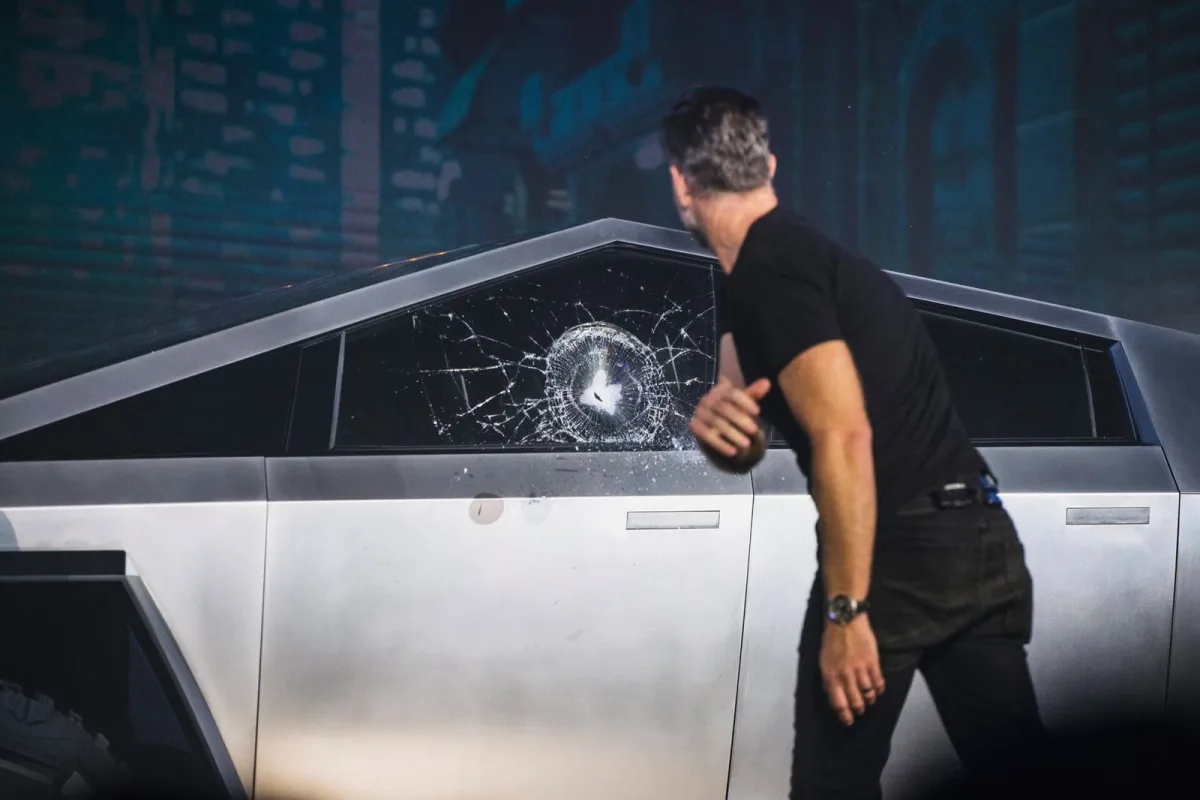
On November 21, 2019, at Tesla’s design studio in Los Angeles, chief designer Franz von Holzhausen threw a metal ball at the pickup’s side window. The glass, which Tesla called Armor Glass, was supposed to survive the hit. It cracked. He threw a second ball at the window next to it. Same result. Musk later explained that someone had hit the door with a sledgehammer before the show, which had already cracked the glass at its base.
The flop worked better than any ad. Five days later Musk announced 250,000 preorders. A reservation cost $100 and was fully refundable, so anyone curious could grab a place in line for the future. The promises were tempting: a starting price of $39,900, up to 500 miles (about 800 km) of range on the top version, and production starting in late 2021.
Steel that a press can’t shape
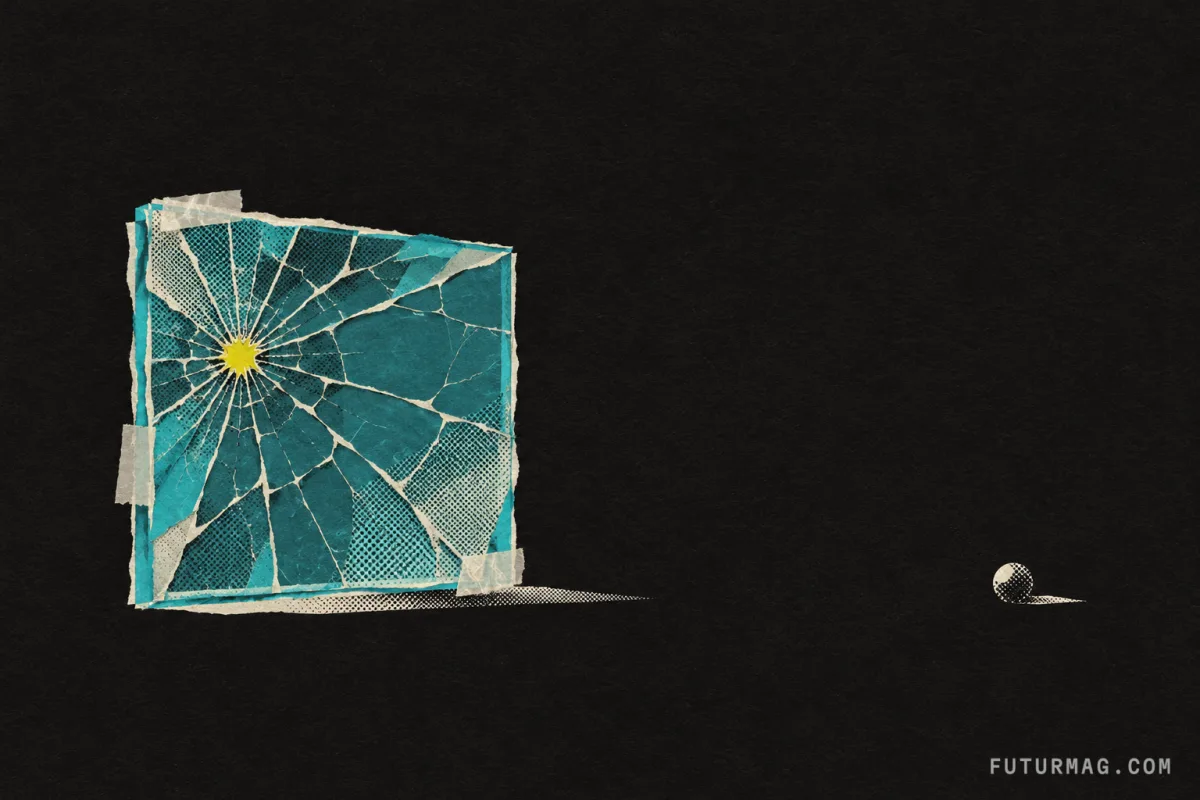
Ordinary cars are built from stamped panels. A soft steel sheet goes into a press and takes almost any shape: the curve of a fender, the bulge of a hood, the sweep of a door. The Cybertruck works differently. Its outer panels form a load-bearing shell, made of a cold-rolled stainless steel that Tesla developed in-house. Inside the factory it goes by HFS, for Hard Freaking Stainless.
No ordinary press can shape sheet that hard. In November 2023, Musk said plainly that the body panels had to be angular because they can’t be stamped by a conventional press. Instead, lasers cut the steel straight off the coil, and machines fold it along straight lines. To keep the bending tool from marking the visible side, Tesla came up with what it calls air bending. On a factory tour, Lars Moravy, Tesla’s vice president of vehicle engineering, showed how it works: air blows up through the lower tool, so the metal floats on a cushion as it bends. The outer door panel alone, he said, takes about 75% of the load in a side crash.
Flat surfaces don’t forgive mistakes. On a curved fender, an uneven gap disappears in the reflections. On a flat face, you can see it from across the parking lot. “Any dimensional variation shows up like a sore thumb,” Musk wrote to employees in August 2023, demanding parts accurate to under 10 microns. That’s several times thinner than a human hair.
In October 2023, six weeks before the first deliveries, Musk delivered the line that would be quoted more often than any of his promises: “We dug our own grave with Cybertruck.” On the same investor call he warned that reaching volume would be enormously difficult and asked everyone to temper expectations.
The headaches didn’t stop after launch. Stainless steel has to be glued as well as bent. In March 2025, Tesla recalled 46,096 trucks, almost every one built by then, because a steel trim panel running along the roof could come unstuck and fall onto the road. The adhesive turned brittle with exposure to the elements, so Tesla switched to a different one and added reinforcements.
What was promised and what arrived
On November 30, 2023, Tesla handed over the first trucks at its Texas factory, and buyers could finally see how much of the 2019 pitch had survived. The cheapest version, with rear-wheel drive, wouldn’t arrive until 2025, and it would cost $60,990. Range came in at 250 to 340 miles, or 400 to 550 km. The entry price was $21,000 higher than promised, and the longest range, as TechCrunch tallied, had shrunk by more than 100 miles.
After that the price went up and down, as if the company were feeling around in the dark for buyers. The rear-wheel-drive version finally arrived in April 2025 and was pulled after 173 sales. In February 2026, Tesla offered an all-wheel-drive truck at $59,990 for “only the next 10 days.” Then on November 6, after the end-of-production announcement, the base all-wheel-drive version vanished from the order page and every remaining version went up by between $2,500 and $7,500. The truck people lined up for in 2019 never became affordable.
// The truck in four numbers
The best customer lives next door
Tesla doesn’t report Cybertruck sales separately, so analysts do the counting. Estimates from Kelley Blue Book, the American car-pricing guide, cited by Reuters, put US sales at 38,965 in 2024, enough to make the Cybertruck the country’s best-selling electric pickup. In 2025, sales fell 48%, to 20,237.
The last quarter of 2025 looks especially odd. In the US, 7,071 new Cybertrucks were registered that quarter, and 1,279 of them went to SpaceX, Musk’s own rocket company. Add xAI, the Boring Company and Neuralink, and Musk’s businesses took 1,339 trucks, nearly one in five sold that quarter. Without them, registrations would have dropped 51% year over year. “Tesla is running out of buyers for the Cybertruck,” Sam Fiorani of AutoForecast Solutions told Bloomberg at the time.
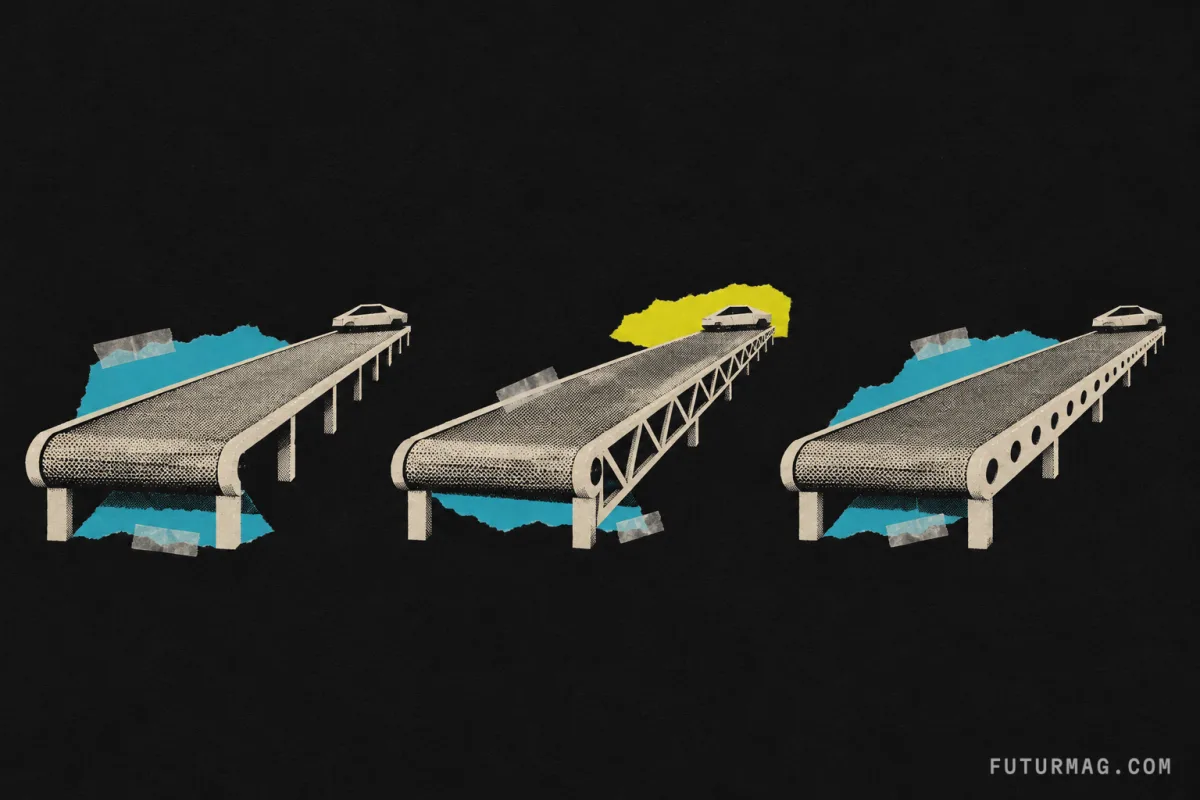
In the third quarter of 2026, Tesla delivered 8,295 vehicles listed as “other models.” Electrek reckons almost all of them were Cybertrucks, which works out to roughly 30,000 a year: about 12% of the plan. According to Tesla’s latest shareholder letter, the line is actually equipped for 125,000 trucks a year. Even against that, sales come to only a quarter. Over three years, by Electrek’s estimate, buyers have received around 70,000 trucks. Not even the best year reached a sixth of the plan.
There are plenty of reasons. The price ended up first one and a half times, then more than twice what was promised. The design thrilled some people and annoyed others. After Musk backed Donald Trump in 2024 and then worked in 2025 at DOGE, the government’s cost-cutting office, the truck became a target for protests. And outside North America, there was hardly anywhere to sell it.
Pedestrians versus stainless steel
Pedestrian-safety rules keep the Cybertruck out of Europe: rigid steel edges and sharp corners don’t pass them. Andy Palmer, the former CEO of Aston Martin, put it more bluntly to Reuters: anywhere crash rules account for hitting a pedestrian, the Cybertruck “won’t go, can’t go.”
The truck only comes in left-hand drive, so selling it in Australia, New Zealand or Japan would take a redesign. Australians had been reserving it since November 2019, putting down 150 Australian dollars each. On October 23, 2026, nearly seven years later, they got an email: plans to build the Cybertruck for Australia and New Zealand had been discontinued, and deposits would be refunded within 30 days. As a consolation, Tesla offered a free year of its FSD driver-assistance software to anyone who bought a Model 3 or Model Y instead.
// Timeline
- Unveiling in Los Angeles, two cracked “armored” windows
- Musk announces 250,000 preorders at $100 each
- “We dug our own grave with Cybertruck”
- First trucks handed to buyers in Texas
- Recall of 46,096 trucks over a steel panel that could come unglued
- Tesla cancels the truck for Australia and New Zealand
- End of production announced, prices raised
A car with no steering wheel gets the floor space
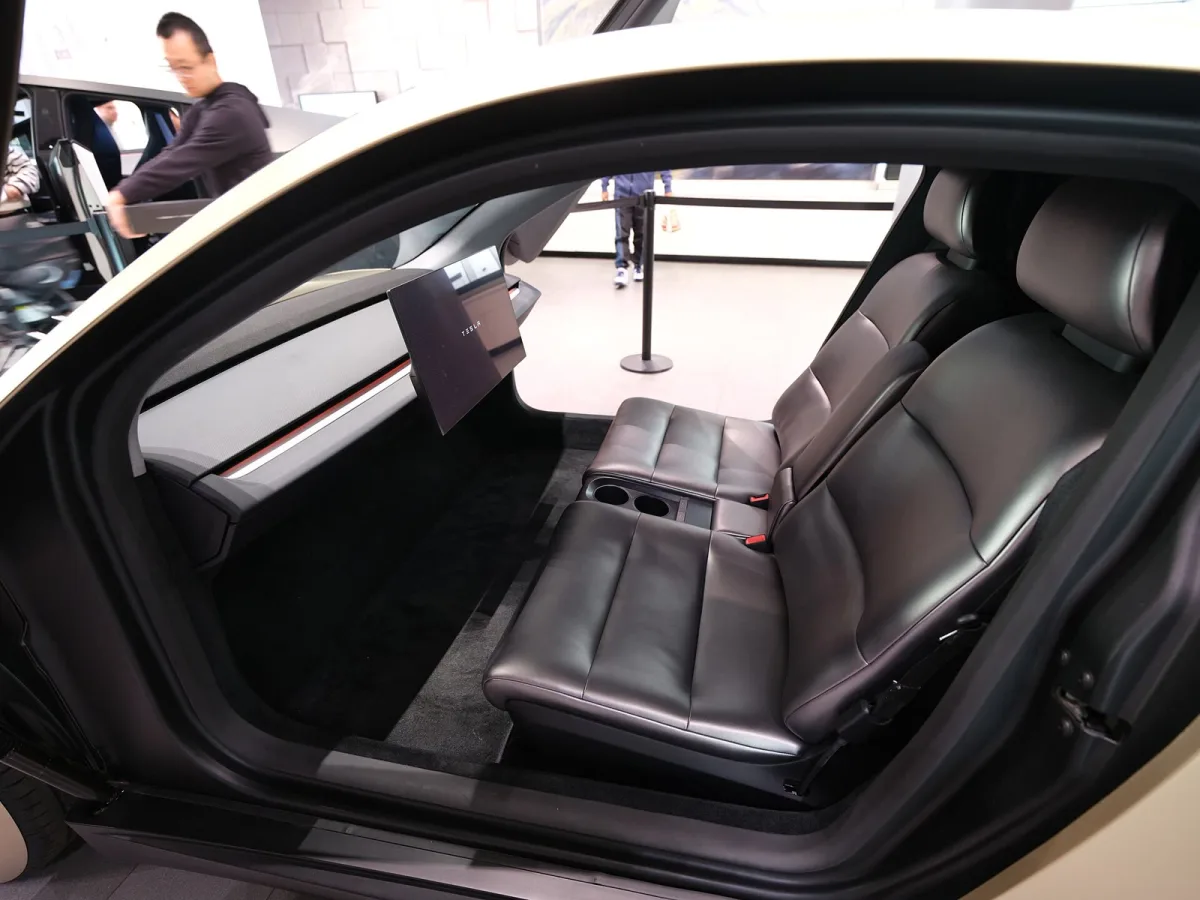
The Cybertruck is the third model Tesla has dropped this year to make room for something new. Before it, the company ended the Model S and Model X and handed their floor space to its Optimus humanoid robots. Now the Texas halls go to the Cybercab, a two-seat robotaxi with butterfly doors and no steering wheel, pedals or mirrors. Paid rides in Austin began in September, and by late October Texas had 463 of them registered, according to Electrek. US auto-safety regulators are still waiting for Tesla to explain whether a car with no steering wheel meets federal standards.
Not everyone buys the floor-space explanation. Electrek points out that the Texas plant has more than 10 million square feet of factory floor, about 93 hectares, or roughly 130 soccer fields.
The biggest question for roughly 70,000 owners has no answer yet. Tesla hasn’t said how long it will supply parts for a truck it will soon stop making.
On announcement day, the truck’s lead engineer, Wes Morrill, summed it up: the Cybertruck “was an incredible technology development platform and lives on through Cybercab.” Buyers will remember a different number. A $39,900 Cybertruck never went on sale. The closest Tesla ever came was February 2026: $59,990, for ten days.