// Contents
On September 25, 2026, a robotic tow truck called LINK burned up over Earth. It had been launched to rescue the Swift space telescope, which spent 22 years catching the most powerful explosions in the universe and is now slowly falling. The rescuer died first. NASA switched Swift off on October 23 , and the telescope will hit the atmosphere within weeks.
This was the first attempt to latch onto a satellite in orbit that nobody had ever prepared for such a visit. Swift has no handles and no docking port; as Ghonhee Lee, who runs the company behind the rescue, put it , it doesn’t have “any interfaces or grapple fixtures or USB port you can plug into.” Lee recalled that his engineers were missing something very basic: before launch in 2004, nobody took a picture of the back of the telescope.
A hunter that had one minute
Swift chased gamma-ray bursts, flashes produced when massive stars die and when their remnants collide. A burst lasts from a fraction of a second to minutes, and the fading glow it leaves behind is called an afterglow. Swift spotted a burst, swung toward it in about a minute and sent the coordinates to other observatories; once it caught a flash lasting 0.03 seconds, shorter than a blink. It was built for two years, worked for almost 22 and spotted more than 2,000 bursts.
The Sun puffed up the sky
Swift flies low, and it has no engine to lift itself. At that height the air is almost empty, but not quite, and every orbit drags it down a little. In recent years the Sun has been especially active. It heats the atmosphere , the atmosphere swells upward, and satellites in low orbits feel more drag.
Swift started out at about 600 km . By February 2026 it had dropped below 400, and a rescue was only possible above 300. That left a few months, and the team had to choose between science and time. On February 11 they stopped the X-ray and ultraviolet telescopes and parked Swift in its most streamlined pose. In April they switched off even the burst detector, to save power and turn the solar panels so they caught less air.
The telescope stopped looking at the sky to stay in it longer.
A tow truck built in nine months
In September 2025 NASA paid $30 million to Katalyst Space of Flagstaff, Arizona. Swift itself cost $364 million, so the rescue came to less than a tenth of the telescope’s price. Katalyst had to build a spacecraft, catch up with Swift, grab it and push it higher.
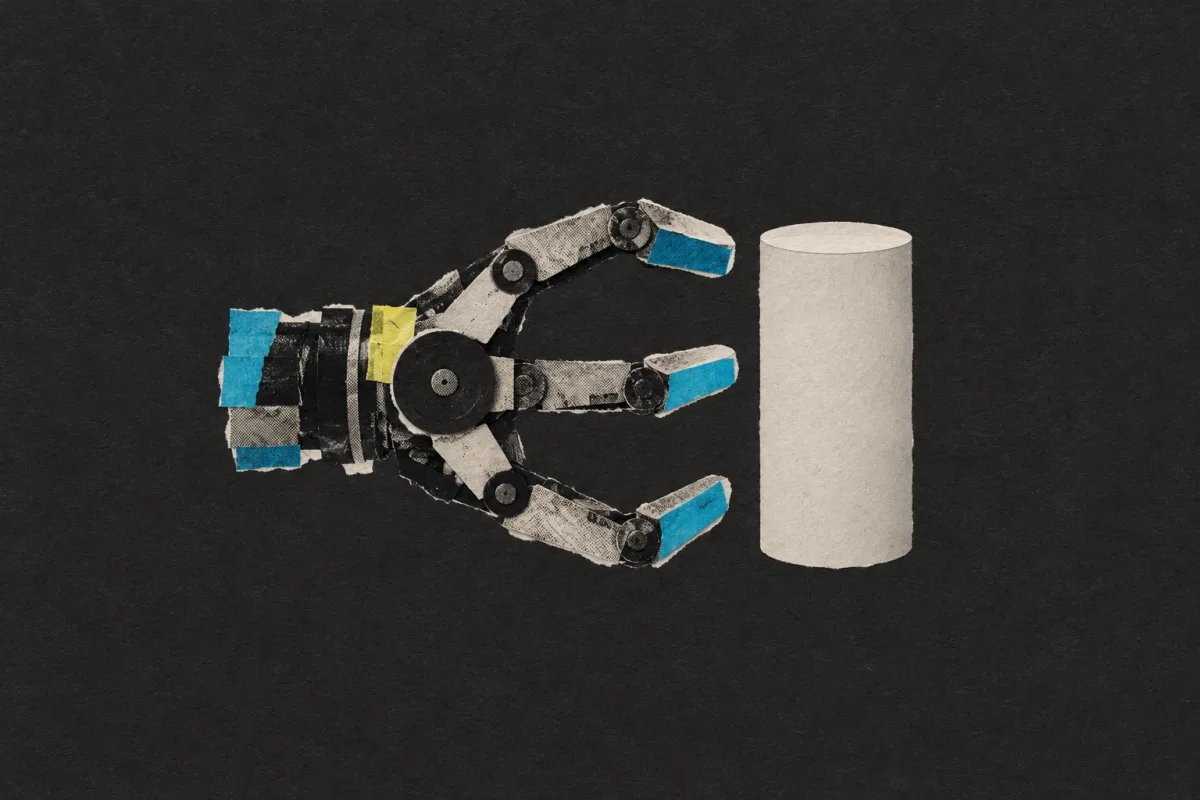
LINK came out 1.8 meters tall and about 400 kg. It had three robotic arms with lidars (laser rangefinders that build a 3D picture of an object), three xenon ion thrusters and two 6-meter solar arrays. The plan: spend several weeks circling Swift looking for spots on the hull to grab, then spend months slowly pushing it upward. That search would have to happen live, because the engineers had no pictures and no detailed view of the telescope’s back. The rescuer carried everything it needed for the grab, and Kieran Wilson, who led the LINK project, was candid about the pace: six months earlier, the whole spacecraft had been a PowerPoint deck.
On July 3, 2026, a Pegasus XL rocket carrying LINK was dropped from under a carrier plane at about 12 km over Kwajalein Atoll in the Pacific. The rocket did its job.
Three weeks to a tailspin
On July 28 Katalyst reported that LINK had been tumbling on several axes for three days. Two of its three reaction wheels were dead. These are wheels spinning inside the spacecraft: by changing their speed, a satellite can turn without burning fuel. Contact with the craft kept dropping. Still, the company held its nerve: LINK, it said, had “a viable path to rendezvous with Swift,” and Wilson called the telescope “an unprepared but cooperative partner.”
The spin, it turned out , came from a faulty valve. Engineers got LINK back under control, but it no longer had the fuel to grab Swift and lift it. That was the end. On August 19 NASA and Katalyst called off the rescue. “This is not the outcome we were working toward, but it does not change why this mission was worth attempting,” said NASA Administrator Jared Isaacman.
The two did meet in the end, if only from a distance. Controllers brought LINK within 12 to 15 km of Swift, close enough for pictures. From there you can take photos but not grab anything: the rescuer never reached the back that nobody photographed in 2004. On September 25 LINK reentered the atmosphere and burned up, more than a month ahead of the craft it had come to save.
// Timeline
- NASA picks Katalyst and puts $30 million into the rescue
- Swift halts most observations to reduce drag
- LINK launches from a plane over the Pacific
- Katalyst reports LINK has been tumbling for three days
- The rescue is called off
- LINK burns up in the atmosphere
- Swift makes its last observation
- NASA announces the end of the mission
What is left after the fall
Swift made its last observation on October 20. It had sunk below 275 km, less than half the height it started from, where the air drags hard enough that the telescope can no longer hold a target steady. With no engine, nobody can steer its fall. Most of the spacecraft is expected to burn up, and NASA says harm to anyone on Earth is unlikely.
What Swift leaves behind is an archive: almost 22 years of measurements, more than 1.5 million ultraviolet and optical images, about 12 terabytes of data, all of it public. Astronomers will be working through it for a long time.
Swift worked eleven times longer than promised, and it is the air that is taking it down. LINK never even got to the question of where to grab it, because its own valve failed first, and Katalyst says it will carry the lessons into future rendezvous missions. AP expects Swift to reenter in early November. Rescuer and rescued will end the same way, a little more than a month apart: as a brief streak across the night sky.