// Contents
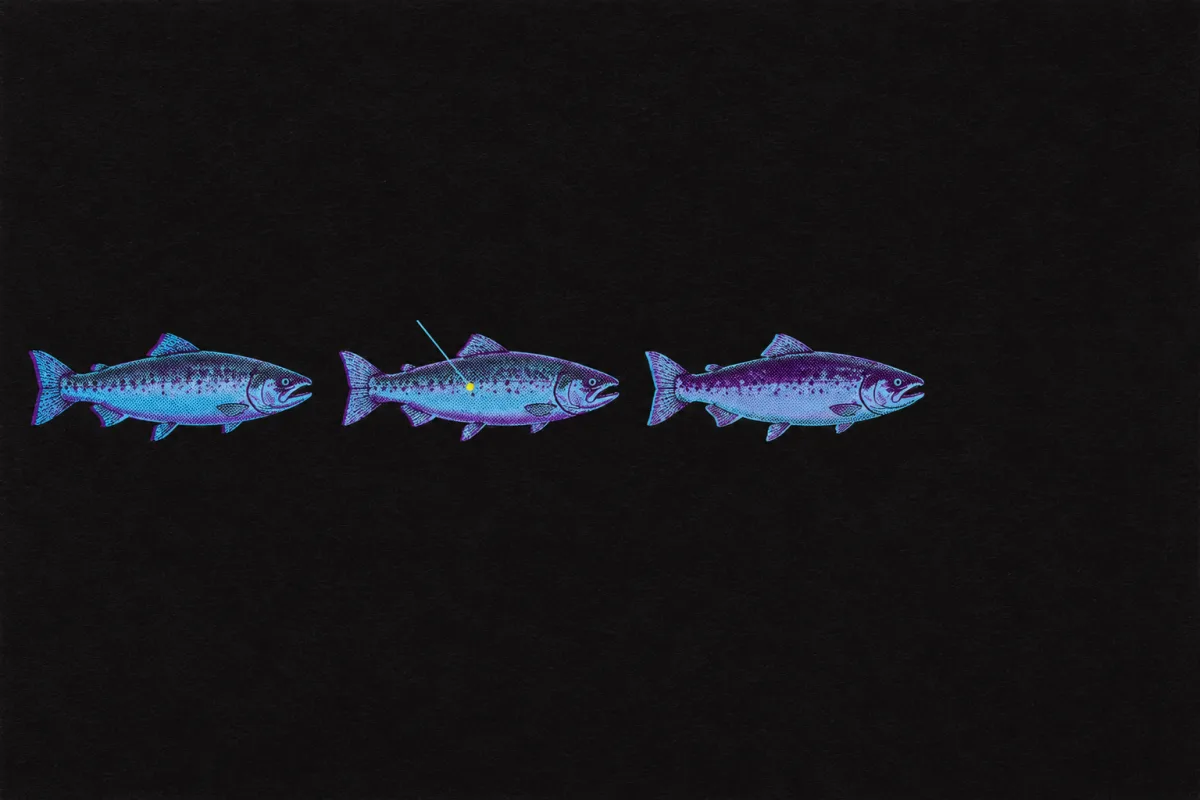
A device the size of a boxer’s heavy bag hangs in the water of a Norwegian salmon pen. Cameras watch the fish swim past, and when the machine spots a parasitic crustacean on a salmon’s flank, it hits it with a green flash. The parasite dies, and the salmon swims on. By the end of 2025 such machines guarded some 112 million salmon, a fifth to a quarter of all the salmon farmed in Norway, according to the annual report of their maker, Stingray.
Farmers have bought in: by the end of 2025, more than 2,500 of these machines were running at once in Norway and Iceland. Yet the only independent trial on a working farm found just as many parasites on the guarded fish as on their unguarded neighbors. The laser wasn’t idle, either. It fired enough pulses to clear up to 38% of the lice a day, and the lice survived anyway.
The company’s own report holds another surprise: the clever machine is nearly useless unless a salmon swims past its camera. So Norway now has a new job. People spend their shifts making sure the salmon do.
A pest the size of a fingernail
The salmon louse isn’t really a louse. It’s a parasitic crustacean up to 15 millimeters long that clings to a salmon and feeds on its mucus, skin and blood. A pen holds up to 150,000 salmon, so the lice breed as if in an incubator. As IEEE Spectrum reported, as few as 11 of them can kill a smaller fish.
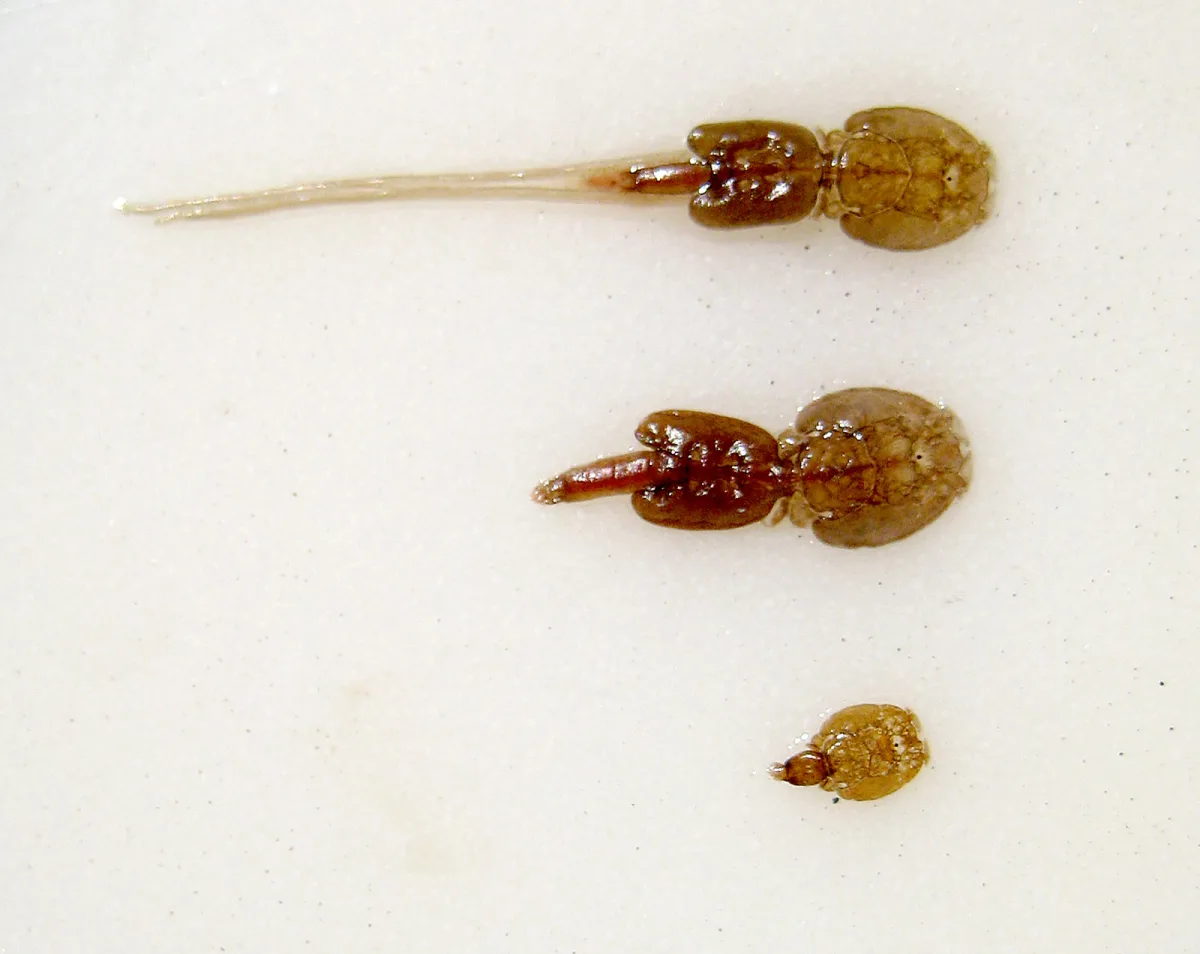
Norway’s rules are strict. Once a pen averages more than half an adult female louse per fish, the farm must treat it. Farmers used to bathe salmon in chemicals, but the lice grew resistant. Today most treatments skip the drugs: crews pump the fish aboard a special vessel, rinse them in warm water or blast them with water jets, and return them to the pen. They come back battered.
In 2025, 54.9 million salmon died in Norway’s sea pens, 14.2% of all the farmed salmon at sea, according to Norway’s Veterinary Institute. About a third died from injuries. The institute points to the lice treatments themselves as the main cause, in a year when farms treated more often than ever. In other words, the cure maims. A Norwegian salmon fillet at the supermarket may well have come from a fish that went through the pump and the warm water at least once.
There was a living fix, too: cleaner fish such as lumpfish and wrasse, which pick lice off the salmon. Farmers stocked 60.9 million of them in 2019 but only 19.1 million in 2025. The cleaners die in large numbers themselves, and farmers have cooled on them.
An inventor in a basement
Esben Beck never trained as an engineer. Born in 1972, he meant to study mechanical engineering but opened a basement workshop instead, where he built prototypes of medical instruments and pipe-inspection systems, as he told SINC, the Spanish science news agency. One day he read a newspaper story about sea lice that drugs could no longer stop. “I thought there had to be another way,” Beck recalled. A louse the size of a fingernail, he reasoned, was a big enough target.
He patented the machine in 2010; sales began in 2014. In 2019 Beck became the first Norwegian to make the final of the European Inventor Award. Unit number 2,000 went to a customer in February 2025, and number 3,000 followed that November.
The device works like this. A pair of cameras views the fish from slightly different angles, like two eyes, and software finds the louse in the 3D image. The laser fires only after the software has spotted the parasite in two frames in a row. Its beam is green, with a wavelength of about 530 nanometers. The dark crustacean absorbs that light, heats up and dies; the shiny scales reflect it. All of this has to happen in the second or two it takes a salmon to swim past. The machine even made it onto a Norwegian postage stamp in a series about the country’s research and technology.
Plenty of shots, surviving lice
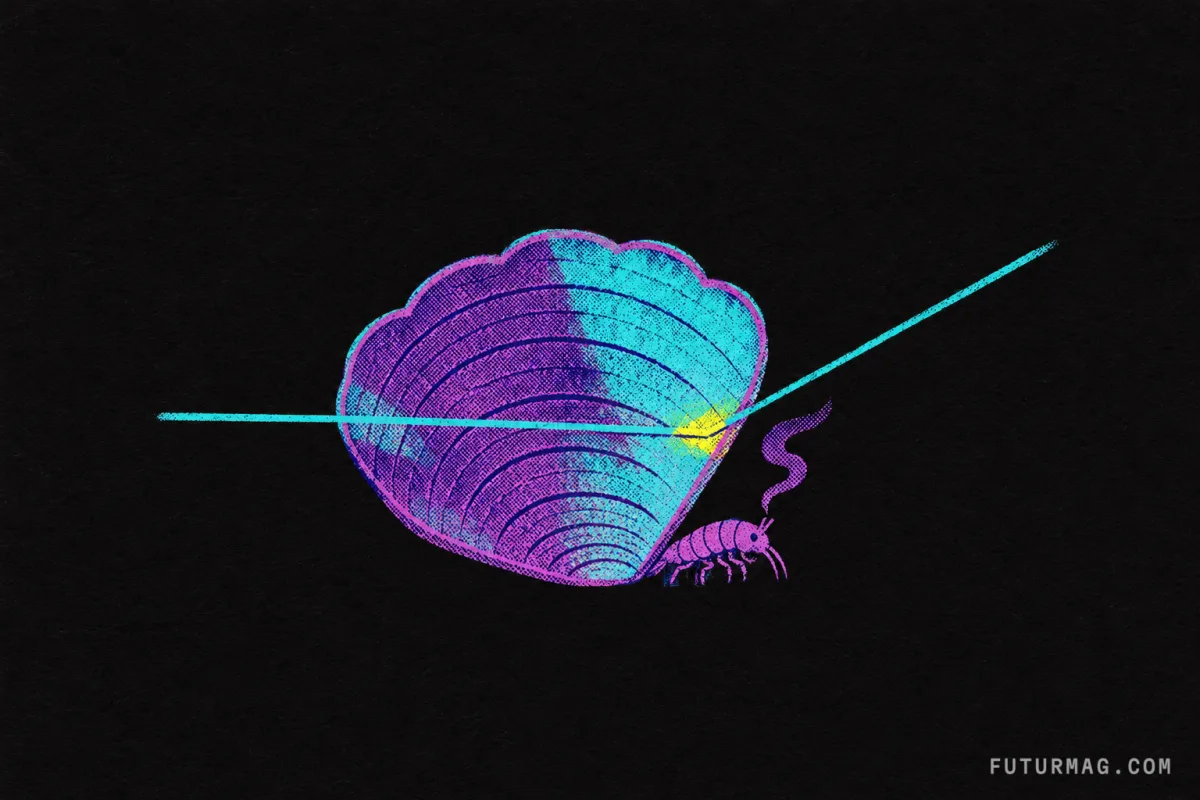
In 2020 Samantha Bui and her colleagues at Norway’s Institute of Marine Research tested the laser at a farm run by Bremnes Seashore. Six pens each held 157,000 to 165,000 young salmon weighing 250 to 450 grams. Three pens got two lasers apiece; the other three served as controls. After 54 days, the fish with lasers carried just as many mobile lice as those without. These are the juveniles and adults that crawl over the fish, unlike the larvae, which stay glued in place. In every pen, adult females crept close to the legal treatment limit.
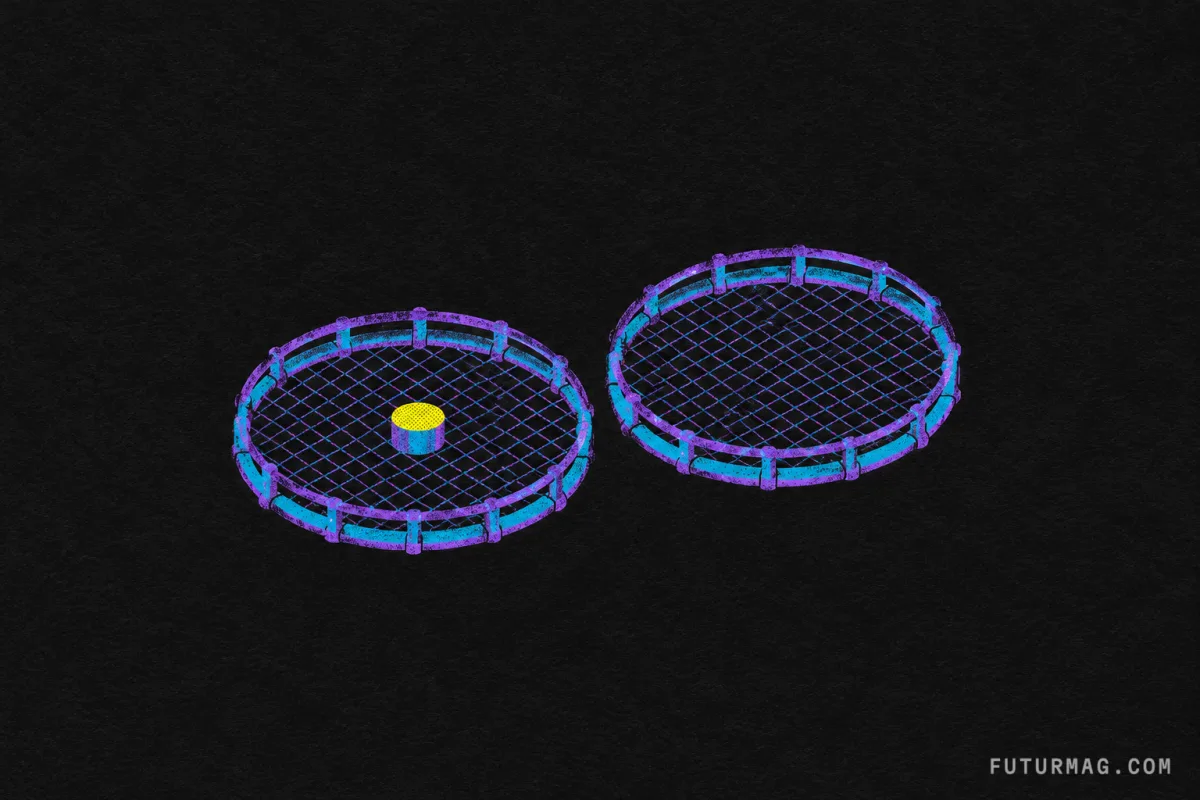
The most telling clue was in the firing log. The lasers fired plenty: had every pulse killed a louse, they would have removed 4 to 38% of the mobile lice each day. So the machine was finding targets but not killing them. Perhaps it mistook other things for lice, or its pulses were too weak. The paper’s title puts it plainly: “Salmon lice survive the straight shooter.” There was good news for the fish, at least: the laser left no marks on their skin or eyes.
Stingray rejected the findings, and its general manager, John Arne Breivik, called them misleading. The trial, he pointed out, used snorkel cages, which fewer than 1% of Norwegian farms use. In such a pen the net has a roof, the fish live below the layer where lice gather, and they rise through a wide tube to gulp air. Salmon swim differently there, the software wasn’t trained for that, and fish this small don’t school yet. Bui herself called the work a short case study at a single farm. Her main point lay elsewhere: technology like this should be validated in public before a whole industry adopts it.
Half the treatments, by public statistics
Five years later Stingray answered with a paper of its own: by its count, farms with lasers had to treat their fish half as often. Company researchers led by Martin Worm, working with a University of Bergen mathematician, published the analysis in the journal Aquaculture. It rests on public statistics: every week, each Norwegian farm tells the authorities how many lice its fish carry, how warm the water is and whether it treated any pens.
The study counts weeks. A production week is any week a farm has fish in its pens; a treatment week is one in which it treated at least one pen. In 2023, farms with lasers accounted for almost 11% of all production weeks but under 6% of treatment weeks. Lice breed faster in warm water, so the authors controlled for temperature. At 10 °C, a farm without lasers had a 10% chance of needing treatment in a given week; a farm with lasers, 5%. The gap held for every kind of treatment: mechanical, baths and medicated feed.
The authors also checked the obvious catch: perhaps these farms had always treated less. They hadn’t. Before the lasers arrived, the same farms treated no less often than their neighbors. And despite fewer treatments and far fewer cleaner fish, they didn’t end up with more lice.
The weak spot in the second paper is easy to see. It is an observational study, not an experiment, and its authors sell the lasers. Farms that buy expensive machines may differ from the rest in other ways, and looking at their earlier years only partly rules that out.
// Two answers to one question
The 2020 trial
A government institute, with no company involvement. One farm, six pens, 54 days, with control pens next to laser pens. It counted lice on the fish and found no difference.
The 2025 study
Authors from Stingray and the University of Bergen. Every farm in Norway in 2023, from public reports. It counted treatments: laser farms needed half as many.
A robot that needs a shepherd
The laser also has a prosaic weakness, and Stingray writes about it openly. The device hangs where it’s put; the salmon go where they please. In January 2025 the company hung three units at a Mortenlaks farm at depths of 2, 8 and 14 meters. Most fish passed the one at 8 meters. But the school picks its own depth, so the units have to follow it: up, down, wherever the fish are.
Lars Arne Lien, who manages laser operations at SalMar, one of Norway’s largest salmon farmers, summed up the key to success in Stingray’s report: “Fish in front of the camera.” Keeping them there is the job of laser operators. The company says it invented the role, and by 2025 Norwegian farms employed more than 100 full-time operators, not counting Stingray’s own control centers in Oslo and Fauske.
An operator sits at a console, either at the farm or in a shared center that watches several farms at once. They track how many fish pass the cameras and shift the units all day to bring more of them past. Cermaq, another major farmer, assigns each operator one or two sites. The report counts more than 2,500 units at more than 170 farms, roughly 15 per farm, so a single operator may tend 15 to 30 machines.
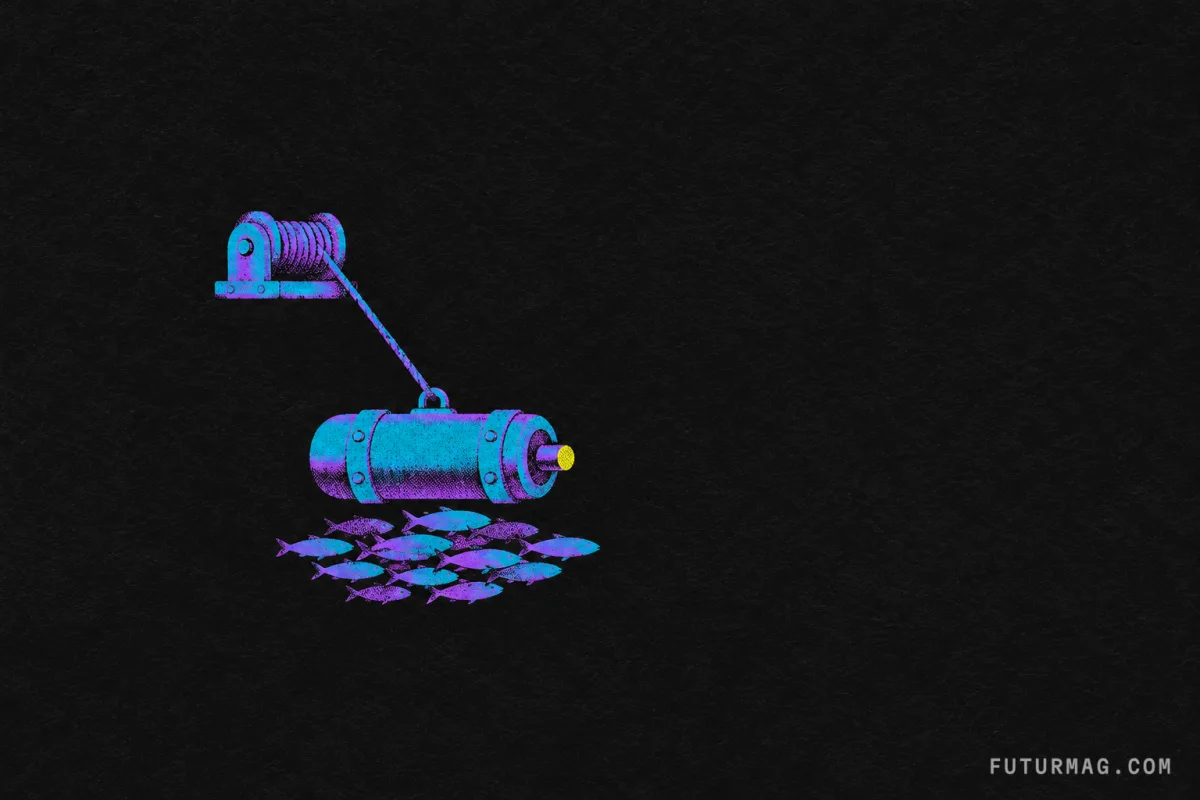
Each unit carries more than its pair of aiming cameras: the report counts about 15,000 cameras on the 2,500-plus units, all streaming to the company around the clock. So the robot that headlines call an AI parasite hunter works in tandem with a person who spends the day steering it after a school of fish.
That may reconcile the two studies. Perhaps the laser doesn’t kill every louse but keeps their numbers just below the threshold that forces a farm to pump the fish out and rinse them in warm water. If so, its value lies not in the burned lice but in the fish nobody had to handle. Only a new independent trial in ordinary pens can test that idea, and none has been published since Bui’s. How many parasites does each green shot actually kill?