// Contents
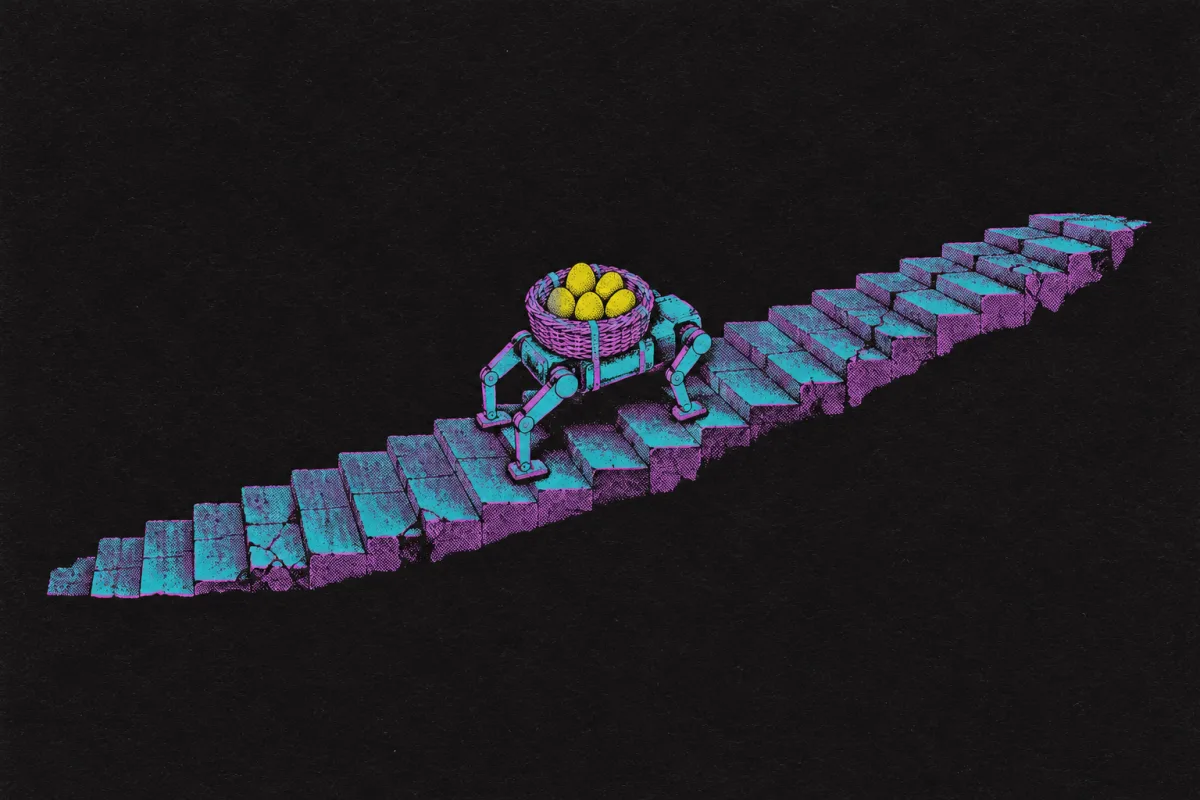
43 minutes and 41 seconds. That is how long a four-legged robot from Beijing’s Lingyi Technology needed to climb 3,100 stone steps on Mount Tai in eastern China. A typical tourist takes an hour and a half to two hours on the same stretch. In the next category over, robots were handed raw eggs, watermelons and thermos flasks to carry, and the best of them took 1 hour 51 minutes. Loaded up, the machine moved at the pace of an unhurried tourist.
The race took place on November 2, 2026, in the city of Tai’an. It was pitched as an exam for machines that are supposed to leave the trade-show floor and go to work in the real world. The mountain graded both parts of that exam honestly. Robots can already sprint up stairs. The job they came for is much harder. In 2019, a 53-year-old porter named Geng Yukui began his own climb at the Midway Gate, right where the robots finished. He went to the summit twice a day with about 50 kilograms on a shoulder pole. That same year he predicted when people like him would leave the mountain.
A race up the lower half of the mountain
Mount Tai is the tallest peak in Shandong province and a UNESCO World Heritage site, and for centuries Chinese emperors climbed it on pilgrimage. The state broadcaster China Media Group ran the first race, from the foot of the mountain to the Midway Gate to Heaven. According to Global Times, that is 3.9 kilometers (2.4 miles) with about 600 meters of climb, about the same as climbing to the roof of a 200-story building. The steps vary in height and width, and the narrowest is 13 centimeters wide. That leaves room for about half an adult foot.
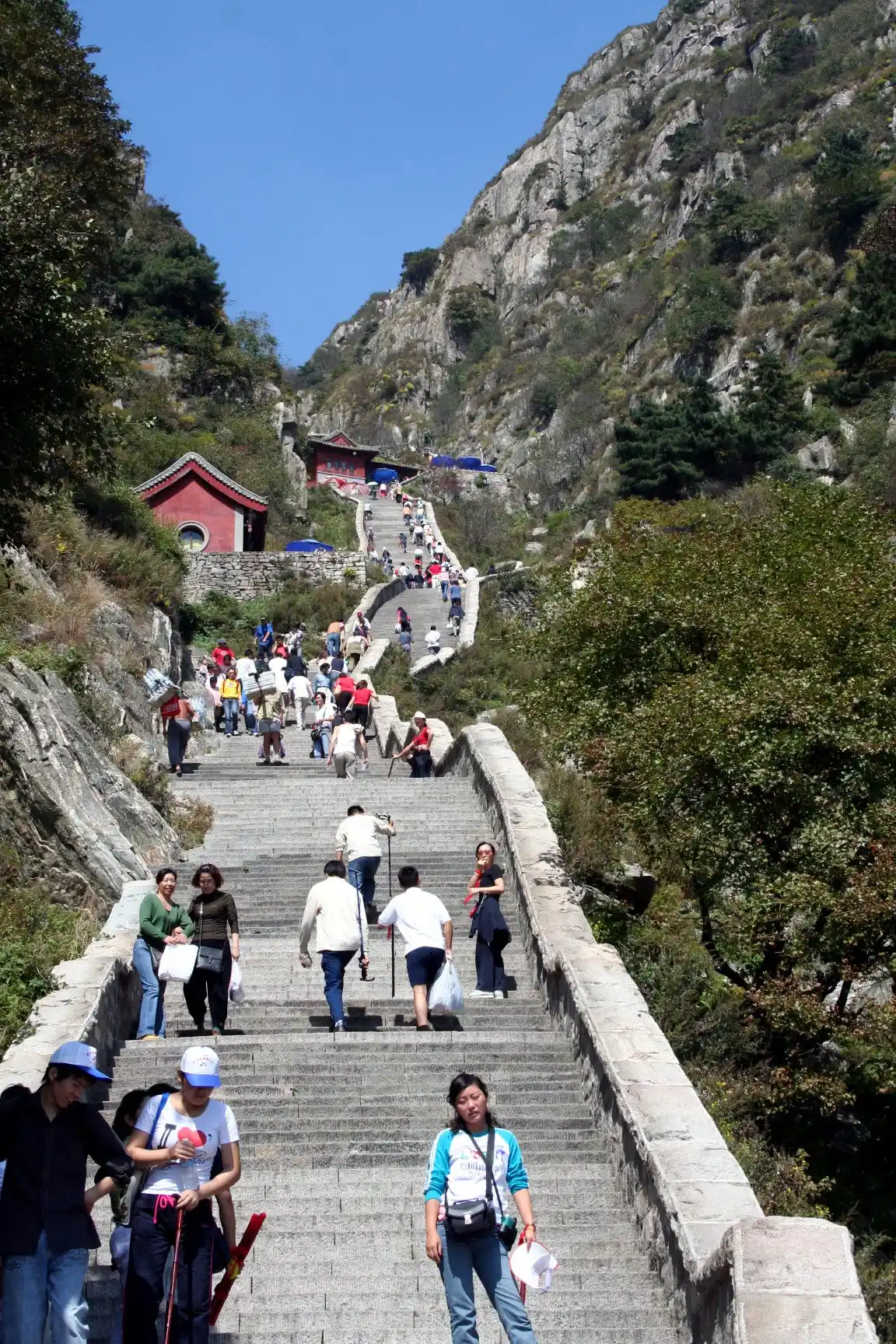
Nearly 90 teams raced humanoids and four-legged robots, hauled cargo and climbed in exoskeletons. The fastest machine came from Lingyi Technology, a subsidiary of the robot maker Unitree: 43 minutes 41 seconds. Humanoids found the mountain tougher. The terrain forced organizers to end their course partway up, at the Doumu Palace temple, TechNode reported. So their best time, 27 minutes 26 seconds, can’t be compared with the four-legged robots’. Contestants wearing exoskeletons from several makers reached the Midway Gate in about an hour; without one, the stretch usually takes two. Tourists have been able to rent such devices since 2025.
There were falls. One humanoid in a bandana collapsed in a heap on the cobbled path, and engineers rushed in. Another tumbled down a flight of stairs and came to rest next to a trash can.
Eggs, watermelons and an awkward thermos
The cargo robots set off at two-minute intervals. The robot dogs carried eggs, instant noodles and bottled water, plus watermelons and oddly shaped thermos flasks. Judges scored both speed and the state of the cargo, and every bit of damage cost points. “Eggs are fragile,” said Li Jinxiang, a marketing manager at GENISOM AI. His team had to figure out how to get them up the mountain steadily and break as few as possible.
A team from Linxai Intelligence won in 1 hour 51 minutes 29 seconds. That is more than two and a half times as long as the fastest robot running empty.
The organizers never said how many kilograms the robots carried or how many eggs survived. That leaves time as the only way to compare them with tourists.
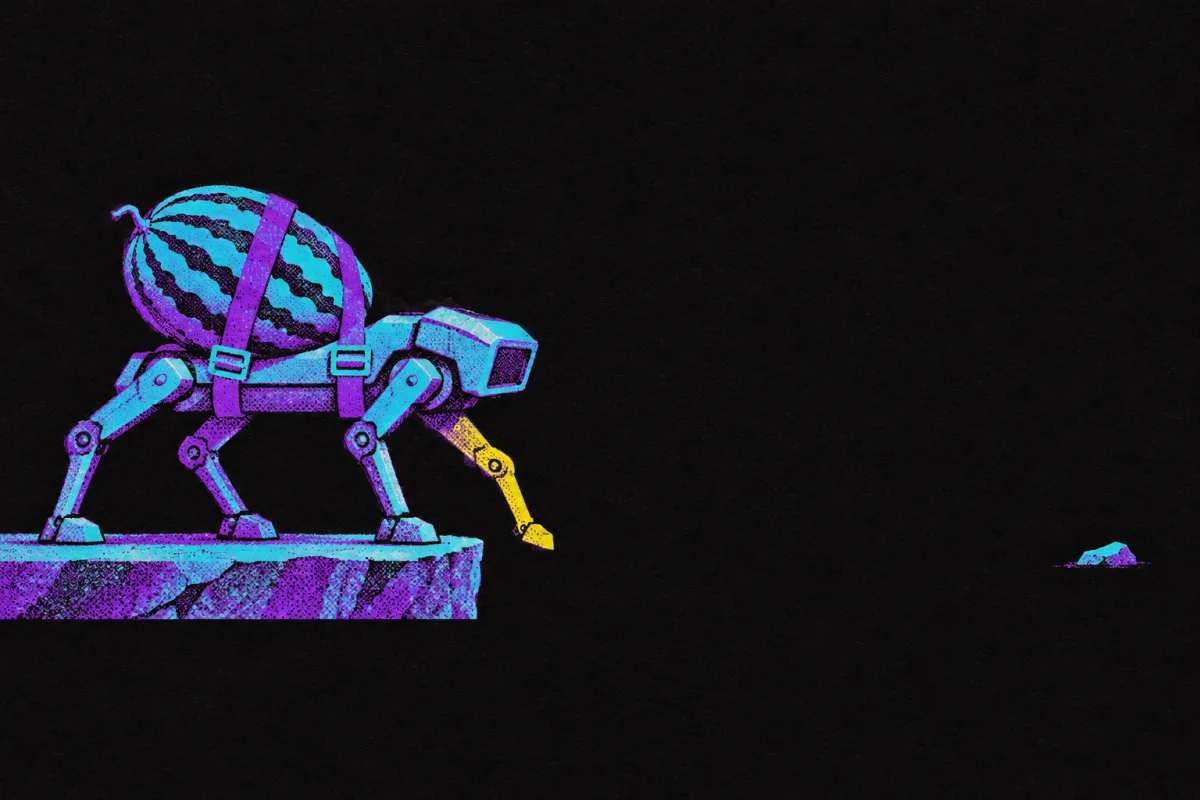
The teams were open about what went wrong. Motors overheated, robots throttled their own power, and some drifted sideways. Cargo machines had it worst: several developed an unsteady gait after their loads were swapped at supply points. Put simply, a robot’s walk is tuned for a certain weight sitting in a certain place on its back. Shift the watermelon, and a carefully balanced stride starts to fail on a step 13 centimeters wide.
The people who carried those eggs every day
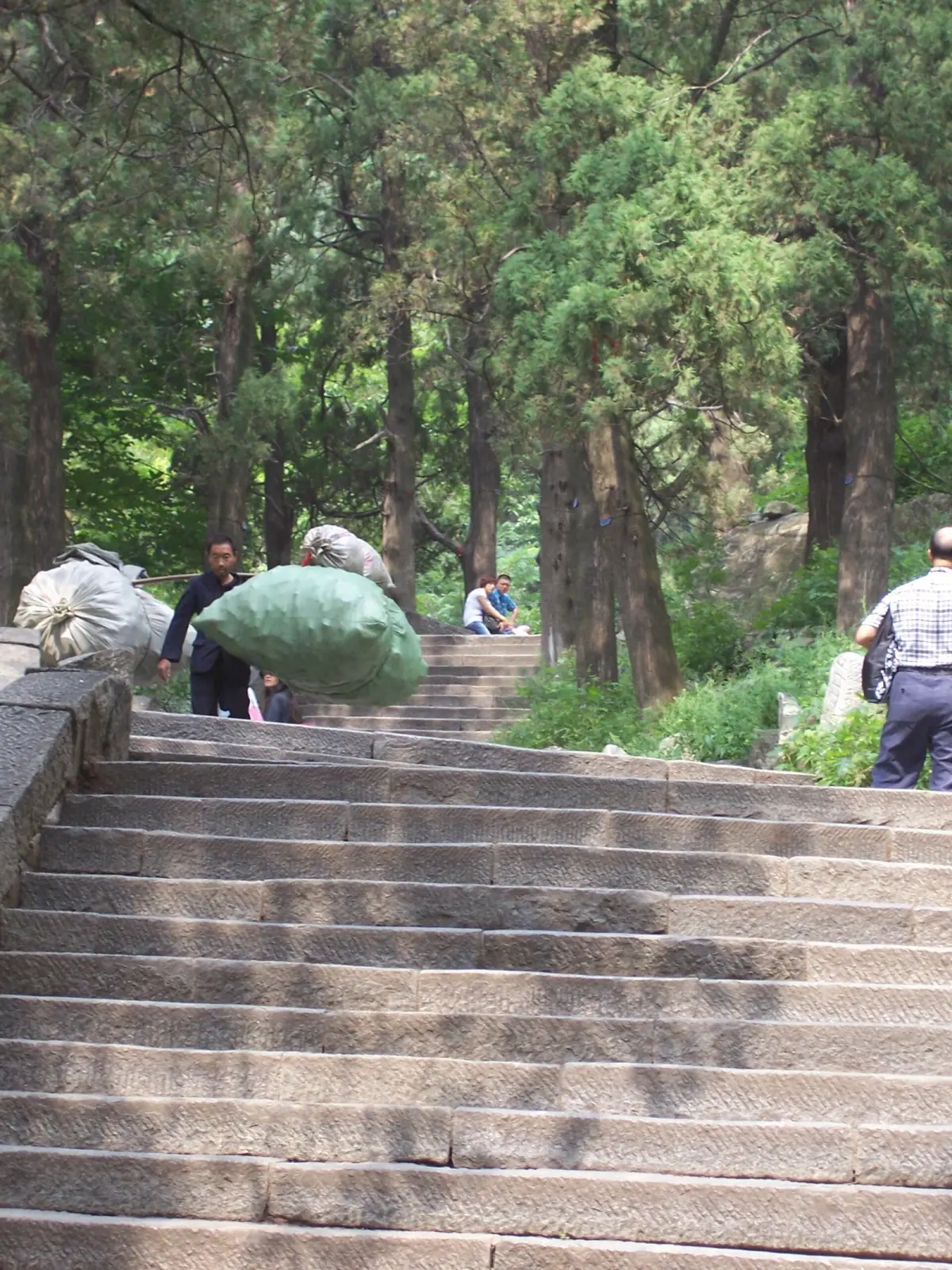
Nobody ever timed the porters, but their workload is on record. In 2019, People’s Daily profiled a porter named Geng Yukui. He was 53 and had worked on the mountain for more than 30 years. Twice a day he carried about 50 kilograms on a shoulder pole, two baskets of eggs and vegetables. His route began at the Midway Gate, exactly where the robot race finished, and climbed to the South Gate of Heaven at the summit. He earned about 260 yuan a day, roughly $38.
The trade was already fading. “Twenty years ago, our team had over 300 porters, but now the number is down to 19,” said Zhao Pingjiang, 69, the mountain’s oldest porter, by then retired. Geng had no illusions about what came next: “The remaining porters are all aged around 53, so in five or six years, we will retire.”
Add five or six years to 2019, and you land in 2024 or 2025. That is exactly when the robots showed up.
// Timeline
- A porters’ crew is down to 19 from over 300, most of them around 53
- A Unitree B2 robot dog is tested on the mountain as a garbage hauler
- A robot dog hauls supplies up and trash down as a regular worker
- The first robot race up 3,100 steps
A new porter in silver gray
The first job offered to a robot was not eggs but garbage. In 2023, Mount Tai drew 8.6 million visitors, who left behind nearly 24,000 tonnes of waste. That works out to almost three kilograms per visitor, and porters used to carry all of it back down on their shoulders.
In October 2024, the mountain tested a Unitree B2 robot dog. On paper it handles up to 120 kilograms. On a trial climb it covered 9.5 kilometers from the Red Gate to the summit in about two hours, twice the speed of an average person.
Ma Yufei, head of the scenic area’s sanitation department, was blunt about why: “Currently, the porters on Taishan are getting older, and it’s increasingly difficult to find laborers.” In the same interview he added that robot dogs cannot fully replace human labor.
By July 2026, the roughly meter-long robot had a permanent job. According to Xinhua, it hauls goods up and trash down, 30 to 45 kilograms a trip, and handles slopes of up to 45 degrees. It runs four to six hours on a charge, and indefinitely with battery swaps.
On paper the robot lifts 120 kilograms. On the steps of Mount Tai it is trusted with 30 to 45, a little less than a man used to carry on his shoulder pole.
An exam you can’t pass at a trade show
Xiang Ligang, president of the Beijing Institute of Intelligent Era Industry, compared events like this to the first air shows and motor exhibitions. Mountain paths, he said, exposed robots’ weaknesses in balance, perception and decision-making. For the industry, the race was “a milestone and a reality check.”
It was not a rigorous one. The results came from the organizers and the companies themselves. UNIUBI AI, for instance, said its small Cyvet robot finished the course in 35 minutes 47 seconds, almost eight minutes faster than the winner. That was on a trial run, and nobody can check it. Cargo weights appear nowhere. The organizer is a state media group whose job includes showing Chinese robotics in a flattering light.
Still, the mountain made its main point without any staging. Robots can already run up it empty-handed. Carrying someone else’s groceries without breaking them is a skill they are still learning. Mount Tai’s porters practiced it for decades, in winter cold down to minus 30 degrees Celsius.
In 2019, Geng Yukui was thinking less about machines than about what would outlast his crew. “It will be a pity if this job vanishes, but I hope that the spirit of porters will never fade away.”