// Contents
Cayden Thompson lives in Lone Pine, a small California town at the foot of Mount Whitney, and he is used to the desert being dark at night. So when a light came on over the flats south of town, he got in a car with a friend and drove up Horseshoe Meadows Road to find out what it was. The light was “blinding” and clearly not headlights, Thompson told the San Francisco Chronicle . In a dirt turnout stood two powerful spotlights. A technician asked them to keep back: the equipment was hot enough to burn.
The spotlights belonged to Reflect Orbital, a California startup that wants to sell sunlight after dark. Mirrors in orbit would catch the sun and bounce it down to whoever has paid for it. Reflect Orbital calls this “sunlight as a service”. The night of October 10, 2026, was a rehearsal on the ground, without a single satellite.
And the light promises to be no joke. A single working mirror, by astronomers’ calculations, would put about 40 times more light into its patch than the full moon, and looking at it through a telescope would be close to looking at the sun. The first mirror is already cleared for launch, yet the US regulator decided that the light and the night sky were not its business. Who answers for the light itself, and whether anyone living near a purchased patch of brightness gets asked, nobody yet knows. Here it is, question by question.
A rehearsal under Mount Whitney
?What exactly lit up the sky over Lone Pine?
A ground mock-up of the future service. The spotlights were meant to show what light from orbiting mirrors would look like. The company invited volunteers from China Lake Mountain Rescue, who ran through their usual night work: grid searches, stretcher carries, rope rigging. According to DarkSky International , they did it first in darkness and then under the beams.
Phillip Cash, the team’s operations leader, said the light was a tick brighter than a full moon. Searchers could see roughly three miles in every direction. Local residents had not been told about the rehearsal. Nor had astronomers, including Princeton astrophysicist Gáspár Bakos, who had filed objections to the project with the US regulator, Sky & Telescope reports . No permit was needed: the spotlights stood on the ground, not in space.
?Why weren't the rescuers impressed?
Cash admitted the light made the work easier. But to measure visibility, the company scattered white, glossy boxes about four feet long across the slope. In training, rescuers usually search for weighted manikins in clothes. “They don’t represent bodies, which wear clothing,” Cash said. “They don’t reflect light the same way.” A shiny white box stands out from far away in almost any light, so the test may have flattered the result.
His overall verdict was calm: “I don’t think this is going to change search and rescue forever. We’re pretty good at working at night already.” He saw more use in large disasters, when many people are trapped under rubble and a whole district needs lighting at once. The catch is the price: the company has discussed rates comparable to helicopter time. Most rescue teams cannot afford that.
The sun in a hand mirror
?How does a mirror in orbit shine at night?
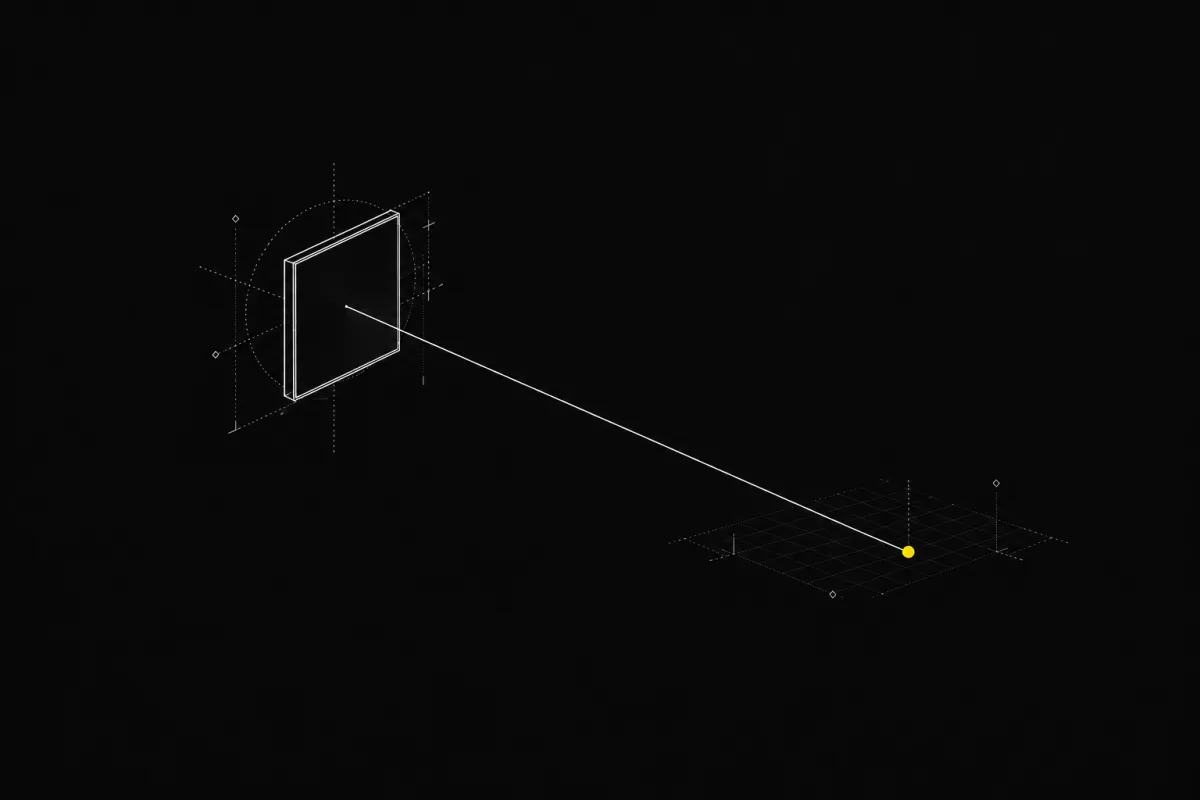
A few hundred kilometres up, the sun is still visible when the ground below is already in night. A flat mirror catches its rays and, tilted the right way, sends them down. The result is a patch of light on the surface. Its size depends on the orbit’s height: for a single mirror it is about five kilometres across.
The patch moves with the satellite, so one mirror lights a spot for only a few minutes. To keep the light on longer, you need many satellites taking turns. The company’s first spacecraft, Eärendil-1, will unfold a mirror 18 by 18 metres, about the size of two volleyball courts. Working mirrors are meant to be 54 by 54 metres: nine of those, or roughly 18 volleyball courts. In total, Time reports , the company hopes to have around 50,000 satellites up by 2035.
?Has anyone done this before?
Yes, almost 34 years ago. On February 4, 1993, the Russian cargo ship Progress M-15 pulled away from the Mir station and unfurled Znamya 2, a 20-metre mirror . A spot of light about five kilometres wide swept across night-time Europe from southern France to Belarus. Clouds covered much of the continent, but meteorologists in the Alps, above the cloud layer, caught the flash. They judged it roughly as bright as a full moon. A follow-up in 1999 failed when the Znamya 2.5 mirror snagged on the ship’s antenna. Znamya 3 never got off the ground: the project was cancelled.
A dot as bright as the sun
?How bright would it be?
The spotlights at the rehearsal gave a light a tick brighter than a full moon. A real mirror promises more. Bakos and his co-authors calculated how a single 54-by-54-metre working mirror would look. To someone standing in its beam, it would appear about 40 times brighter than the full moon . The ground underfoot would be that many times brighter too. The company disputes this estimate.
Yet the real difference from the moon is not the amount of light. The moon hangs in the sky as a wide, dim disc. A flat mirror reflects the sun itself and looks like a tiny dot. Put simply, a person in the patch sees a small piece of the solar disc, as bright as the sun’s surface. Stars inside the patch would vanish, and the sky glow, Bakos says, “will be worse than big cities like London”.
?Who could get hurt?
Amateur astronomers first. A telescope gathers light and magnifies the image, so pointing one at such a dot is close to pointing it at the sun. The American Astronomical Society warned the regulator about possible eye damage, and about pilots and drivers being briefly flash-blinded. The society argued that the satellite is designed to be as bright as possible, which makes protecting scientific observations extremely hard.
Biologists and dark-sky advocates point out that light at night disrupts the internal clocks of people and animals. And the glow would not stay inside the patch, because air scatters light. In the model by Bakos and his co-authors, for a clear night, even 14 km from the patch most of the sky would be brighter than under a full moon, and even 34 km away the sky toward the patch would still outshine a full-moon night.
The sky is not its department
?Who approved the launch?
The US Federal Communications Commission, which decided that the night sky is not its business. On July 9, 2026, the FCC authorised the construction, launch and operation of Eärendil-1 . It allocates spectrum, so spectrum is mainly what it checked: how the satellite will communicate with Earth and how it will be taken out of orbit so it does not become space debris. The light the satellite is being launched to deliver, and the harm to astronomy, it placed outside its remit.
The application drew more than 1,800 public comments, many of them opposed. On August 6, environmental groups including Earthjustice and DarkSky International asked the commission to overturn its decision. That request is still pending.
?What does the company promise?
Reflect Orbital says it will not light protected natural areas or places set aside for astronomy. Customers, a company spokesperson says, will need permits, sign-off from local authorities and identity checks of the kind banks run. Those answers are quoted by astrophysicist Richard de Grijs , who asks who should get to decide such things at all.
The promises cover the patch, but the physics spills past its edges. A customer buys a circle about five kilometres wide, while the sky, by astronomers’ calculations, brightens for tens of kilometres around it. De Grijs makes the same point: reflected light falls on an area that may be much larger than the one the customer has paid for.
Waiting for a ride
?When will the mirror reach space?
Eärendil-1 is due to fly as a rideshare payload on a SpaceX rocket before the end of 2026, but there is no firm date yet. The original target was April. Reflect Orbital plans to use it to test the technology itself and its safeguards. Thousands more satellites after it remain, for now, a plan.
The licence answered questions about radio and debris. The main question is still hanging in the air. On the night of the rehearsal, Cayden Thompson had to drive out into the desert himself to find out where the light was coming from. Whose consent should it take to switch off the night over his town: the one who pays for the patch, the county authorities, or everyone who planned to look at the stars that night?