// Contents
Twenty-five kilograms on Earth, about 13 grams on Phobos. That is what the rover Idefix, a box about the size of a microwave oven, will weigh once it is dropped onto the larger moon of Mars, where gravity is roughly 2,000 times weaker than on Earth. Thirteen grams is a couple of coins in your palm. On Earth, that is what a letter in an envelope weighs.
The rover is riding to Phobos aboard MMX, a Japanese probe that lifted off on an H3 rocket from the Tanegashima Space Center at 04:41 Tokyo time on October 20, 2026. If it works, MMX will be the first spacecraft to circle alongside Phobos, scoop up its soil and come home from the Mars system. Yasuhiro Kawakatsu, who manages the project at the Japanese space agency JAXA, sums up the problem with a single image: landing on Phobos is like trying to land a balloon. Try dropping a balloon on the floor without it tilting or bouncing.
Spacecraft have set down on Mars several times, and there the enemy is speed: you need parachutes, engines and airbags to shed it. Phobos flips the problem. A hard crash is nearly impossible. Bouncing off and never coming back is easy. Japan learned this firsthand: in 2005, one of its robots did exactly that.
How to lose a robot right next to an asteroid
On November 12, 2005, the Japanese probe Hayabusa released MINERVA, a tiny robot of about 600 grams, toward the asteroid Itokawa. It was supposed to drift down to the surface and hop around in the weak gravity.
It never arrived. Hayabusa’s altitude-hold system had slipped. At the moment of release the probe was climbing faster than Itokawa’s escape velocity, so the robot went out higher than planned, just as its mother ship was pulling away. MINERVA inherited that speed and sailed past Itokawa. Its cameras worked perfectly: as it drifted off for good, MINERVA photographed the mother ship’s solar panels.
The lesson was simple. When weight is measured in grams, a few extra centimeters per second decide whether a spacecraft lands or becomes a new satellite of the Sun.
A moon you can’t simply circle
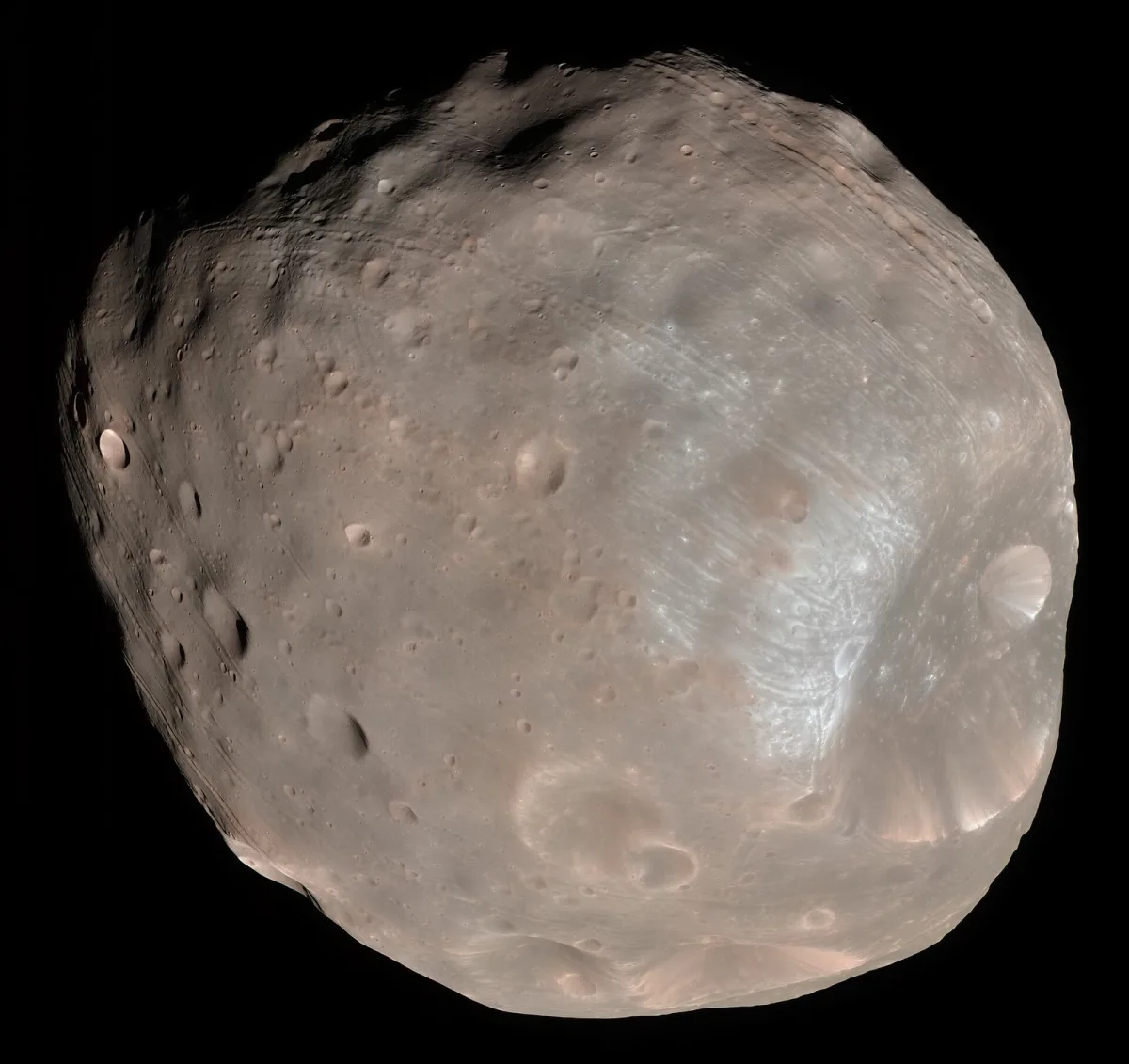
First, MMX has to get to Phobos and stay close. The moon is a lumpy potato measuring 27 by 22 by 18 kilometers, and it sits so low over Mars that it circles the planet three times a day. Its own gravity is so feeble that an ordinary orbit around it is impossible: up close, Mars pulls far harder.
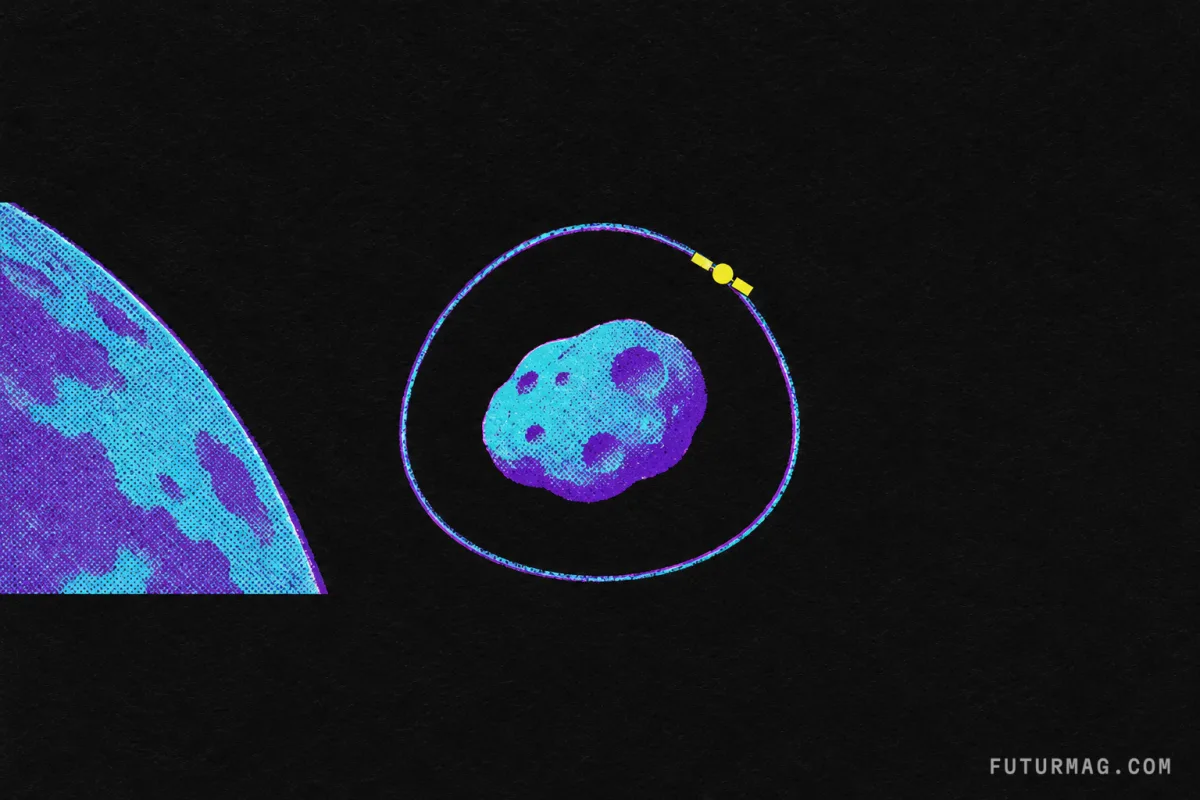
So MMX will fly an unusual path that engineers call a quasi-satellite orbit. That is what “orbiting Phobos” really means here. Picture two runners on neighboring lanes of a track, one lane slightly more oval than the other. The runner on the oval lane keeps pulling ahead and falling back. Seen from the next lane, they appear to be running circles around their neighbor. The probe does the same: it goes around Mars right beside Phobos on a slightly stretched loop, so it appears to circle the moon at a distance of anywhere from 200 kilometers to less than 20. Getting onto that loop takes three braking burns in a row at Mars.
The margin for error is slim. Nicola Baresi, an astrodynamicist at the University of Surrey, warns that if something doesn’t go to plan, MMX will fly past Mars and get flung out into the solar system.
The probe will spend about two years photographing Phobos and mapping it with a laser altimeter to choose a landing site. There is no rush. The moon isn’t going anywhere, at least not for the next 50 million years or so, when it will either crash into Mars or break up into a ring.
No legs, no airbags
France’s space agency CNES and the German Aerospace Center, DLR, built Idefix. The probe will release it in 2028 or early 2029, during a pass 40 to 100 meters above the surface. The rover has no landing legs and no inflatable airbags, just extra padding on its solar panels. It should touch down at less than one meter per second, slower than a person walks.
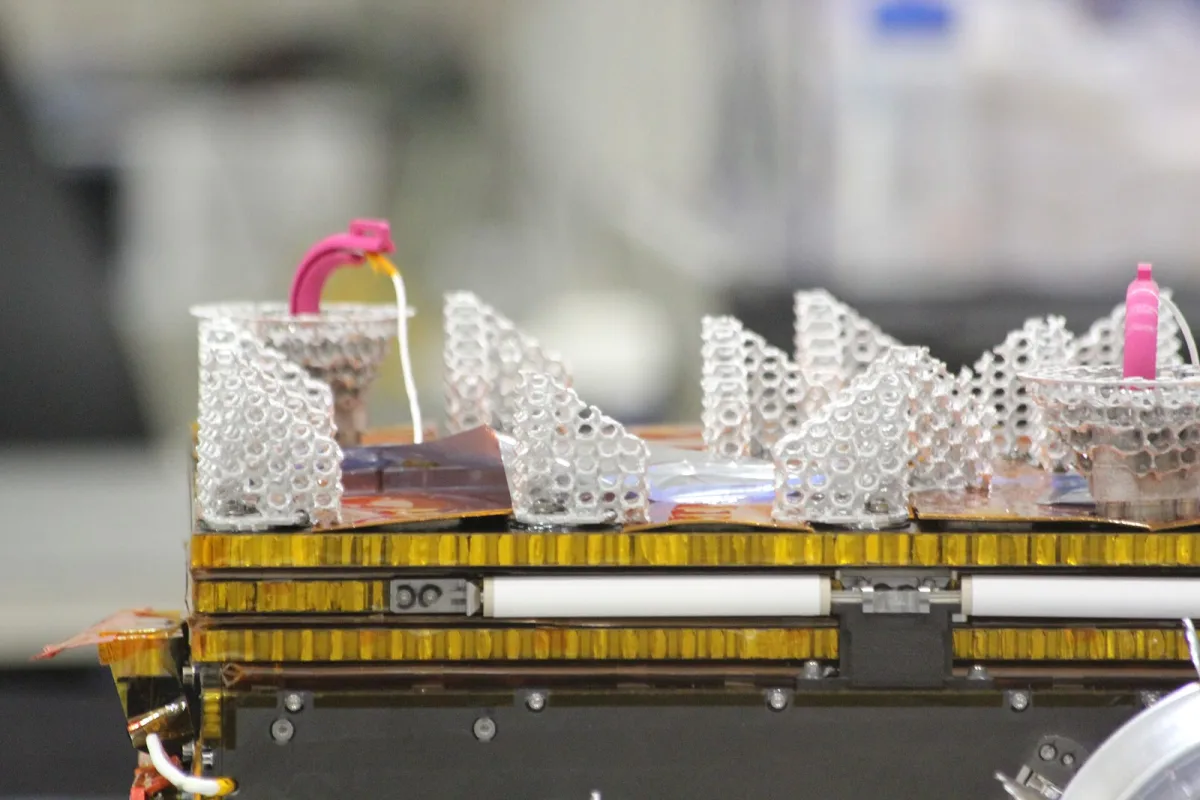
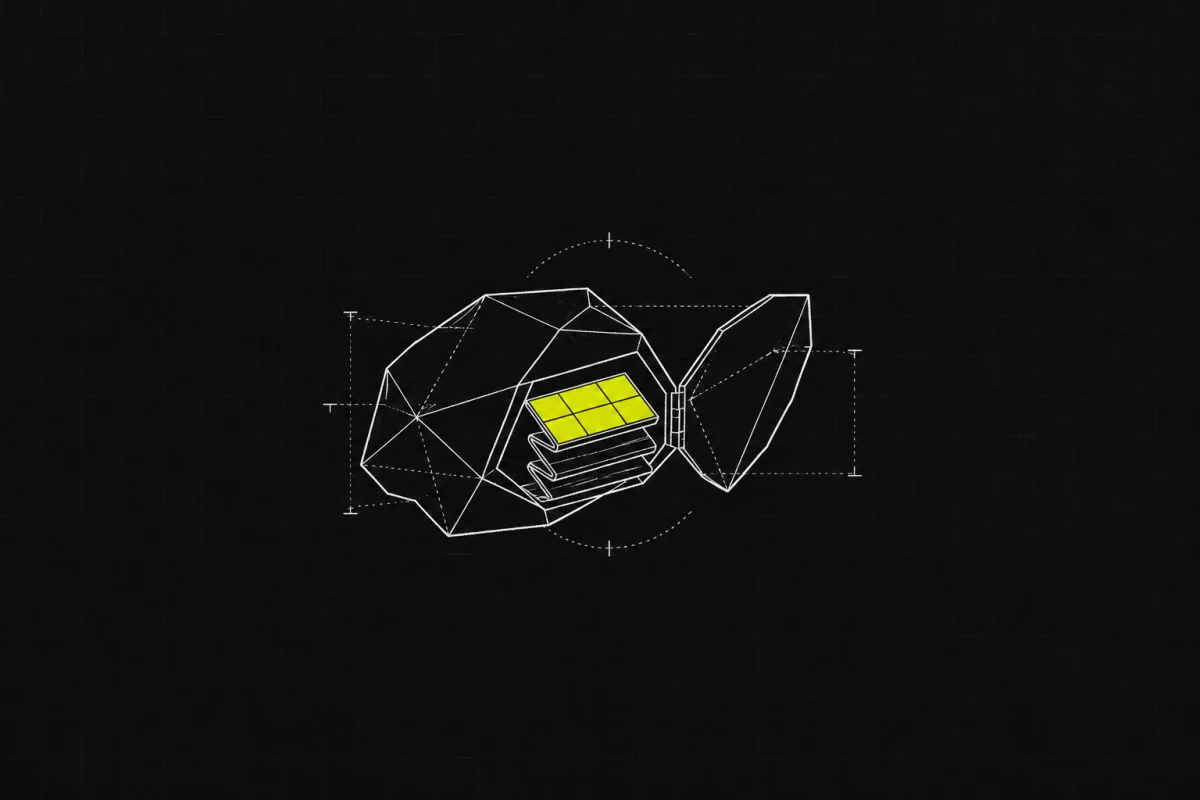
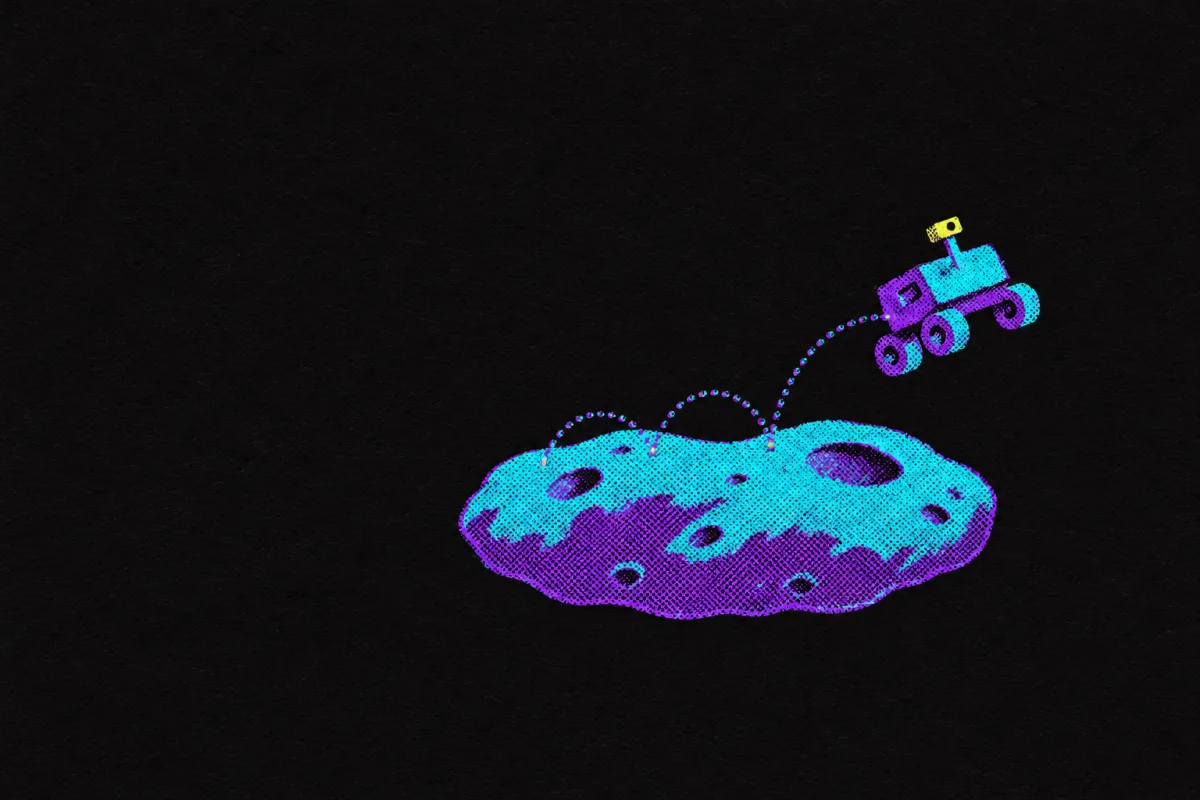
After that, it will tumble. “It will bounce probably several times,” says Stephan Ulamec of DLR, one of the two scientists leading Idefix. “It will come to rest somehow in some position.” Nobody can predict how it will land: that depends on the very soil properties the mission is going to measure. So the rover can right itself: four folded legs flip it onto its wheels from any position, then its solar panels unfold and start charging.
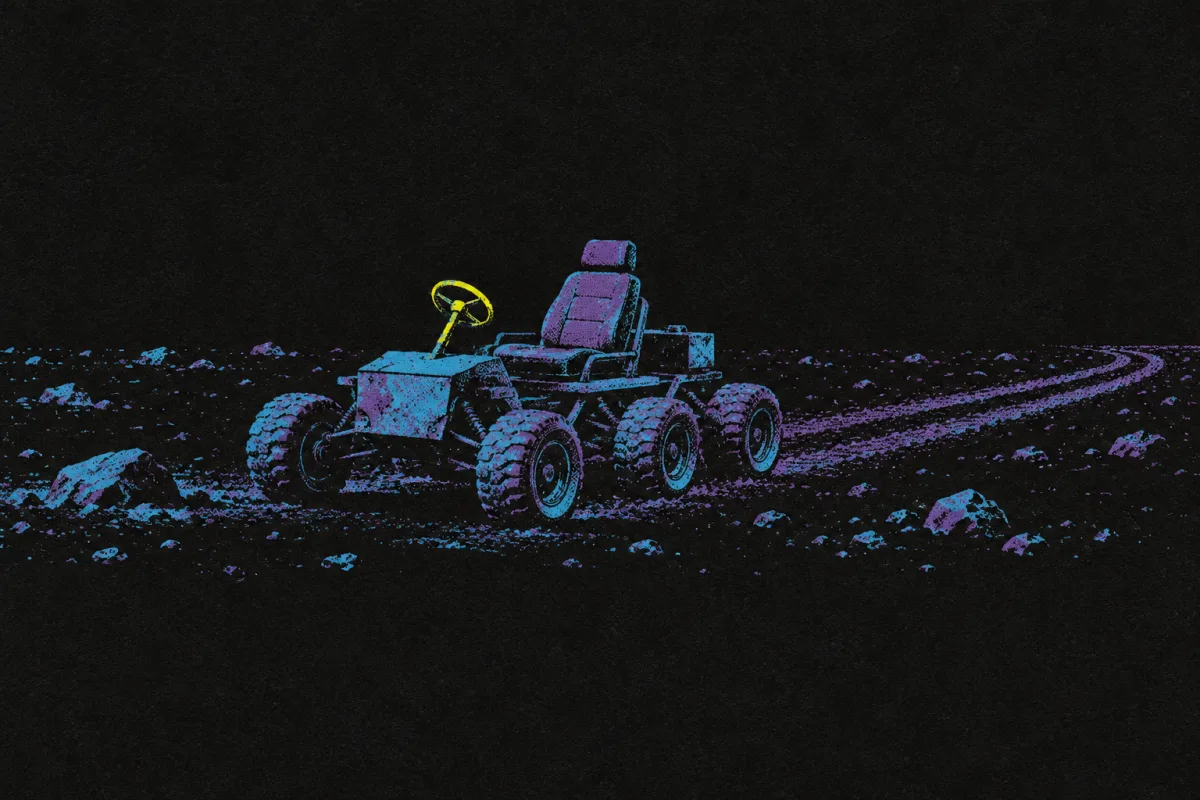
Idefix will drive at less than a centimeter per second. The DLR mission page spells out why: go faster and the rover risks “taking off.” Two cameras on its belly watch the wheels, recording how deep the tracks are and how the loose soil shifts.
Researchers in Toulouse are already working out what those cameras will see. Cecily Sunday, a doctoral student at ISAE-Supaéro, and her colleagues have rolled Idefix’s wheels over simulated Phobos and lunar soil, glass beads, quartz sand and clay pebbles. She reaches for a sandcastle. “Think of trying to build a sandcastle with dry sand,” she says. “Add water, and suddenly you can.” On Phobos the grains are barely pressed together, like dry sand. Drive faster, she says, and it becomes more like swimming through the soil than driving across it.
Ten meters of free fall
The hardest job belongs to the main probe. The lander will descend under control to about 10 meters above the surface and then simply drop. With gravity at 1/1,800 of Earth’s, the fall takes about a minute, and the lander meets the ground at roughly 30 centimeters per second, about the speed at which you set a mug down on a table. The danger is the same one the rover faces: even a small sideways drift could tip it over or bounce it back up.
If it lands upright on all four legs, it gets up to two hours. In that time a robotic arm with a Japanese corer has to pull a sample from at least two centimeters down. If the ground is too hard, one of the legs carries a backup: a NASA “vacuum” that blows nitrogen into the surface and catches the grains it kicks up.
Nobody involved is overconfident. Kawakatsu admits the corer may struggle if Phobos turns out to be very hard. Patrick Michel of the French research agency CNRS, the other scientist leading Idefix, calls MMX the most complex mission he has ever seen.
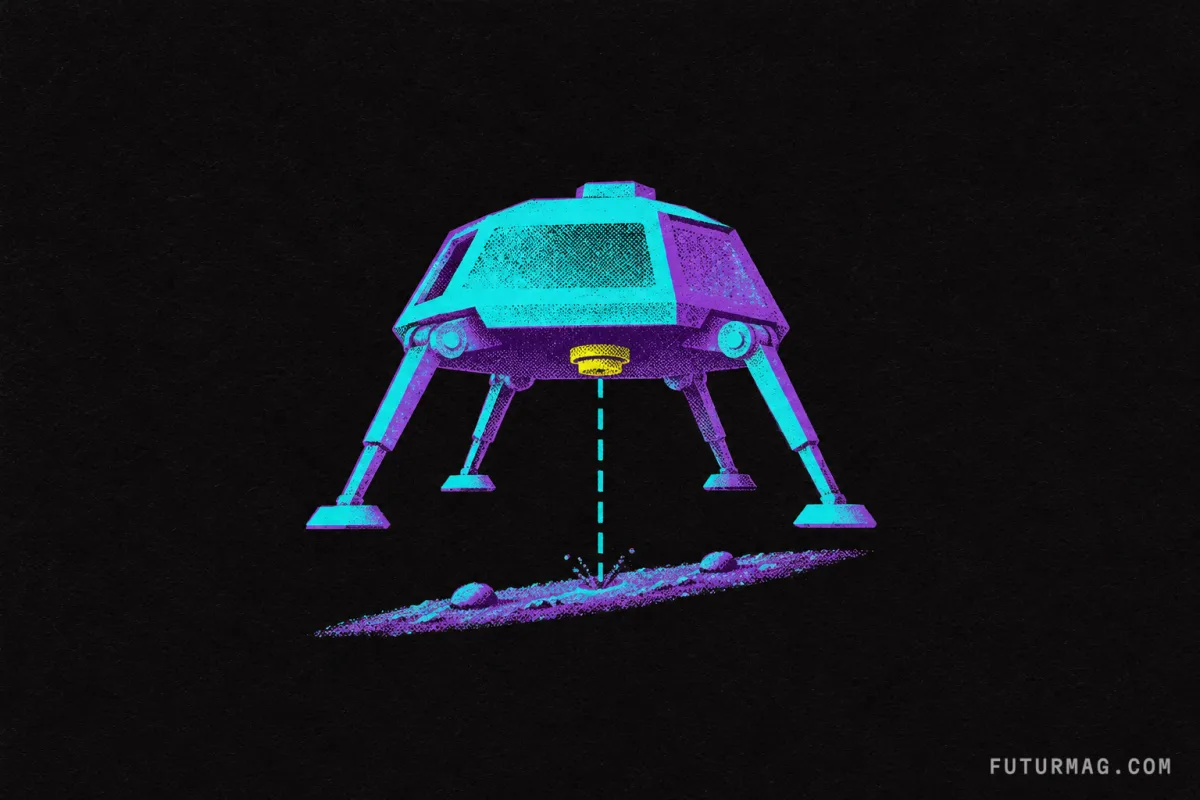
The goal is at least 10 grams of material, less than a tablespoon of salt. To bring back that spoonful, the probe will spend about five years on the round trip.
Martian grains, shipped from Phobos
Those grams may include visitors. Asteroid impacts have blasted material off the surface of Mars, and some of it settled on Phobos. Michel estimates the sample could hold a few hundred grains from Mars. Their oxygen isotopes would set them apart from the local ones. One vial, two stories: the moon and the planet below it.
Those grains won’t need the quarantine reserved for possible Martian life. An expert panel concluded that any Martian microbes, if they ever existed, would not have survived the impact that blasted them off Mars and the harsh radiation on the way to Phobos. That ruling spared the mission an expensive, time-consuming protocol for handling the sample.
// Timeline
- The MINERVA robot misses the asteroid Itokawa and drifts into space
- MMX launches on an H3 rocket from Tanegashima
- Arrival at Mars and entry into the loop around Phobos
- The Idefix rover is dropped onto Phobos
- The return module separates and heads for Earth
- A 60 cm capsule hits the atmosphere at about 12 km/s and lands in Australia; the soil goes to JAXA’s ISAS institute in Sagamihara
On Earth, those 10 grams will weigh exactly 10 grams. The 25-kilogram rover that made the trip with them weighs about 13 on Phobos. Out there, the real danger is being light.