// Contents
“I am a bit concerned that the ‘clock’ is being run out on this game… at this pace, there may not be a Hubble to save.” Jared Isaacman, a billionaire and private astronaut, posted that on X in January 2024. He had offered to pay most of the cost of flying a SpaceX crew up to the telescope and pushing it higher. NASA said no.
On October 29, 2026, NASA itself asked companies how they would catch Hubble and lift it to at least 600 km (373 miles).
The agency is now run by the same Isaacman who warned there might soon be nothing left to save.
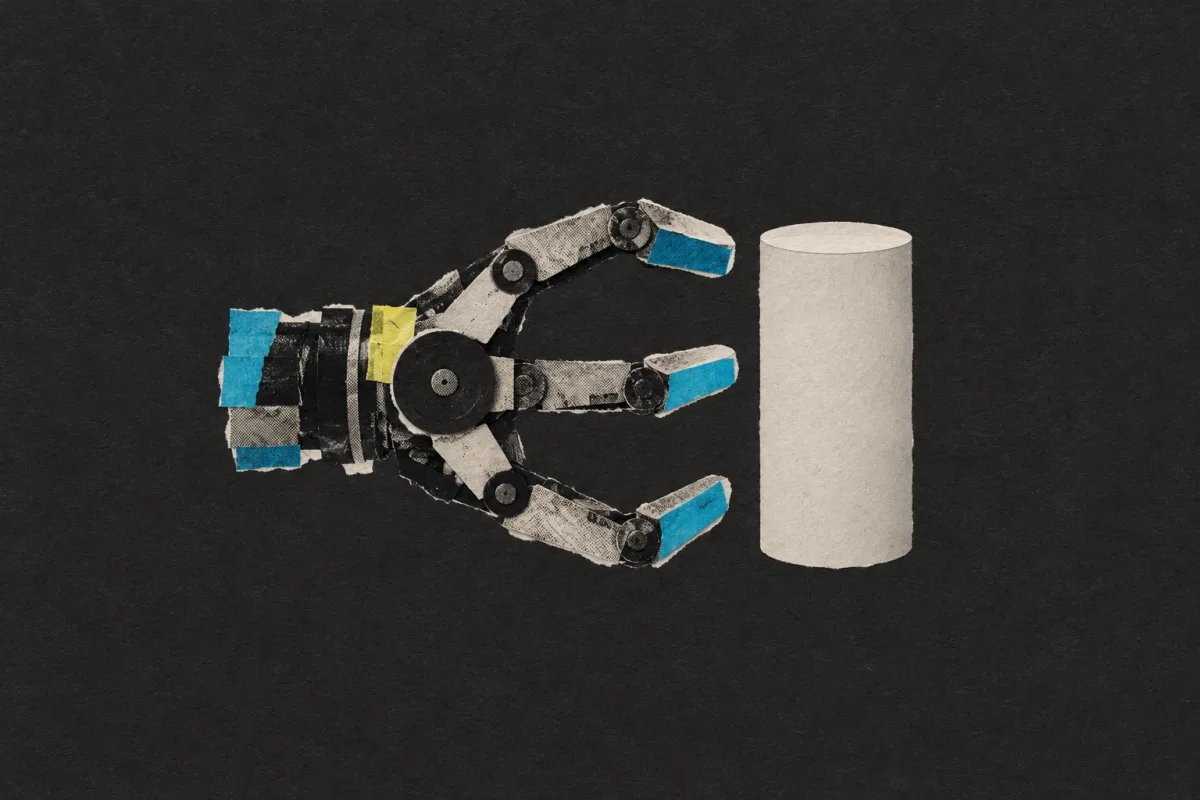
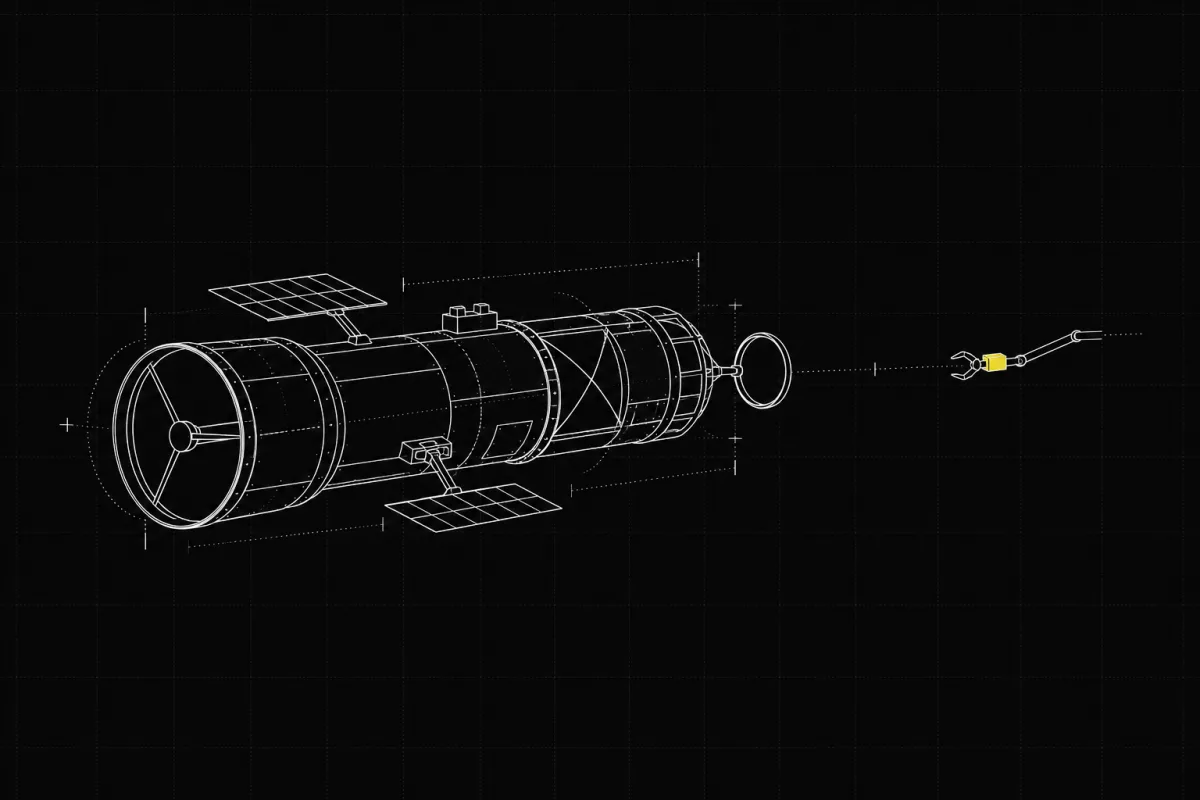
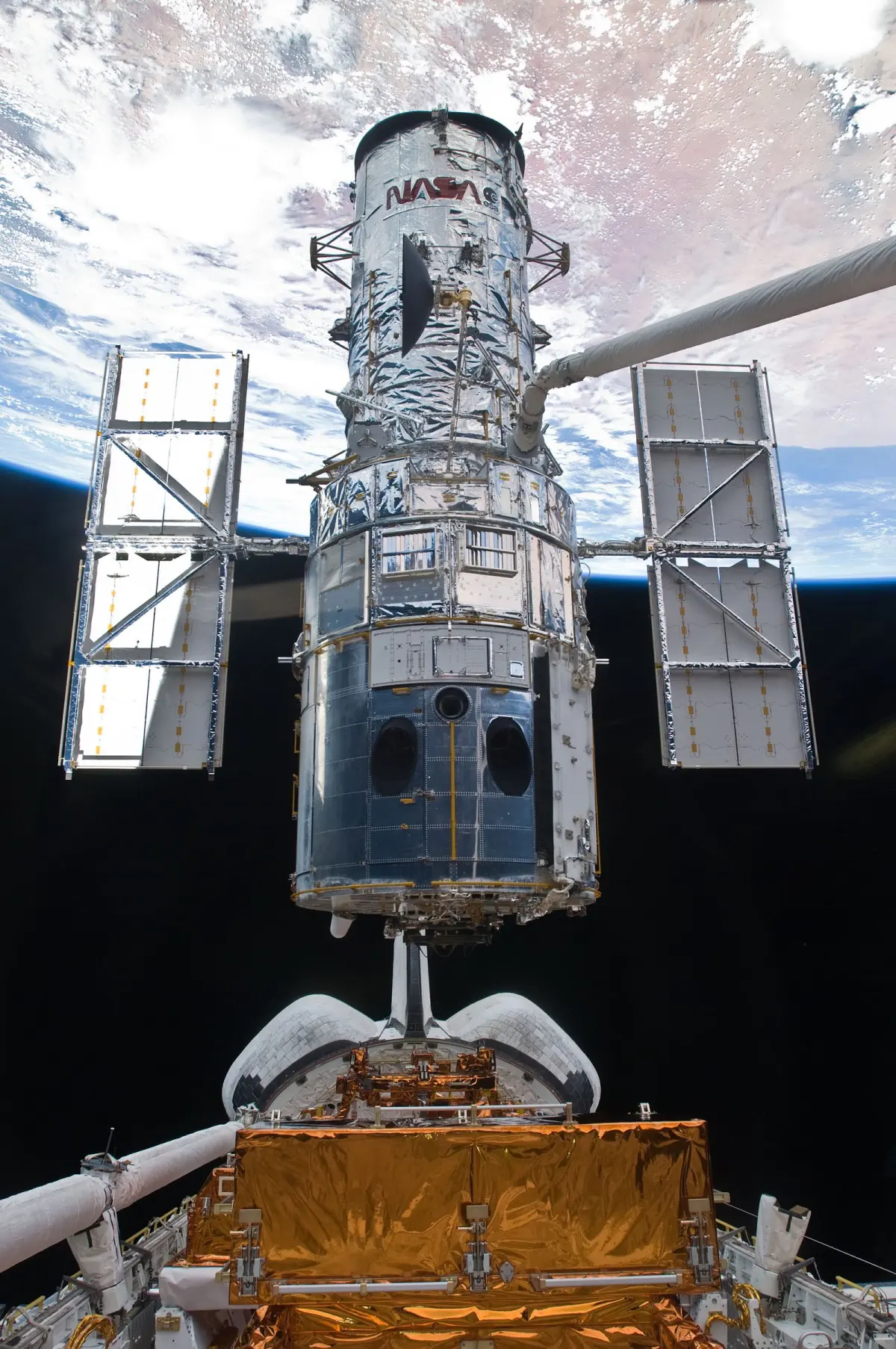
Since 2009, a ring has sat on Hubble’s back end. Astronauts put it there so that one day a robot could grab it and steer the retired telescope down into an empty stretch of ocean. Now the same handle may be what keeps Hubble flying for another 25 years.
A telescope that keeps sinking
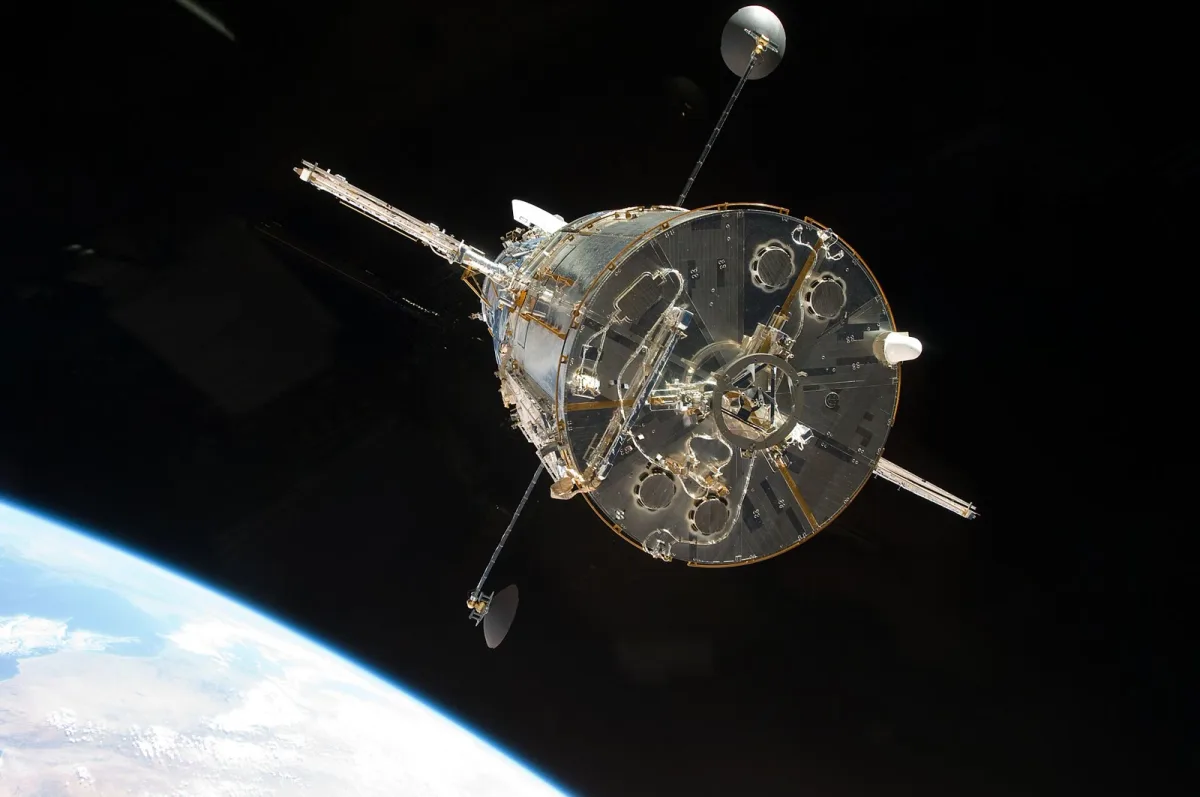
Hubble weighs about 12 metric tons and is as long as a large school bus. It has no engine. At its altitude the air is almost gone, but almost isn’t nothing: on every orbit the thin gas tugs at the telescope, and it sinks a little lower.
Hubble was flying at 583 km (362 miles) in 2002, the last time anyone raised it, when the Space Shuttle Columbia came to visit. It has since slipped 113 km (70 miles) and now flies about 470 km (292 miles) up. The last shuttle visit, in 2009, left the orbit where it was, and two years later the shuttles retired. Nothing was left that could give Hubble a push.
How fast it falls depends on the Sun. An active Sun heats the upper atmosphere, which swells and drags harder on anything in low orbit. In 2024 NASA expected Hubble to stay up until at least 2035. Now reentry is forecast for 2033 or 2034, so any rescue has to fly by 2032.
If Hubble falls, so does the universe most people picture when they think of space: glowing nebulae, colliding galaxies, deep fields packed with thousands of tiny spirals. Hubble mostly sees the same visible light our eyes do, but it collects 40,000 times more of it. As of March 2024, NASA counted more than 1.7 million observations and more than 23,000 scientific papers built on its data.
A boost to 600 km would likely keep Hubble in orbit for at least 25 more years, Ars Technica estimates. Nothing can stand in for it yet: Webb and the recently launched Roman telescope see in infrared. Hubble’s real successor in visible and ultraviolet light, the Habitable Worlds Observatory, won’t launch before the 2040s.
The gift NASA turned down
Isaacman brought his idea to NASA in 2022. A Crew Dragon crew would dock with Hubble, raise it by at least 50 km and perhaps attach a pod with fresh gyroscopes, and Isaacman would cover most of the bill. In September 2022 NASA and SpaceX agreed to a study at no cost to the government. The agency also invited other companies to pitch ideas and got eight responses.
Not everyone inside NASA liked the plan, as staff emails obtained by NPR through a public records request show. Dana Weigel, who manages the space station program, wrote that “SpaceX’s view of risks and willingness to accept risk is considerably different than NASA’s” and worried about “the extreme immaturity of the spacesuit.” Astronaut John Grunsfeld, who had installed that very ring on Hubble in 2009, raised a different question: “the need for reboost now versus later.”
To Isaacman the risk-versus-reward call was “a no brainer.” In June 2024 NASA passed. “After exploring the current commercial capabilities, we are not going to pursue a reboost right now,” said Mark Clampin, then head of the agency’s astrophysics division. He later called the Isaacman and SpaceX plans “really just notional concepts.”
So what changed in two years? The Sun sped up Hubble’s fall, and the expected reentry moved from 2035 at the earliest to 2033 or 2034. A failed rescue of another telescope, Swift, showed that such a mission costs tens of millions of dollars, not billions. And Isaacman himself now runs NASA.
A ring built for a funeral
In May 2009, on the fourth day of the last repair flight, Grunsfeld and Andrew Feustel were wrapping up the first spacewalk. Their last job that day was to fit the soft capture mechanism to the telescope’s back end. According to the European Space Agency, the ring is there to help bring Hubble down safely at the end of its life. Five days later Megan McArthur used Atlantis’s robotic arm to lift Hubble out of the cargo bay and let it go over Africa. “Hubble has been released, it’s safely back on its journey of exploration,” commander Scott Altman radioed Houston.
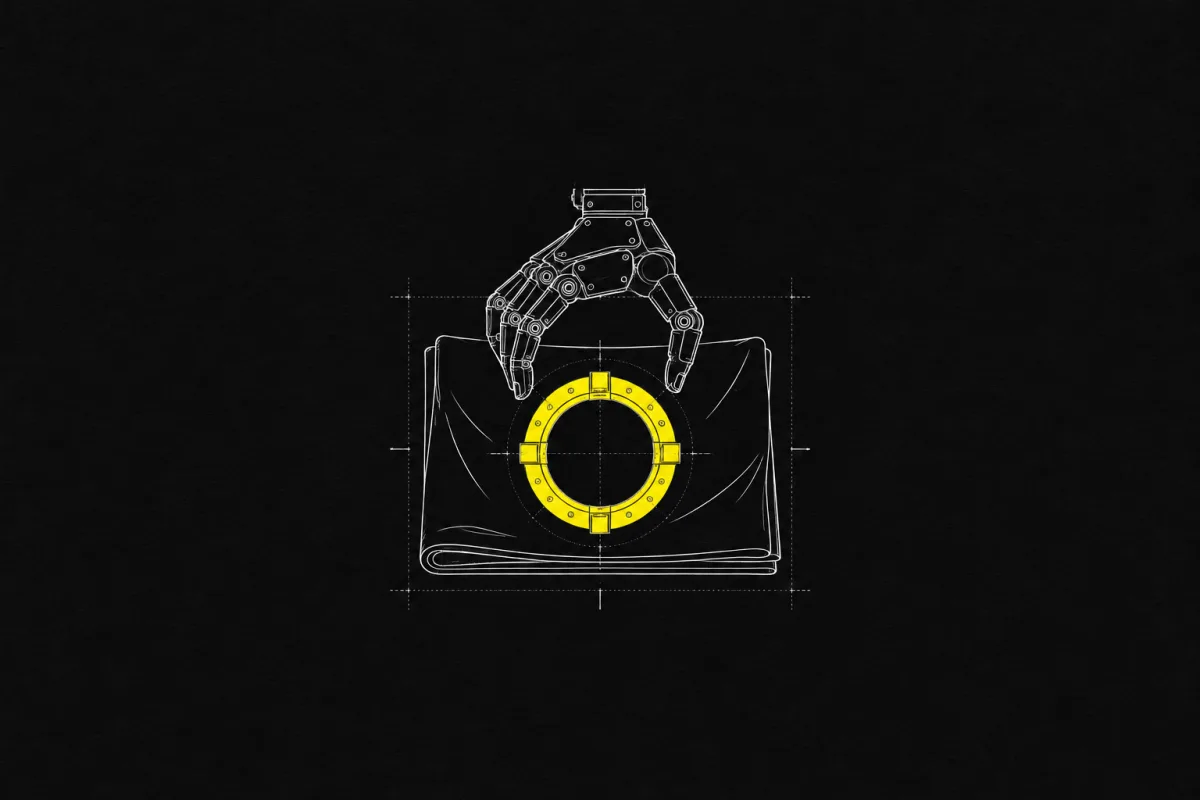
This year Swift showed how much a handle matters. The small telescope, a hunter of gamma-ray bursts, was also falling, and NASA paid a company called Katalyst $30 million to build a robotic tow truck in nine months. Swift had nothing to hold on to. As Katalyst’s chief, Ghonhee Lee, put it, it didn’t have “any interfaces or grapple fixtures or USB port you can plug into.” Before Swift launched in 2004, Lee recalled, nobody even took a picture of its back. Hubble’s back has a ring with targets on it.
The tow truck, LINK, launched in July 2026, but three weeks later a faulty valve sent it tumbling, and it burned through its fuel. It only ever got within 12 to 15 km of Swift: close enough for photos, too far to grab. On September 25 LINK burned up in the atmosphere ahead of the telescope it came to save, and on October 23 NASA ended the Swift mission. The full story is in a separate piece.
NASA took away more than disappointment. The failure showed that a rescue mission can cost tens of millions of dollars, while a canceled government satellite-servicing project had been expected to cost billions. Hubble, though, is worth far more than Swift, so the agency would like to give a contractor more than $30 million and more than nine months, Ars Technica reports. How much more, nobody knows: NASA has no money set aside for such a mission.
Who might come for the telescope
NASA’s request is short and strict. Companies can propose one of three things: raise Hubble to at least 600 km, repair and upgrade it, or guide it into a controlled reentry. The contractor brings the rocket, the servicing spacecraft, mission operations and “crew if applicable.” NASA spelled out the main condition: the mission must not harm the telescope and is expected to happen by 2032.
A repair job has an obvious target. Hubble needs gyroscopes to point precisely, and since June 2024 it has been steering with a single gyro, keeping one more healthy unit in reserve. Project manager Patrick Crouse put the odds of “operating at least one gyro through 2035” at better than 70 percent. A rescuer who wants to extend Hubble’s eyesight, not just its altitude, would have to bring gyros along.
Grunsfeld’s “later” has arrived, and the ship Isaacman wanted to fly will soon be gone: SpaceX plans to retire Crew Dragon by 2030, according to Ars Technica. Isaacman himself expects the request to “draw interest from robotics companies.” There are more of them every year: earlier in 2026, the same outlet reports, Northrop Grumman and DARPA, the Pentagon’s research agency, launched the world’s most sophisticated robotic servicing satellite.
The industry is still fragile, though. On November 3, 2026, NASA reported losing contact with the first Otter spacecraft built by Starfish Space, one of the companies with a contract for a servicing demonstration. Otter’s own fault-protection software is keeping its radio switched off by mistake, and NASA and Starfish have concluded the spacecraft can’t be recovered.
Six years for robots that don’t exist yet
// Timeline
- Last orbit boost.
- Last repair, ring fitted to the back end.
- Isaacman’s offer.
- NASA declines; Hubble switches to a single gyroscope.
- NASA asks companies for rescue plans.
- Deadline for responses.
- Latest date for a mission.
- Predicted reentry if nothing is done.
NASA isn’t promising to buy a mission. First it wants to know who could get there, what it would cost and whether anyone can make it by 2032. In that time someone has to build a spacecraft and, on its first attempt, catch a 12-ton telescope. There may not be a second.
In 2024 Isaacman worried that at this pace there might be no Hubble left to save. Now his own agency is the one watching the clock.
NASA is taking responses until 3 p.m. Eastern on November 30, 2026. Hubble is 36 years old, and the capture ring has been waiting on its back for 17 of them.