// Contents
In late September 2026, Montana game wardens spent two days on a single property north of Bozeman and ended up euthanizing 14 black bears . The animals had grown used to human food and lost their fear of people, a habit that experts say neither rehabilitation nor relocation can undo. Only a cub was spared. In a normal year the Bozeman area loses eight to ten “problem bears”. This time more than a year’s worth went in one go.
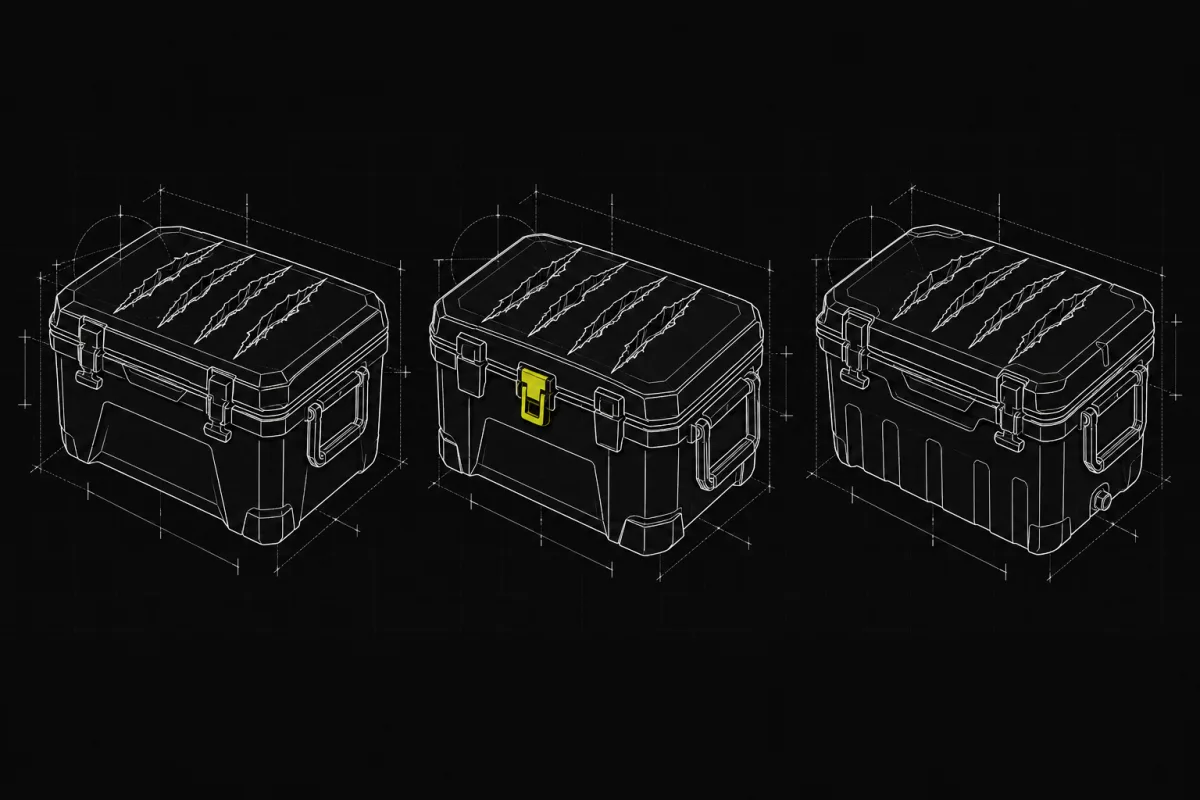
Further south, near the west entrance to Yellowstone, live bears that got luckier. They too were once written off as problem bears, and now they work as test engineers. Manufacturers bring in coolers, trash cans and camping canisters, a staff member stuffs them with treats and lets a grizzly loose. If the bear fails to reach the food in an hour of real effort, the product earns the right to be called bear-resistant. In the last two seasons the bears won more often: in 2024 only 9 products out of 30 held out, and in 2025, 22 out of 49. The clock counts only real work. While a grizzly is just playing with the box, the clock stands still, and a bored tester gets swapped for the next one. The most famous of them, Kobuk, known as the Destroyer, had a book dedicated to him in September 2026.
An orphan from a chicken farm
Kobuk was born in Alaska. His mother and brother were shot by a resident near the community of Delta Junction . According to journalist Alex Davies, the family had taken to raiding a rancher’s free-range chickens. The surviving cubs, Kobuk and his sister Nakina, went to the Grizzly & Wolf Discovery Center in West Yellowstone, Montana. Nakina has lived there since 1998.
Their wild life was over, and their working life began. Kobuk made his name finding the weak spots in “bear-resistant” locks, latches and walls. The 99% Invisible podcast called him a destroyer less of containers than of engineering egos. Alex Davies, a former Wired editor, named his book about test engineers after him; it came out on September 8, 2026. About six weeks later, on October 22, Science Friday ran an excerpt and a conversation with the author . According to the center , Kobuk died in 2017, so the book is about a legend.
The book is not really about bears. It is about the people whose job is to imagine how a thing will break, in anechoic chambers, Formula 1 wind tunnels and hangars where aircraft are tortured to failure. The grizzlies are simply the most vivid example of the trade.
A weight, a spike and a bear’s cunning
At first, people tried to replace bears with machines. The first bear-resistant storage units of the 1980s were heavy government-issue metal boxes with massive latches. In 1989 the Interagency Grizzly Bear Committee (IGBC) published minimum design standards and a testing method . The Forest Service’s technology center in Missoula built two rigs for them. One dropped a 100-pound weight from two feet onto the weakest side of a container. The other, a penetrometer, pushed a pointed rod into the wall with roughly 125 to 135 pounds of force to stand in for a grizzly’s canine or claw.
The rigs measured strength, not ingenuity. A weight and a spike, Davies explains, cannot account for the fact that a bear thinks. It does not press one spot with one force. It hunts for a gap, pries at the lid with a claw, jumps on the box with its full weight and a minute later tries from the other side. An ordinary store-bought plastic cooler failed both the penetrometer and its meeting with live grizzlies .
// Timeline
- The first bear-resistant storage: heavy metal boxes with latches
- The IGBC publishes container standards and a testing method
- Nakina, Kobuk’s sister, arrives at the West Yellowstone center
- Containers start being tested by live grizzlies
- Washington State University’s bear center joins the testing
- Alex Davies publishes “Kobuk the Destroyer”
An hour with its own rules
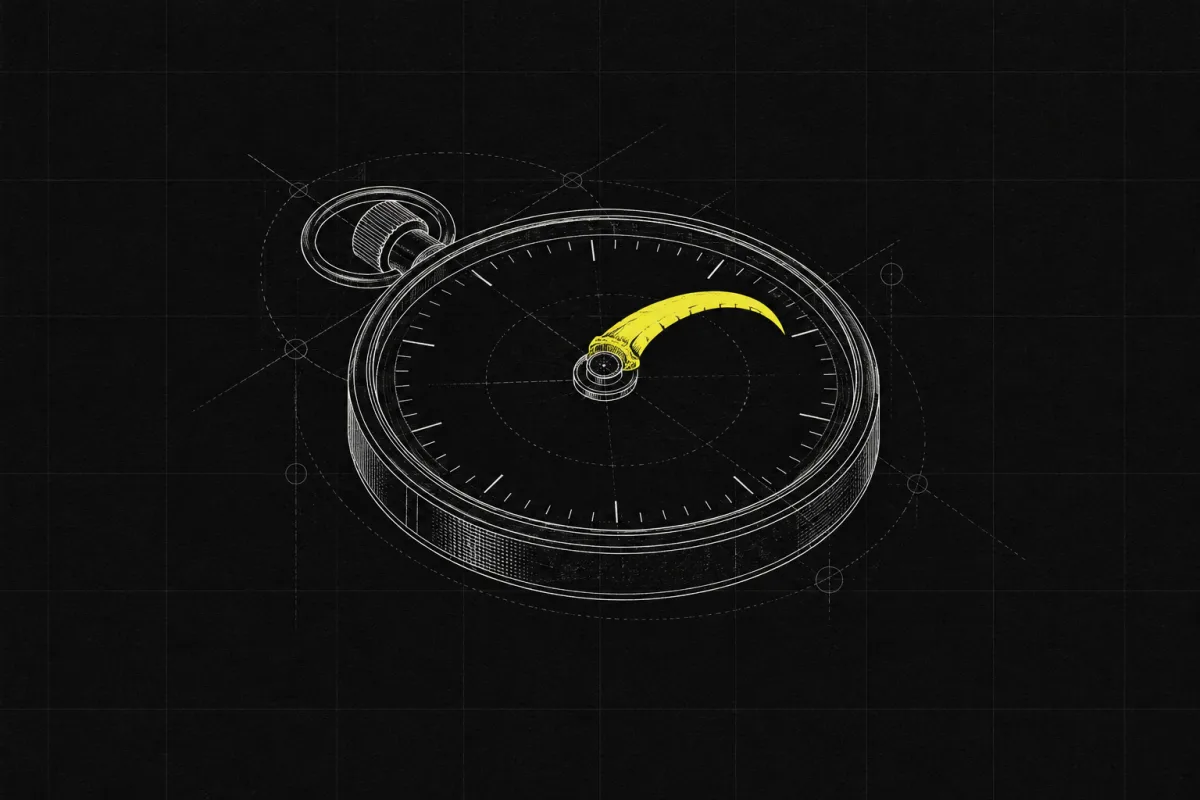
Since 2001, the committee has trusted the exam to bears rather than to a weight. A staff member inspects the latches, hinges and lid, loads the product with bait (fish, peanut butter, honey, dog food) and leaves it in the enclosure. The test runs until the bear breaks in or until it has logged 60 minutes of contact. Only real work counts: biting, clawing, pouncing. If a grizzly plays with a cooler in the pond , that time does not go on the clock.
Failure can come before the bear gets anywhere near the food. According to Davies, a cooler fails if the animal makes a hole or gap wider than a quarter inch, roughly the thickness of a pencil. A trash can is allowed a gap of up to an inch.
Testing runs from April 1 to September 30 , weather permitting. The manufacturer delivers the product, pays for the test and pays another $100 for video of its product being destroyed. Submissions for the 2026 season closed on September 17; the next round opens in March 2027.
A product that passes goes on the committee’s certified list. Even so, the IGBC warns plainly that certification does not mean a bear will never get in. And an unlocked bear-resistant cooler does not count as bear-resistant.
Nine out of ten lost
The early years were a rout. When testing first began, about 10% of products passed , recalls Randy Gravatt, who runs the testing at the center. Manufacturers, he says, had no idea how strong, how smart and how food-driven grizzlies are.
Engineers have learned a lot since then, yet the bears still have the upper hand. According to the committee’s 2025 report , only 30 to 50% of products pass on the first try.
// The score: bears versus engineers
Results swing from year to year. In 2024 the bears won 21 times out of 30 , and in 2025 27 times out of 49 . That makes sense: each season brings a different batch of products. A failed design can be modified and tested again , so plenty of rough prototypes end up in the enclosure. For engineers, the bears are a free and merciless quality-control department.
Even testers get bored
The method has a weakness no standard anticipates: bears get bored. In May 2023 the Bozeman Daily Chronicle reported that the West Yellowstone grizzlies were tiring of testing , and the committee had to find a second site. It became Washington State University’s bear center in Pullman, which has been testing containers since 2022.
In 2023, a 19-year-old grizzly named Luna spent an hour hammering at a cooler there. Her move looks a lot like CPR: she plants her front paws on the lid and pushes harder and harder until the plastic cracks. Chelsea Davis, who manages animal care at the center, calls “CPR” her favorite bear technique. While staff pulled the cooler out of the enclosure, Chelsea distracted Luna with a spoonful of frosting. She describes the general grizzly playbook as well. The first few minutes go to brute force, then the bear stops, studies the box and starts picking it up.
A university story from March 25, 2026 spells out the shift system. If one bear loses interest after five minutes, the clock stops and another takes over. Each has a specialty: one is good with coolers, another with canisters, and a younger one prefers to throw things. For the bears it is entertainment, a kind of puzzle, and staff say the tests are popular.
Back in West Yellowstone, the center sometimes performs for the public, too. In June 2026, tourists watched grizzlies wreck a demonstration campsite , eating food left out and stomping a tent into the ground. It is hard to think of a better lecture on why you put food away in the woods.
Curiosity sometimes works against the humans. In the summer of 2023, YouTuber Tom Scott was filming a test of a trash can smeared with peanut butter and honey in West Yellowstone when a grizzly carried off his action camera and dropped it in the pond. Hours later, a bear came back, fished it out and switched it on . Scott posted the footage to an open archive and credited it to “Grizzly bears”.
An opponent no rig can replace
For people who will never see a grizzly, the story is about something else. A machine tests what an engineer managed to imagine: an impact, a load, a drop. A live opponent tests what the engineer did not imagine. That is why the best tester wants to break the thing rather than confirm it is fine. Davies finds such testers everywhere, from labs that check pill bottles to the early days of aviation testing, which cost a great many chickens their lives.
For bears, the stakes are higher. An animal that once got a high-calorie meal for almost no effort goes looking for the next one, and the road from there leads to what happened outside Bozeman in September. Every trash can that held out against Luna or Kobuk takes one such lesson away from a wild bear. Just read the sticker on it carefully: it promises not that a bear will never open it, but that once, over an hour of contact, a bear did not.