// Contents
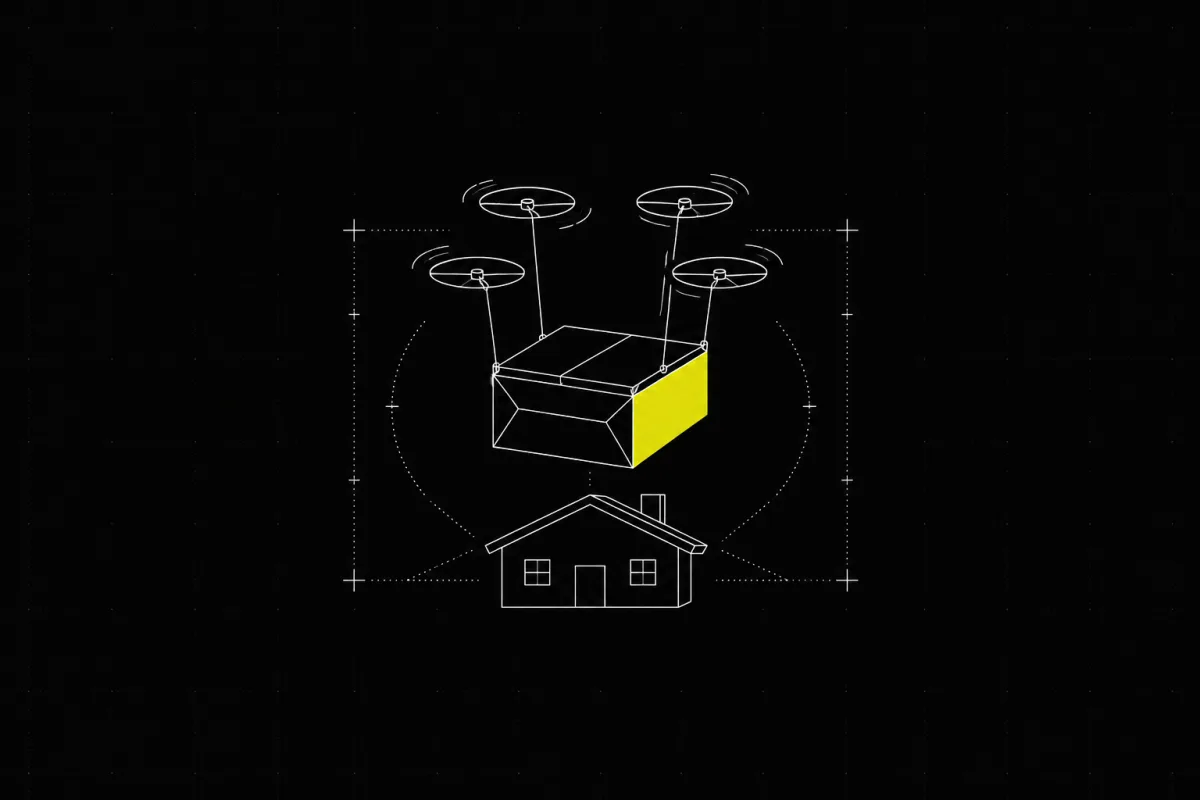
Forty-eight seconds. That was the gap between drones over Cristina Boone’s street in Baton Rouge, Louisiana, when she stood outside one Saturday morning between 9 and 10 and timed them. The drones were carrying Amazon orders from a warehouse a little over 3 kilometers (2 miles) away. What bothers people most, her partner Blake Fugler told IEEE Spectrum, is the high-pitched whine of the rotors, like someone running a weed whacker for hours.
By the math of the US Federal Aviation Administration (FAA), that noise is insignificant. Even with 500 deliveries a day passing over a single spot, out and back, it stays under the FAA’s threshold. The math is honest and by the book. The catch is the book itself: the formula averages sound over a full day, while a person hears every single pass. While drone delivery was a novelty in a couple of suburbs, almost no one minded the gap. Now Amazon, Wing and Zipline are moving into hundreds of towns, and the gap is already driving town-meeting votes and lawsuits.
The hawks left first
Amazon started flying its MK30 drones from a site outside Baton Rouge in August 2026. At first they flew high. Within weeks there were more of them, and they flew lower. Rick and Marcia LeCompte had spent years watching Cooper’s hawks perch in the sweetgum tree in their yard. Since early September the birds have been gone, and Marcia believes the drones scared them off. The couple has thought seriously about moving.
Noise wasn’t the only complaint. Drones flew over playgrounds, schools, even a cemetery. One made a forced landing in a highway median, and every one of them carries cameras. A city council member says that after the outcry Amazon rerouted 70% of its flights. Nobody said where to. IEEE Spectrum points out that drones aren’t allowed over highways, so the flights most likely moved over other residential streets. Marcia LeCompte was still seeing “two or three a day” over her house in late October. On one trip to the bank, she counted eight in 20 minutes.
How a whine becomes silence on paper
To open a drone site, Amazon needs FAA approval, and the FAA needs an environmental assessment first. The draft assessment for Baton Rouge came out in June 2026. It allows up to 1,000 deliveries a day, seven days a week, from 6 a.m. to 10:30 p.m., with about a hundred of them in the early and late hours. One detail is easy to miss: over the yard, the drone descends and drops the box from about four meters (13 feet), so Amazon only flies items that can survive the fall.
The loudest spot, of course, is the drone site itself. But the FAA also modeled the worst case for a neighborhood: half of all routes crossing one spot, or 500 deliveries a day. Out and back, that’s 1,000 real flights, roughly one a minute from morning to late evening. With the nighttime penalty, the calculation counts 1,900 “daytime” passes a day, and the total still stays under the 65-decibel DNL threshold.
The trick is in the word “average.” A drone pass lasts seconds, and the quiet between passes counts too. A thousand short whines get smeared across 24 hours into a calm number somewhere in the middle. The person on the porch never hears that number. They hear a whine, a pause, and another whine.
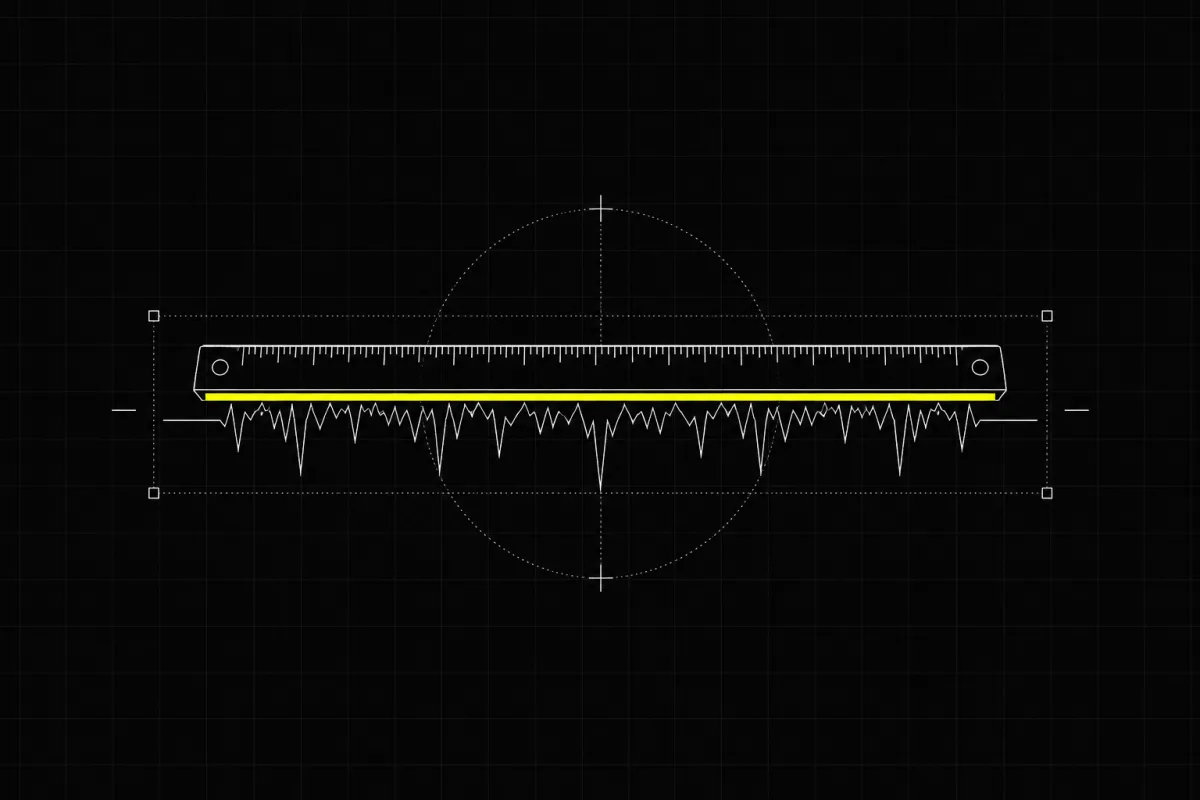
The 65 dB line itself dates back to research from the 1970s. By the old curve behind it, that much noise leaves about one neighbor in eight highly annoyed. In January 2021, the FAA published its own survey of more than 10,000 people living near 20 US airports. Six or seven in ten were highly annoyed at the same 65 dB. The line still stands: it is the very one Baton Rouge was measured against in 2026.
Where the 1,900 passes come from
Five hundred deliveries mean 1,000 flights, because each delivery is a trip out and a trip back. A tenth of them fall in the early and late hours, and under DNL rules each of those counts as ten daytime flights. That’s 900 daytime flights plus 100 night flights times ten: 1,900.
A sound nobody recognizes, and everybody hears
NASA began asking back in 2017 why drone noise grates more than its decibels suggest. Engineers Andrew Christian and Randolph Cabell recorded flyovers by several small drones and drive-bys of ordinary vehicles, from a compact car to a delivery van. Then they played the recordings to 38 volunteers in an acoustics lab and asked them to rate how annoying each sound was. At the same noise level, the drones were clearly more irritating, on average about as annoying as a vehicle 5 to 6 dB louder. Curiously, almost none of the volunteers realized they were listening to drones. So the reaction wasn’t a bias against “spy drones.” People just disliked the sound.
The volunteers explained what got to them. A sound that seemed to hang in place was more annoying than one that passed quickly, and knowing it would “be over soon” made it easier to bear. Hanging in place is exactly what a delivery drone does at your house: it descends, hovers, drops the package and climbs back up. The authors called their test preliminary, but they put the conclusion bluntly: it casts doubt on the hope that people will forgive drones their noise as long as they are “no louder than” ordinary delivery.
Amazon describes its drones differently. In a post about its delivery expansion, the company says that in flight they sound roughly like a window fan on low, and that a drop-off lasts about 30 seconds and is quieter than a delivery truck idling at the curb. For a single pass, that may well be true. For a pass every 48 seconds, or 75 an hour, as on Cristina Boone’s street, the window fan sounds less reassuring.
Canberra has been here before
In 2018, Wing, the drone company owned by Google’s parent Alphabet, began delivering coffee, burritos and medicine by drone in Bonython, a suburb of Canberra, Australia. Residents soon formed a group called Bonython Against Drones. They described the hovering drones as “an extremely loud, squealing vacuum cleaner” and said they could hear them inside closed, double-glazed houses. The group gathered more than 1,000 signatures to stop the trial, and the angriest neighbors threatened to shoot the drones down. By 2019 the trial was over. Wing said it had only ever been planned to last a year.
Still, Wing took the lesson. It slowed its drones, changed their flight paths and fitted a new propeller that is quieter and lower in pitch. It now holds meetings and demonstrations for residents before launching in a new area. Instead of a few fixed “drone highways,” it uses a web of routes: each order flies its own shortest path, so the noise doesn’t pile up over one street. Wing rates a flyover at 43 dBA, quieter than everyday neighborhood sounds. But that figure is an average too: the “Leq” next to it means a level averaged over time, the FAA’s trick on a smaller scale. The company doesn’t say how far away or over what interval it took the measurement.
David Ison works for the Washington State Department of Transportation and writes the state’s guidelines on where drone hubs can go. He warns against treating all drones as one thing. The MK30 weighs almost 36 kilograms (80 pounds) and comes down close to the yard. Wing’s largest drone weighs under 11 kilograms (25 pounds), payload included. Wing stays higher up and, like Zipline, lowers packages on a tether. Companies assumed people would welcome faster delivery, Ison says, and talking to the public became an afterthought.
The sky is federal, the yard is local
In the US, airspace is federal, and a town can’t ban drones from flying overhead. What a town does control is the ground beneath them. In October 2026, residents of Westborough, Massachusetts, voted 510 to 13 for a bylaw covering everything that happens on the ground: commercial drone staging, takeoffs, landings, loading and drop zones. Each violation carries a $300 fine. The trigger was Amazon’s plan for a drone delivery center at its local warehouse, with the same target of up to 1,000 deliveries a day. The bylaw still needs approval from the state attorney general.
States are aiming higher. On September 28, 2026, 15 states and Harris County, Texas, sued the FAA. They are challenging a nationwide environmental finding from July 28 that lets the FAA approve drone delivery in new markets without a separate assessment for each one. Under that finding, documents like the Baton Rouge draft could simply stop being written. The plaintiffs didn’t ask for a pause while the case runs, so new markets keep getting approved.
US law has never settled who owns the sky directly above a private roof. Ison expects the courts to decide.
A million deliveries a day
The plans are growing faster than the disputes get resolved. According to IEEE Spectrum, Amazon now delivers by drone in about 85 US municipalities and promises nearly 500 by the end of 2026, a sixfold jump in a couple of months. Wing is counting on 270 US hubs by the end of 2027. Uber and Zipline are aiming for a million drone deliveries a day by the end of 2029.
Ison notes that people accept the noise more easily when they can see what it’s for. “It’s a lot easier argument to make when you’re saying you’re delivering blood to an accident site than when you’re delivering a fidget toy,” he said. The drones over Cristina Boone’s street carry ordinary orders: the fidget toys. That difference is exactly what a 24-hour average can’t hear.