// Contents
California’s most famous light bulb is dimmer than a nightlight. It hangs from the ceiling of Fire Station 6 in Livermore and has been glowing since 1901. Guinness World Records lists it as the longest-burning light bulb in the world, and it has its own committee, website and webcam. In 2013 it went dark, and old age had nothing to do with it. The culprit was the backup power system installed to make sure it never would.
People love to hold it up as proof that things used to be built to last and are now built to fail. Half of that is true. In the 1920s, bulb makers really did agree that a bulb should not live past 1,000 hours, and fined each other when theirs burned longer. The Livermore bulb, though, is a poor witness. It has lasted this long because it barely shines.
A nightlight for volunteers
The Shelby Electric Company of Shelby, Ohio, made the bulb in the late 1890s to a design by the Frenchman Adolphe Chaillet. The glass is hand-blown, the filament is carbon, and it was rated at 60 watts. A 1912 hardware catalog priced a lamp like it at 40 cents, about $13 today. In 1901 Dennis Bernal, owner of the local Livermore Power and Light Co., gave it to the fire department. The volunteer firefighters used it as a nightlight.
For its first 75 years it ran on city power, so every time the line failed, the bulb went out along with the rest of Livermore. In 1976 it moved to Fire Station 6, and the bulb’s fans record that it made the trip under a full police and fire truck escort.
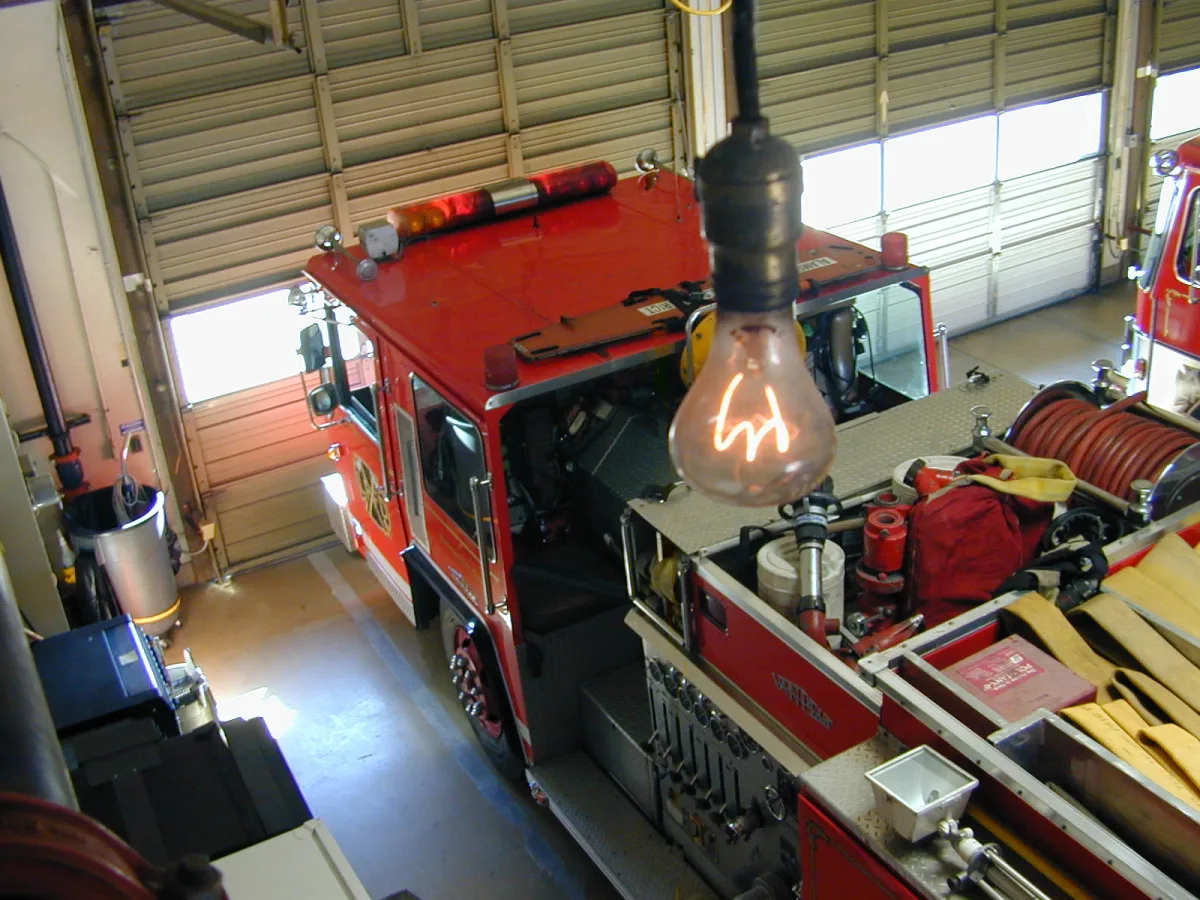
After the move it got its own power source, and in late 2001 an uninterruptible power supply, or UPS. The logic was simple: the town loses power, the relic keeps glowing.
Ironic, huh?
At 8:45 p.m. on May 20, 2013, people watching the webcam saw a dark frame. They assumed the bulb had finally burned out. The next morning, station captain Curtis Dickey and an electrician found the bulb was fine. The UPS itself had failed. Once they bypassed it, the bulb lit up again. It had been dark for at least 9 hours and 45 minutes.
We didn’t want the light to be out during a power failure. Ironic, huh?
That was how Tom Brammell, then the deputy fire chief, explained why the UPS had been installed in the first place. The episode also left a loose end nobody has tied up. By the committee’s account, the revived bulb shone at a full 60 watts for a few hours, then dimmed back to its usual 4. Why it did that, the committee admits, is “still a mystery.”
Fined for lasting too long
While the Livermore bulb kept the firefighters company, Europe’s lamp makers were deciding how long everyone else’s bulbs should live. On December 23, 1924, the heads of the largest manufacturers met in Geneva and founded the Phoebus cartel. Its members included Osram, Philips, Tungsram, Tokyo Electric and others; General Electric took part through its subsidiaries. The historian Markus Krajewski later pieced together how it worked from the archives.
The founding document was called the “Convention for the Development and Progress of the International Incandescent Electric Lamp Industry,” and it promised to increase the use of light “to the advantage of the consumer.” To that advantage, by early 1925 the standard life of an ordinary household bulb was set at 1,000 hours. Before that, 1,500 to 2,000 hours had been common, and by Krajewski’s account a good 1924 bulb could easily manage 2,500 or more. Every factory sent samples to a central lab in Switzerland. If its bulbs lasted longer or shorter than the rule allowed, the factory paid a fine.
// Hours and watts
The cartel’s paperwork reads like a log of small absurdities. Every member also had a sales quota, and selling past it brought a fine too. In 1927 Tokyo Electric did exactly what the cartel wanted: it shortened the life of its bulbs, and its sales jumped fivefold. For that success it faced a heavy penalty. The company complained, in its own stiff English, that such a penalty “must be a thing out of reason and shall quite discourage us.” Flashlights got the same treatment. A GE flashlight bulb used to outlast three sets of batteries, then two, and in 1932 the company’s engineers proposed cutting it to one.
The cartel didn’t last. Its sales fell by more than 20% between 1930 and 1933, GE’s key patents expired, and lawsuits piled up. World War II finished off the coordination. The agreement was meant to run until 1955; it was voided in 1940.

Why it still glows
Now the bad news for anyone who believes old things were simply made better. In an incandescent bulb, brightness and lifespan pull against each other. The hotter the filament, the brighter the light and the faster the filament boils away. By a standard rule of thumb, cutting the voltage by just 5% doubles a bulb’s life but makes it about 16% dimmer.
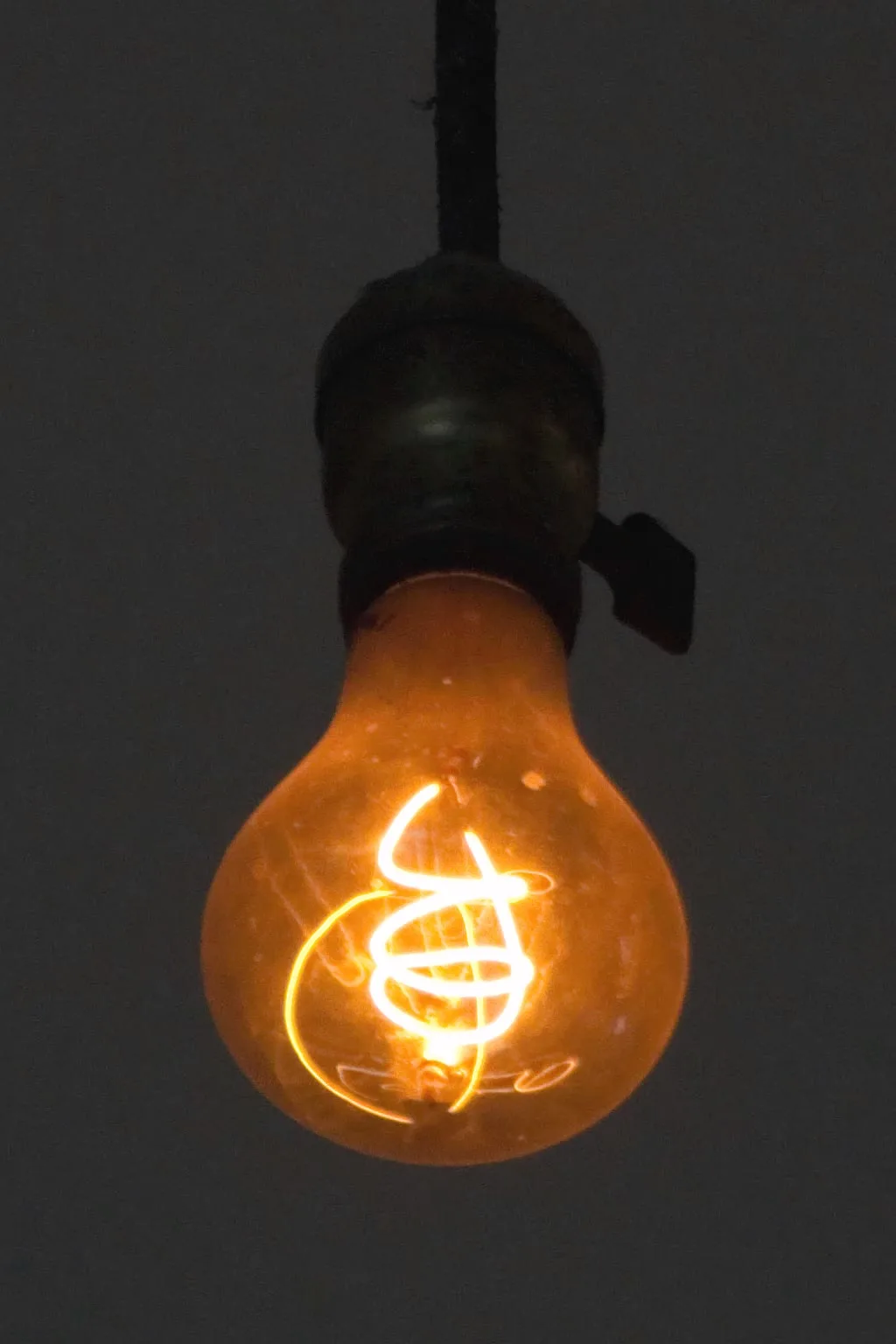
The Livermore bulb takes that trick to the extreme. It was built for 60 watts and now draws about 4, roughly the glow of a nightlight. Two more things help, according to Guinness. A carbon filament doesn’t wear out as easily as a tungsten one. And the bulb is almost never switched off, which spares it the stress of heating up and cooling down. Any incandescent bulb that rarely runs at full brightness and never gets turned off will live a long time.
That was exactly the cartel’s defense: short life was supposedly the price of brightness and efficiency. Krajewski doesn’t buy it. The engineers at Osram, Philips and GE, he argues, could have built a bulb that was both bright and long-lived. It just would have meant selling fewer of them. In 1949 a US court hearing the case against General Electric also accepted that a lamp’s life is “inextricably related” to its brightness, yet still concluded that the company’s main concern was profit.
A million hours and counting
On June 6, 2026, the bulb marked its 125th birthday with a celebration right there at the fire station. Brammell, now a retired deputy fire chief, has written a book about the bulb. He says that back then “they were manufacturing equipment to last,” and puts the total at more than 1.5 million hours. So even the man who knows the bulb best believes the very myth it disproves. The calendar is more modest: 125 years come to about 1.1 million hours, minus a few outages. Fans had already celebrated the millionth hour back in 2015. The city is eyeing a remodel of the station, and the bulb may move to the entrance.
The fire department has promised to keep the bulb for the rest of its life, however long that turns out to be. By the 1925 standard, the 125 years it has already burned would have used up more than a thousand ordinary bulbs in that one socket. But each of them would have shone at a full 60 watts. This one gets by on 4.