// Contents
BepiColombo took eight years to reach Mercury. Its thrusters cut out before they finished the braking maneuver. The spacecraft still made it into orbit on November 21, 2026.
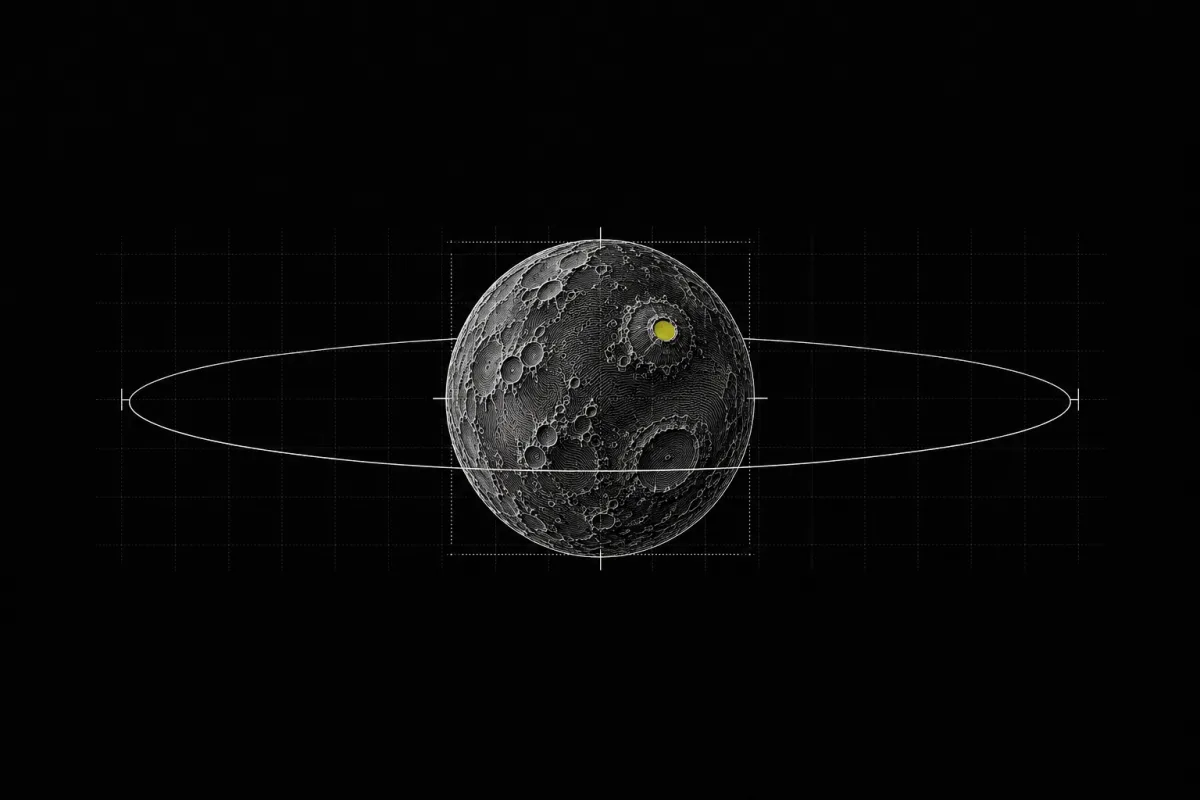
The thrusters had slowed BepiColombo by about 77% of the planned amount. That was enough for Mercury’s gravity to hold it. On its first stable orbit, one lap took 75 hours instead of the planned 58.
The call in Darmstadt
BepiColombo turned into position for the burn at 16:51 UTC. That temporarily cut contact with Earth, as mission control had expected. Controllers had already sent the commands, so the spacecraft could run through them on its own. Four thrusters fired at 18:24 UTC, with BepiColombo 635 kilometers above Mercury. They were supposed to run for 37 minutes.
An antenna in Western Australia run by the European Space Agency (ESA) eventually picked up the signal again. The spacecraft was in safe mode, a protective setting that shuts down nonessential operations after a fault. Its thrusters had stopped. Controllers used the incoming data to plot its path and see whether it had settled into orbit.
“We confirm Mercury orbit capture!” said flight dynamics manager Frank Budnik over the mission control audio channel in Darmstadt, Germany. It was about 1 a.m. local time.
Engineers traced the cutoff to the software that controlled the spacecraft’s orientation and thrusters. On November 26, 2026, the Japanese mission team confirmed that the fault lay in the software aboard Europe’s Mercury Planetary Orbiter (MPO). BepiColombo was healthy and orbiting higher than planned.
Six passes before Mercury let it stay
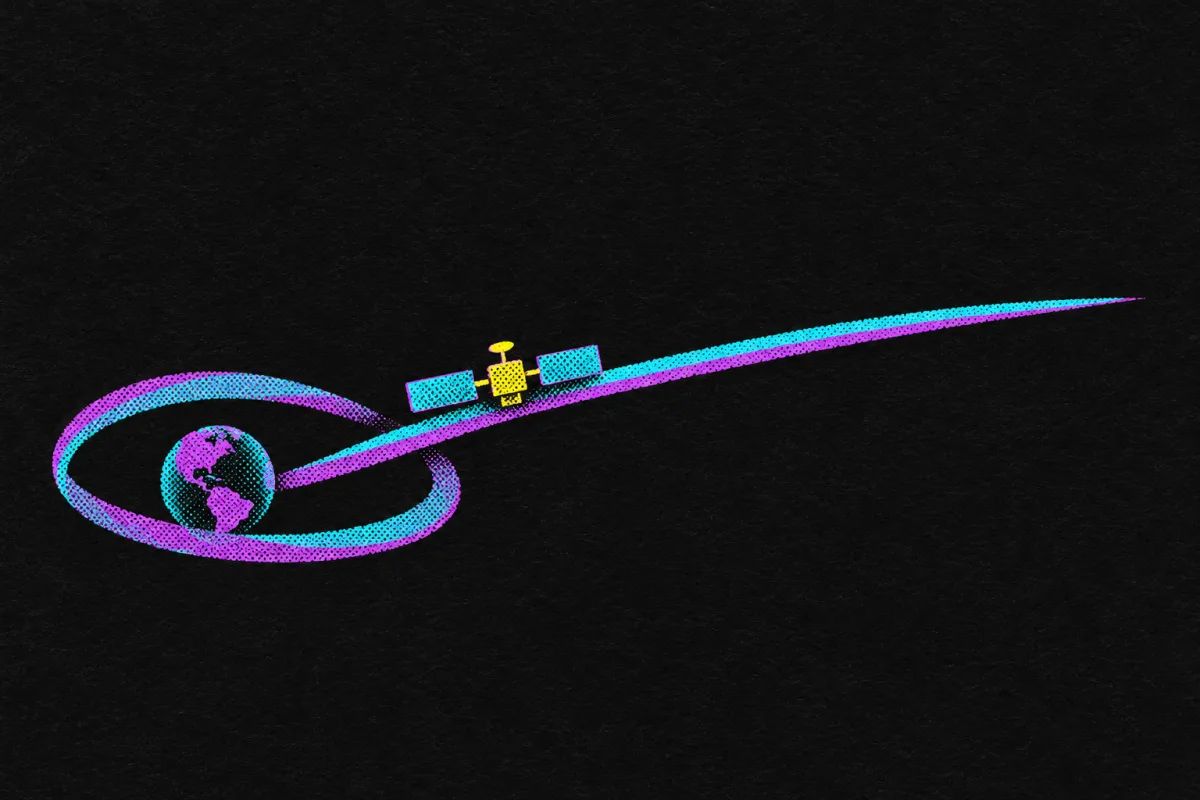
BepiColombo approached slowly enough relative to Mercury that the planet’s gravity could hold it for several laps. Mission planners call this weak gravitational capture. On that trajectory alone, the spacecraft would eventually drift away. Its thrusters fired long enough to turn that temporary capture into a lasting orbit. ESA says spacecraft had used this approach at Earth’s Moon before. BepiColombo was the first to use it to enter orbit around another planet.
Getting the speed right takes work. The Sun pulls a spacecraft inward and speeds it up along the way. Some of that extra speed comes in handy because Mercury itself moves quickly around the Sun. If the spacecraft is moving too fast relative to Mercury, the planet’s gravity will bend its path and the craft will fly right past. As BepiColombo approached Mercury, it needed to move at roughly the same speed and in the same direction as the planet.
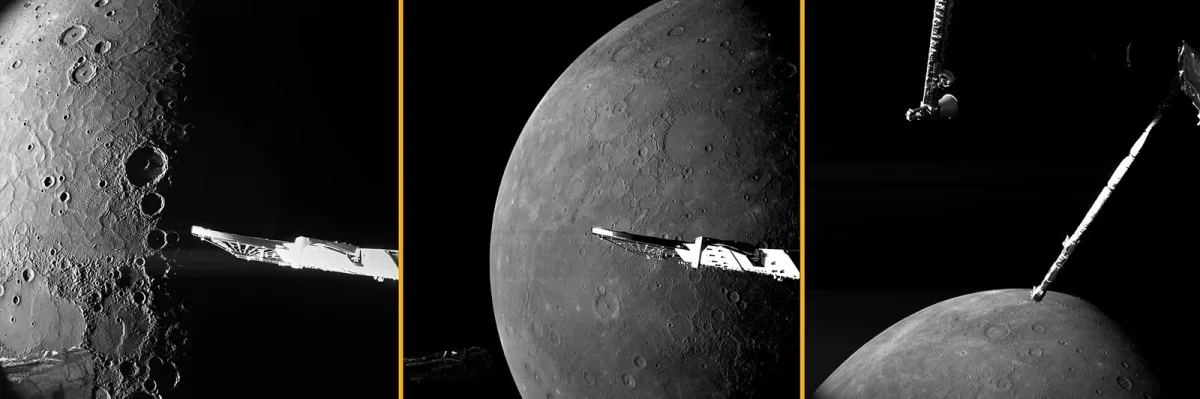
On its way, BepiColombo flew past Earth once, Venus twice and Mercury six times. At each flyby, the planet’s gravity changed the spacecraft’s path. Between flybys, the ion thrusters gave the spacecraft a gentle push for long stretches. Together, those maneuvers let BepiColombo reach Mercury at a low speed relative to the planet. The mission takes its name from Giuseppe Colombo, who in 1970 proposed using a flyby of Venus to send NASA’s Mariner 10 past Mercury three times.
A longer lap for the same series of burns
// One lap around Mercury
Engineers had planned a series of burns to lower the orbit. They fire the thrusters near the point in the orbit closest to Mercury, where the same amount of fuel can lower the orbit farther. After each burn, the flight dynamics team calculates the new orbit and plans the next maneuver. The team has already adjusted the remaining burns for the 75-hour orbit. The plan still calls for the same number of burns.
Europe’s MPO and Japan’s Mio are still attached. They are due to separate on December 9, 2026, German time (December 10 in Japan). MPO will descend to a lower orbit to study Mercury’s surface and interior. Mio will investigate Mercury’s magnetic field and the solar wind. The main science mission is set to start in April 2027.
If one orbiter registers a change in the magnetic field, researchers can check what the other measured. The two readings will help them tell whether the field changed over time or the first orbiter simply flew into a different part of it. For now they share an orbit. Its first lap turned out longer than expected, and the two spacecraft are still on schedule to separate.