// Contents
On September 2, 1988, the Soviet probe Phobos 1, then en route to Mars, stopped answering. A few days earlier, mission control had sent it a command with a one-character error, commonly described as a missing hyphen. The computer meant to check it was out of order, and the operator bypassed procedure and sent it anyway. Once aboard, the command switched off the attitude thrusters that kept the probe pointed. The solar panels drifted away from the Sun, the batteries ran down, and a spacecraft weighing more than six metric tons went silent for good.
Thirty-eight years later, the probe turned up again, in a scientific paper. A team that includes Harvard astrophysicist Avi Loeb has suggested that Phobos 1 may be hiding under the catalog name 1998 KY26. That’s the 11-meter asteroid Japan’s Hayabusa2 spacecraft is flying toward right now. The idea is bold, and most astronomers don’t buy it. But the list of other explanations keeps getting shorter.
The problem is that 1998 KY26 is speeding up, and nobody knows why. The obvious answer used to be hidden ice, with escaping vapor pushing the rock the way it pushes a comet. Engineers at Georgia Tech ran the numbers: ice venting hard enough to produce that push would be gone in 62 years. For ice to be doing the work today, KY26 would have to have settled into its orbit practically yesterday, by cosmic standards. Nothing suggests it did.
// 1998 KY26 by the numbers
A day that lasts five minutes
The asteroid was discovered on May 28, 1998. In 2025, a team led by Toni Santana-Ros of the University of Alicante found that it is nearly three times smaller than thought: about 11 meters across, turning once every 5.35 minutes. It would fit inside the dome of the telescope that photographed it.
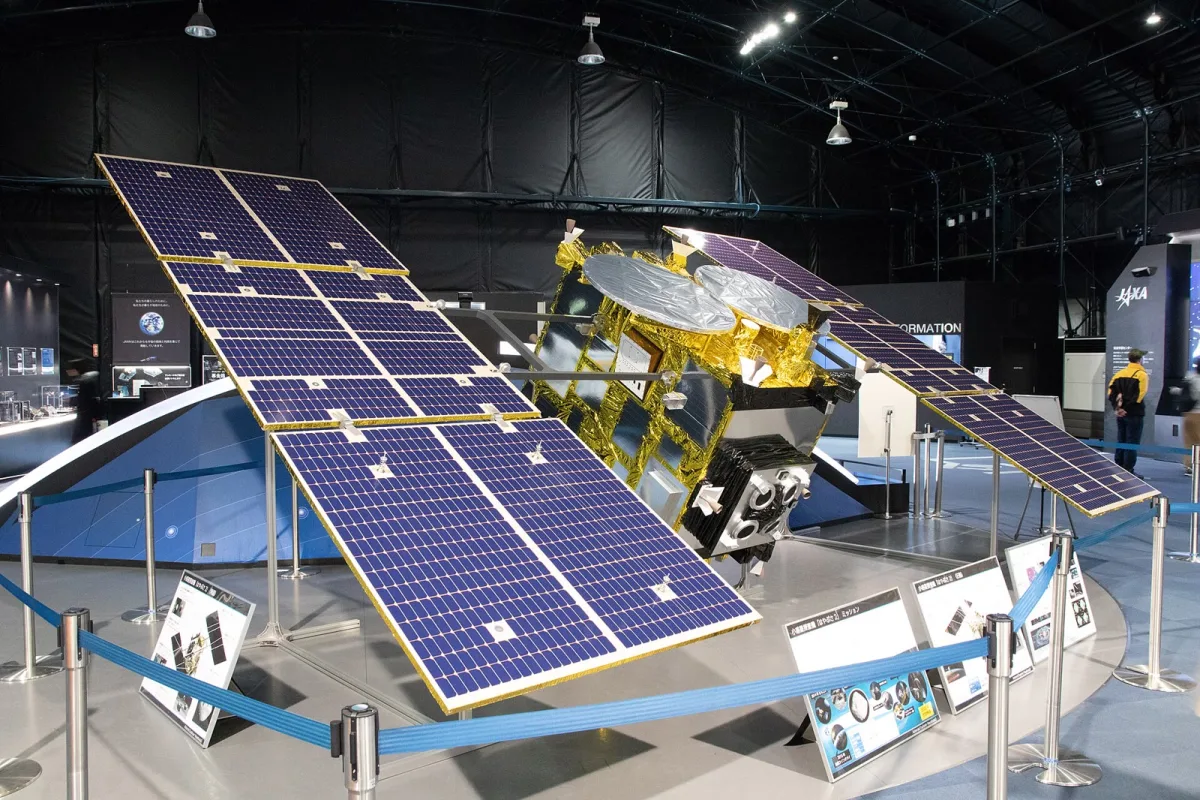
With its solar panels deployed, Hayabusa2 is nearly 6 meters wide. “The size of the asteroid is comparable to the size of the spacecraft that is going to visit it,” Santana-Ros said. No probe has ever met anything this small. Ryugu, the mission’s first target, was almost 900 meters across and turned once every 7.6 hours.
Small doesn’t mean harmless, though. Olivier Hainaut, a European Southern Observatory astronomer and co-author of the study, pointed out that the space rock that exploded over Chelyabinsk, Russia, in 2013 was barely larger than KY26. Objects like this are hard to spot in advance, and predicting their paths means understanding what moves them. That is exactly where this rock misbehaves.
A rock that acts like a comet
Astronomers calculate an asteroid’s orbit from the pull of the Sun and the planets. Whatever that math can’t account for is called nongravitational acceleration. In February 2023, astronomers Darryl Seligman, Davide Farnocchia and their colleagues described six small asteroids with a surprisingly large leftover push. 1998 KY26 was on the list. The push doesn’t point straight away from the Sun; it shoves the rock sideways.
Comets get nudged like this all the time. Sunlight warms their ice, gas escapes in jets, and each jet works like a tiny rocket engine that can point in any direction. But a comet also has a tail and a cloud of dust. KY26 has neither. Sunlight itself didn’t work either: its pressure points mostly away from the Sun, and the 2023 authors wrote that no radiation effect could produce a sideways push that large.
In June 2024, the asteroid passed within 5.5 million kilometers of Earth, and a team led by Bryce Bolin found no trace of dust around it. Its spectrum looked like those of bright rocky asteroids. Instead of vapor, the authors suggested, the push might come from the fast-spinning rock flinging large dust grains off its surface.
The ice runs out
Korbin Hansen and Masatoshi Hirabayashi at the Georgia Institute of Technology put the vapor idea to the test. In a paper in the journal Icarus, they modeled how KY26 heats up, both at the surface and deep inside. ScienceAlert covered the work on November 8, 2026.
To survive, buried ice must stay colder than -128°C, yet even the coldest spots on KY26 average warmer than -61°C. For ice, that is a furnace. If ice made up 1% of the asteroid’s mass, it would quietly evaporate in just over 2,000 years. But to push the rock as hard as astronomers observe, the vapor would have to escape much faster, and the supply would run out in 62 years.
“Our temperature model results indicate that the water outgassing rate on 1998 KY26 would be too high to maintain buried ice,” the authors write. Their verdict: KY26 is most likely a dehydrated asteroid.
They don’t rule ice out entirely: nobody knows how long KY26 has been on its current orbit, and if it arrived recently, a little ice could have survived. Still, Hansen and Hirabayashi lean toward sunlight. Light presses on the rock, and its warm side sheds heat unevenly; together, they conclude, these forces may account for part of the sideways push. The paper doesn’t prove it, but it leaves three explanations on the table: sunlight plus uneven cooling, Bolin’s shedding dust grains and, if the rock is hollow, Loeb’s idea.
A suspect from 1988
Loeb is known for bold hypotheses; he has argued, for instance, that ‘Oumuamua, the interstellar object spotted in 2017, could have been alien technology. The KY26 paper’s lead author is Adam Hibberd of the Initiative for Interstellar Studies in London, and Loeb is the senior author. The preprint appeared on May 31, 2026, and the group posted a follow-up in September. Neither paper has been peer reviewed.
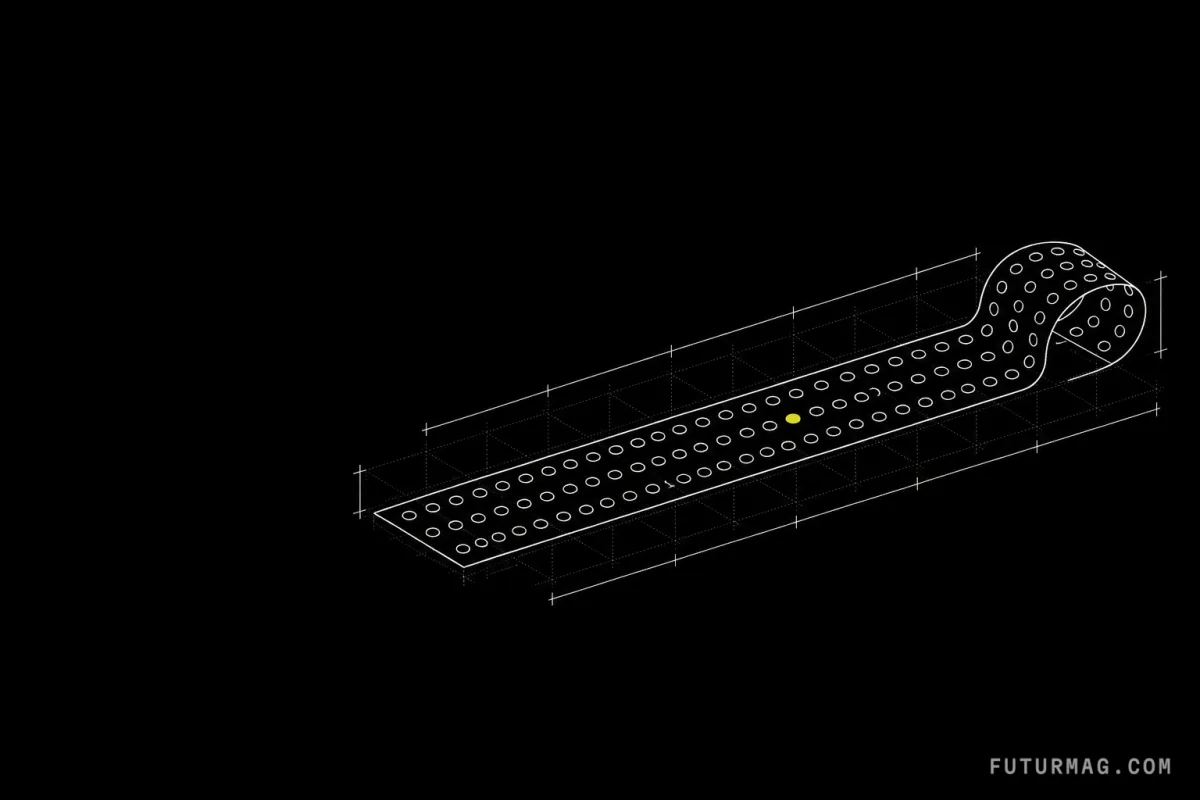
Their case rests on three arguments. The size matches: by the authors’ estimate, Phobos 1 measured about 10 meters across with its panels open, and KY26 is about 11. The brightness fits too: right after its discovery in 1998, the asteroid grew brighter and dimmer by a factor of about six with every spin, the way an elongated body with two long panels would.
Their third argument concerns motion. A flat panel angled toward the Sun catches light like a sail and gets pushed sideways, not straight away from the Sun. A model of the probe with such panels fits 260 position measurements of KY26 about 11% better than a calculation based on gravity alone. That sounds impressive, but the standard formula astronomers use for any unexplained push does slightly better still. In other words, the probe explains the motion no better than “something is pushing it.”
Then there’s the weak spot. To turn the probe’s orbit into KY26’s, the spacecraft would have had to change speed twice, and by a lot. First by 0.61 km/s on September 2, 1988, the very day the probe fell silent. Then by 1.28 km/s on May 19, 1996, eight years after Phobos 1 went dark. The authors checked the probe’s propellant budget and concluded it had enough. They also concede that their work can’t definitively identify KY26 as Phobos 1.
Why the wind rolls an empty can
The notion that an “asteroid” might turn out to be hardware isn’t as wild as it sounds. In September 2020, the Pan-STARRS telescope in Hawaii found an object called 2020 SO on an orbit suspiciously similar to Earth’s. Engineers at NASA’s Jet Propulsion Laboratory ran its path backward and found that it had passed very close to Earth in September 1966. On September 20 of that year, a Centaur upper stage had sent the Surveyor 2 lander toward the Moon. NASA concluded that 2020 SO was probably that very booster.
One clue was sunlight, which pushes an empty rocket shell harder than a dense rock of the same size, the way wind rolls an empty soda can along the street but barely moves a pebble. Light matters most for things with a lot of surface and little mass.
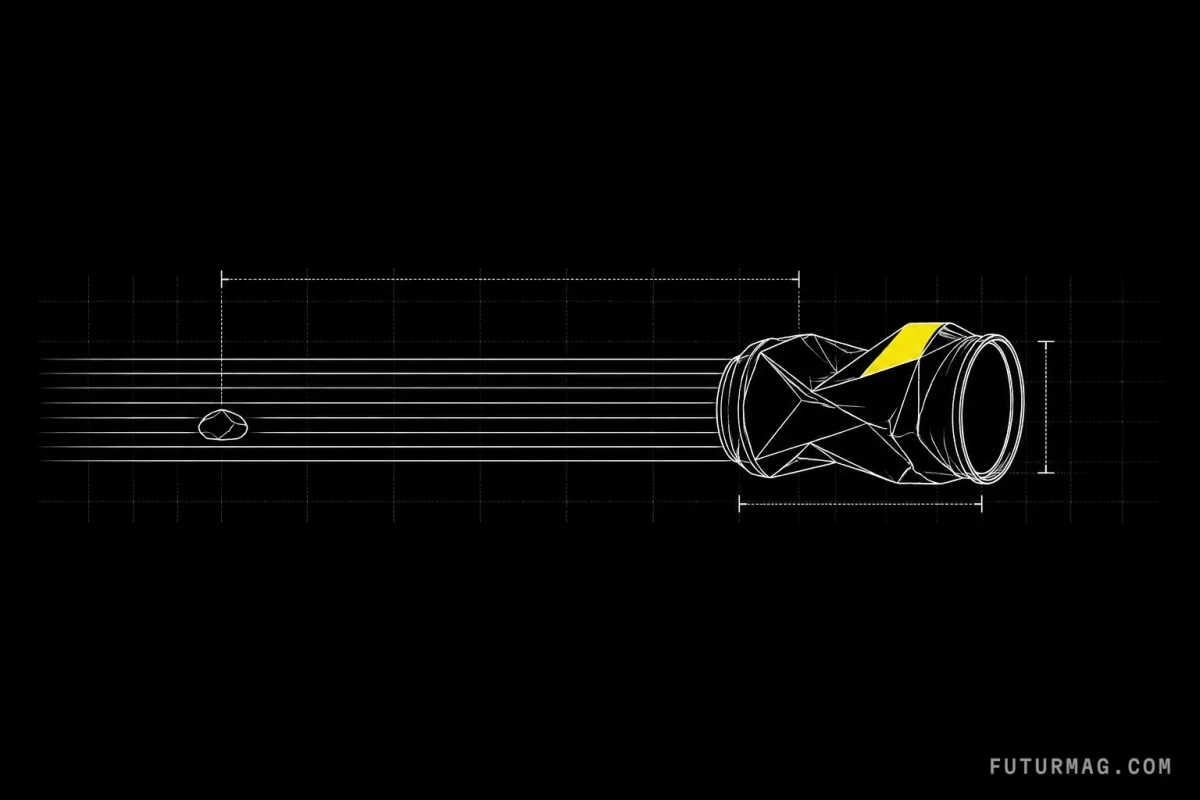
That leaves the central question about KY26: could a rock its size be light enough for sunlight to shove it this hard, or would that take a hollow hull? There is no accepted density estimate yet. KY26’s spectrum resembles those of bright asteroids, and the shape that Santana-Ros’s team reconstructed from its flickering brightness looks more like a rock with concave patches. On his blog, as Futurism reported, Loeb has urged colleagues to widen their “training data set” and consider more than rocks and icebergs when an object behaves strangely. Fair enough, but for now that is an invitation to check, not a discovery.
The answer arrives in 2031
Hayabusa2 will settle it. Run by JAXA, Japan’s space agency, the spacecraft launched in 2014, reached Ryugu in 2018 and dropped a capsule of asteroid soil over Australia in December 2020. With fuel to spare, JAXA sent it on a long trip to KY26. On the way, on July 5, 2026, it swept within about a kilometer of the asteroid Torifune and photographed it.
Ahead lie two Earth flybys, in 2027 and 2028, and the rendezvous with KY26 in July 2031. It won’t be easy: the probe is meant to briefly touch a rock its own size with a five-minute day, and ESO says the job has proved harder than expected. Up close, Hayabusa2 will see whether the object is one solid rock or a pile of rubble, dense or porous, and whether it carries any dust or ice. No telescope on Earth can provide that picture.
If the images show a rock, astronomers will still have to work out what is pushing it, and that matters for every object like it, including the ones that may one day head our way. But if the rock turns out to have solar panels, the question will no longer be for astronomers: who fired the engine, in May 1996, on a probe that had been silent for eight years?