// Contents
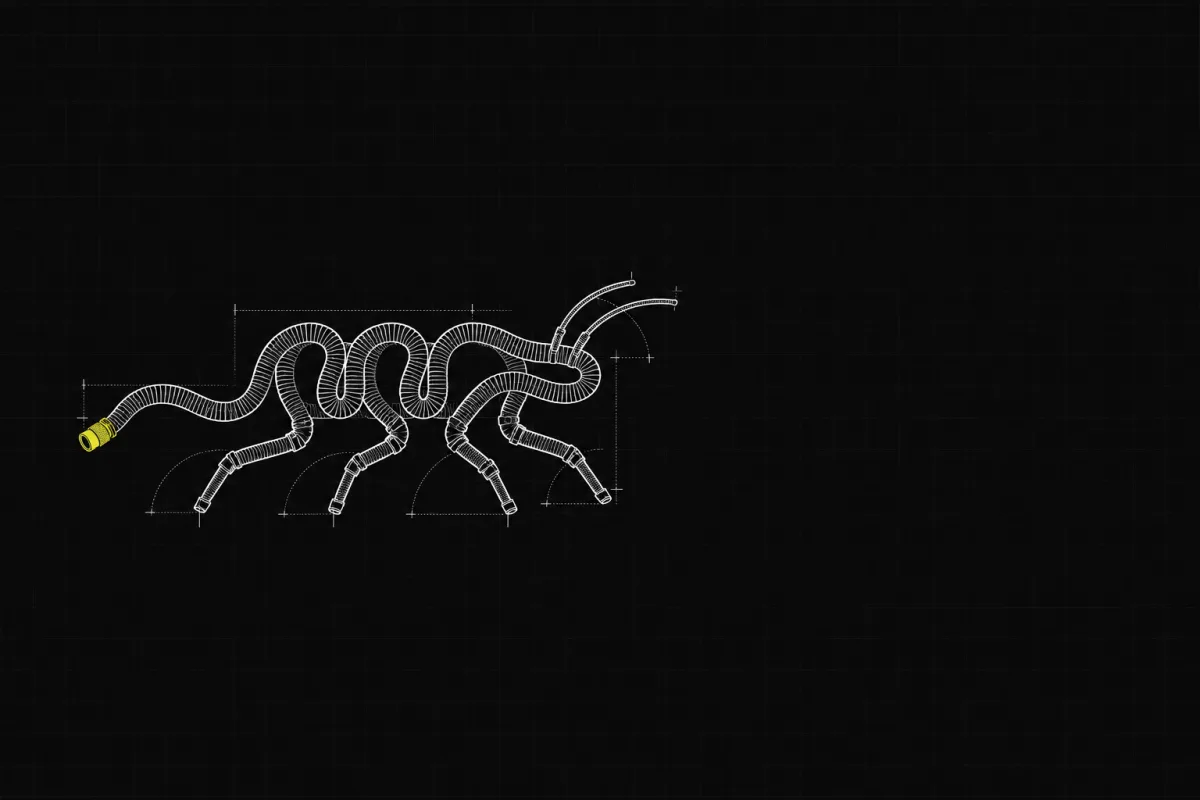
On six soft legs, a robot hits nearly 17 km/h. A hose feeds it compressed air. Inside the robot, that air sets the pace, then moves the legs. To make the air do both jobs, engineers at UC San Diego borrowed a trick from steam engines.
Yichen Zhai and Michael Tolley reported a top speed of 4.72 meters per second in a Science Robotics paper published November 18, 2026. They printed the whole robot, moving legs and all, in one piece from a single flexible material. There are no chips inside.
The first 85 centimeters
An earlier paper by Zhai and his colleagues describes a much slower outing. With a carbon dioxide canister on its back, their robot took 21 seconds to walk 85 centimeters across a smooth floor. The canister could keep it going for about 80 seconds. At the beach, in a separate trial, the team added weight so that the robot could walk along the bottom of a puddle and come out on the far side.
Three feet supported the body while the other three swung forward. Then they traded places. The valves and sealed air passages that controlled the steps were already built into the same printed piece.
Zhai and his colleagues tried raising the pressure. That worked at first. Air filled the chambers faster, and the legs stepped more often. As pressure rose further, the soft valve stretched and pinched the passages that fed air to the legs. The steps barely sped up. For the new robot, the team made the parts inside bigger and stronger. The main challenge was fitting the mechanism into a robot they could print in one piece from one material.
Two jobs for the same air
At higher pressures, the air still had energy to spare when it left the robot. Old steam engines put that principle to work with a second cylinder. A two-cylinder engine at the University of Palermo’s Museum of Engines and Mechanisms shows how this worked. Steam traveled from the first cylinder into the second, where it kept expanding and pushed another piston.
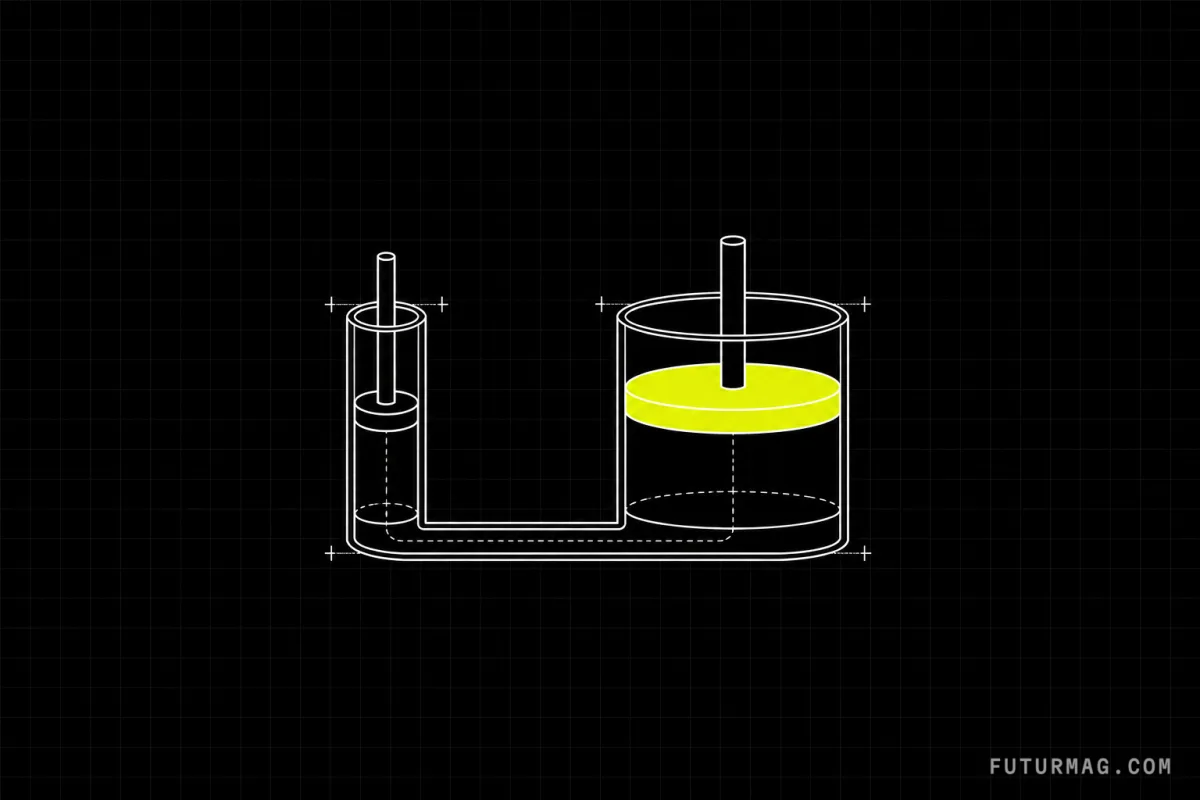
The air inside the robot first works the valves. They set the pace. Air leaves the small chambers and enters larger ones with enough pressure left to bend the legs. The engineers tested one-stage and two-stage designs to see where the power went. In the two-stage version, the remaining pressure helps move the legs. In the one-stage version, that energy leaves with the exhaust.
Freeze the slow-motion footage at the right instant and all six feet are in the air. The same thing happens when a runner pushes off the track. For a moment, no foot is on the ground.
What changes when the hose comes off
The team sent the robot down a set of steps. A foot reaching forward may find empty space before it touches the next step down. A top speed on a straight run tells you little about how fast the robot can get down those stairs. With a portable gas supply, the robot also has to carry extra weight.
In a separate test, the new robot moved without a hose, powered by an onboard CO₂ canister. The authors’ Fig. S20 on Dryad tracks the pressure where gas enters the robot, how often it steps, and how fast it moves from moment to moment. Those readings let the researchers compare how the robot moves at the start of a run and at the end, when less gas is left in the canister.
A portable supply adds weight. The earlier robot weighed 172 grams, and its canister and pressure regulator added about 200 grams. Carrying its own supply more than doubled the weight it had to move. In the new study, the team varied the air pressure and compared the same design with a 257-gram load and with no payload. That test isolates what the extra weight does to its speed.
Zhai and Tolley want to use less air and give the robot a way to steer. They suggest that a machine like this could go places where electronics are difficult to use, such as an area with a strong magnetic field. Getting there takes more than a fast start. Can the robot carry enough gas to reach a chosen spot, even if it has to turn along the way?