// Contents
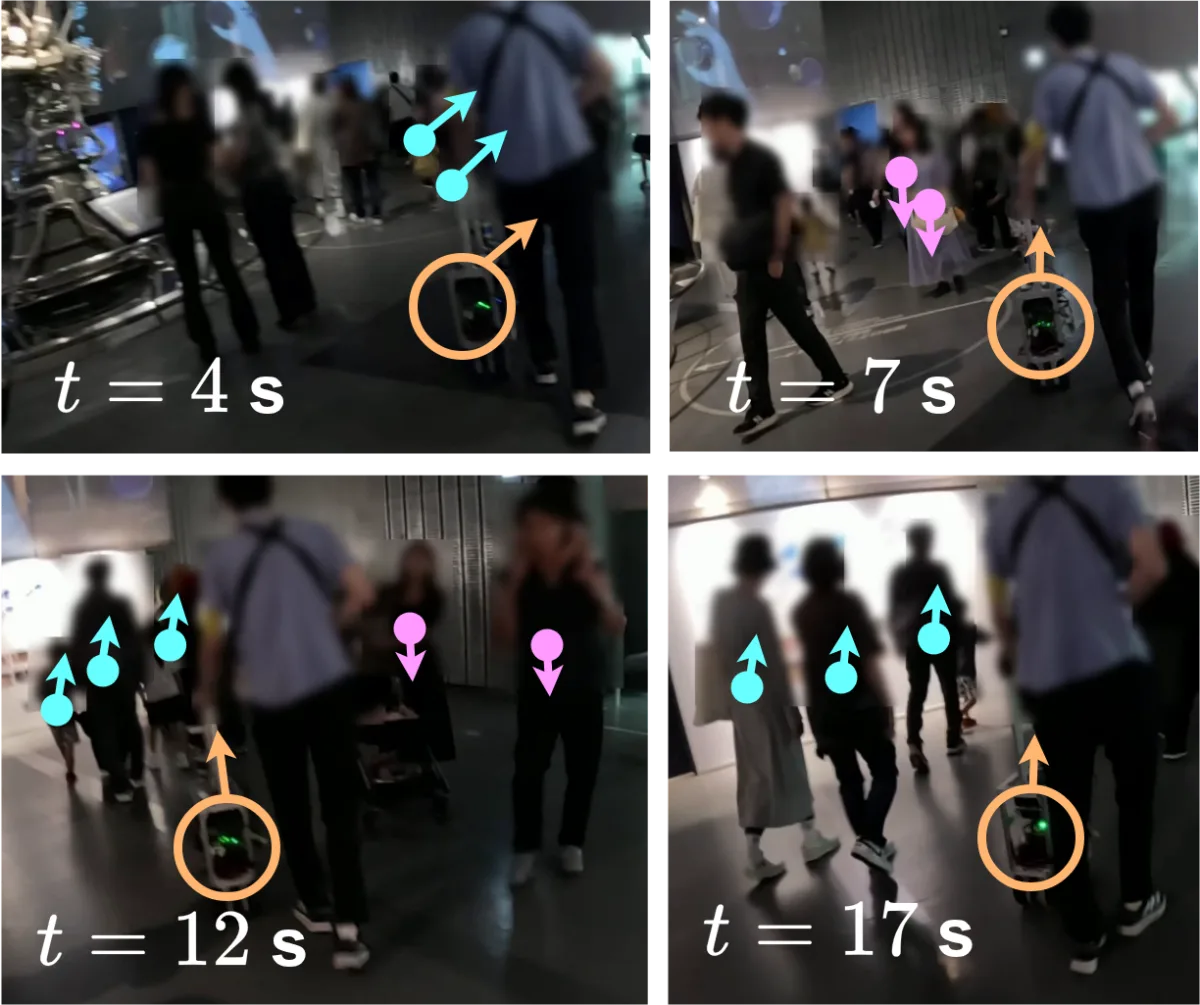
The pedestrians turned right. A wheeled research robot followed. Seconds later, its camera picked up the crowd coming straight toward them. Already moving with the group ahead, the robot slipped past the oncoming pedestrians and crossed the busy hall without stopping once.
Robotics researcher Yufei Zhu recounted the maneuver to Örebro University in a report published on November 17, 2026. His team developed navigation software called HiCrowd and put it to the test at the Miraikan science museum in Tokyo. They also demonstrated it at Expo 2025 in Osaka. One possible use is helping robots guide blind travelers. A robot that stops every time someone walks past makes the person holding its handle stop too.
The long way can be quicker
Picture yourself changing trains. A group a few yards ahead veers right. You could head straight for the platform sign. But if people are streaming toward you from the other direction, going with the group may get you there sooner than pushing straight through.
A robot that tries to get around pedestrians one at a time can quickly run out of moves. A gap may look clear and then fill before the robot can reach it. The robot stops. If every new opening closes the same way, it stays put. Researchers call this the freezing robot problem.
The HiCrowd paper, presented at the ICRA 2026 robotics conference, describes how the team divided the job in two. The software uses a forward-facing camera to see which way people are going. It picks a point to aim for based on the movement of a group headed in a direction the robot can use. A second part works out how to get there while giving nearby pedestrians room. If the group veers toward a different exit, the robot still has its own destination.
Twenty trips across one museum hall
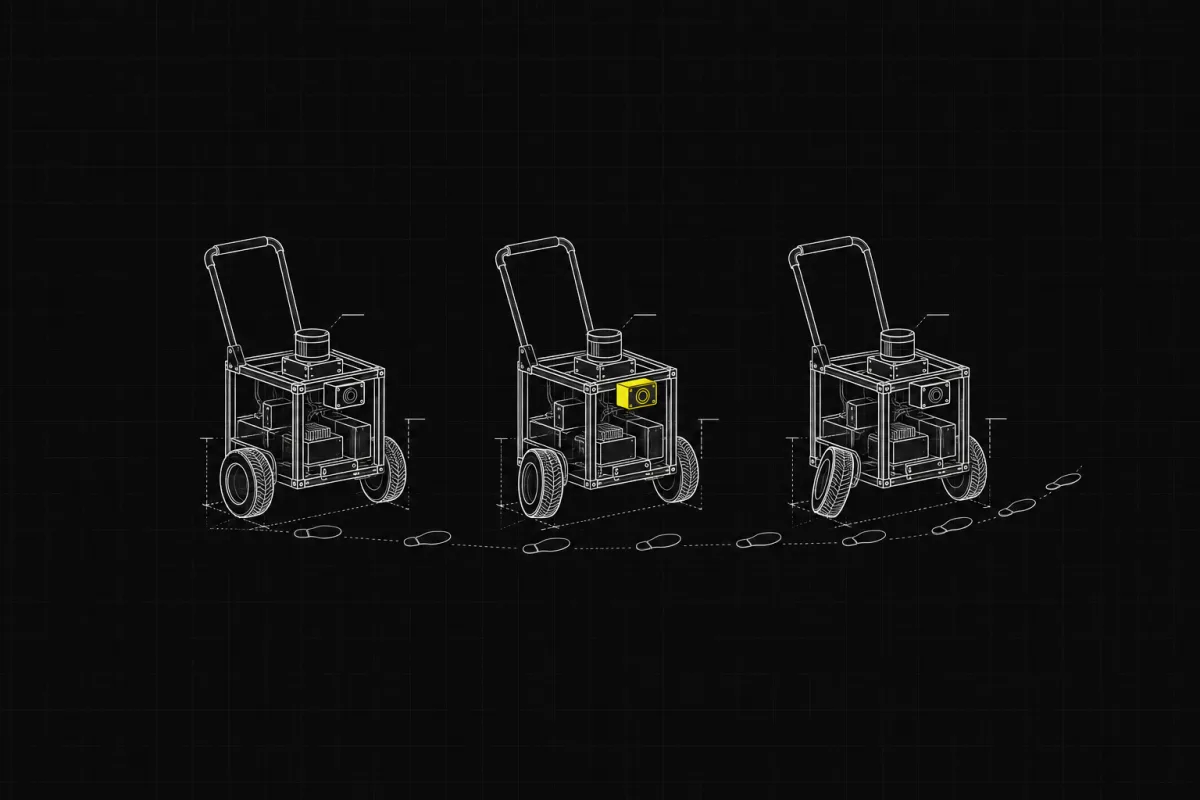
For the museum trial, the team mounted its equipment on an open frame with wheels and a handle. A lidar sensor on top measured distances with laser light to help the robot avoid collisions. The robot made 20 trips across a wide area with few fixed obstacles, moving at up to one meter per second, about an easy walking pace. It picked its own path as long as a supervisor held the handle. A touch sensor stopped the robot when the supervisor let go.
The robot often had to get around about ten people on a single trip. The trial diagram shows how the software left room for the person holding the handle. It treated the robot and the space where the supervisor would walk as one circle. The researchers observed no collisions or significant freezes in those 20 supervised runs. Guiding a blind person through a narrow passage, with less room to go around others, would need its own test.
In computer simulations, pedestrians either reacted to the robot or stuck to preset paths. In tests based on pedestrian movements from the ETH-UCY dataset, the robot reached its goal 100% of the time with a responsive crowd and 88% when pedestrians followed the recordings. The remaining 12% in the replay test ended in collisions. When simulated pedestrians followed preset paths from a separate synthetic dataset, the robot reached its goal in 99% of attempts.
A turn you can feel
Miraikan uses a different device for its trial tours. The AI Suitcase hides its hardware inside a luggage shell. Chieko Asakawa, Miraikan’s director, is blind and came up with the idea on a business trip, when she pictured her suitcase guiding her to her destination. At the museum, visitors set a destination on their phone and take the handle. They feel a small plate vibrate under their fingers on the side the suitcase will turn toward.
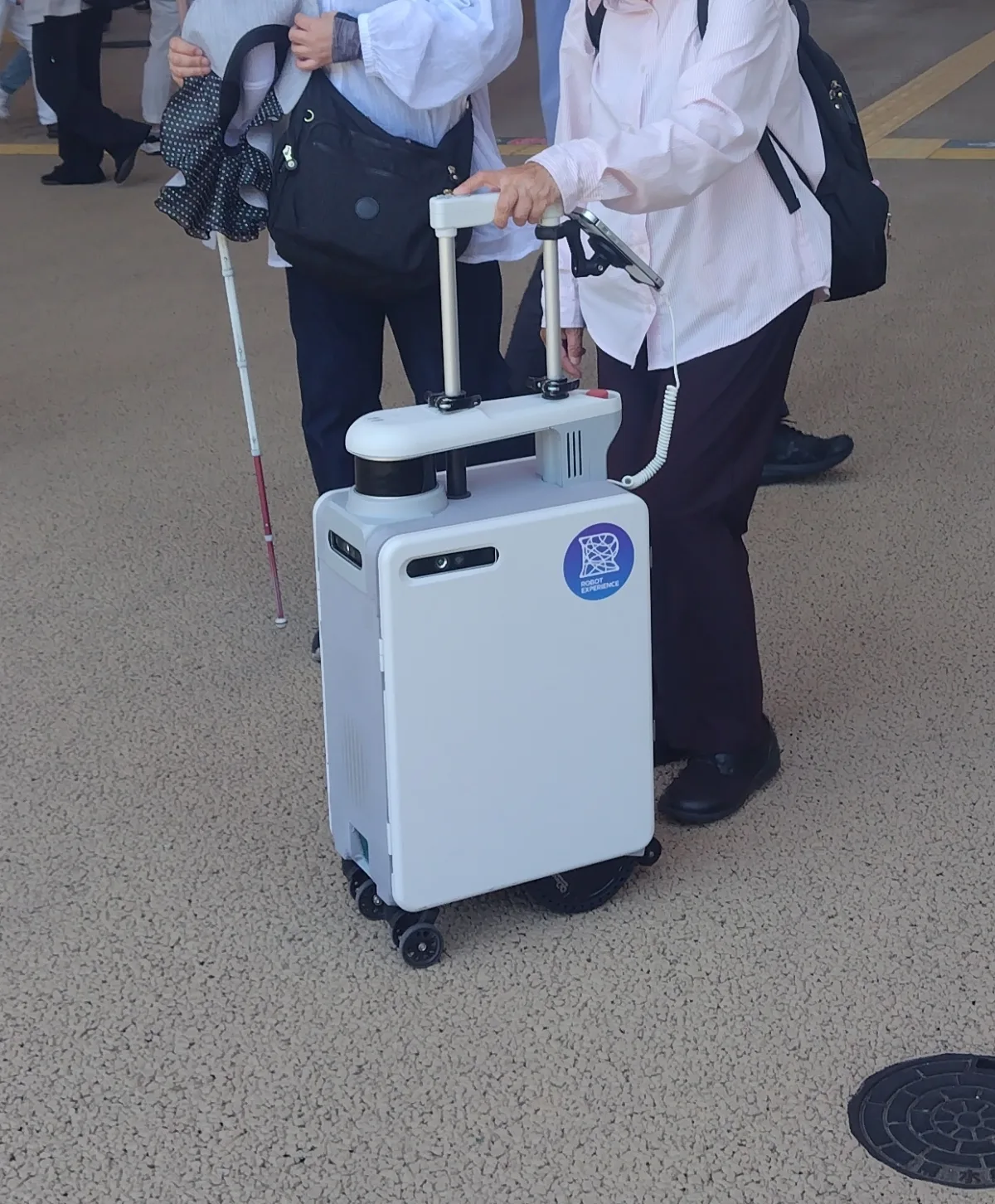
A separate museum study looked at when blind and low-vision people chose to speak for themselves and when they asked a robot to speak for them. Six participants used a modified suitcase-shaped robot in three weekly sessions. They crossed paths with regular visitors and encountered obstacles set up by the researchers. They could ask people to clear the way themselves or press a button on the handle to have the robot ask.
One participant said he’d done all the talking himself in the first week. By the second week, he’d started using the button to have the robot ask people to move in noisy crowds. He told the researchers his voice often didn’t carry over the noise. The words could come from a speaker. The person holding the handle chose who would say them.