// Contents
About a quarter of a second before a person said a word, electrodes picked up activity in Wernicke’s area, a part of the brain usually associated with understanding speech. In experiments at the University of California, San Francisco (UCSF), the signal from one patch varied with features of the next word, including how many syllables it had.
The team wanted to know whether the patch helps prepare a word or responds to the sound of a person’s own voice. When the researchers briefly stimulated the patch just before people spoke, the speakers made errors. The finding suggests the patch helps them get the intended word out. The researchers published their study in Science on November 19, 2026.
Before you hear yourself speak
In the 1870s, German neurologist Carl Wernicke noticed that damage to the temporal lobe could leave his patients struggling both to understand speech and to find the words they wanted to say.
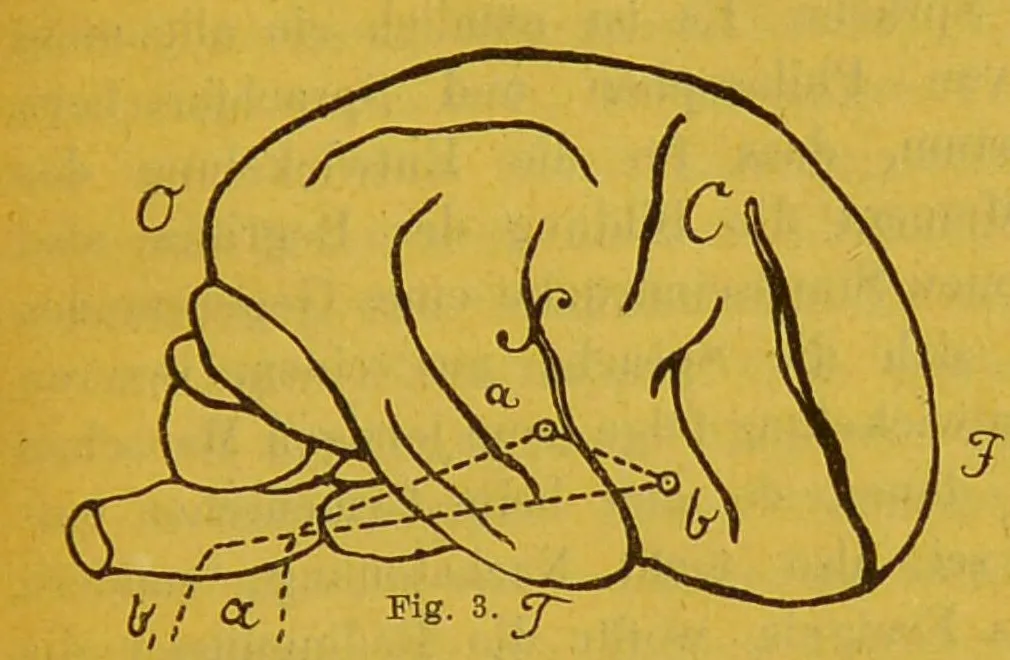
Matthew Leonard and Alexander Silva compared recordings of brain activity from people as they listened and as they prepared to talk. The team recorded 28 people undergoing unrelated brain surgery. The patch lies near the back of a fold on the left side of the brain called the superior temporal gyrus. Its early activity varied with the length of the upcoming word and how often people use it in English. Syllable count mattered too.
Consider “cat” and “caterpillar.” They start alike but have different numbers of syllables. In the recordings, differences linked to features like these appeared before people spoke. Once their voices were audible, some cells responded to what they heard. That’s auditory feedback. The sound of your own voice can tell you when you’ve stumbled over a word. The researchers could distinguish the signals by when they appeared. Cells involved in planning and hearing speech sat close together, and some did both jobs.
What changed when the team stimulated the patch
Timing was the first clue. The team then used brief electrical stimulation to test whether the patch helps people speak. Co-author Alexander Silva described what happened when they stimulated the patch just before people began speaking. Participants made errors in the words they were trying to say.
The authors also checked which speech difficulties went with damage in different parts of the brain. That gave them a second way to check the link between the patch and speech. Together, the results help explain Wernicke’s original puzzle. A patch among cells that respond to speech helps a person get their own words ready.
Ordinary slips can sound much the same. Damage to Wernicke’s area can make the problem more obvious. Edward Chang, the neurosurgeon who led the study, told BrainFacts that some patients still spoke fluently. Their words came out smoothly, but they were sometimes different from the ones they meant to say.
The team decoded attempted words in two people
In two people with severe paralysis, the researchers recorded activity in and around the same speech-planning patch. They decoded both the words the participants tried to say and the speech they heard.
A separate study in 2023 used a different signal. A woman named Ann spent weeks attempting to say phrases after a brainstem stroke left her with severe paralysis. Electrodes picked up activity in the part of the brain that controls the muscles used to speak. A program identified phonemes, the individual sounds of speech, in those signals and assembled them into words. Ann’s text decoder ran at a median of 78 words per minute and had a median word error rate of 25%. The team used a recording from Ann’s wedding to make the synthesized voice sound like hers before the stroke.
Future trials could test whether the signal from Wernicke’s area is useful for people with damage to brain regions that control the muscles used to speak. If the damage reaches the speech-planning patch itself, it remains unclear what a decoder could pick up there. Even with a usable signal, the system still has to work in an unscripted conversation. Could it tell apart the “yes” a person just heard and the “yes” they’re about to say?