// Contents
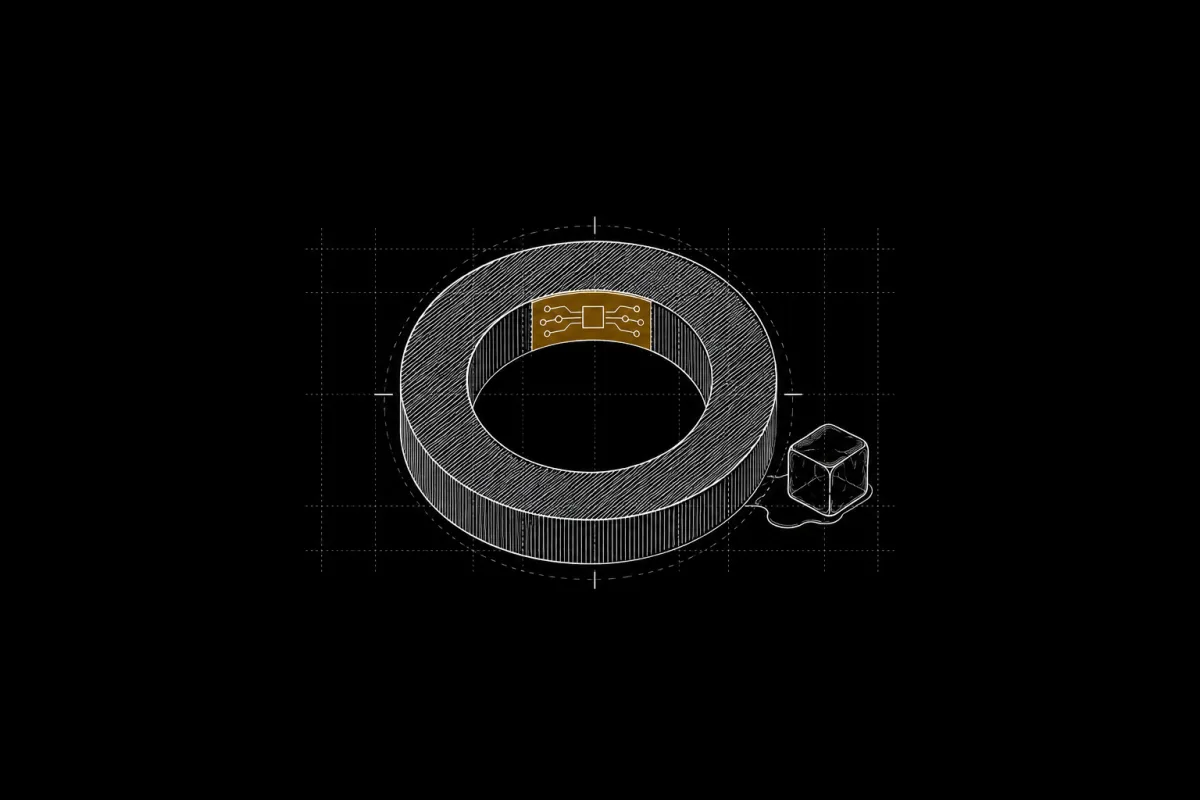
3 seconds to answer. That’s how much time two volunteers had per problem toward the end of a timed math test. The screen showed their scores alongside a deliberately inflated “average.” As the volunteers worked, an experimental ring shone infrared light into the skin beneath it. Changes in the scattered light gave the researchers an indirect reading of sweat gland activity.
Engineers at the University of Southern California built the ring and tested it on healthy adults. Their study, published November 13, 2026, in Science Advances, describes the math test as a separate check with two volunteers. To measure the software’s accuracy, the team ran a different experiment that compared the response to ice water with quiet rest.
Two beams for one finger
Sweat changes how easily electricity travels across the skin. Electrodes can pick up those changes. In May 2026, a separate team watched individual sweat glands under a microscope and found that brief bursts of sweat coincided with spikes in skin conductance, a measure of how easily current flows. That held during both rest and exercise.
Electrodes depend on good contact with the skin. A sensor can shift as its wearer moves, and the gel used with some electrodes can dry out. Engineer Yasser Khan and his doctoral student Farhad Hassan took inspiration from optical heart-rate monitors. Those devices shine light into the skin and measure how the reflection changes with each heartbeat. The team suspected reflected light could reveal what the sweat glands were doing, too.
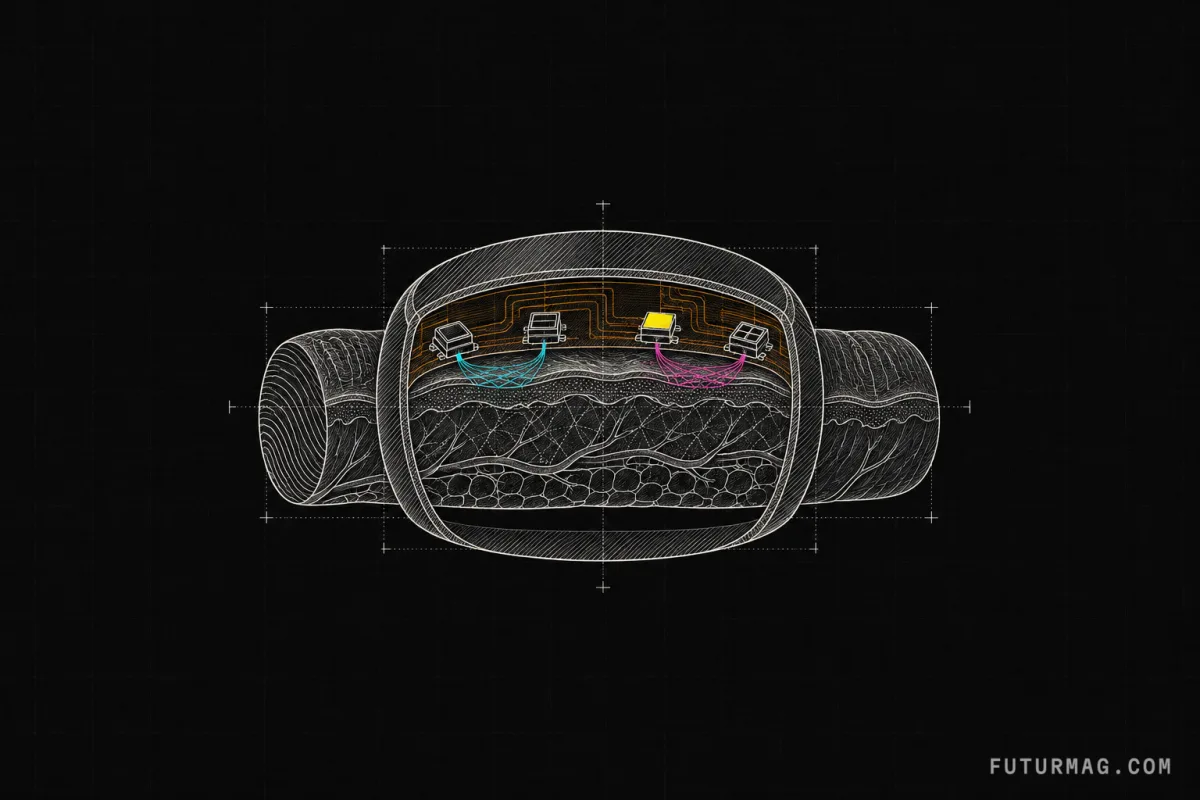
Two infrared LEDs sit inside the ring. In tests, changes in water content had a bigger effect on the reflected light at 960 nanometers than at 1,250 nanometers. The 1,250-nanometer reading served as the reference. Comparing the two readings let the ring track small changes in moisture beneath the skin without electrodes or gel. The same sensors picked up how often the heart beat and how strong each pulse signal was.
What ice does to the signal
In the cold-water experiment, volunteers listened to calming music and then dipped a hand in ice water. The researchers took simultaneous readings from the ring and gel electrodes in four volunteers. The average correlation was 0.86, meaning the two traces tended to rise and fall together.
For a short trial with six participants, the team added walking and stationary cycling. That gave them separate readings for movement and sweating as people warmed up. The software used readings of sweat gland activity, pulse, temperature, and motion. The researchers split the recordings into short segments and asked the software to tell the ice-water response from rest. It got about 92% of the labels right.
Two people wore both devices in a 12-hour test, repeating the same tasks three times. The team used the first two sessions to train and tune its software, then tested it on the same people in the third session. Using all the ring’s sensor data, the software correctly classified about 80% of segments as an ice-water response or rest. It got 72% right with the optical sweat signal alone and 57% with the gel-electrode readings. That comparison used a single gel-based device. Dry-electrode sensors were outside the scope of the test.
Outside the lab
Small movements mattered. In a separate test with five volunteers, turning the wrist registered as the largest movement, yet typing and bending the fingers caused more interference in the optical readings. A wrist turn moved the ring and finger together. Typing could shift the ring against the skin. A computer simulation also showed that sweat pooling on the skin could change the reflection and amplify the optical signal.
Both volunteers in the math experiment reported feeling more stressed after the test and less stressed after a break. The ring and gel electrodes also registered changes as the session progressed. At work, someone can be typing, rushing, and sweating from the heat all at once. A spike on the chart gives little away on its own.
The team plans a yearlong study with 40 people in an office. That should help establish how often a spike on the ring’s chart corresponds to a moment when someone actually feels stressed.