// Contents
One hour, a local anaesthetic and a small pocket under the skin of the forearm. That is roughly what surgeons in Melbourne needed to give the first patients a sensor that drives a bionic hand. Nobody opened a skull, and nobody went near the brain. The sensor sits over the muscles of the residual limb and listens to their electrical chatter: the person tries to squeeze fingers they no longer have, and the prosthesis squeezes its own.
US company Phantom Neuro announced on 20 October 2026 that its Phantom X device had been implanted in people for the first time. This is an early feasibility trial, and the main question is safety. The company’s promise is specific. Some prostheses with electrodes on the skin need recalibrating every day, while Phantom X’s calibration, according to chief executive Connor Glass, may hold for months. For now that is the company’s word about two patients. And the argument here is less about signal strength than about sweat.
// The CYBORG trial
A pocket, not a craniotomy
The first patient was Michael Easy, a 32-year-old carpenter from the town of Hastings near Melbourne. A carpenter needs his hands every day, so a temperamental prosthesis is no small thing for him. “This implant has made everything easier and smoother and faster,” Easy says. That is one patient’s impression, not a measured outcome. It does show what people want from the device: a prosthesis that stops misbehaving.
The procedures took place at Cabrini Health , performed by plastic surgeon Michael Lo. Glass describes the operation as creating a pocket under the skin and compares it to a routine cosmetic procedure rather than brain surgery. After the implant goes in, the arm gets about two weeks to heal, and only then is a prosthesis fitted. Regulators approved the study in April 2026, and according to IEEE Spectrum the first procedure took place about five months before the announcement.
Why sweat is a bionic arm’s worst enemy
A standard bionic arm is simpler than it sounds. Inside the socket that slips over the residual limb, electrodes press against the skin. When the wearer tenses the remaining forearm muscles, those muscles give off faint electrical pulses, and the electronics turn them into commands for the hand.
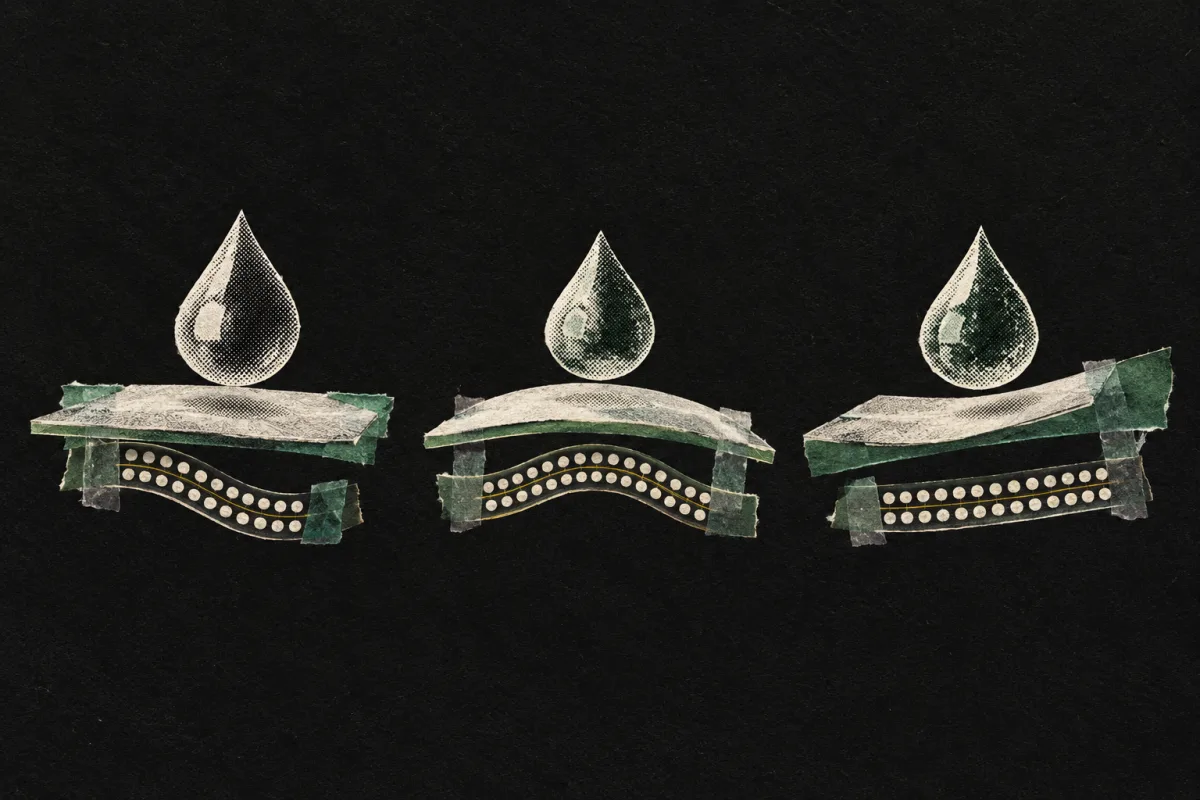
The weak spot is the skin. Put simply, a surface electrode is like a stethoscope pressed to someone’s chest through a jumper: you can hear the heart, but every shift of the fabric adds a rustle. Electrodes slide around as the arm moves, the socket sits differently by the end of the day, and sweat changes the electrical resistance between skin and sensor. The signal drifts and the hand starts confusing gestures. Some surface-electrode systems, the developers say, need recalibrating every day.
That is not a footnote. In a 2007 review covering a quarter of a century of studies, Canadian researchers Elaine Biddiss and Tom Chau estimated that on average 23% of adults abandoned electric prosthetic arms, and even more gave up on cable-driven mechanical ones. Picture an expensive gadget that almost one owner in four eventually puts in a cupboard. The reasons vary, from weight and heat inside the socket to a hand that can do too little and lets you feel nothing.
What sits under the skin
Phantom X is a flexible strip of medical silicone about 2 by 10 centimetres. It wraps around the forearm beneath the skin, above the muscles. The strip carries two rows of electrodes and a small electronics module that processes the signal and sends it to the prosthesis wirelessly. There is no battery inside: the implant draws power through the skin from an external coil, explains Electronics For You . Cochlear implants are powered the same way.
Machine learning does the rest. Software learns which pattern of muscle pulses matches which gesture. The prosthesis can then perform the same movement slowly or quickly: gently picking up a glass, say, or snapping into a fist. Because the electrodes no longer slide over sweaty skin, the calibration should last longer. If that holds up in more people, the morning ritual of retuning the arm could disappear.
In the US the system received breakthrough device designation from the FDA back in spring 2025. It sounds grand, but the status means something modest: it speeds up the company’s conversations with the regulator and says nothing about whether the device works. That is for trials to decide, and the Melbourne one is only the first.
Neighbours with the same idea
Moving sensors from the skin into the body is not a new idea, and Phantom Neuro has predecessors. They show what each step inward costs in surgery.
In 2020, Swedish and Austrian researchers described in NEJM prosthetic arms anchored directly to the upper-arm bone. Their electrodes are attached to nerves and muscles, and the link runs both ways: the arm receives commands and sends sensations back to the wearer. Four patients were followed for three to seven years and used the prosthesis in everyday life, at work and at home. It works reliably, but it takes serious surgery on bone and nerves.
Researchers in Pisa took another route and in 2024 reported their first patient . Daniel, 34, had six tiny magnets implanted in three of his forearm muscles. No electrical signals are read at all. A muscle contracts, its magnet shifts, and magnetic field sensors in a carbon-fibre socket track where it went. Daniel used the hand for six weeks, and the results appeared in Science Robotics.
On this ladder Phantom X sits on the lowest rung of surgical effort: under the skin, but not inside a muscle, a nerve or a bone. The company is betting that this depth is enough for reliable control, while the operation still takes about an hour. Such a sensor gives no sensation back: it only listens.
What Phantom X cannot do yet
The system has clear limits, and the coverage states them plainly. So far the implant cannot combine movements: rotating the wrist while closing the fingers is out, and complex actions have to be built step by step. The company’s next target is simultaneous proportional control, which is how a living hand works, with several joints moving at once and with different force.
There is a bigger caveat. Everything known about the results comes from the company and from journalists who spoke to it. The trial is open-label and single-arm : every participant gets the implant and knows it. There are no peer-reviewed data, and Phantom X remains an investigational device that is not approved for sale. Even IEEE Spectrum notes that what works for one or two patients may not work for everyone.
So the Melbourne experiment is testing a modest hypothesis: to make a prosthesis obey, you may not need to reach into the brain. Trials will give the answer. If the hypothesis holds, the main obstacle for bionic hands was never a weak signal, but a few millimetres of sweaty skin.