// Contents
A green snake crawls past a red square. The player’s hand rests on an armrest, wires trailing from electrodes on his forearm. He tries to move his hand to turn the snake. The electrodes pick up activity in his muscles. One signal turns the snake 90 degrees clockwise from its current heading. A second turns it 90 degrees counterclockwise. The researchers show the hand and the game side by side in their video.
All three men in the study had spinal cord injuries in the neck, and each had lost the use of the hand the team tested. The results appeared in Nature Human Behaviour on November 25, 2026.
A signal beneath the skin
When you bend a finger, nerve cells tell muscle fibers to contract. A single nerve cell and all the fibers it controls make up a motor unit. Some pathways from the brain can survive a spinal cord injury. An attempt to move can still produce a flicker of electrical activity in the muscles, even when the hand is too weak to use.
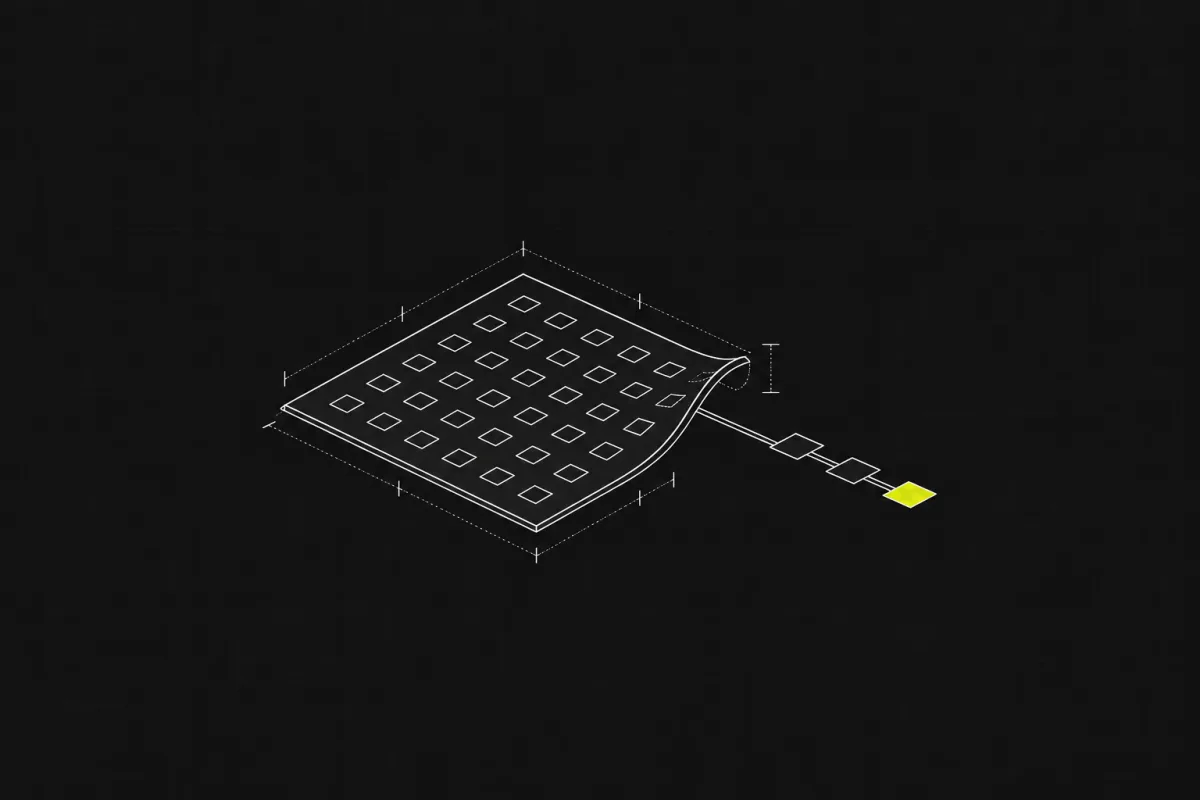
The researchers wrapped three grids of 64 electrodes each around the forearm and asked the men to attempt a series of finger and wrist movements. They looked for attempts that produced a clear signal and little or no visible movement. For the simplest tasks, one participant tried to draw his thumb toward his palm. Each of the other two tried moving his wrist sideways.
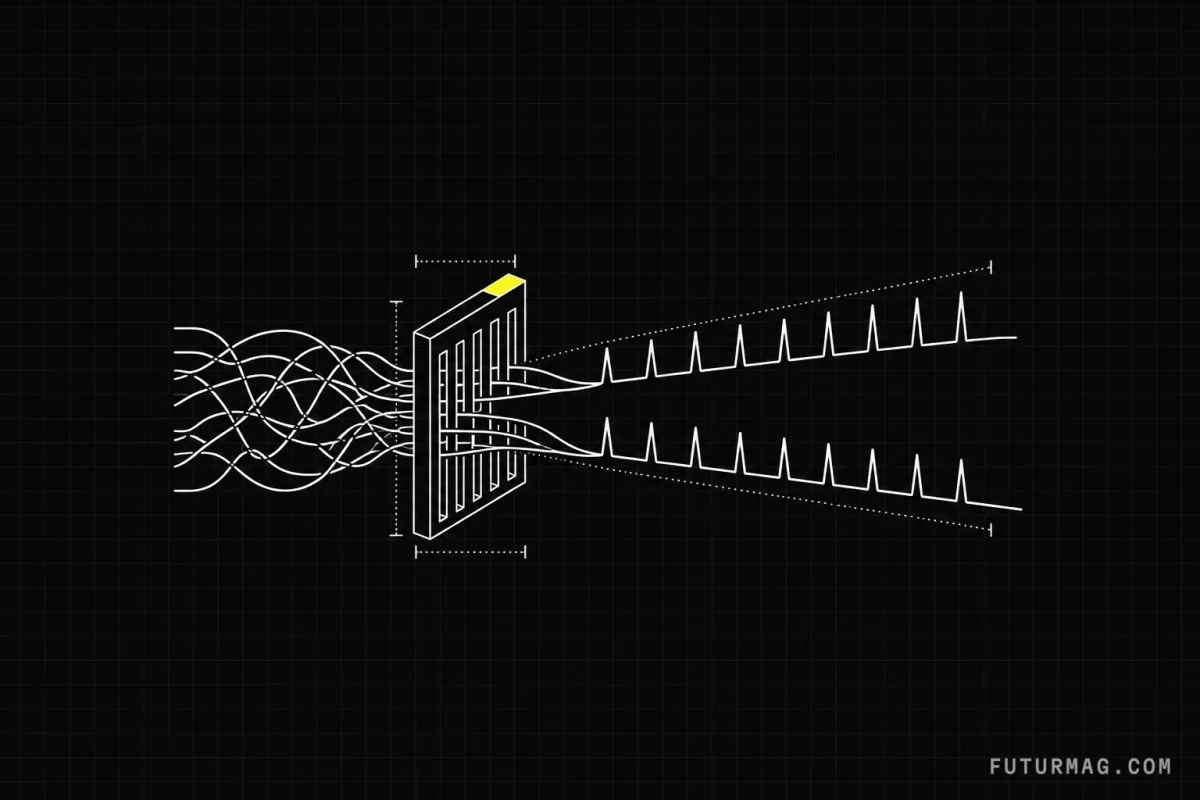
The electrodes pick up overlapping signals from several motor units. Some units kept firing at rest, possibly because of spasticity, a condition in which muscles become unusually tense. To keep that background activity from moving the cursor, the team isolated signals from individual motor units. During setup, each man tried moving a finger or wrist while the researchers checked which signals he could change.
In Snake, a burst of activity could act as a button press. The players could move a cursor smoothly by changing how fast a motor unit fired.
Turning a muscle signal into a button
First, the men followed a line across the screen. They raised or lowered a pointer by changing how fast selected motor units fired. There were three lines. On the simplest, the pointer had to climb slowly, hold steady and descend slowly. The hardest traced a series of waves, some taller than others and some closer together. All three men could follow the lines in their first session. One person had already learned to do something similar in an earlier study by the team. This time the researchers looked at how participants handled several independent controls.
Next came targets. All three could steer the cursor across the screen to reach them. One motor unit controlled its horizontal position and another its vertical position. The players had to hold the cursor on a target for a little over a third of a second. Passing through didn’t count. Going straight to a target on the diagonal meant using both signals at once. Some participants moved along one axis first and then the other.
The researchers report that two men played Pong and two played Snake, with one man playing both. In Pong, the players raised or lowered a paddle to intercept the ball. The snake kept moving forward on its own. Clockwise meant right when the snake was heading up the screen and left when it was heading down. Both players found it tricky to choose which command to use.
One of the Snake players had steered the cursor by trying to bend his thumb and straighten his little finger. He used the same two attempted movements to turn the snake. Clinicians had classified his spinal cord injury as complete after testing his movement and sensation. The electrodes showed he still had enough muscle activity to steer the snake.
Three signals for a virtual wheelchair
One participant steered a virtual wheelchair along a route. Trying to draw his thumb toward his palm sent the chair forward. As the motor unit fired faster, the chair sped up smoothly. Two different attempted wrist movements turned it, each by 90 degrees. That was enough to follow the route.
The demonstration took place on a screen. At every session, a participant attempted a movement so the researchers could check which motor units responded. A wearable that someone can put on at home would have to pick those signals automatically. Study coauthor Ciara Gibbs told the Champalimaud Foundation that the team would like to test whether the signals could also control an exoskeleton that moves a limb.
Some participants had trouble holding a cursor steady. Some also tired, especially when they had to push the firing rate as high as it would go. Occasionally, a motor unit someone could control began firing on its own, or a unit that had fired on its own came under their control. A device people can use outside the lab would have to handle those changes automatically.
What a still hand can tell you
The researchers used the line task to compare three ways of controlling the pointer. They could use the overall signal from the electrodes, isolate a single motor unit, or pool the activity of several units that responded to the same attempted movement. Pooling gave two participants the best control. For the third, the overall signal was relatively clear and worked best on one of the lines. The team also filmed the hand during the task. Small twitches on camera bore little relation to changes in the pooled signal.
When the experiment began, the injuries were between one and two years old. The study had no separate control group. In their peer-reviewed paper, the authors report each man’s results individually because the sample was small and the injuries varied in severity. How many people could use this approach after a similar injury remains open. The authors propose comparing it with eye tracking and sip-and-puff devices, which take commands when someone breathes in or out through a tube. Giving people the same tasks with each device would let the researchers compare how many mistakes they make and how long setup takes.
Using the signals at home or to steer a real wheelchair still needs testing. So does any effect on recovery of movement. In the video, the hand rests on the armrest. The player picks his moment. The green snake turns.