// Contents
Twenty-nine healthy volunteers in Oulu, Finland, ended a single session with about a third more amyloid in their blood. The researchers read this as a good sign: amyloid, the protein that clumps into plaques in Alzheimer’s, appears to have left the brain. The volunteers put an ordinary nitroglycerin tablet under the tongue and lay down on a vibrating mattress. Nitroglycerin is the explosive behind Nobel’s dynamite, and Nobel himself refused to take it as medicine. No new drug, no surgery.
The study, from the University of Oulu and Oulu University Hospital, appeared in Nature Communications on November 3, 2026. It tests a mechanism in healthy people. It is not a treatment.
The cleanup that usually happens at night
The brain burns a lot of energy, and its cells leave debris behind: protein fragments, spent molecules. The brain tissue itself has no lymphatic vessels, so the fluid the brain floats in does the flushing. That fluid runs through narrow channels along the blood vessels, picks up dissolved waste and carries it toward the veins and the lymph nodes of the neck. Scientists call this network the glymphatic system, a blend of “lymphatic” and glial cells, which help steer the flow.
Most of the cleaning happens during sleep. In 2013, Maiken Nedergaard’s group at the University of Rochester showed in mice that the space between brain cells widens by 60% during sleep. Fluid flows more freely, and amyloid clears faster. Her lab first described the system, and she is a co-author of the new paper.
The flow weakens with age. Blood vessels dilate less readily, and soluble amyloid that isn’t carried away starts sticking together into insoluble deposits. Hence the Finnish team’s idea: give the fluid a push during the day and remove the protein while it still floats free.
The pill Nobel refused
Nitroglycerin supplied the first push. In the body it releases nitric oxide, which relaxes the walls of blood vessels. The vessels widen and blood pressure drops.
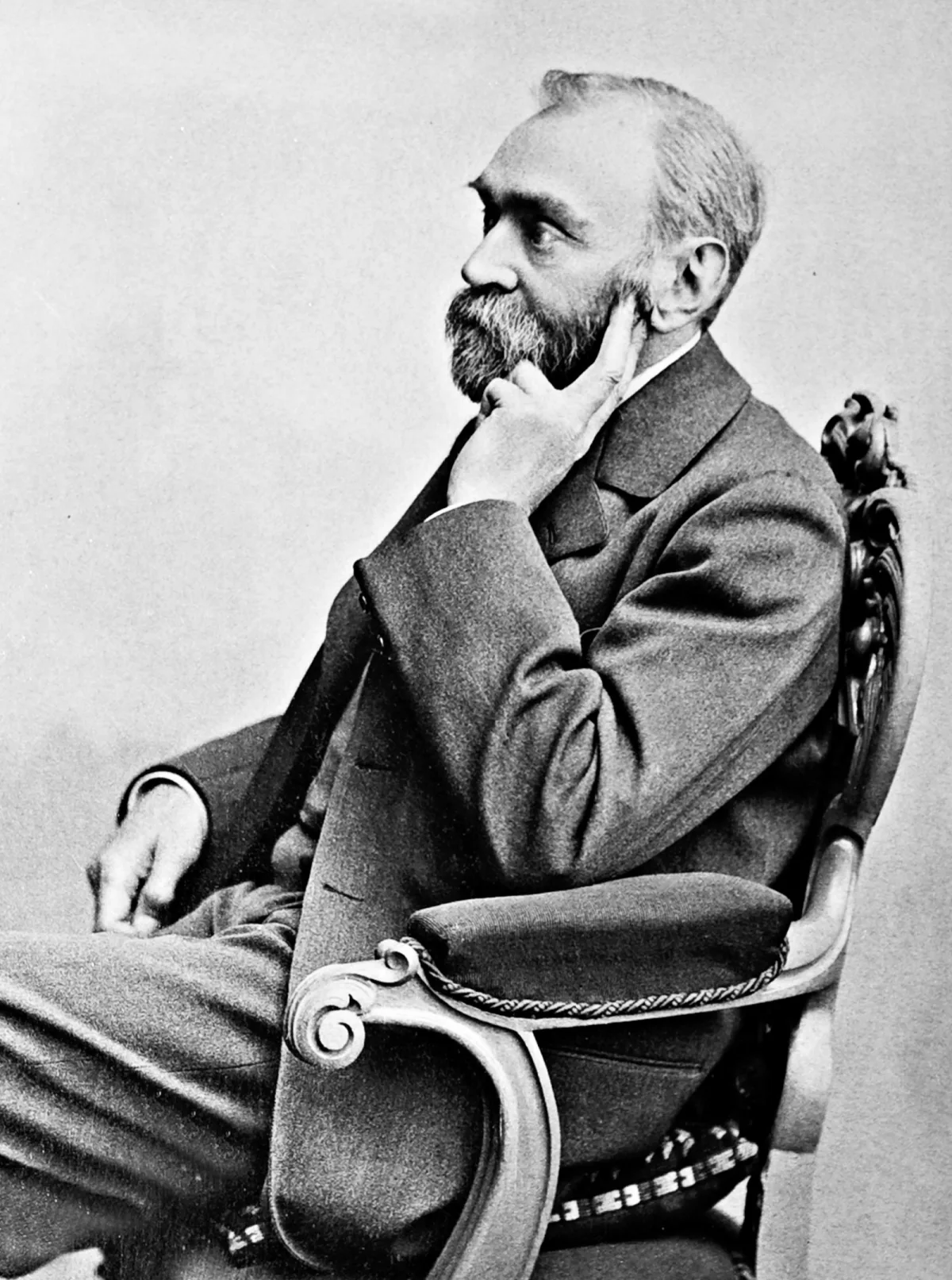
This pill comes with a backstory. Late in life Alfred Nobel had heart trouble, and his doctor prescribed the very compound Nobel had turned into dynamite. According to the Nobel committee, Nobel refused to take it because he knew it caused headaches. In a letter, he wrote: “It is ironical that I am now ordered by my physician to eat nitroglycerin.” In 1998, the Nobel Prize in medicine went to the discoveries that explained how the drug works: through nitric oxide.
The Finnish volunteers took two 0.5 mg tablets under the tongue about 20 minutes apart. Systolic blood pressure, the top number, fell from 134 to 114 mmHg on average, a drop of roughly 15%. A similar trick had already worked in mice: briefly lowering their blood pressure helped fluid carry large molecules out of the brain faster.
The second push came from vibration. Blood vessel walls carry a protein called Piezo1 that senses mechanical pressure. In mice, switching it on boosted drainage from the membranes around the brain and improved memory. Doctors have no pill that switches Piezo1 on, so the team shook the sensor from the outside. Volunteers lay on an off-the-shelf vibrating mattress, sold by a Finnish company for relaxation. It hummed at 22 to 50 hertz, a low rumble you feel more than hear. The pattern mattered: the vibration came in waves with pauses, because the sensor quickly gets used to steady shaking and stops responding.
The vibration lasted 37 minutes, and the second tablet came partway through. Volunteers spent about half that time with their eyes closed. The team scanned their brains before and after, and drew blood before the procedure and about an hour and a half after the first tablet.
What showed up in the blood
// After the pill and the vibration
The figures are corrected for blood dilution, and the correction matters. Nitroglycerin dilutes the blood by about 5%, so the concentration of any protein in it should fall. These proteins went up instead.
Two other brain proteins, neurofilament light chain and tau, didn’t budge. The authors class both as larger proteins and suggest the route from brain to blood works like a sieve: small proteins pass through, larger ones get stuck. If that’s right, the approach could only help early, before amyloid has clumped together.
One more pattern emerged: the more a person’s blood pressure dropped, the more protein ended up in the blood.
The scans hinted at where the protein went. After the procedure, the large veins at the back of the head grew brighter, and the brighter they were, the more amyloid turned up in the blood. The brain tissue itself dimmed by 4.6% on average. In this scanner mode, that means the tissue holds less protein-bound water.
“For the first time, we obtained evidence that brain-derived proteins passed directly into the large veins at the back of the brain, something that has not previously been observed even in animal models,” Professor Vesa Kiviniemi, who leads the group, said in the university’s announcement. According to the announcement, the effect largely resembled what the brain does during sleep. “Harmful proteins were cleared from the brain more efficiently than usual,” first author Johanna Tuunanen told Medical Xpress.
Where the evidence ends for now
Start with who was tested. The 29 volunteers, aged 27 to 61, were university and hospital staff who answered an email invitation and took part without pay. None of them were patients, and nobody measured memory or plaques.

There are two ways to read more brain protein in the blood. One: the brain is flushing out waste better. Two: the barrier between brain and blood briefly opened a little. If the second is right, the numbers show a leakier barrier, not a cleaner brain. This experiment can’t tell the two apart. The authors don’t rule out the second reading, and they write that recordings of the brain’s electrical activity also hint at a brief leak. GFAP also rises in the blood after a concussion, and the authors make that comparison themselves. Published data put it at about 1,200 picograms per milliliter on average after a mild head injury; their volunteers had about 85 after the procedure.
Blood was drawn only in the combined session, so the tests can’t separate the effect of the vibration from that of the pill. Each person went through the procedure once, and nobody checked whether they would have fewer plaques years later. The team collected the data between November 2021 and October 2023; the paper came out three years later.
Next stop: early memory problems
Kiviniemi sees a chance to act before the disease takes hold. “We can now also remove proteins while they are still soluble, before they form solid deposits,” he told Medical Xpress. Next, the team plans to test the procedure in people with early memory impairment.
Nobel turned this drug down because it gave him headaches. Now researchers are testing it as a way to clear the head. The question that matters is still open: will that mean fewer plaques years from now?