// Contents
The doorway is so overgrown with branches that nobody could get through. A person in a virtual reality headset stops and asks a question adults rarely ask out loud: am I dreaming? They study their palms and check whether gravity still works. Suddenly the world around them brightens. A sword appears in their hand, the branches fall, and the way is clear.
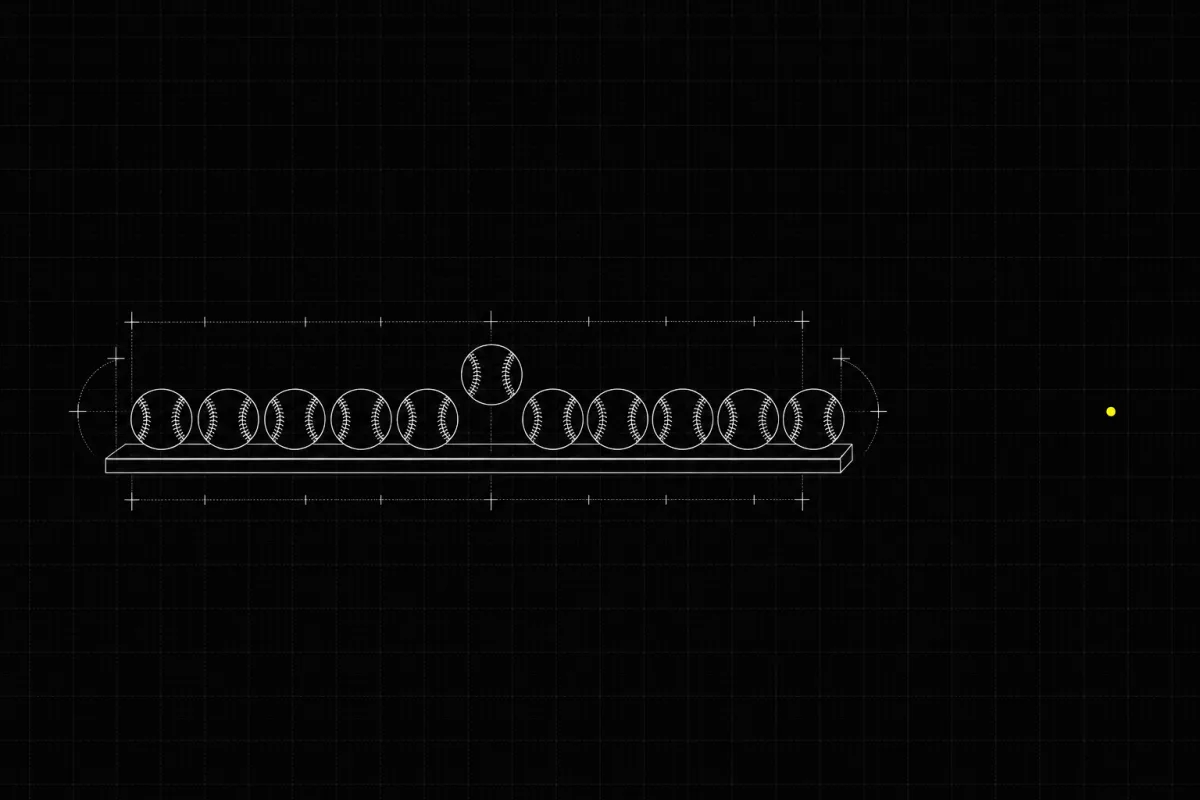
This is a dream simulator. Psychologists at the University of Trento in Italy used it to teach students to notice when they were dreaming. After a month of sessions, the trainees were having lucid dreams four times as often as people who practiced without a headset. The strangest part of the study, published September 28, 2026, in Frontiers in Psychology, concerns a third group. For a month, its members wandered through similar virtual worlds hunting for hidden baseballs. They ended up with the fewest lucid dreams of all, fewer even than people who never put on a headset. That gap, admittedly, is small enough to be chance.
Pinch your nose
A lucid dream is one in which you realize you’re dreaming and can sometimes steer the plot. About half of people have had at least one: a meta-analysis of 50 years of research put the share at 55%. Roughly 23% have them once a month or more. The rest have to learn.
The best-known technique is the reality check. Several times a day you ask yourself “am I dreaming?” and give the world a small test: pinch your nose and try to breathe through it, look at your hands, flip a light switch. Awake, the result is always boring. The hope is that the habit carries over into sleep, where the test gives a different answer and the dreamer catches on.
Ordinary days, though, rarely feel like dreams. “For most people, our day-to-day lives may not feel ‘dream-like,’” Daniel Morris, a cognitive neuroscientist at Northwestern University who was not involved in the work, told Live Science. The check becomes an autopilot ritual and never makes it into the dream.
A white rabbit and flying on command
Researchers in Trento decided to feed the waking brain what it was missing: absurdity. Why a headset rather than a screen? Dreams fool us because they feel real to every sense, Andrea Signorelli, a doctoral student and the paper’s first author, told Live Science. Virtual reality fools stereoscopic vision and hearing; it is “basically the most immersive technology that we have at the moment,” he said. The app, LucidDreamingVR, draws on Tibetan dream yoga. The research center of the Italian Buddhist Union built it and handed it to the university for testing. Each session opened with 15 minutes of meditation inside the headset. Participants practiced noticing their breath, bodily sensations, thoughts and emotions without acting on them. Then they stood up and spent about 20 minutes exploring a virtual world while a narrator’s voice guided them.
That world was built like a dream. A white rabbit stands at the end of a dim hallway. In a grove at night, a little house grows out of a tree. Spot an oddity like that, run a reality check. From the third session on, a successful check “switched on” lucidity, and the scene grew brighter. Participants had to hold that state or it faded, much as lucidity slips away from beginners in real dreams.
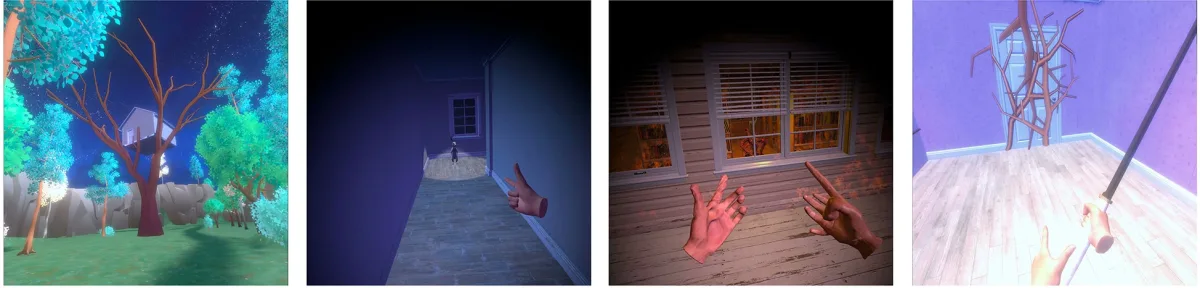
The first four sessions took place in an ordinary apartment, the last four in fairy-tale settings like that grove. Near the end came the superpowers: participants could jump high, fly and change the size of their bodies just by saying so.
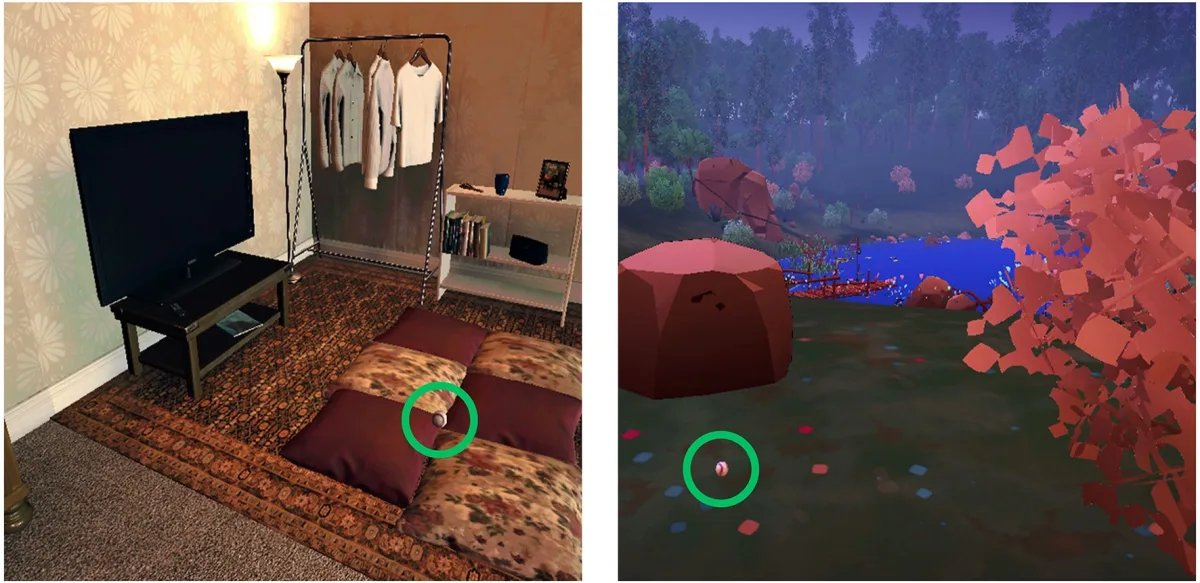
To find out whether the headset mattered, the team split 38 students into three groups. For five weeks, everyone kept a dream diary each morning and did reality checks, with a phone alarm reminding them every hour. The only difference was the headset. Thirteen people came in for LucidDreamingVR twice a week during the first four weeks. Another 12 got the same amount of virtual reality, but a different kind: similar rooms and landscapes, no meditation and a single task, finding the baseballs. The last 13 never used a headset at all.
Last place goes to the baseball hunters
// Lucid and semi-lucid dreams over five weeks
As a share of all remembered dreams, nearly one in eight in the simulator group was lucid or close to it. In the no-headset group it was about one in 34; among the baseball hunters, one in 73. At least one such dream came to 11 of 13 people in the first group, but to just 4 of 12 baseball hunters. Nicola De Pisapia, the neuroscientist whose lab ran the study, told Live Science he was surprised how little training it took. The team stopped at a month, he said, because anything longer would have been too demanding for the volunteers.
The clearest clue to why the simulator worked lies in the dreams themselves. Two of the seven fully lucid dreams in the first group contained elements of the simulator, and so did one semi-lucid dream. In two of those three cases, a detail familiar from the headset was exactly what tipped the dreamer off.
For the baseball hunters, it seems, the opposite happened. The authors suspect habituation: a month of searching the same rooms made people comfortable in the virtual world. By the eighth session, questionnaires showed that group’s sense of an altered state had faded while their focus on the task had grown. They were learning to find baseballs, not to doubt what they saw. That shift, too, is too small to lean on: it stops being statistically significant once the analysis corrects for multiple comparisons.
One more oddity. The simulator group remembered fewer dreams overall. Its members recalled something on 47% of nights, compared with 59.5% in the no-headset group. Morris offers a mundane explanation: people in the simulator group may simply not have bothered to write down ordinary, uneventful dreams.
Taking dreamers at their word
The study’s biggest weakness is that everything rests on diaries. Participants decided for themselves whether a dream was lucid, and most of the “lucid” dreams were really “maybe” answers. The first group had 7 fully lucid dreams; the other 19 were semi-lucid. Sleep labs check it another way. In 2021, four research teams in the US and Europe agreed on a signal with sleepers in advance. Once the sleepers realized they were dreaming, they moved their eyes left and right. Then they solved simple math problems and answered with eye movements or twitches of their facial muscles. Instruments confirmed they were in REM sleep at the time. The Italian experiment had no such check.
The stakes go beyond entertainment. Morris noted that lucid dreaming can help people with nightmares: once they realize they’re dreaming, they can turn a frightening plot into a calm one. Signorelli would like to tailor the training to each person. The headset could, for example, recreate someone’s recurring nightmare so they learn its warning signs while awake.
That would give a nightmare a dress rehearsal in broad daylight. Whether the sleeper will then recognize, at night, the very door they once hacked open with a sword is a question for the next experiments.