// Contents
A person with a cochlear implant goes deaf several times a day. Before a shower, at the pool, before bed, they take the processor off their head and the world switches off: the internal part of the implant is silent without the external one. That is how nearly every cochlear implant in use today works.
On September 29, 2026, the Austrian company MED-EL began rolling out in Europe TICI UNICO, an implant with everything under the skin, microphone included. Three weeks later, on October 20, Envoy Medical in Minnesota announced that participants in the pivotal trial of its fully implanted Acclaim had passed their six-month visits. The two companies are solving the same problem in very different ways. The contrast shows what actually kept the whole implant from disappearing under the skin for decades.
What usually stays on the outside
A cochlear implant bypasses a damaged cochlea: electrodes threaded inside it stimulate the auditory nerve with current. As the US institute NIDCD describes it, the system has four parts. A microphone picks up sound, a speech processor selects and arranges it, a transmitter and receiver-stimulator turn the signal into electrical impulses, and an electrode array delivers them to different regions of the nerve.
In the familiar design, the microphone, processor and transmitter sit outside in a unit behind the ear, and a coil is held to the head by a magnet over the implant. Processors get lost and broken, they need cleaning, and they get in the way of swimming. They are also visible, which for many people hurts more than the rest.
The authors of the first peer-reviewed paper on TICI, in Communications Medicine , name the external unit as one reason implants remain rare. They cite a WHO estimate that about 60 million people live with severe-to-profound hearing loss. Since the first operations, only slightly more than a million implantations have been done in total.
A microphone under six millimeters of skin
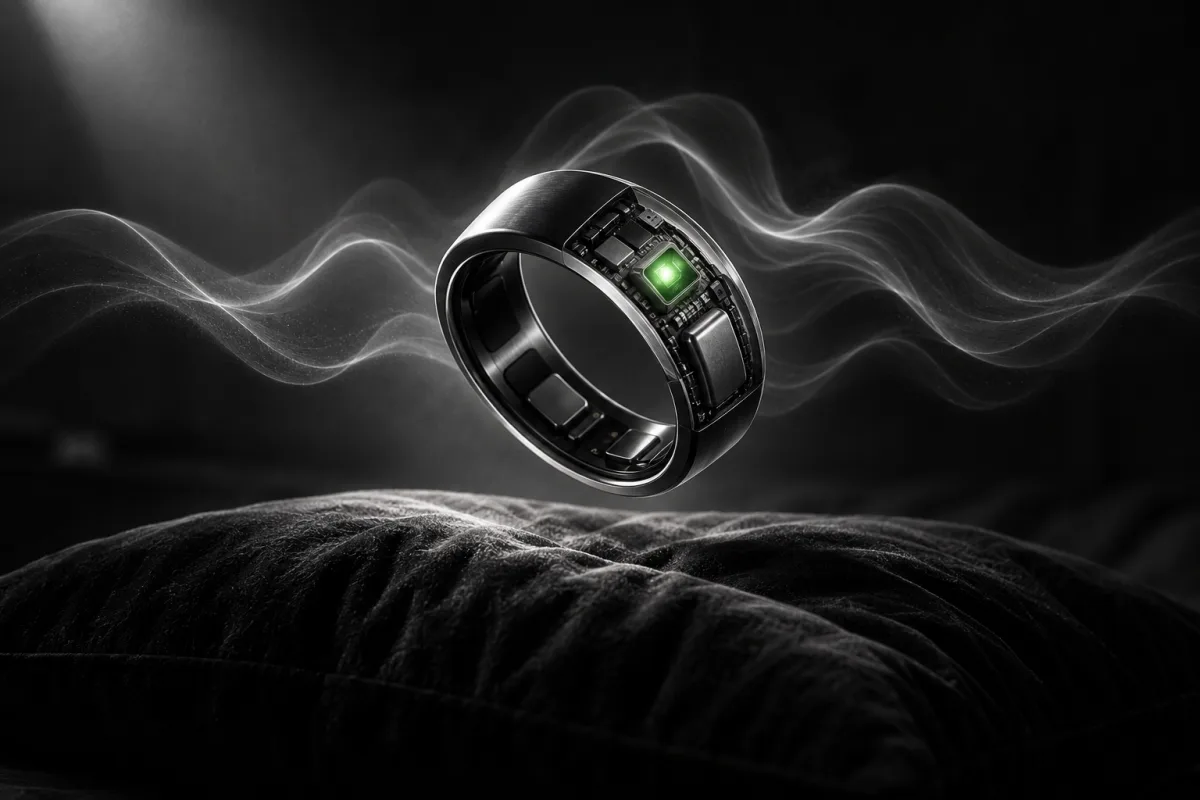
MED-EL moved everything inside. According to IEEE Spectrum , the implant weighs 20 grams and has four connected parts. The microphone sits about 6 mm under the scalp. A stimulator the size of a postage stamp holds the processor and a lithium-ion battery. A coil moves data and recharges the battery, and a lead runs to the same electrode array the company uses in its conventional implants.
The microphone is the hard part. Project leader Gerhard Mark told IEEE Spectrum it was by far the biggest engineering challenge. Sound that has traveled through tissue behaves differently from sound in air. Mark declined to say exactly how the team solved it.
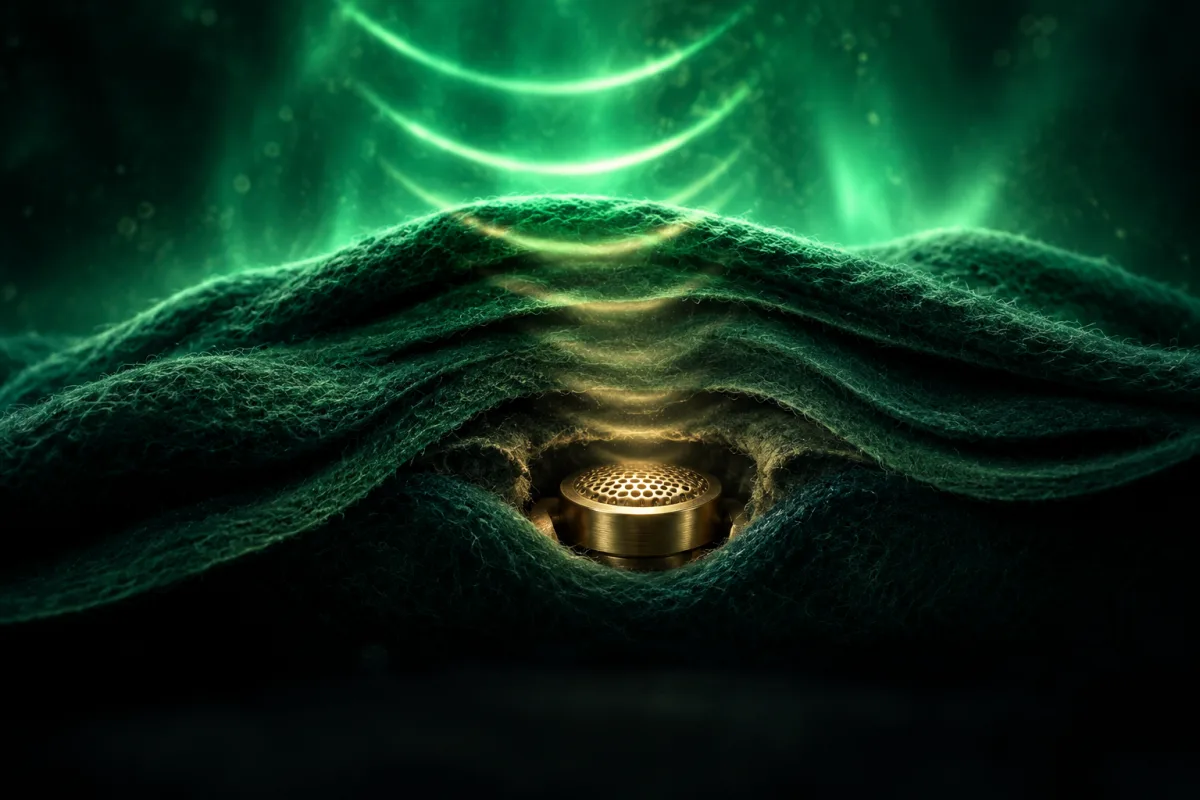
A competitor’s study shows why this matters. In November 2025 the Australian company Cochlear published in Ear and Hearing a trial of its own research TICI system in ten adults. The system has two modes: one with an external processor and an “invisible” one in which sound comes only through the internal microphone. After six months both modes clearly improved speech understanding over baseline. But the external processor did better, and the gap depended on loudness.
// How many points the external microphone beat the internal one (Cochlear, 9 months, phonemes in quiet)
The quieter the sound, the more the buried microphone loses. Loud speech comes through as well as with the external one. There was a bigger problem too: in two of the ten participants the device failed because fluid got into the microphone, and both were reimplanted with conventional Nucleus devices. The authors still write that they found no fundamental problem with a microphone under the skin.
MED-EL’s published picture is calmer. In a six-patient study in Liège and Munich, word recognition in quiet and sentence recognition in noise were comparable between TICI and the external SONNET processor. Of 15 adverse events, one was a serious device-related effect: swelling at the implant site with signs of infection, which was treated and resolved without lasting harm. The paper’s own caveat is that the sample was too small for statistical testing. Three of the five authors work for MED-EL, which also paid for the study.
The ear instead of a microphone
Envoy Medical came at the problem from the other side and dropped the microphone altogether. In Acclaim, sound is picked up by a piezoelectric sensor resting on the incus, one of the three tiny bones of the middle ear. That is how chief executive Brent Lucas described the device in an interview with Hearing Health Matters . The outer ear gathers sound, the ear canal carries it to the eardrum, and the eardrum sets the bones moving. The sensor turns those vibrations into a signal for the processor.
The design has consequences the company lists in its October 20 release. No layer of tissue sits between the sound and the sensor. The ear canal stays open, so a person can wear ordinary earbuds or a hearing aid. There is no external part on the head and no implanted magnet, not even for charging. The battery sits in the chest and is meant to last several days, and the modular design lets it be replaced without removing the whole system.

Nor is the sensor itself new. The same component sits in Esteem, a fully implanted middle ear device Envoy has sold in the US since 2010. Esteem drives the stapes mechanically, while Acclaim, being a cochlear implant, stimulates the cochlea with current. The trade-off is that the approach depends on the ear’s own mechanics: the eardrum and the chain of bones have to deliver vibrations to the sensor reliably.
A battery meant to last fifteen years
A fully implanted device needs a power source inside the body, and here the companies split again. According to IEEE Spectrum, the TICI UNICO battery runs up to 40 hours per charge. It recharges in about an hour to an hour and a half from an external unit the size of a car key that attaches magnetically through the scalp, and the wearer can keep hearing while it charges. The battery cannot be replaced. The company expects it to still deliver at least 24 hours of use per charge after 15 years.
// Two ways to hide an implant
MED-EL TICI UNICO
Microphone under the scalp. Battery inside the implant housing, up to 40 hours per charge, not replaceable. Charging from an external magnetic unit. CE marked, rolling out in Europe since September 29, 2026, not approved in the US.
Envoy Acclaim
No microphone; a sensor on a middle ear bone picks up sound. Battery in the chest, several days per charge, replaceable on its own. Nothing worn on the head. Investigational, in a 56-participant US pivotal trial.
What has not been proven yet
There is little data, and that is the most honest thing to say about fully implanted cochlear implants right now. MED-EL has peer-reviewed results for six people. For a 30-patient trial the company says hearing was comparable to its conventional implants, but chief executive Ingeborg Hochmair says those data are still awaiting peer review. Cochlear is continuing in its ENHANCE study with 18 participants, still a feasibility study.
Envoy has no results to show at all; the company is holding them until the trial ends. The pivotal study is registered for 56 participants at seven sites, among them Mayo Clinic and Cleveland Clinic. It has two primary endpoints. One covers adverse events through the first year after activation. The other compares CNC word scores at 12 months in the “Acclaim only” condition with the score the person had with a hearing aid before surgery.
Envoy expects to finish the 12-month visits early in the second quarter of 2027 and to file the last of four PMA modules with the FDA by the end of that quarter. Two modules are already in. Lucas expects an FDA decision by the end of 2027 or early 2028, and the company notes that passing milestones does not guarantee approval. Neither company has said anything about price.
Invisible on a schedule
The most interesting finding in both studies is not speech scores but how people used the new option. In the MED-EL study, participants went without the external processor for 4.2 to 18.5 hours a day. One participant wore the processor at home and went out without it. The authors don’t know exactly why; they only describe the habit.
In Cochlear’s study, the share of time in invisible mode ranged from 22% to 88%, with a median of 49%. For roughly half the day, listeners chose to keep the implant out of sight, and for the other half they put the familiar processor back on.