// Contents
“Space is getting wider and deeper.” A participant in a 2016 experiment said that in their sixth week of wearing a compass belt. It buzzed on whichever side of the body faced north. Another participant said the buzz helped them keep track of where things were, from the university to a desk at home.
A volunteer in a 2023 study faced a familiar building in the virtual town of Westbrook, controller in hand. The belt was off. Researchers at Osnabrück University asked the volunteer to point north from memory. People who had explored with the belt could still point roughly north.
North moves to your left hip
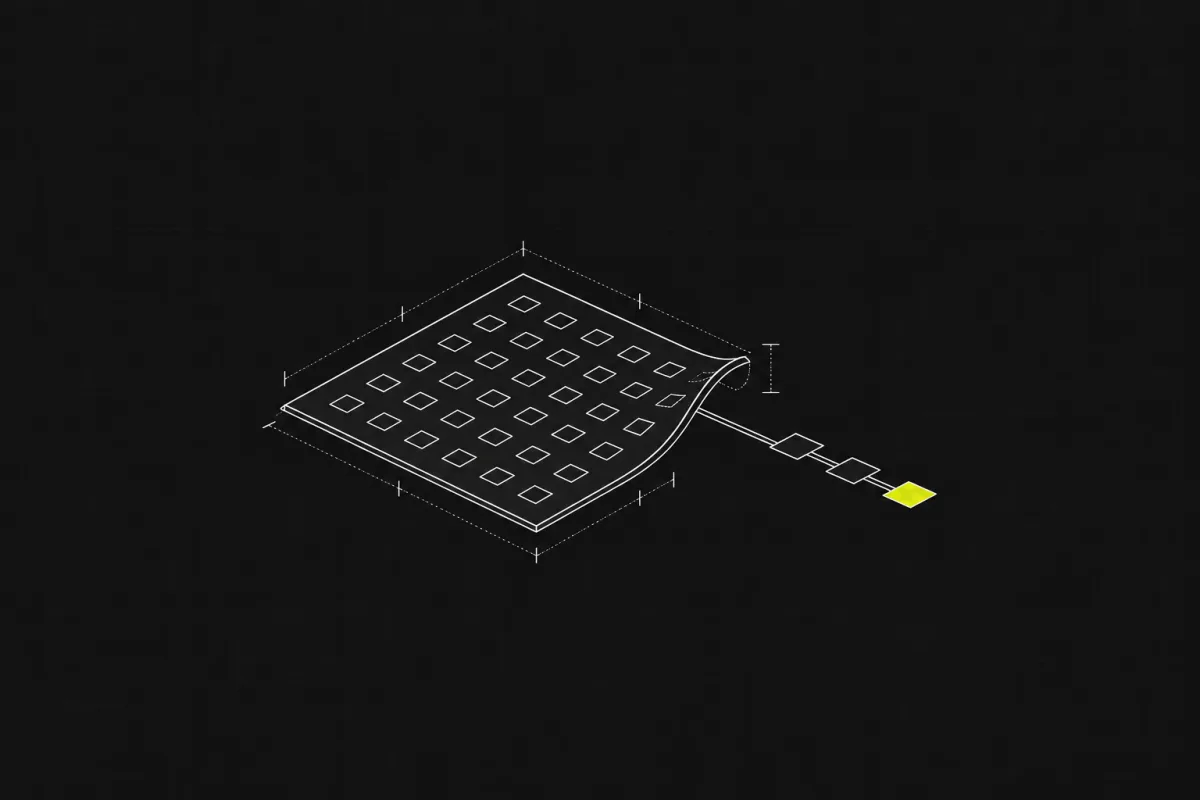
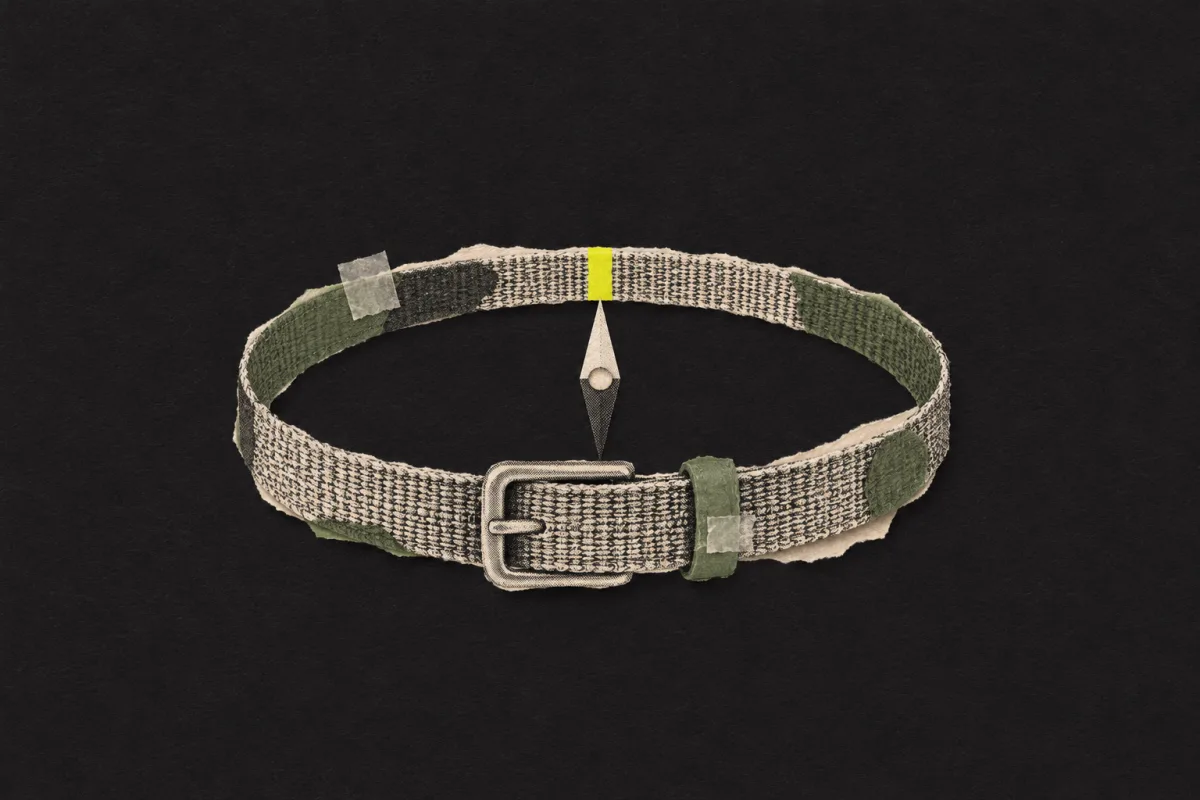
The feelSpace belt has a compass and 16 small motors spaced around the waist. Face north and the motor in front buzzes. Turn right and the buzz shifts to your left hip. The belt turns with you, while the direction it signals stays put. Even on a gradual bend with no clear corner, you can feel yourself turning right.
People in the 2016 study said the belt made it easier to picture how places fit together. The researchers saw no clear improvement when they asked people to point back to the start of a complicated route. For the new test, the team gave a virtual town a north of its own.
A town with its own north
The researchers built Westbrook, a town of 236 buildings spread across about one square kilometer of virtual land. The volunteers wore virtual reality headsets and swiveled in their seats. A joystick moved them down the street. They had five half-hour sessions to explore and take pictures of buildings with street art.
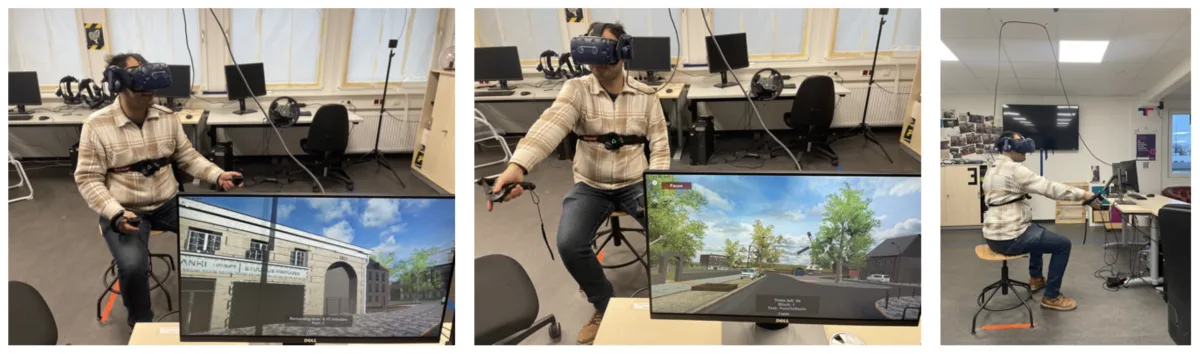
Fifty-three people completed the study. Of those, 27 had already spent six weeks wearing the belt in daily life. In Westbrook, their belts buzzed in the direction the team had chosen as north. The others were never told which way was north. The town gave them no clues. There was no sun in the cloudy sky, and the buildings cast no shadows.
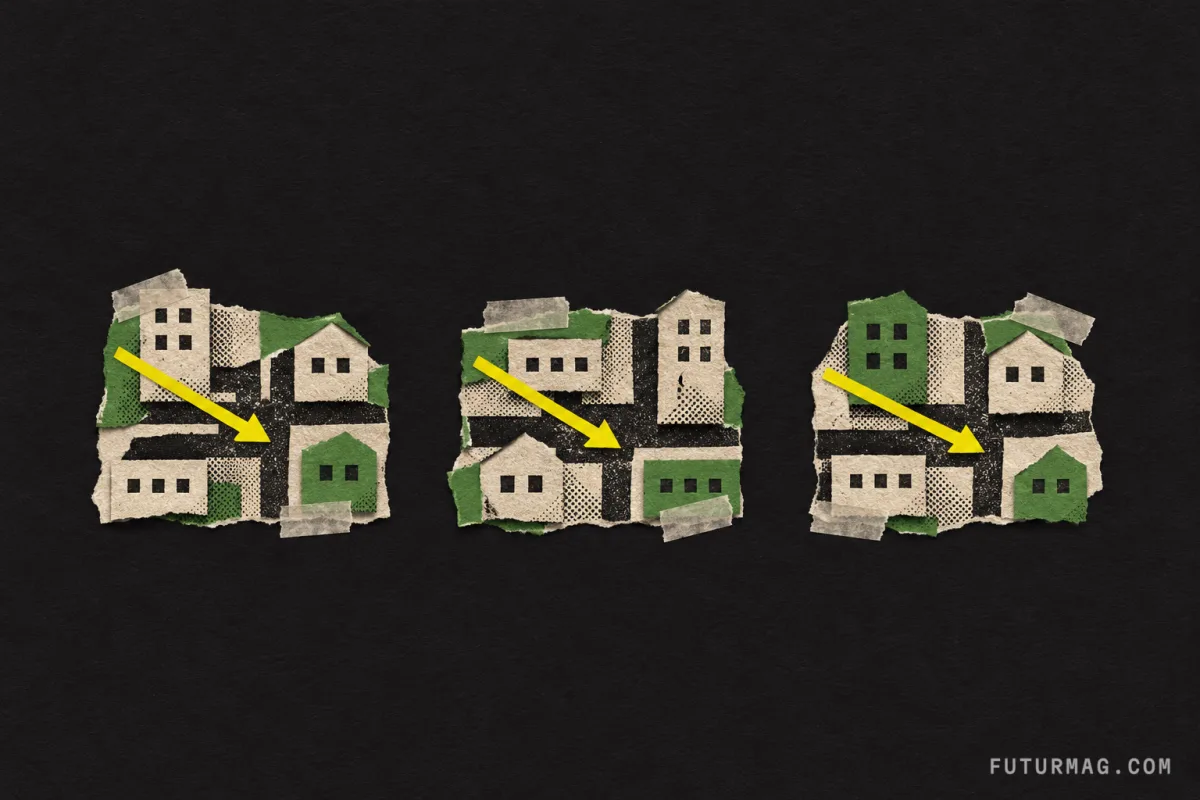
In the pointing test, the program changed the building and the direction each person faced between attempts. With the belt off, the people who had explored wearing it missed north by a median of about 32 degrees across their attempts. For the control group, which had never been shown north, the median was about 111 degrees. In a separate test with the belt on, users were slightly better at pointing from one familiar building straight toward another. North was still the only direction the belt signaled.
The researchers formed the groups without random assignment, and Westbrook had no moving traffic or pedestrians. The pointing test showed that people could remember the general direction in a virtual town they knew. How well that skill carries over to real streets remains open.
A compass for the walk to work
The feelSpace naviBelt, a version for people who are blind or have low vision, has a tactile compass mode. In a 2021 study, 11 blind people wore a belt for seven weeks and reported how they used it on familiar and new routes. By week five, one participant had learned a new route to work through the woods and across a tricky intersection. He said the belt gave him enough confidence in his bearings to try it.
Five people did the in-person tests. The authors analyzed the results for the four participants who had lost their sight after birth. They left out the fifth participant, who had been blind from birth. Across the three tasks, the researchers found no statistically significant improvement after training.
Even where there’s nothing nearby for a cane to pick up, a buzz at the waist can still tell you which way is north.