// Contents
In Cornell University’s photo of the demonstration, doctoral student Saif Mahmud wears a smartwatch. A simple figure on the monitor beside him shows what the software can reconstruct from the watch’s echoes, right down to where the wearer’s knees are. The team did it with an off-the-shelf watch.
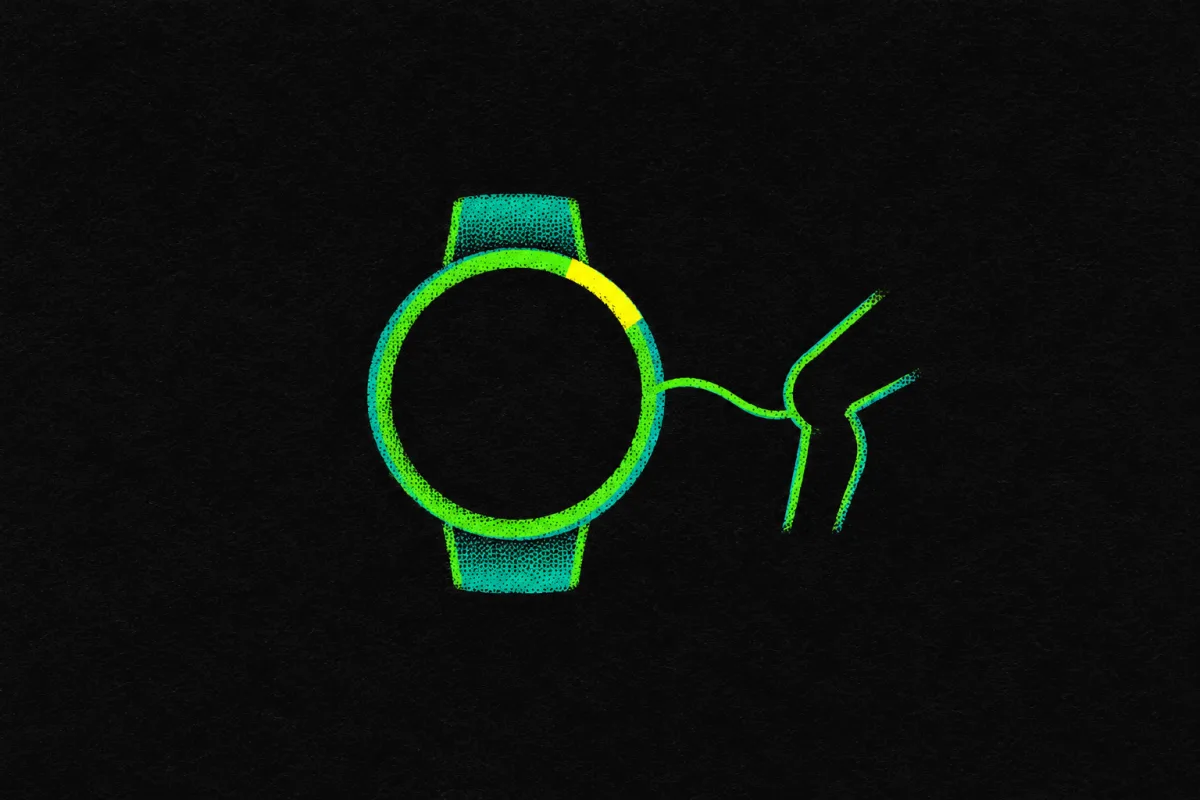
EchoMotion turns the watch’s speaker and microphone into a kind of sonar. It uses the pattern of echoes to place 12 points from head to ankles. In a trial with 15 volunteers, the average error after a brief calibration for each participant was about six centimeters per point. Outside the lab, accuracy dipped a little in one narrow hallway. The researchers suspected echoes from other people.
The watch listens for echoes
A watch’s motion sensors can tell when you turn your wrist or swing your arm on a walk. During a squat with your arms out in front of you, your wrist drops as your knees bend. That wrist movement tells you little about the knees.
Mahmud’s team used the watch’s speaker to play sounds too high for people to hear. The sound bounces off parts of the body and returns to the microphone. When someone changes pose, the pattern of echoes changes with it. The model learns to use those patterns to estimate where each point is in space. A series of poses makes a three-dimensional record of the way the person moved.
The team developed the model with a 3D-printed watch case fitted with two speakers and two microphones. Ten volunteers put the prototype on their nondominant wrists and performed 18 exercises. Cameras recorded the movements so the researchers could compare the footage with the poses estimated from sound. The team reported its results in the Association for Computing Machinery’s peer-reviewed journal on wearable computing. Co-author Jiwan Kim published the study’s abstract.
Twelve minutes to get to know the wearer
For the next test, 15 new volunteers wore an off-the-shelf Galaxy Watch 6. The team used the built-in speaker and microphone listed in Samsung’s specifications. One pair was enough.
Before the team calibrated the model for each wearer, the average error was about ten centimeters. After 12 minutes of calibration, it fell to about six. The same model ran on a Galaxy Watch 7 and a Google Pixel Watch 3 without retraining.
To calculate the error, the team measured how far each point was from its position in the camera footage, then averaged those distances across body points and exercises. Say the watch places the shoulders accurately in one move. Its knee estimates might be worse. An average of six centimeters tells you little about whether the watch can pick up a small shift in a knee.
Accuracy slipped in one narrow hallway
The researchers recruited another ten volunteers to try the system outside the lab. They exercised in a small room and beside a busy road. Furniture and traffic noise made little difference. A narrow hallway was the third setting. Accuracy slipped there, which the team attributed to sound bouncing off other people nearby.
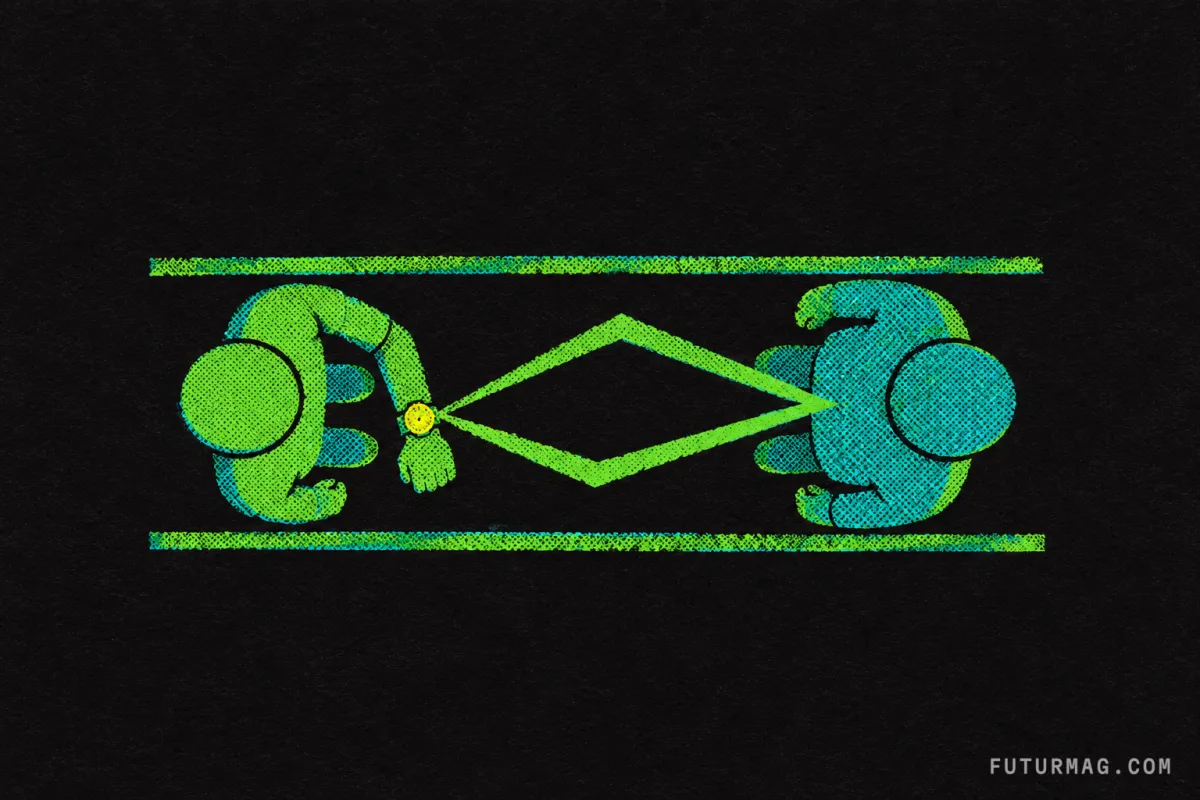
In a crowded gym, the watch would need to tell which echoes came from the wearer and which came from other people moving nearby. Mahmud hopes the model could learn to tell those echoes apart if it trained on thousands of people instead of a few dozen. A larger trial could test that.
When counting reps gets you only so far
The team is developing the system to track workout form. One example is the Bulgarian split squat, with the back foot resting on a raised surface. A rep counter only has to pick up an up-and-down motion. To offer feedback on form, the system needs a picture of what both legs are doing. Physical therapists might use the watch’s three-dimensional record to see how patients move during exercises at home. Whether the records would help in rehab still needs testing.
EchoMotion can estimate where the joints are during an exercise. At the bottom of a split squat, a small shift in a knee might call for a correction. Can the watch reliably distinguish that shift from an error in its own estimate?