// Contents
“Contrary to our hypothesis.” That is how a Stanford team opens the main finding of its paper on concussion. The researchers set out to confirm the idea that has shaped head protection for eight decades: twisting the head is what hurts the brain, and a straight-line jolt is mostly harmless. Sensor-packed mouthguards worn by 203 athletes said the opposite. The best predictor of concussion turned out to be plain linear acceleration, and its danger threshold sits lower than helmet sensors had suggested. Four children under 14 were concussed by hits softer than an average football tackle, and a model trained on older athletes missed every one of them.
The study, by graduate student Jessica Towns and bioengineering professor David Camarillo, appeared in the Annals of Biomedical Engineering on November 9, 2026. It draws on real athletes in real games and practices. Back in 2016, Camarillo stood on a TEDx stage and argued the opposite.
A theory born in a block of gel
The idea dates to World War II. In a 1943 paper in The Lancet, the Scottish physicist A.H.S. Holbourn described experiments with flat gel models of the brain. When he rotated the gel, it sheared: thin layers slid past one another. Holbourn concluded that rotation could explain most brain injuries, while straight-line motion did no harm: brain tissue barely compresses, so a linear push shouldn’t deform it.
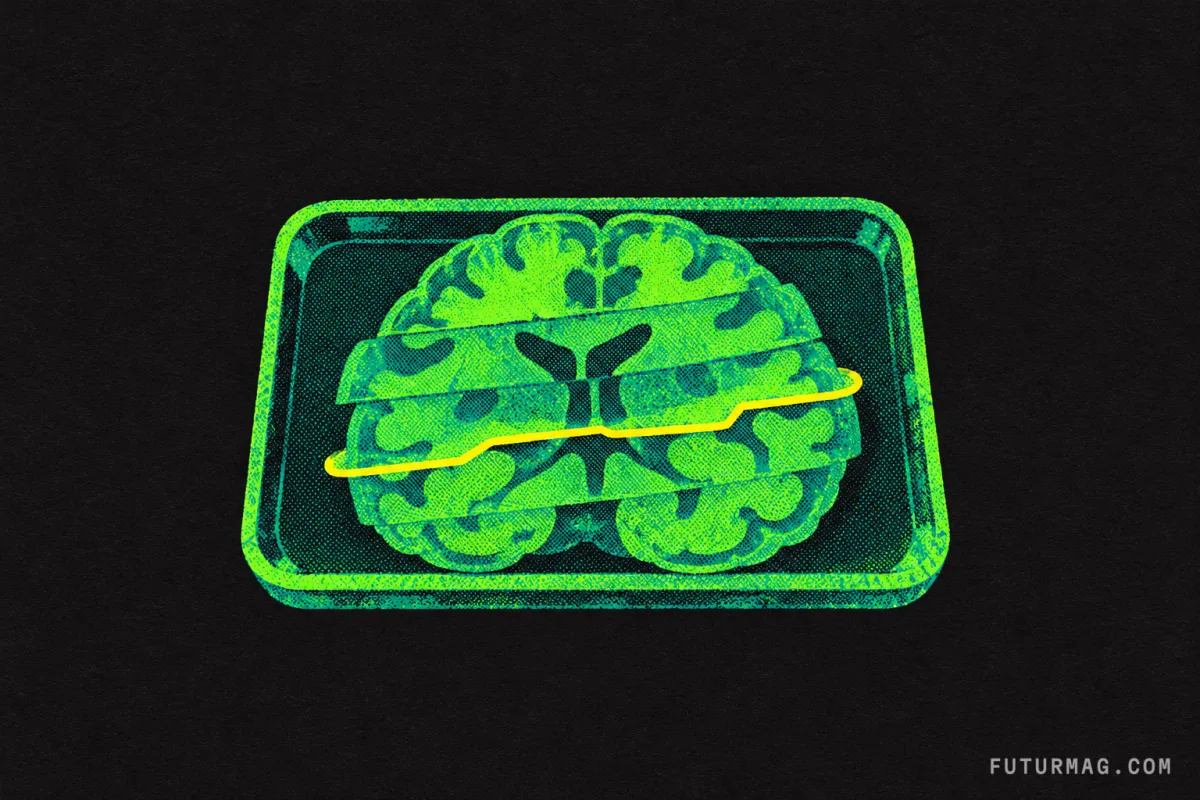
It made intuitive sense. The brain has the consistency of jelly, and jelly distorts most easily when you twist it. In the 1960s and 1970s, US neurosurgeons knocked monkeys unconscious with rotational force. By 2013, biomechanics researchers were stating it bluntly: linear acceleration breaks skulls, not brains. The idea even made it to store shelves: bike helmets with MIPS, WaveCel and SPIN liners are sold as protection against rotational motion.
Camarillo shared that view. In April 2016 he gave a TEDxStanford talk and opened with his own record: ten years of football, thousands of blows to the head, and two concussions, both from bike crashes. He showed an animation from the US Centers for Disease Control and Prevention: a brain slamming into the inside of the skull. More of it was wrong than right, he said. The skull leaves only a few millimeters of room, he explained, so the brain as a whole barely moves. Most experts, he said, saw rotation as the critical factor.
A lab that clips onto your teeth
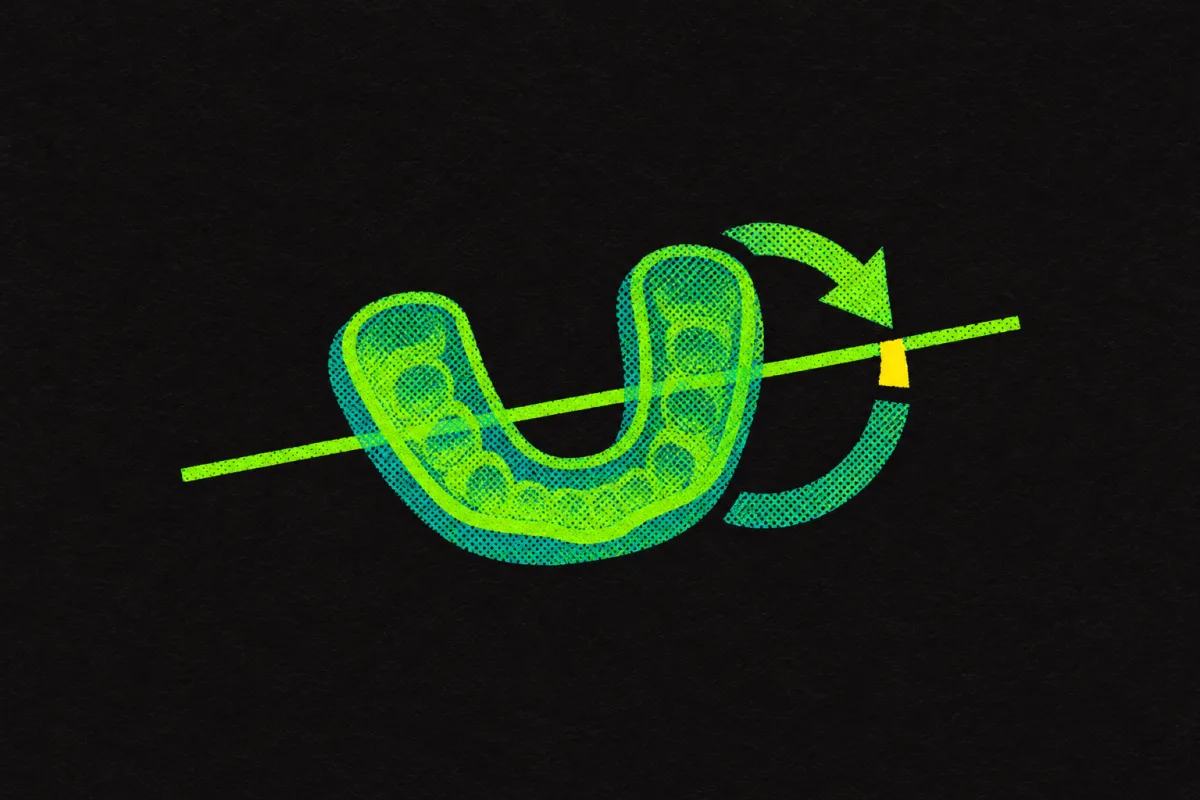
What Holbourn never had was measurements from living people at the moment of injury. Helmet sensors arrived in the 2000s, but a helmet shifts on the head and records its own wobble. So Camarillo’s lab spent more than a decade building sensor mouthguards: the plastic trays boxers and rugby players bite down on, fitted with an accelerometer and a gyroscope like those in a smartphone. Teeth are locked into the skull. A mouthguard tracks its motion more faithfully than any helmet.
The new study pooled mouthguard recordings from several projects in the US and Australia: American football, Australian rules football, rugby, mixed martial arts, gymnastics, ice hockey and lacrosse. About 3,800 impacts left no injury; 47 ended in concussion. Each concussion was confirmed twice: a clinician or the video caught signs of injury, and the blow itself was identified on the footage.
Then the team asked which measurement best separates dangerous hits from harmless ones. Picture two alarms: one goes off on how sharply the head is jolted in a straight line (peak linear acceleration), the other on how sharply it twists (peak rotational acceleration). The first rings far more often on the hits that ended in concussion, and raises fewer false alarms. On accuracy, it beat the second by almost a factor of two. Adding the second alarm to the first contributed almost nothing. The speed of the turn, as opposed to how abruptly it started, did improve the prediction slightly. The authors stress that twisting isn’t harmless. In their data, the main concussion signal just wasn’t coming from it.
A hundred g, and a coin flip
Head impacts are measured in g, where 1 g is ordinary Earth gravity. At 100 g, the head briefly “weighs” a hundred times more than usual. A head weighs about four kilograms (nine pounds), so the force is like a 400-kilogram (880-pound) weight pressing on it for a few milliseconds.
// Concussion thresholds
“If 100 people were each hit at 100 g, half of them would get a concussion,” Towns said. For comparison, the average head impact in football is about 25 g. Helmet-mounted sensors had put the 50% threshold at 192 g. That is nearly twice as high. The authors suspect the helmet’s movement on the head added noise to those recordings.
Horse riding offers the starkest example in the paper. The International Equestrian Federation has proposed a concussion test for riders’ helmets with a 150 g limit. Under the new model, a hit at that limit carries a concussion risk above 99%. Close to a sure thing. A lab at Virginia Tech, a US university, tested 45 equestrian helmets, and only four kept impacts under the limit. If the model is right, even those four would barely lower concussion risk.
None of this will surprise anyone who remembers another point from Camarillo’s 2016 talk. Helmets for cycling, football and much else are designed and tested to prevent skull fractures, not concussions. Many standards allow accelerations far above 100 g because they were written to stop catastrophic injuries. For a shopper, that means a sticker saying a helmet meets the standard still allows hits at which half of athletes get a concussion. And paying extra for an anti-rotation liner buys protection against the weaker signal in this data. In the authors’ view, cutting the force that reaches the head may matter at least as much as cutting the twist.
Kids don’t fit the model
Four of the 47 concussions happened to children under 14. The researchers held these cases out of the model and tested them separately. A hundred g isn’t where concussion starts but where the odds hit fifty-fifty: risk climbs gradually, and many concussions happen at softer hits. The average peak linear acceleration in a youth concussion was 19.7 g, compared with 68.3 g in older athletes. The model was trained on those older athletes. It missed all four.
Four cases are far too few to draw conclusions, and the authors say so. But the hint is worrying. If a hit softer than an average football collision really can concuss a child, thresholds derived from older athletes won’t work for kids’ helmets. “There’s an urgent need to get more of this data on kids because that might end up being the biggest problem,” Camarillo said. Back in 2016 he pointed out that the leading cause of sports-related concussion in children isn’t football but cycling.
Liquid instead of foam
Why would a straight-line jolt hurt the brain if brain tissue barely compresses? The authors offer a guess and label it as one. The brain and the fluid around it differ slightly in density. In a 100 g hit lasting 10 milliseconds, they estimate, the brain lags behind the skull by about 1.2 millimeters. That might be enough to squeeze out some of the cushioning fluid and press the brain’s surface against bone. The other candidate is cavitation, where a sudden pressure drop makes tiny bubbles form and collapse in the fluid. It is a leading suspect in blast injuries among soldiers, though evidence that it happens inside a living brain is still thin.
That reasoning also drives the engineering half of the paper. The team swapped the standard pads inside a football helmet for liquid-filled shock absorbers and ran it through the usual lab impact tests. In the hardest hits, the predicted concussion risk fell from 73.3% to 55.7%; in medium ones, it halved. Most of the gain came from cutting linear acceleration.
“I would say this is the beginning, not the end,” Camarillo said. If linear acceleration is its own distinct and common mechanism of concussion, he added, “then we’ve been missing a lot.”
In 2016 he showed an audience an animation of a brain hitting the skull and called it a largely mistaken picture of concussion. Ten years later, his own paper lists the brain’s surface striking bone among the possible ways the injury happens.