// Contents
The third man in the trial stopped taking his pills, and not on purpose. On the pills he had no seizures; during the gap he had two. He went back on the drug, and the seizures stayed away for the rest of the follow-up.
That unplanned break became the most convincing piece of evidence in the paper that the New England Journal of Medicine published on November 5, 2026. It is also the weakest: nobody designed it, and you cannot prove a treatment works by accident.
Three men now carry a man-made receptor in the hippocampus: a protein that does not exist in nature. It answers nothing the brain itself produces. It waits for a pill.
Three men and four seizures a month
The participants were 28 to 37 years old and had lived with epilepsy for 10 to 25 years. All three had the same diagnosis: mesial temporal lobe epilepsy with hippocampal sclerosis. The hippocampus is a pair of structures buried deep behind the temples; memory and a sense of direction run through them. Sclerosis means that some of those neurons have died and scar tissue has taken their place. That patch is where the discharge starts.
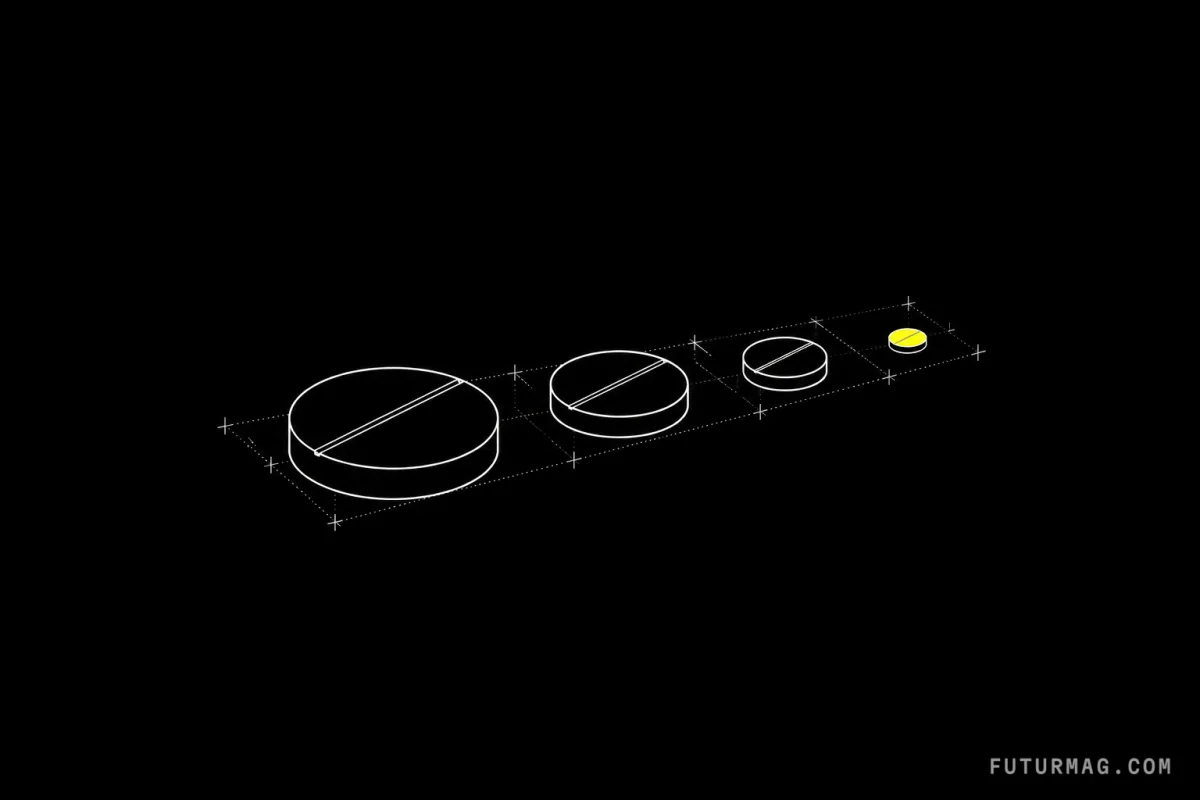
Four seizures a month is roughly one a week, for ten years, or twenty, or twenty-five. New tablets barely change that count. In a thirty-year study of 1,795 patients, half stopped having seizures on the very first drug; when it failed, the second added about 12% to that share, the third 4%, and everything after them together a little over 2%. That is why epilepsy counts as drug-resistant once two properly chosen, reasonably tolerated drugs have failed to stop the seizures. All three men had reached the end of that road: drug after drug tried, seizures still arriving every week.
Once the drugs run out, hippocampal sclerosis usually leaves one choice: remove or destroy the damaged tissue and risk losing something along with it for good.
That route works reasonably well: anterior temporal resection frees most patients from disabling seizures. In one series of 82 adults who had the operation, 72% were still seizure-free after an average of more than seven years. One in four came out permanently missing a corner of vision in both eyes: whatever falls into that corner simply is not there until the person turns their head.
The Beijing team proposed cutting nothing and installing a dial instead. Under MRI guidance, a courier virus carrying the gene for a receptor goes into the damaged hippocampus, and only excitatory neurons — the ones that drive the discharge — can build it. Then the patient takes a tablet, the receptor recognizes it, and the neuron grows harder to fire. The focus stays where it is. It just gets quieter.
Yang Dai, Minmin Luo and Guoguang Zhao ran the trial with colleagues at Xuanwu Hospital of Capital Medical University and the Chinese Institute for Brain Research. Their drug, GA002, is an adeno-associated virus, a harmless courier, carrying the gene for the hM4D(Gi) receptor along with the CaMKIIα promoter, the stretch of DNA that lets only excitatory neurons build it. Surgeons infused 0.5 to 1 ml of it, and two weeks later the men started low doses of clozapine while staying on their usual anti-seizure medication.

The team counted seizures from week five to week twelve after surgery and compared them with the two months before it. In two men the rate fell from 4.5 seizures a month to 0.5; in the third, from four to zero. An average drop of 92.6%. All three also showed fewer of the abnormal discharges that fire between seizures, when the person feels nothing at all.
A lock rebuilt to fit the key
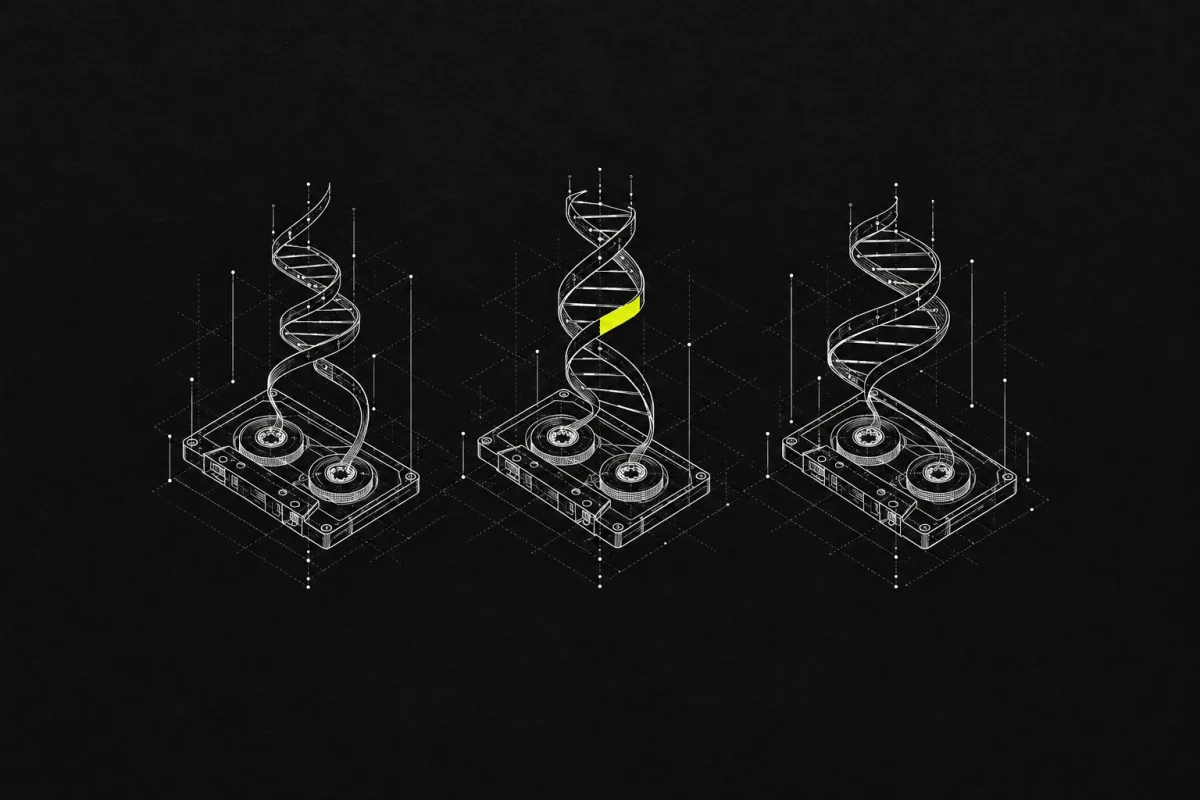
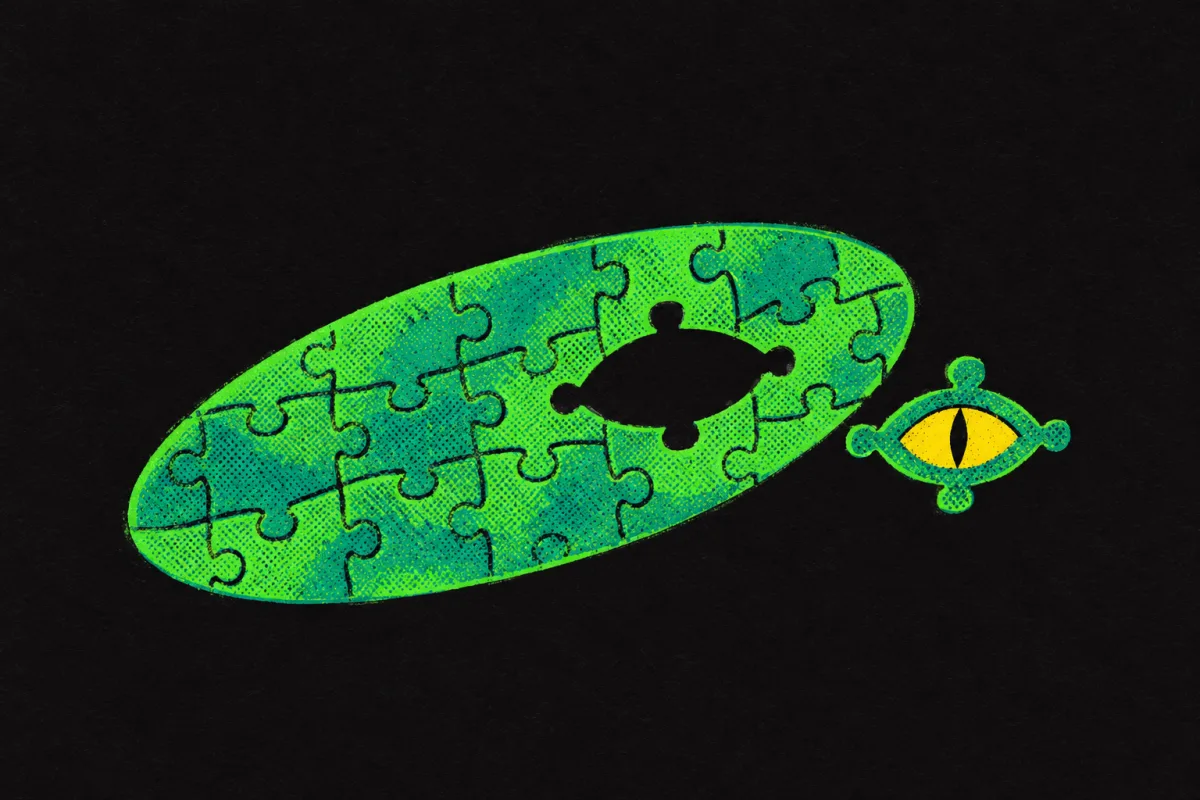
The trick underneath all of this is called chemogenetics, and it has lived in laboratories for almost twenty years. Bryan Roth’s lab described in PNAS how it had made a human muscarinic receptor forget its own messenger. His team ran the receptor through directed evolution in yeast and kept the variants that ignored acetylcholine and answered a synthetic compound instead. The title of the paper says it plainly: evolving the lock to fit the key. One of those variants, hM4D(Gi), is what the men in Beijing received.
The intended key was clozapine-N-oxide, or CNO. Everyone took it to be inert: in the body it does nothing except open the man-made lock. For a decade half of laboratory neuroscience ran on it.

Then the key turned out not to be the key. Juan Gomez, Michael Michaelides and colleagues showed in Science that CNO barely enters the brain and binds the receptor weakly. What it does do is convert into clozapine, and clozapine crosses into the brain easily and holds onto the receptor tightly. For ten years, clozapine had been pulling the lever.
So the human trial dropped the middleman and gave patients the compound that actually works.
// Timeline
- Clozapine is synthesized, the future antipsychotic of last resort
- PNAS: the lock is evolved to fit the key. The receptor ignores its own messenger
- Science: the intended key hardly reaches the brain. Clozapine was opening the receptors
- NEJM: the first chemogenetics inside a human brain, three patients
Before any of this reached people, the same switch had quieted seizures in mice and in macaques. The leap from the lab to the operating room took less invention than nerve: the gene for the artificial receptor goes into a living human hippocampus for good.
Why the key is a schizophrenia drug
Clozapine comes with a reputation. Its label opens with a warning about severe neutropenia: the drug can collapse the count of neutrophils, the white cells that fend off infection, and serious or fatal infections follow. So patients give blood before the first tablet and regularly after that, and doctors keep the drug for people with schizophrenia who did not respond to standard antipsychotics. The target dose there runs from 300 to 450 mg a day.
Epilepsy needs far less of it. The paper calls the dose low without naming milligrams, one of many details that did not fit into three journal pages. Side effects in all three men were mild or moderate and cleared up on their own. None of them developed agranulocytosis, the extreme form of that same neutropenia. One man’s liver enzymes rose briefly and came back to normal without treatment, and tests found no meaningful loss of memory or attention.
A key that requires blood tests is hard to call elegant. But it has the property chemogenetics is prized for: the dose can come down, and the pill can stop altogether. A hippocampus that has been cut out cannot be put back.
What the accidental gap showed
The trial was built to test safety and feasibility, not efficacy: three people, no control group, no blinding. That 92.6% was measured in a narrow window, from week five to week twelve after surgery. Follow-up then ran 8 to 12 months. Two of the men came through all of it without a single seizure. The third lost that status because of the two seizures that arrived during the break in his pills; after he started again, he had none. Those are different windows, which is why the numbers do not line up directly.
Nobody planned that break. His seizures came back, then vanished again once he resumed the pills. Pharmacology calls that pattern withdrawal and rechallenge, and treats it as evidence that the drug is doing the work. In one person it proves nothing: clozapine acts on the brain without any gene therapy at all, so two seizures cannot separate the receptor’s work from the drug’s.
Matthew Walker, a neurologist at University College London who was not involved in the work, called the effect strikingly dramatic and the side effects very few, and named the weak spots in the same breath: the sample is tiny, and clozapine would have to be taken for years. He added that he hopes better drugs will serve as the key. That is a polite way of naming the central awkwardness of the whole idea.
The switch is sunk into the brain, and what sticks out of it is a tablet with a mandatory blood test.
A dial against a laser
Chemogenetics has an older sister. Optogenetics, which won the 2026 Nobel Prize, also gives neurons a man-made receiver, but one that answers light. Light switches on and off in milliseconds, a real advantage. Delivery is the trouble: into the eye the light arrives through camera goggles, and into the depths of the brain only through a fiber in the skull. A pill walks in by itself.
For epilepsy, a slow key may be tolerable: nobody is trying to catch a discharge in a particular second, and the focus just has to stay dimmed for weeks and months. In China GA002 has entered phase 1, and in the United States the regulator has cleared a phase 1/2 trial.
What the receptor will be doing in five or ten years, nobody knows. The gene they received stays in those neurons for a long time, and these men have been watched for less than a year.
What this design does have is a spare part no brain surgery ever had. If some compound turns up that opens the same receptor without mandatory blood tests, the neurons of those same three men will answer to it instead. The lock is in for life. The key is replaceable.