// Contents
Fourteen people with stubborn high blood pressure spent 6 to 12 months on a pill that stops the body from making a single hormone. Then the course ended. That is usually when blood pressure creeps back up, which is why most people take their pills for life. This time it stayed down. Two years later, nearly a quarter of them had normal blood pressure and needed no other drugs to keep it there.
Doctors at Queen Mary University of London described the result in early November 2026 in a short letter to the New England Journal of Medicine. It was a study in people, not mice, but a tiny one with no control group, and the authors themselves are cautious. The interesting part lies elsewhere. This pill seems to do more than hold a disease in check while you take it. The cells that pump out the hormone may simply disappear when they have no work to do, as they do in mice that lack the right gene. Until now, only surgery could cure this form of hypertension.
The disease Conn expected in one patient in five
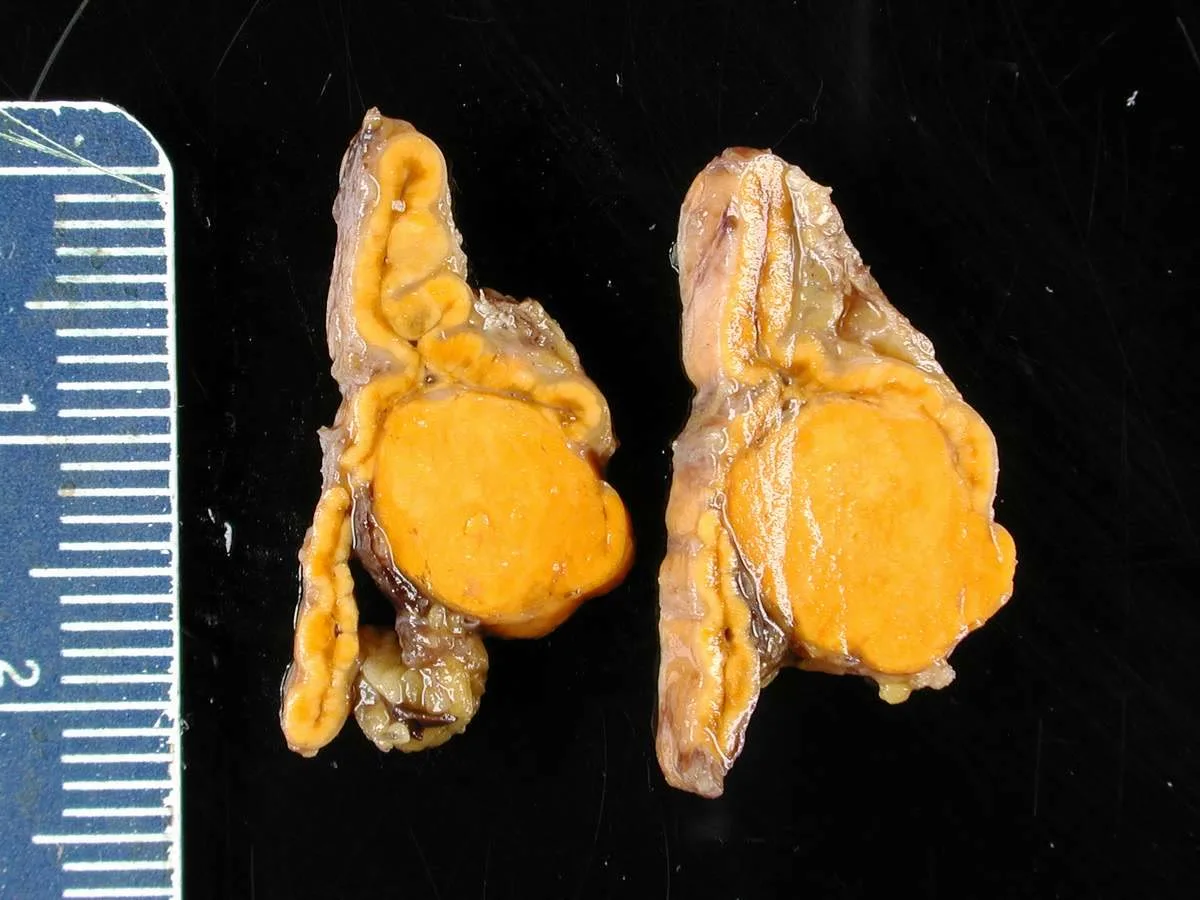
In 1954, a 34-year-old woman checked into the University of Michigan hospital. For seven years she had had bouts of muscle weakness, at times bad enough to leave her legs nearly paralyzed, and cramps in her hands. Her blood was short of potassium. The endocrinologist Jerome Conn admitted her for a long metabolic study. Her urine turned out to carry too much of a hormone that makes the body hold on to salt. That December, surgeons explored her adrenal glands and found a tumor about 4 centimeters across.
It came out on December 14, along with the gland. According to a newsletter of Australian endocrine surgeons, all of her symptoms went away, and her blood pressure was normal within 18 days. The condition got a name: primary aldosteronism, or Conn’s syndrome.
Conn was sure he had found a common cause of hypertension. He predicted such tumors in up to 20% of patients with high blood pressure. In his lifetime that did not pan out: most studies found the syndrome in fewer than 1% of them. With time, Conn has started to look closer to right. The London group estimates that primary aldosteronism is behind 5–10% of high blood pressure cases worldwide. Wenyu Huang, an endocrinologist at Northwestern University, puts it as high as one in seven.
Yet it is still rarely found. In 2023 the same London team wrote that fewer than 1% of these patients get diagnosed, because doctors rarely measure aldosterone. A person can take several blood pressure pills for years without knowing that a tiny nodule in an adrenal gland is to blame.
A scalpel or earplugs
Until recently there were two options. If the nodule sits in one adrenal gland, surgeons remove the whole gland, and for many patients that is a genuine cure. But it is major surgery. First, doctors have to work out which of the two glands is at fault, and that takes invasive testing.
The other option is spironolactone. It does not stop the adrenal gland from making the hormone; it blocks the receptors the hormone latches onto. In other words, the hormone keeps shouting and the body puts in earplugs. In men, Huang notes, spironolactone can cause breast growth and erectile dysfunction.
A newer class of drugs acts further upstream. It switches off aldosterone synthase, the enzyme that performs the last step in building the hormone, so the hormone is simply never made. The first of these, AstraZeneca’s baxdrostat, was approved by the US Food and Drug Administration in May 2026 under the name Baxfendy. The approval covers ordinary hard-to-treat hypertension, as an add-on to other drugs. In a large trial, after 12 weeks, it lowered the top blood pressure number almost 10 mmHg more than a placebo did.
Fifteen patients and an odd observation
In 2025 a small trial called SPARK tested baxdrostat in people with Conn’s syndrome. Fifteen patients with primary aldosteronism, whose blood pressure would not come down on several drugs at once, took it while doctors followed them for 72 weeks. The results in NEJM beat what blood pressure pills usually manage. Systolic pressure, the top number, fell by 25 mmHg on average, two to three times what a single drug typically does. For scale, that is roughly like going from 160 to 135, from the danger zone to nearly normal (an illustration, not trial data). Aldosterone dropped by 90% on average.
The more curious part came later. In some participants, blood pressure and hormone levels stayed normal even after they stopped the drug. That is strange for a blood pressure pill. Such drugs work only while you take them.
Two years off the pills
Here is where things stood two years after treatment ended. The main marker of excess aldosterone stayed 99% below its pre-treatment level. Systolic blood pressure averaged 25 mmHg lower than at the start, roughly what the pill itself delivered during SPARK. Nearly a quarter had normal blood pressure without any other drugs for it. Potassium and creatinine, a measure of kidney function, rose only modestly.
That 99% is not the hormone level, so it does not contradict the 90% above. A chart in the press release identifies it as the aldosterone-to-renin ratio. The kidneys release renin when the body needs more pressure, and normally aldosterone follows its lead. Lots of aldosterone with almost no renin means the adrenal gland is making hormone that nobody asked for. That is the ratio that fell.
The report covers 14 patients at eight US clinics who took a drug of this class for 6 to 12 months. When treatment ended, the doctors kept tracking their routine blood tests and blood pressure. The press release does not say outright whether these are the same people as in SPARK, and it does not name the drug. But Mason Freeman of Harvard Medical School launched the original study while he was medical director at CinCor, the company that developed baxdrostat.
Morris Brown, the lead author and a professor of endocrine hypertension, calls curing this type of hypertension with tablets rather than surgery a long-standing “holy grail.” He chooses his words carefully: longer follow-up, he says, may justify claiming that a finite course of medication leads to an infinite cure. For now, the operative word is “may.”
Cells with nothing to do
The idea for how this could work came from mice. In 2005, American geneticists bred mice that lacked the gene for aldosterone synthase. The adrenal cells that would normally have become aldosterone factories did not stay put: they drifted toward the inner edge of the gland’s outer layer and died there. The London group has long suspected that blocking the enzyme for months could do something similar in people. Keep a cell from its only job long enough, the thinking goes, and it may disappear, taking with it the nodule that was pushing blood pressure up.
That is still a hypothesis. Nobody has yet watched the nodules vanish in a patient. An analysis in Inside Precision Medicine stresses that low test results, however long they last, cannot on their own show that the disease has changed for good.
What the scanner will show
A trial with a fitting name, ELIXIR, will test the hypothesis. About 30 patients with primary aldosteronism will take baxdrostat for 24 weeks. The researchers will scan their adrenal glands with molecular imaging, which can show whether the aldosterone-producing cells are still there. After the drug stops, they will keep tracking blood pressure and hormones. They expect to finish by May 2028.
If the idea holds, people with Conn’s syndrome might one day get a course of pills instead of adrenal surgery. But the real bottleneck will not be at the pharmacy. A disease first found more than seventy years ago through one woman’s failing legs is still diagnosed in fewer than one patient in a hundred. Who is going to test aldosterone in the millions of people who take their pills every day without suspecting that a nodule in an adrenal gland is running their blood pressure?