// Contents
The defense came down to one idea. Bitcoin is just an electronic record with no value of its own, and you can’t rob someone of something worthless. The defendant had helped a gang that used threats to make a family on the Thai island of Koh Samui hand over 2.48 bitcoin. Thailand’s Supreme Court sat as a full bench to hear the argument and rejected it. A summary of the ruling came out on October 28, 2026: bitcoin is property, and the law protects it from robbery the same way it protects a wallet.
Can you steal something you can’t hold? It sounds like a naive question, but lawyers have been fighting over it for more than a decade, and countries still answer it differently. A Tokyo court decided in 2015 that bitcoin can’t be owned at all. Back in the 1890s, a German court used the same logic to acquit a man who had been stealing electricity: current is not a thing. The answer matters in everyday life. Will the police take your theft report? Who gets the coins when an exchange goes bust?
A café on Koh Samui
The robbery took place on September 15, 2022, in a café on Koh Samui. Five foreign men sat down with a man and his wife, a Russian citizen. According to one account of the case, they made it clear they knew the family’s movements, threatened the couple’s young child and punched the man in the face. Under that pressure, the wife bought 2.480801 BTC for $50,000, about 1.878 million baht at the time, and sent it to a wallet one of the attackers controlled.
The court papers don’t name the defendant; they call him “Mr. A.” Reports of the ruling suggest he was not one of the five men in the café. Instead, he arranged the gang’s travel to the island, their lodging and their escape by ferry. The trial court gave him 15 years, then cut the term by a third because his testimony had helped the case. That left ten years. The court also ordered him to return the bitcoin to the victims or, failing that, pay them 1.878 million baht. According to CoinDesk, the Supreme Court upheld the ten-year sentence.
The defense was not as empty as it sounds. Section 137 of Thailand’s Civil and Commercial Code, which the Supreme Court itself cites, defines a “thing” as a corporeal object, something with a physical body. You can’t pick up a bitcoin. It has no weight and no size.
The court answered with the market. Bitcoin has a market price, it can be swapped for cash whenever a buyer turns up, and anyone can hold it. It is worth at least what someone paid for it. The judges also pointed to a 2018 decree on digital assets, which describes cryptocurrency as electronic data used to pay for goods and services. A Bank of Thailand letter says crypto is not legal tender; the judges set it aside as the answer to a different question. You can’t pay for groceries with a gold bar or a painting either, yet both can be stolen. Being money and being property are separate questions.
Current isn’t a thing either
The same fight has happened before, and that time the defense won. Between January 12 and 17, 1895, a man in Kiel ran his motor on current from the local power station with no intention of paying. The regional court in Kiel acquitted him. Theft under the German criminal code meant taking a movable thing, and a thing needed a physical body. Electricity, the judges decided, was a force or a state of matter, not a substance. On October 20, 1896, the Reichsgericht, Germany’s top court in Leipzig, let the acquittal stand.
A court can’t punish without a statute, so lawmakers wrote one. On April 9, 1900, Germany passed a law against “withdrawing electrical work,” punishable by prison or a fine of up to 1,500 marks. It survives today as Section 248c of the German criminal code, in the chapter on theft. Taking current, though, never became theft.
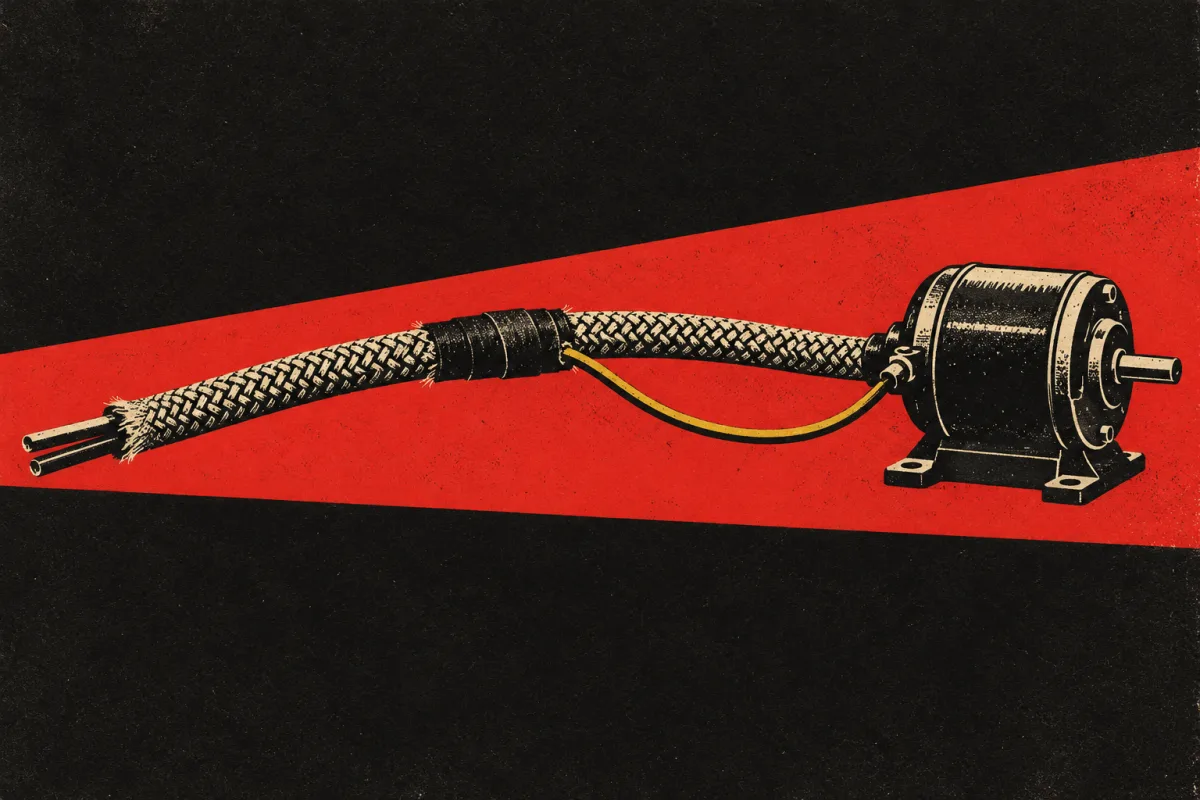
Bitcoin shares current’s problem: you can’t put it in your pocket. And it is even less physical. Electricity at least flows through wires; bitcoin exists only as the sum of entries in a shared ledger of transfers.
458 coins nobody could own
In 2014 Mt. Gox, a bitcoin exchange in Tokyo, went bankrupt after a huge amount of bitcoin was stolen from it. One customer asked the bankruptcy trustee to hand back his 458 coins. His logic was simple: if the bitcoin was his, it should be kept out of the bankrupt estate and returned to him.
In August 2015 the Tokyo District Court turned him down. Japan’s Civil Code recognizes ownership only of tangible things. The customer argued that the blockchain record was his bitcoin and that he alone controlled it. The court accepted neither point. A blockchain stores a history of transfers, and a “balance” only appears once you add those transfers up. There is no single record that is the bitcoin itself.
It was a first-instance ruling, binding on nobody but the parties. Still, it shows exactly where that reasoning leads.
If bitcoin can’t be owned, a customer of a failed exchange is just one more creditor waiting in line.
A penthouse bought with someone else’s USDT
In Singapore in 2023 the question surfaced in a payroll case. Ho Kai Xin worked for a contractor that paid staff at the Bybit exchange in crypto, and she alone edited the monthly payment spreadsheets. Between May 31 and August 31, 2022, eight irregular payments sent 4,209,720 USDT to four addresses. One of those wallets, its provider’s records showed, had been registered with her identity card and a selfie. Ho blamed a cousin named Jason, who had supposedly used her laptop. The court concluded that Jason either did not exist or had played no such role.
According to Bybit, the money went on a new car for about S$362,000 and on S$30,000 worth of Louis Vuitton goods. Ho also cancelled a government flat she had already ordered and, with her husband, bought a freehold penthouse valued at nearly S$3.7 million. Judge Philip Jeyaretnam wrote that the holder of a crypto asset has a property right in a “thing in action.” Think of money in a bank account: you can’t touch it, but it’s yours, and a court will protect it. Because USDT, a stablecoin pegged to the dollar, is someone’s property, the court could do more than order Ho to pay a debt. It could order the coins themselves handed back to their owner.

The customers’ coins, not the exchange’s
The Mt. Gox story has a mirror image, and it comes from a common-law country, where much of the law is built from past rulings. In 2020, Justice Gendall in New Zealand took on the collapse of Cryptopia, a hacked crypto exchange. He ruled that the coins on the exchange belonged to the customers and that Cryptopia had merely held them on behalf of more than 900,000 people. A ruling like that has losers. With the coins out of the common pot, Cryptopia’s other creditors were left with less: instead of getting back about 85% of what they were owed, they could now expect under half.
Britain eventually put this into law. On December 2, 2025, a digital assets act took effect. English law used to recognize two kinds of personal property: things you can hold, and rights you can enforce, like an IOU or money in a bank account. Now a thing no longer loses protection as property just because it fits neither box. Crypto can count as a third kind. Where that third category ends, the courts will have to work out.
Russia learned to seize it first
The woman robbed in the Koh Samui café is a Russian citizen, and her country reached the same answer from the opposite direction: it started with seizure. On February 20, 2026, President Vladimir Putin signed a law under which digital currency counts as property for the purposes of the Criminal Code. The law is mostly about seizure and confiscation. Investigators can take a flash drive, hardware wallet or computer holding the keys, or, where technically possible, move the coins to an address the state controls.
Four months later, on June 16, 2026, the full bench of Russia’s Supreme Court updated its 2002 guidance on theft, robbery and armed robbery. Its list of things that can be stolen now includes digital currency and digital rights, alongside bank balances and digital rubles. A theft of such assets is complete the moment they leave the victim’s account. For victims, that means courts should treat taking someone’s crypto as theft or robbery, the same as taking money from a bank account.
Recognition cuts both ways, and Russia’s sequence makes that plain. Property is what the law protects from thieves, and also what it can freeze and confiscate. For bitcoin holders that is a fair trade: as long as a coin counts as mere data, it is hard to punish the thief and hard to get the coin back.
Compensation at 2022 prices
That leaves the family from the café on Koh Samui. The court tied bitcoin’s value to what it cost, so if the coins don’t come back, the compensation is fixed at that price: 1.878 million baht. On October 30, 2026, after the Binance hack, bitcoin fell below $77,000. The same 2.48 BTC is now worth about $190,000, nearly four times what the wife was forced to pay for it.
If the coins never turn up, the family will get roughly a quarter of their current value in cash. Calling bitcoin property was only half the job. The next fight is over which price counts: what it cost then, or what it’s worth now.