// Contents
Two stalls at a Singapore food court can display the same SGQR symbol. You might pay for lunch with your usual app at the first stall, then find yourself fishing for cash at the second. Different payment networks sit behind the signs, and some of them still can’t send money to each other.
On November 18, 2026, NETS gave more visitors to Singapore a way to scan and pay with NETS App. NETS counts more than 50,000 SGQR locations that support its network.
That same day, the Monetary Authority of Singapore (MAS) and the Association of Banks in Singapore (ABS) announced a plan to connect payment networks so people can use their usual apps at more stores and stalls.
NETS also plans to test a tap that starts a QR payment in the Toa Payoh district. The two-month trial is set to begin in December 2026. A sign equipped with near-field communication (NFC) can start the payment when a phone comes close, with no need to open the camera. The trial will start with NETS App alone.
The logos under the code
Singapore introduced SGQR, its national QR payment standard, in 2018. Shoppers could see at a glance that a store took mobile payments. A seller who used to put out a code for each payment scheme could put them all on one sign. The logos underneath the square still tell you which schemes that particular seller accepts.
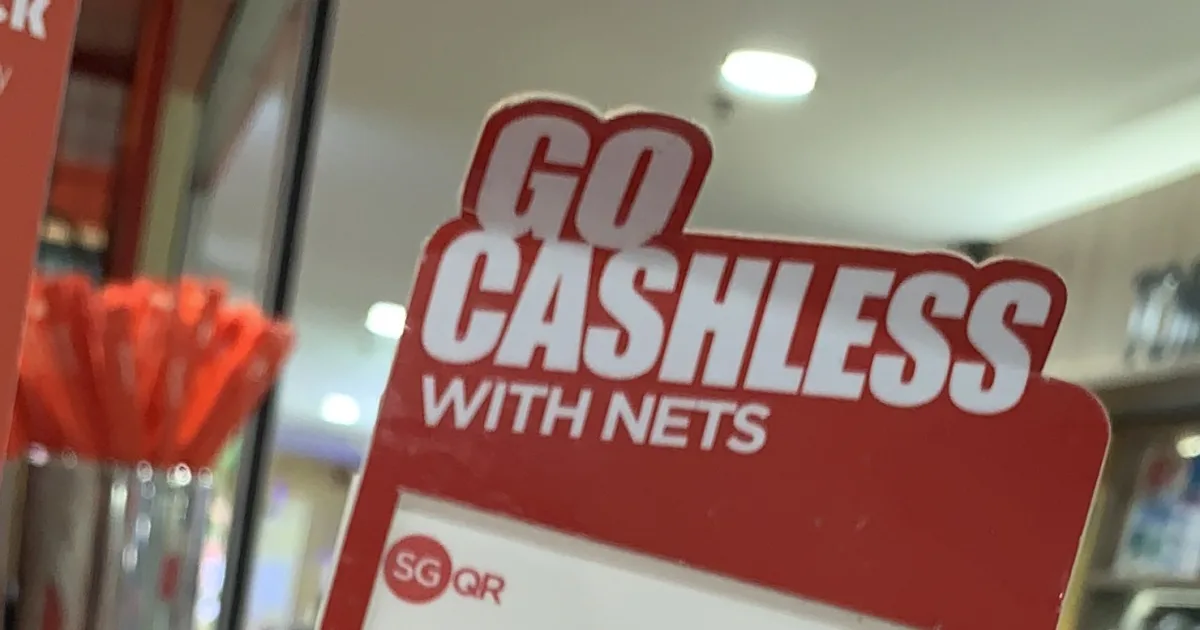
At either of those food stalls, the code tells the app who should get paid. If your app uses a network listed at the first stall, the money can go through. If none of the logos at the second stall matches a network your app works with, you’ll need another way to pay.
A visitor with a participating Malaysian bank or wallet app can scan a Singaporean NETS code with the app they use at home. That works because the two countries’ central banks connected Malaysia’s DuitNow QR network with Singapore’s NETS QR on March 31, 2023. A visitor from a country without that kind of link might still need cash for lunch.

The money you could leave behind
“The bigger problem for me… would be leaving money in the app at the end of the trip,” a visitor told researchers for the November report from MAS and ABS. The researchers asked 12 recent visitors how they paid and what they wanted from a payment app for tourists. Most used cards and reached for cash when a stall wouldn’t accept their card or their usual app. One visitor liked the idea of paying by phone at small food stalls.
Visitors wanted to see fees and exchange rates up front. If you use the app for only a couple of meals, setting it up and getting any leftover money back can eat into the time you save at checkout.
How SGQR+ would connect the networks
A shared switch called SGQR+ would route payments from the buyer’s app to the seller’s network. The 2027 rollout starts small. Starting in 2028, MAS and ABS plan to expand the switch across local networks including PayNow QR and NETS QR, then gradually add regional networks. Customers will be able to use their usual app at more stores and stalls if their payment network joins. That includes visitors whose apps use a participating regional network.
Visitors already have one more option. The joint report from MAS and ABS says the updated NETS App lets them pay via PayNow QR at participating stores and stalls.
The SGQR+ name has been around for a while. After a trial in 2023, NETS announced an expansion in November 2024. NETS offered participating sellers one contract to take payments from multiple networks. Under the 2026 plan, the networks themselves would pass payments between one another via the shared switch. Sellers will be able to accept those payments under their existing agreements.
If a seller cancels an order, who handles the refund? Singapore’s report says QR networks still lack common procedures for refunds and disputes. Regulators plan to phase in shared rules for PayNow purchases in 2028.
Back at the food court, the test is dinner at one stall and dessert at the next. If both stalls’ networks and the buyer’s app are connected to SGQR+, one app can pay for both.