// Contents
It is 9:42 p.m. in Jerusalem on October 27, 2026, less than twenty minutes before Israel’s polling stations close. A brand-new wallet appears on Polymarket, the world’s biggest site for betting on real-world events. Six minutes later, at 9:48, its owner puts $14,000 on Benjamin Netanyahu and his Likud party doing better than expected. On the eve of the vote, the market had given Netanyahu a 27.5% chance of staying prime minister. At 10 p.m., TV channels aired their exit polls and the odds shot up. The next day, the owner cashed out about $42,000, according to The New York Times.
Nobody knows yet whether this particular wallet is among those Polymarket is now examining. But it had company: hundreds of fresh wallets like it that night. The first to spot them were analytics firms that simply read a public ledger. Polymarket bets run on a blockchain, so anyone can look up every one of them. That transparency catches insiders within minutes. It doesn’t yet stop them.
Six hundred wallets born on election day
Before the vote, the market was confidently backing Netanyahu’s challenger, former military chief of staff Gadi Eisenkot: 56% to 27.5%. It gave Likud only a 26% chance of winning the most seats. Overnight, all of that flipped. After the exit polls, Netanyahu traded at 48%, and by Wednesday morning Likud’s first place was priced at 99%. With part of the vote counted, Likud had 27 of the 120 seats in the Knesset, Israel’s parliament, and Eisenkot’s party had 21.
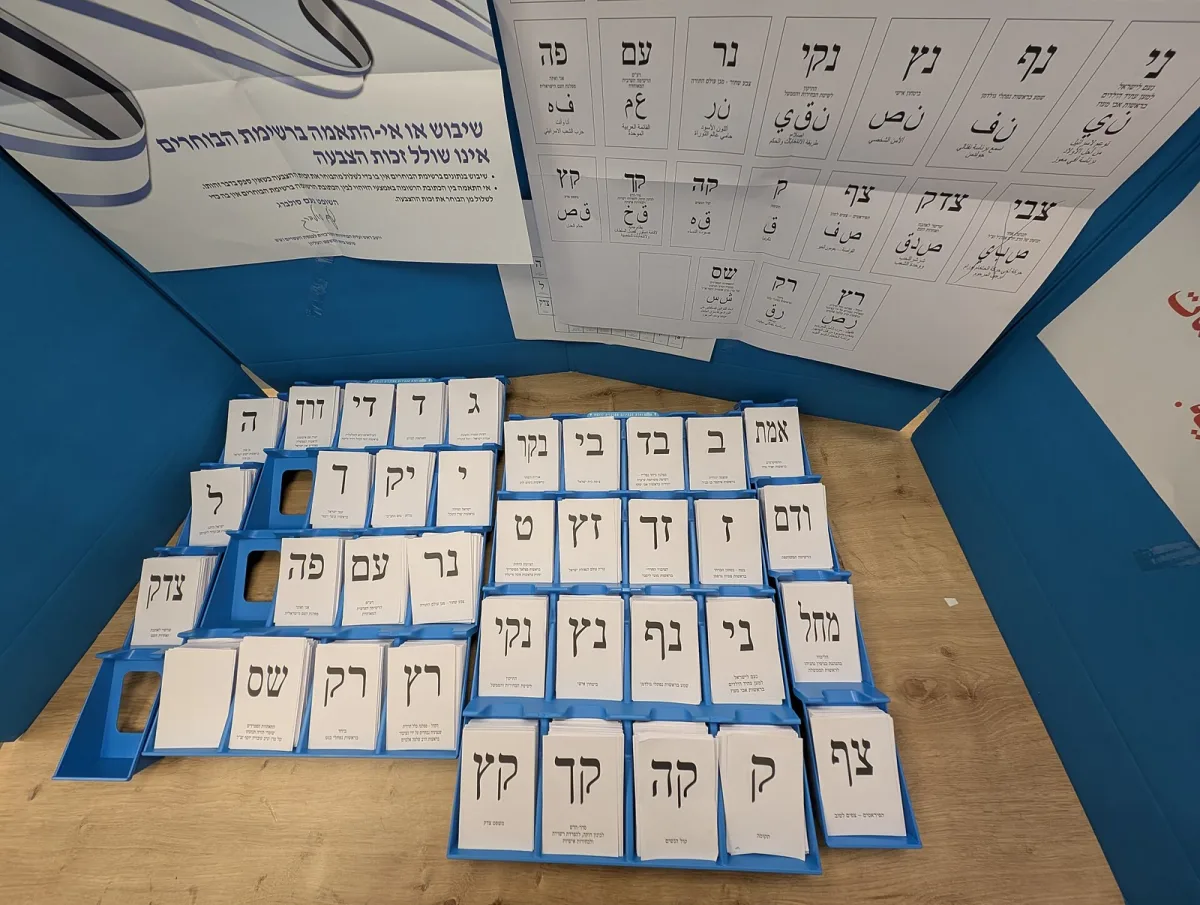
So the crowd, with tens of millions of dollars on the line, got it wrong. The wallets born on voting day got it right.
Bloomberg combed the blockchain records and found more than 600 wallets created on election day with no trading history at all. Every one of them backed Netanyahu or Likud. By Bloomberg’s count, some of the new accounts have together withdrawn more than $100,000, while the rest are sitting on paper gains. The analytics firm Bubblemaps used a stricter test and counted 101 accounts that got their first deposit on voting day, before polls closed. On Tuesday evening, the tracking service Polysights posted that its tools were seeing “massive inflows of YES buys on fresh wallets” and called it definitely worth investigating.
Who could have known? Israel airs exit polls the moment the polls close, but pollsters interview voters leaving the booths all day. So the numbers exist earlier, for whoever runs or pays for the survey and for campaigns with pollsters of their own. None of this proves anything. It just explains why analysts stare so hard at the last minutes before 10 p.m. And it has happened before. This spring, NPR found that U.S. campaign staffers made thousands of dollars betting on their own candidates with the help of internal polling.
Polymarket has made no public statement but confirmed to reporters that it is reviewing dozens of new wallets. So far, the company says, it has found no evidence of insider information: the traders may have done their own homework or simply got lucky. Bloomberg adds that on a market like this, a leak and a lucky guess are hard to tell apart.
How a price becomes a forecast
A prediction market works like an exchange where people trade contracts on how an event will turn out. A “yes” contract costs between 1 cent and $1 and pays exactly a dollar if the event happens, or nothing if it doesn’t. If the contract trades at 27 cents, the market puts the odds at 27%. Thousands of people risk their own money, and the price folds what they know into a single number. That is why odds from Polymarket and its rival Kalshi now get quoted on the news next to opinion polls. For the U.S. midterms on November 3, 2026, Americans wagered about $1.9 billion.
Nobody moves a price harder than someone who already knows the answer. Polymarket founder Shayne Coplan once called it “cool” that the platform creates a financial incentive to divulge information to the market. Such traders really do sharpen the forecast. The person on the other side of the trade, though, is playing against someone who has already seen the cards.
A soldier, an engineer and a reservist
Polymarket already has its own case file of people who, prosecutors say, turned a secret from work into a bet.
// Timeline
- Israel strikes Iran. A new account called ricosuave666, which had bet on the strike in advance, makes about $155,000.
- A Google engineer trading as AlphaRaccoon allegedly uses internal data to bet more than $2.7 million on the company’s ranking of the year’s top searches. His profit tops $1.2 million.
- U.S. special forces soldier Gannon Van Dyke places about 13 bets that Nicolás Maduro will soon be out of power. In January his unit takes part in the Caracas operation that captures Maduro. His profit: about $409,000.
- Israeli prosecutors charge a reservist and a civilian with using military secrets to bet on Polymarket. Neither their names nor the bets are disclosed.
- Van Dyke is charged in the first U.S. criminal case over prediction market bets.
- Hundreds of new wallets back Netanyahu just before polls close.
The soldier’s case is telling because of how he got caught. Van Dyke signed up for Polymarket with his personal email. When online sleuths and reporters noticed the payouts, he asked the platform to delete his account, claiming he had lost access to that email. The same day, prosecutors say, he changed the address on file. Jay Clayton, the U.S. Attorney for the Southern District of New York, said prediction markets are “not a haven” for profiting from confidential or classified information. The Google engineer, Michele Spagnuolo, was charged in May; the company put him on leave.
The Israeli case is murkier. Prosecutors named neither the defendants nor the bets they are accused of. All that is public is that investigators had been looking at bets on the June strike on Iran, so any link to ricosuave666 remains a guess.
Some stories are simpler. Former congressman George Santos used Kalshi to bet on whether he himself would attend the president’s State of the Union address, and posted about it on social media as he went. He won $17,839.57 and earned a lifetime ban and a $71,356 penalty.
Transparency that doesn’t stop anyone
After the soldier’s arrest, Polymarket’s chief legal officer, Neal Kumar, posted on X: “It’s not anonymous — you will be found just like this guy.” After the engineer’s case, a company spokesperson made the same point: blockchain trading is transparent, and bad actors leave footprints.
A blockchain records every bet, forever, for everyone. It is excellent at showing who knew in advance. It does nothing to stop them from taking the money.
The footprints are real. Every wallet, every amount and every minute is public, which is why Bubblemaps and Polysights spot suspicious spikes before the press does. Inside Polymarket, the job belongs to Shana Bautista, a former FBI official. Her 16-person team pulls in data from social media, banks, crypto companies and the Federal Election Commission, which tracks U.S. campaign money. She says the system generates hundreds of alerts a day. One red-flag pattern she described to NPR will sound familiar: someone opens several new wallets in short bursts, and the same device ID shows up across their bets. “If you decide that you are smarter and can do it, we will find you,” she said.
Bautista says her team has never had a case where it couldn’t at least potentially identify who was behind the wallets. Even so, finding someone and getting the money back are two different things. Most of the trading happens on Polymarket’s international exchange, where an email address is enough to sign up. The U.S. version, overseen by a federal regulator, asks for ID, but it handles less than 10% of trading. The blockchain shows that a wallet was created six minutes before its bet. It doesn’t show whose wallet it is, and the winnings leave within hours. Over the U.S. midterms, the company has referred at least two investigations to that regulator, the Commodity Futures Trading Commission. The agency, NPR reports, has largely left policing to the platforms themselves. Criminal cases over bets can still be counted on one hand.
In March, Joshua Mitts of Columbia Law School and Moran Ofir of the University of Haifa put a size on the problem: more than 210,000 suspicious trades in 2024–2026 and $143 million in anomalous profit. The authors themselves call that a lower bound. Harry Crane, a statistician at Rutgers University, argues that their method reads too much into lucky bets. So $143 million is best read as an order of magnitude, not a tally of theft.

Who pays for someone else’s head start
On a stock exchange, insider trading hurts shareholders. On a prediction market, it hurts whoever sold the insider the contract. Every dollar won by a wallet created six minutes before its bet is a dollar somebody else lost. That wallet bought its contracts cheaply from people who still trusted the polls at 9:48 p.m. On Wednesday it sold them to other traders for three times as much, without waiting for the result.
Everyone else pays too. If a leak is moving the odds, the number on the news no longer shows what the crowd thinks. It shows someone’s secret, retold as a price. On October 28, Senators Elizabeth Warren and John Curtis asked Kalshi and Polymarket to explain how they protect election markets from insider trading and manipulation. They set a deadline of November 3, the day of the U.S. midterms, which had drawn $1.9 billion in bets.
Polymarket’s market on Israel’s next prime minister won’t settle until a new one takes office. That could take weeks of coalition bargaining. The owner of the wallet that placed its bet twelve minutes before polls closed has already cashed out the $42,000.