// Contents
Twelve lines on a single sheet of A4 paper were worth almost €54 million by 2020. Irishman Clifton Collins printed the codes to twelve bitcoin wallets on that sheet, 500 coins in each, and hid it inside the aluminium cap of a fishing rod case. The case stayed behind in a rented house in County Galway. Collins went to prison, the house was cleared, and his belongings were hauled to a local dump. Waste from there, The Irish Times reported in 2020, is shipped to Germany and China to be burned.
For more than six years the money was out of reach: a court had frozen it, but nobody could take it. Then, starting in March 2026, the wallets began to open one after another, roughly every two months. On October 20 the fifth one moved: 500 bitcoin, about $41.5 million. The first identical batch of 500 coins was worth about $34 million in March; the difference is the price. Only three of those five moves have been officially acknowledged, and nobody has explained how any of this is possible.
How a beekeeper ended up with 6,000 bitcoin
Collins grew up in Crumlin, a district of Dublin. He worked as a security guard, kept bees for a while and won prizes for his honey, then spent more than a decade growing cannabis in rented houses. In late 2011 and early 2012 he put the proceeds into bitcoin. A coin cost a few dollars back then, so by a rough estimate the whole stash cost him tens of thousands of dollars.
Some of the money went on hobbies. Collins bought a two-seat gyroplane and took flying lessons, and in 2020 he surrendered €1.2 million in assets to the state: €1 million in bitcoin, the gyroplane, a camper van and a fishing boat .
The big money sat elsewhere. In early 2017 he held just over 6,000 bitcoin in one account and worried that a hacker might take it. So he split the coins across twelve new wallets, exactly 500 in each. The codes to all twelve ended up on that one sheet.
To see why the sheet mattered so much, one detail helps. Bitcoin has no bank and no “forgot password” button. The right to spend coins comes from a private key: a long number that only the owner knows. Anyone can see a wallet and its balance on the blockchain, but without the key the coins cannot be moved. No police force, court or developer can issue a new key.
The fishing rod case went to the dump
In 2017 a patrol stopped Collins’s jeep at the Sally Gap in County Wicklow and found cannabis in the car. Investigators then traced a grow house in Galway with plants worth about €450,000 . Collins got five years.
While he was inside, someone broke into the house in the village of Farnaught, and later everything left there was cleared out on the landlord’s behalf. Workers at the dump remembered seeing discarded fishing gear. The rod case was never found.
The police believed the story, and they had reasons to. It was backed up by the landlord, by the people who emptied the house and by those who had helped Collins split his bitcoin. Nobody had touched the wallets for more than a year before the police came across him. Collins himself told officers he had made peace with the loss and saw it as punishment for his own foolishness.
In February 2020 Ireland’s High Court ruled the bitcoin to be proceeds of crime and froze it permanently. It became the most valuable asset in the history of the Criminal Assets Bureau (CAB), the Irish agency that strips criminals of their property. The bureau just could not take possession of it. By October 2024 the twelve wallets were worth about €350 million, and the bureau, The Irish Times wrote, was holding on in the hope that technology would one day open them.
Opening what cannot be opened
On March 24, 2026 the Irish police issued a short statement . The bureau, working with Europol’s European Cybercrime Centre, had gained access to a wallet holding 500 bitcoin and seized it, about €30 million (roughly $34 million) in all. Europol hosted investigators in The Hague and provided “highly complex technical expertise and decryption resources”. The statement did not name the owner.
That same day analysts at Arkham noticed that 500 bitcoin had left an address they had long labelled “Clifton Collins: Lost Keys” and landed in a storage account at the Coinbase exchange.
How the police got to the key is unknown. One word offers a hint: decryption. You can only decrypt something that is encrypted, which suggests investigators had something in hand. A wallet file, say, or a copy of the codes on a seized device, locked with a password. Passwords can be guessed if you have enough computing power. It was not a break of bitcoin itself: that would put every wallet in the world at risk, and nobody has found any sign of it.
Other explanations on the table
Analysts float several explanations, and none is confirmed. One: a backup copy of the codes turned up somewhere. Two: forensic specialists recovered data from seized phones, computers or memory sticks. Three: there was a weakness in how the keys were kept, such as duplicate records. Four: some of the wallets share a common source for their keys, so one find unlocks several. Arkham also mentions a version the police would not enjoy: Collins kept a copy and lied in 2017. But then it would be odd for the state to be the one seizing the coins.
One detail is worth a thought. The wallets open one at a time, six to eight weeks apart. If investigators had a single master key to all twelve, it would be simpler to take everything at once. The rhythm looks more like work in which each wallet needs its own effort. That is our guess, not a fact.
Three times on record, twice in silence
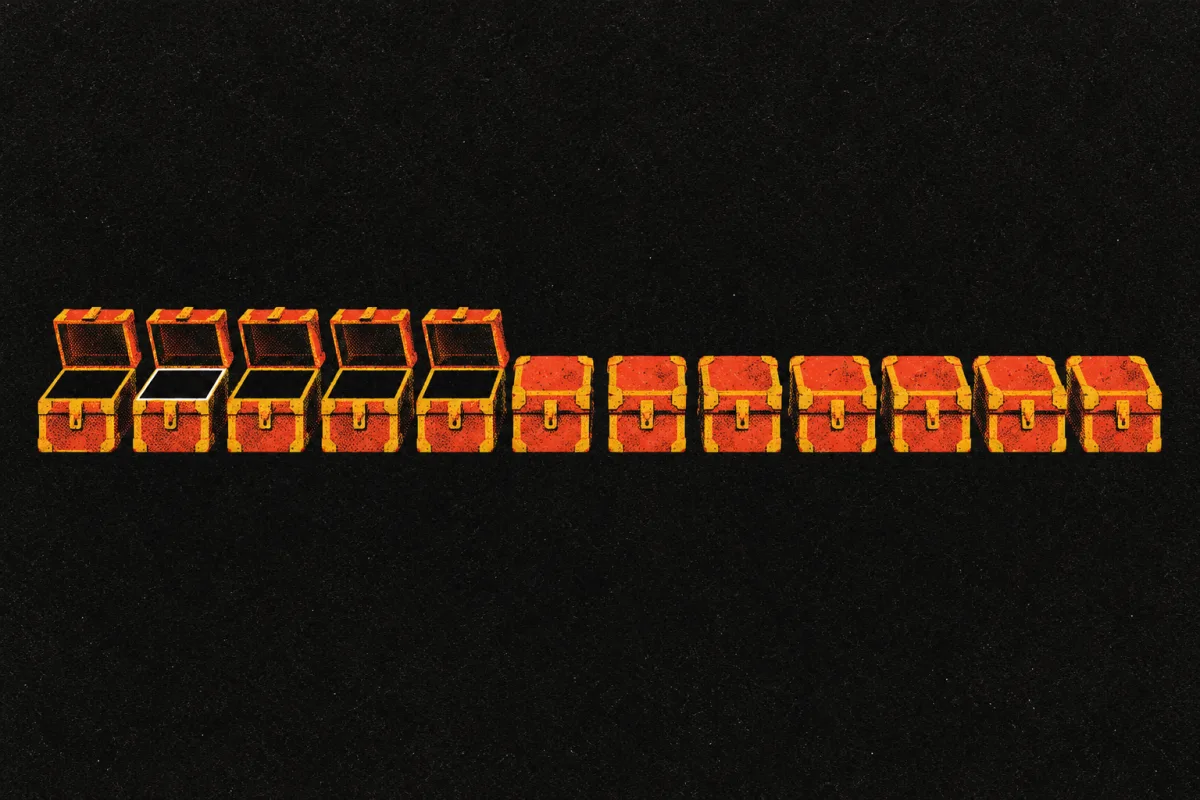
The bureau has confirmed three seizures. After March came May, when the coins, according to Arkham , went to an address belonging to Wintermute. That is a firm that buys and sells crypto in bulk, so the coins were probably headed for sale. On July 2 the bureau announced a third batch, bringing the total to 1,500 bitcoin . In May and July the bureau thanked Europol in almost the same words, and in May it added that it would make no further comment.
Then came two more transfers. In late August and on October 20, 500 bitcoin each left Collins’s wallets for an address linked to Coinbase Prime, the exchange’s service for large clients. The third, official batch went to the same place in July. These coins also look as if they are being readied for sale: the recipient split the October batch into 42 pieces , forty of them exactly 10 bitcoin each. That makes it easier to sell in small portions. Arkham thinks law enforcement is the most likely party behind both transfers, but the Irish authorities are saying nothing.
Where the money goes
Under Irish law the bureau can hold seized property for seven years and then hand it to the Department of Finance, which means the state budget. The Irish Examiner explained the procedure back in 2020. One comparison shows the scale. In all of 2023 the bureau returned €8.6 million to the exchequer, its best result in 15 years. The single wallet opened in March was worth more than three times that. Unlike the British case over $5 billion in bitcoin , where defrauded savers are fighting for the coins, here there is nobody to fight: the money has been ruled criminal, and Collins said goodbye to it long ago.
What “lost forever” really means
Back in 2017 Chainalysis estimated that between 2.8 and 3.8 million bitcoin had been lost, 17 to 23% of all coins in existence at the time. Estimates like that rest on a simple signal: coins that do not move for years. Collins’s wallets were a textbook case. Nearly ten years of silence, an incinerator story, a court ruling and a “Lost Keys” label on a blockchain explorer.
Real loss happens too, when the key truly is in a landfill. In 2013 James Howells, from Wales, threw away a hard drive holding 7,500 bitcoin. He spent twelve years asking Newport city council to let him dig, and in January 2025 a court threw out his claim , saying it had “no realistic prospect of success”. The council was planning to close the landfill and cap it. Howells’s keys sit on a physical drive under tonnes of rubbish. What investigators had in Collins’s case instead of the sheet is unknown.
None of this means any forgotten wallet can be opened. Europol apparently had something to work with, while an ordinary person who has lost a password has no such resources.
Seven of Collins’s wallets are still silent. By Arkham’s count they hold 3,500 bitcoin, about $291 million. But in the world of bitcoin, “lost” turns out to mean only “nobody has found the key yet”.