// Contents
On Britain’s official emergency checklist, cash sits on the same list as bottled water and three days of canned food. The government’s Be Ready campaign, launched on October 22, 2026, tells households to keep coins, notes and cards at home in case electronic payments or ATMs are disrupted. The Netherlands has given the same advice since 2025.
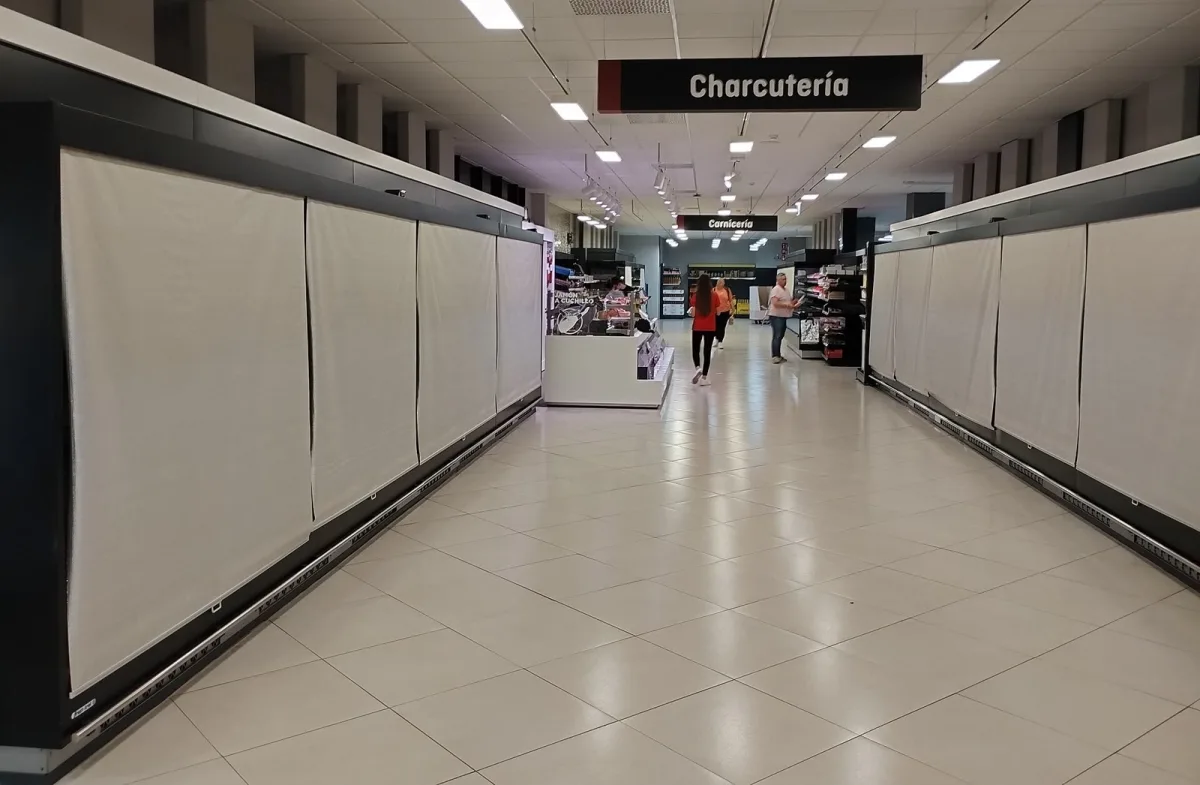
Three weeks later came a hint that spending the stash might be harder than saving it. In a survey for the Post Office, Britain’s national postal network, where people can also withdraw and deposit money, only 32% of high street retailers said they currently accept cash. European Central Bank economists call cash a spare tire for the payment system. The British state is asking people to carry that spare, and two out of three shops in the survey have nowhere to bolt it on.
Half a day without an ATM
Why keep banknotes in a box when the money is already in the bank? Japan answered that this month. At around 1:30 p.m. on November 6, 2026, counters and ATMs at 128 shinkin banks stopped working. Shinkin banks are small cooperative lenders that serve local residents and businesses; the ones hit were mostly in western Japan, from Okazaki in Aichi Prefecture to Osaka and Hiroshima. Customers could neither withdraw nor deposit. The Shinkin Kyodo Center, which runs the banks’ shared network, and the Shinkin Central Bank blamed faulty equipment and ruled out a cyberattack. Everything was back shortly after 7 p.m.
Five and a half hours sounds harmless. But for that whole stretch, customers’ money sat exactly where it always had, and nobody could get at it. The ATM turned out to be one more link in the same digital chain as the card reader at the checkout. That is the scenario the British checklist covers when it names ATMs separately.
Cash in the bank and cash in your pocket are two different kinds of money.
Money in an account lives inside the same system as your card, and it goes down with it.
The biggest real-world test came on April 28, 2025, when Spain and Portugal lost power. ECB economists Francesca Faella and Alejandro Zamora-Pérez picked that day apart in an article titled “Keep calm and carry cash.” In the blacked-out areas, card spending in physical stores fell by roughly 41–42%. Online spending across Spain dropped by about 54%, and the country’s total consumption that day fell by about a third. Withdrawing cash was no help there either, since an ATM without electricity is just a metal box. Where the lights stayed on, in the Balearic and Canary Islands, Ceuta and Melilla, withdrawals jumped. And once power returned to the mainland, people withdrew far more than usual in the days that followed.
Many Spaniards were ready for this: in an ECB survey from 2024, 39% of them already kept a cash reserve at home, just in case. Banknotes don’t depend on a server or a power socket. The authors write that cash in people’s hands forms “a distributed liquidity network” for when centralized systems fail. Put simply, it’s thousands of small wallets, none of which needs to be plugged in.
£255 an hour
For the British survey, the research firm Censuswide polled 2,000 adults and 500 high street retailers in October. The Post Office published the results on November 12, and they show what depending on cards costs a shop.
// When payments go down
Melissa Samuel, who runs the post office in Bourton-on-the-Water, a tourist village in the Cotswolds, described what this looks like in practice. When card terminals go down at nearby shops, customers come into her branch to withdraw cash. Often the shop itself sends them over, so they can go back to the till and finish paying. In this version of the story, the spare tire isn’t at home. It’s in the building next door, and you still have to walk there.
The odd part is that most shops already have a plan for this. Some 83% of those surveyed have a written or agreed contingency plan, and 81% agree that keeping cash available for customers and emergencies matters. Yet 90% of those plans leave cash out. Shoppers see the mirror image: among people who failed to pay at least once, about one in five hit a store that didn’t take cash.
That 32% figure looks stark, and not everyone accepts it. Corner shops tell a different story: their trade body, the Association of Convenience Stores (ACS), says 99% of convenience retailers accept cash. The two numbers describe different shops: the Post Office asked high street retailers, while the ACS speaks for convenience stores. The Post Office hasn’t said how the respondents were chosen, so the figure can’t be checked further. One more caveat: banks pay the Post Office to let their customers withdraw and deposit cash at its branches. The survey’s sponsor, in other words, has a stake in shops taking cash.
People know the advice, but the box stays empty
Even in the Netherlands, where the advice came first, 71% of people know about it, but only 58% follow it. The most common reason for an empty box is disarmingly honest: people just haven’t gotten around to it. That finding comes from Dutch central bank economists Carin van der Cruijsen and Nicole Jonker, who published a survey of 5,672 people in September 2026.
The advice itself is modest. Since May 2025, the Netherlands’ national payments forum, chaired by the central bank, has suggested keeping €70 per adult and €30 per child at home. Nibud, the Dutch institute for household finance, worked out the sum: enough for essentials during three days of disruption, not for normal life.
Knowing helps: people who have heard the advice are 21 percentage points more likely to follow it. Households on tight budgets lag furthest behind, because €70 a head is real money to them.
The Dutch were keener on a digital backup than a paper one: 70% have more than one way to pay by card or phone at the checkout. Two cards from different banks will save you if one bank goes down. If the network or the power goes, as it did in Spain, the second card is as useless as the first.
A spare tire with nowhere to bolt it
Cash works as insurance only if two things are true: people have banknotes on hand, and someone is willing to take them. So far, governments are working only on the first half: they print checklists and calculate how many banknotes to set aside for each child. The second half they leave to shops.
Three sides weigh in. The British Retail Consortium (BRC), which speaks for the big chains, says businesses are free to choose which payment methods they accept, and that cash is valued as a backup. Convenience stores say they take cash already. The Post Office wants more. Its head of banking, Ben Hunter Woollard, put it in a single sentence: “If cash usage is being encouraged, so should its acceptance.”
One country is already going beyond advice. Finland, which, like Austria, advises households to keep €70–100 per person at home, is exploring “disruption-proof” ATMs, according to the ECB authors. These machines would still hand out money when the rest of the digital system has gone quiet.
Even that ATM only fills the box. An envelope of banknotes on the shelf will see you through three days only if the shop around the corner accepts it. For now, the British government leaves that decision to each shop. A rainy-day stash is only as good as the nearby tills willing to take it.