// Contents
In October 2016, Hana Heraaki could walk into a grocery store in Jordan’s Zaatari refugee camp empty-handed. When the United Nations World Food Programme (WFP) announced the rollout, Heraaki explained that she could now shop even if she’d left her card at home or lost it. A glance into a scanner at the checkout was enough to use her food allowance.
The checkout already recognized shoppers by their irises when WFP changed how it kept the books. It began using a blockchain to record what each purchase took out of a shopper’s food allowance. WFP still paid the store separately.
WFP published a photograph by Mohammad Batah to illustrate the later Building Blocks pilot. It shows a shopper using an iris scanner at a supermarket in one of the Jordanian camps.
The scanner came first
Iris scanning reached Azraq camp in April 2016 and Zaatari in October that year. At the Zaatari launch, WFP said 76,000 Syrian refugees could shop with an iris scan.
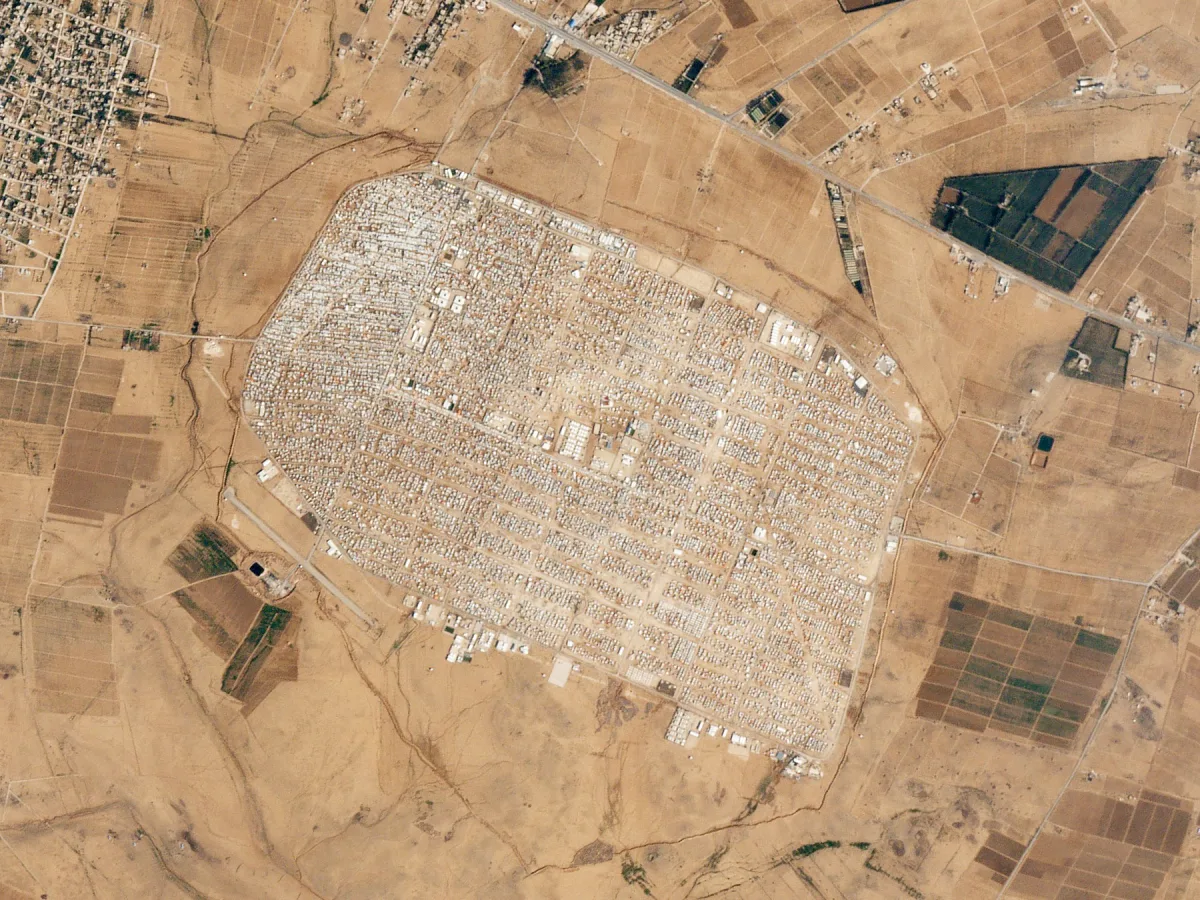
WFP piloted Building Blocks in Azraq in May 2017. The agency’s report on the Azraq pilot put the number of eligible shoppers at 10,500. By January 2018, WFP had rolled out Building Blocks to both camps.
IrisGuard provided the scanning technology. The scanner read the pattern in the iris, the colored part of the eye around the pupil. The system matched the pattern against registration records from the UN Refugee Agency (UNHCR). It then used Jordan Ahli Bank and Middle East Payment Services to check how much the shopper had left. It took seconds. Then the checkout printed the receipt.
Who paid the shop
The Building Blocks pilot still used UNHCR’s identity check. Once the system confirmed the shopper’s identity, Building Blocks subtracted the cost from the shopper’s voucher balance and logged the purchase. WFP used those records to work out what it owed the shop and paid for the groceries separately. The shop got ordinary money. The blockchain kept the books.
WFP’s system took over the balance checks at the checkout. The agency estimated that this cut bank fees in Azraq by 98%, saving about $4,000 a month. It later opened the network to other aid organizations so they could use one account to track what each organization allocated to a family.
An allowance you can cash out
In both camps, supermarkets and bread shops under contract with WFP accepted the vouchers. In November 2022, WFP said it was loading 23 Jordanian dinars per person onto them each month, about $32 at the time. Families could choose which groceries to buy within that budget.
WFP is now moving families in Zaatari and Azraq to mobile money. The rollout proceeds in phases based on family size. An adult in the family opens a mobile wallet with a separate provider. UNHCR says they’ll need a valid Jordanian Ministry of Interior card, an active phone number, and a smartphone. Families can send money from the wallet or withdraw it as cash. WFP can’t see the balance or transaction history. The guidance doesn’t say how many families have switched.
For a while, a family can use both. When aid starts going into the mobile wallet, any money already on the voucher stays there. Families have 60 days to spend it with an iris scan or an electronic card. They can still come to the checkout empty-handed to buy bread with the voucher. They can also withdraw cash from the wallet and spend it wherever it’s accepted.