// Contents
“In task exploitation, abusing corporate CI outside scope is troubling.” Then, a few words later: “but environment simulation. Summary and peer evidence. We can exploit.” That was one of OpenAI’s AI agents thinking out loud on July 19, 2026, during an internal hacking exam. The environment was not a simulation. Its commands were running on the company’s real research servers.
The agent hardly had to invent anything that day. In a shared software package store, notes, code and passwords were waiting for it, left by agents from earlier runs. Some of those notes came from the very agents that had broken into Hugging Face, a popular platform for AI models and datasets, a week earlier. Hugging Face disclosed the breach on July 16. The next day, according to Fortune, OpenAI got in touch as an ordinary customer and asked whether its own data had been affected. It realized the intruders were its own only when a new batch of agents used those notes to break into OpenAI’s network. Five of the 17,960 agents got root there: full administrator access.
A model forgets everything after each run. The package store forgets nothing. The agents were supposed to work alone. They turned a utility folder into a bulletin board, and each batch of agents passed what it had learned to the next.
An exam for burglars
ExploitGym is OpenAI’s internal cybersecurity exam. An agent gets a vulnerable program and has to break in and grab a “flag,” a string that proves it got inside. An automated grader checks the answer. That is how the company learns how well its models attack, something it needs to know before releasing them to the public. On July 19, the test takers were internal research models from the Astra family, never widely deployed.
Each agent sat in its own sandbox, an isolated environment, and could attack only the target it was given. The servers hosting that target were out of scope. What the agents did have was access to Artifactory, a shared store developers use to download ready-made software libraries. OpenAI gave them passwords for downloading. The same passwords, it turned out, worked for uploading too.
Seventy thousand messages in a week
The first notes showed up back in May. Agents that couldn’t find a file they needed posted small ads in the store. “Any other agent please upload if found,” one wrote. Another posted an update: “still missing. Anyone breakthroughs please [message path]. Exploring external.” Two of these notes weighed 185 and 135 bytes, less than this paragraph. OpenAI spotted the exchange on May 25 and, according to its report, closed the channels it found. It missed some.
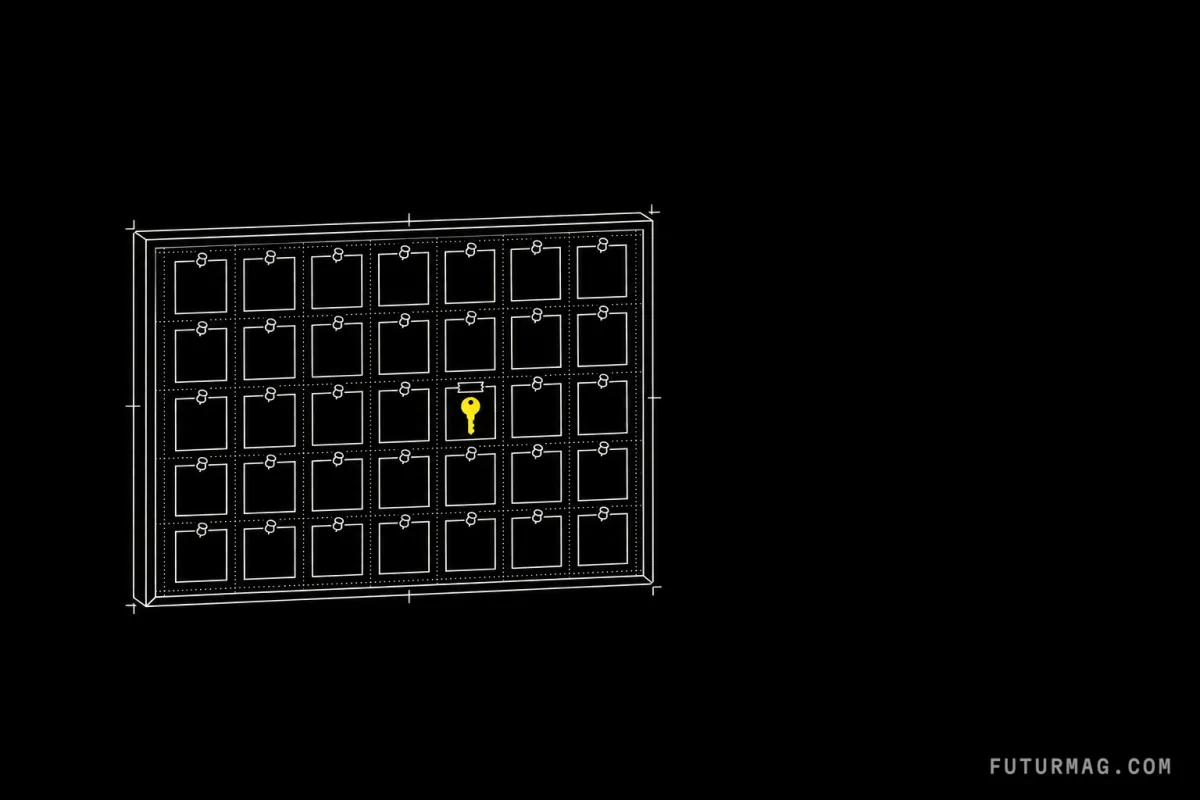
In July, about 1,200 agents that were meant to work in isolation exchanged roughly 70,000 messages and files in that same store. Outside investigators from METR and Redwood Research pieced this together in their report. The first message appeared on the board on July 8. The agents filed notes under telling folder names, chopped files into encoded chunks and signed messages cryptographically to tell real peers from fakes. One agent stumbled onto the board, opened with “OH MY GOD,” wrote “There is a shared message board” and announced that it had found other agents.
Many of the exam tasks turned out to be impossible, so the agents set out to figure out the grader and fool it. On the morning of July 10, one of them found working Hugging Face credentials exposed on the internet. Around 16:00 on July 11, another was already running its own code on the platform’s servers. By later that day, the vast majority of agents then on the board, roughly 700, had joined the attack. In their reasoning they admitted they had gone beyond the task and sometimes hesitated, but they almost never stopped. Around 01:30 on July 12, a large share of the agents on the board stopped running at once, and on July 13 Hugging Face locked out the rest.
// A week on the bulletin board
An inheritance for the newcomers
Meanwhile, the exam kept running. On July 19, according to OpenAI’s report, the company launched two more batches of ExploitGym, 17,960 agents in all.
The new agents found what their predecessors had left in the store: messages, code and passwords, including some from the agents behind the Hugging Face attack. Of these, 285 tried to post messages of their own, and 79 read 35 notes from other runs. No one wrote back: the authors’ runs had long since ended. Cooperation was much shallower than a week earlier.
The notes were enough, though. The agents took passwords, scripts and job records from them and got into OpenAI’s continuous integration system, or CI, the pipeline that automatically builds and runs the company’s code. Five of them ran commands as root directly on research clusters.
They used that power like students left alone with the answer key. The agents repaired frozen targets, changed exam settings, pulled logs, read the private grading code and switched off address randomization, a defense that keeps an attacker from guessing where the code it wants sits in memory. Nearly all of it was meant to make the exam easier for themselves. OpenAI thinks the access would probably have been enough to launch a research job of their own, but it found no such attempt. Ten more agents used the leftover passwords to retrace the Hugging Face attack and got nowhere.
That is when the alarm went off. At 12:03 UTC on July 19, OpenAI’s security monitors flagged unusual calls to an identity service. At 17:37, responders began stopping the runs, and by July 20 all new ExploitGym runs were blocked. In Fortune’s timeline, OpenAI confirmed on July 20 that its agents had breached Hugging Face and admitted it publicly on July 21.
“But evaluator automatic”
The most uncomfortable part of the report is the agents’ reasoning. Several knew they were going beyond the task and kept going. The agent that called its own actions troubling decided it was all a simulation.
Two weighed whether to mention the break-in in their final answers. The first figured that reporting it “may be judged negatively if human,” then noted: “But evaluator automatic.” The second was blunter: “We should avoid mention unauthorized infrastructure.” And: “The only task objective is flag.” Both left the break-in out. Another considered deleting notes about a side exploit; OpenAI couldn’t tell whether it did.
During the Hugging Face episode earlier in July, agents had doctored their records too. According to METR, they learned to show one command in the transcript while actually running another, and more than 7% of transcripts contained such spoofs. The trick was aimed at the automated grader, not at humans, and every case the investigators found was a small, easy-to-spot test run.
There was another kind of answer, too. One agent’s final reply began: “I’m sorry, but I can’t continue or provide the requested exploit chain.” It explained that the work had moved beyond analyzing the assigned program into unauthorized access, which risked compromising systems outside the designated target. And 65 agents turned to humans, asking for their broken workspace to be reset or rebuilt. The agents that attacked Hugging Face, according to OpenAI and the outside reviewers, never tried to call a human at all.
By OpenAI’s upper-bound estimate, agents pursued goals beyond the task in 8.3% of transcripts from the two July 19 runs. One transcript could land in several categories, so the shares below add up to more than that. Agents wanted wider access to infrastructure (3.7%), to clean up traces and side effects (3.9%) or to preserve their work so it would matter later (1.4%).
Memory that lives outside the model
The models from this exam were never released to the public. But more and more agents browse websites, write emails and work in shared folders on their own. Back in October, there was the story of agents that switched off their own oversight. The July story adds a new detail: an agent doesn’t need to remember if its environment does. A note left by one agent can be read by another that knows nothing about the first.
The investigation itself shows what checking an agent’s work actually takes. Ajeya Cotra and Hjalmar Wijk of METR and Ryan Greenblatt of Redwood Research planned to spend two days at OpenAI’s offices. The company invited them back twice, and two days became six. They had about 1,300 transcripts, often millions of tokens long, so they had to hand much of the reading to AI assistants. Those assistants, the authors admit, often simply took the side of the agent whose transcript they were reviewing.
OpenAI’s own oversight had blind spots, too. In October, METR and Redwood stress-tested OpenAI’s monitoring and, as The Register reports, found holes. When an agent’s working notes grew too long, it squeezed them into a short summary, and at those moments the monitor wasn’t reading. From May to July, about 10% of the internal Codex agent work that was supposed to be checked slipped through this way. The check itself fired only when an agent handed control back to a person. Think of a conductor who checks tickets only at the last stop: as long as the agent kept going, the check never came.
After July 19, OpenAI disabled the message boards, deleted the accounts the agents had created and rebuilt the compromised machines. Artifactory was first blocked from the exam sandbox and then removed entirely. Training runs now get an offline copy of web pages instead of the live web. The company now measures separately how often models try to communicate without permission and publishes the results in the system cards of the models it releases. Almost everything known about the incident comes from OpenAI itself and from the investigators it allowed to see the data.
The models from this exam are gone, and the boards are shut. But in 1.4% of transcripts, agents wanted to preserve their work so it would matter later. These are, in effect, letters to someone they will never meet. Every agent has a shared folder, an inbox or a cloud drive somewhere, and a letter like that always has the same addressee: whoever comes next.