// Contents
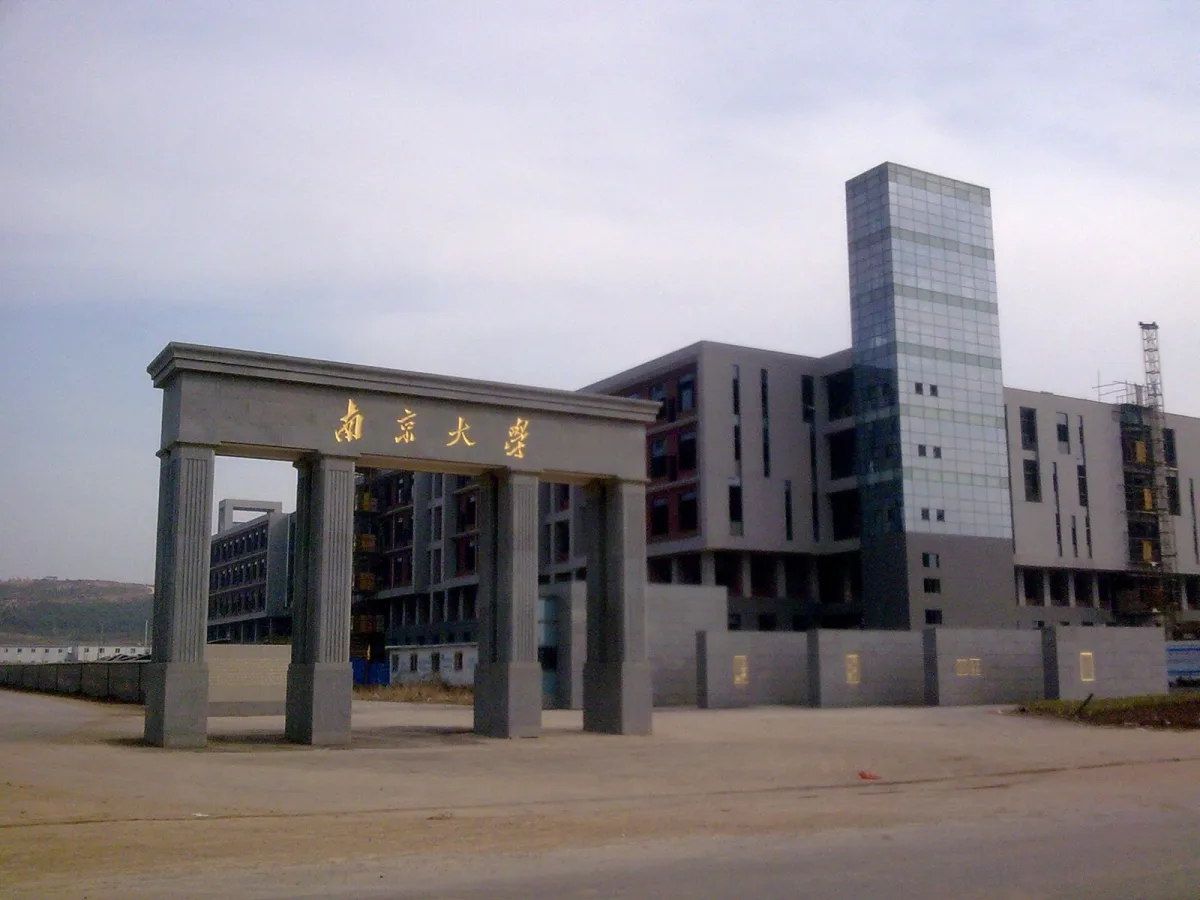
To a camera on the ceiling, a student taking notes and a student scrolling through a phone look exactly the same: both have their heads down. That simple fact tripped up Nanjing University, ranked sixth among Chinese universities in the 2026 ShanghaiRanking. Its new “smart classroom” system calculated a “head-up rate,” the share of students looking at the lecturer at any given moment. On November 4, 2026, after a wave of online anger, the university announced that it had stopped tracking the number.
The cameras stayed. And at another Chinese university, a system just like it once caught a Japanese-language teacher breaking the rules: she sat down during class. Read the university’s explanations alongside accounts from lecturers elsewhere, and it becomes clear that students were never the system’s main target.
The screenshot that gave it away
It started with a notice. In early November, students learned that the system, upgraded over the summer, would take attendance in some courses for a week during a routine midterm inspection. Some teachers, Chinese media reported, warned in class group chats that absences would hurt grades and that poor attendance could even void exam results.
Then a screenshot went viral: a live view of a lecture hall with figures alongside it. How many students arrived late, the attendance rate, and the share sitting with their heads up. In Chinese the metric is called taitou lü, literally the “raised-head rate.”
The university responded quickly. Attendance isn’t tied to grades, it said, and the screenshot was old, taken in May on the Suzhou campus. Readers latched onto two qualifiers in the statement. The system does not collect facial data “without authorization,” and it is “currently” not calculating the head-up rate. Yet the upgrade contract was worth more than 31.52 million yuan (about $4.4 million), and Chinese media reported that its tender documents explicitly list facial recognition and head-up rate calculation. Jimu News, an outlet in Hubei province, argued that students should have a say in decisions about monitoring. Students themselves put it more simply: why did nobody ask them?
Heads up, minds elsewhere
Set privacy aside and a simpler question remains: what does this metric actually measure? The camera sees the angle of a head. A lowered head counts as inattention, even if it’s bent over a notebook full of lecture notes or a textbook open to the right page. A raised head counts as attention, though anyone who survived first grade knows how to stare at a blackboard while thinking about the weekend.

If you sat through Zoom calls in early 2020, a similar counter was watching you too. Hosts could see whether you kept the meeting window in focus or had switched to your email. It measured the same thing the Nanjing camera does: a visible sign, not attention. A minimized window says nothing about whether someone is listening, and Zoom soon removed the feature for good.
Who the camera was really watching
The most revealing explanation didn’t come from students. A Nanjing University faculty member who asked not to be named told the South China Morning Post that the system was aimed more at supervising teachers’ performance than at individual students. In the same breath, the lecturer complained that students spend too much class time on their phones. The metric pits lecturers against students, and each side blames the other for low numbers.
The logic is easy to follow. If half the room is staring at the floor, the administration blames whoever is standing at the front. In spring 2026, reporters at the Chinese studio Jizhou described what that feels like from the inside. Their piece, “Under the Camera’s Gaze, I Changed from a University Lecturer into a ‘Performer’,” was translated by researcher Jeffrey Ding in his ChinAI newsletter.
Its central figure is a lecturer in Heilongjiang province who goes by the pseudonym Xiaoxi. Her university installed these systems in March 2024, and they now sit in more than 90% of classrooms. One camera in front, one in back. The system tracks the head-up rate and how many students sit in the front row, and it reads their facial expressions. It also logs the lecturer’s own verbal tics and gestures and flags any “sensitive keywords.” At some schools these numbers appear live on a screen next to the blackboard.
“I feel as though I’ve been alienated by AI,” Xiaoxi says. Another lecturer in the piece, a junior instructor in digital media, was criticized for a low head-up rate. He believed in giving students room and was content if one or two of them listened and asked questions. He eventually left academia. The story of the Japanese-language teacher who sat down came from one of her own students.
Students adapted faster than their teachers. They prop tablets upright to block the front camera and use their own backs to shield themselves from the rear one. The most coveted seats are now in the middle rows, as far from both cameras as possible.
A metric designed to make students look up more taught them how to hide.
Headbands, seven emotions and an eight-year pattern
Nanjing isn’t the first to measure attention by machine, or the first to back down after an outcry. The pattern has been repeating for eight years.
// Timeline
- At Hangzhou No. 11 High School, three cameras above the blackboard read seven facial expressions. The headmaster says focused students get an “A” and wandering minds a “B.” One student says it feels as if mysterious eyes are always watching.
- Education officials in Jinhua suspend a trial of BrainCo headbands that turned brain signals into a live focus score for schoolchildren.
- Zoom drops its attendee attention tracker.
- Universities in Heilongjiang province start installing cameras that count raised heads and watch the lecturer.
- Nanjing University stops calculating the head-up rate. The cameras keep taking attendance.
Jinhua’s headband trial in 2019 was especially telling. An alumna who had invested in BrainCo donated the 50 headbands to the school, so in effect an investor in the company that made them set up the experiment on schoolchildren. In an online poll by Economic Daily, a Chinese state newspaper, 88% of 3,362 internet users called monitoring schoolchildren’s focus unnecessary or unacceptable.
Each scandal switches off one feature; the infrastructure stays. The headbands came off, and behavior-tracking cameras spread to universities. Nanjing no longer counts raised heads, but its cameras still take attendance and count the people in the room. In April 2026, China’s Ministry of Education and other agencies issued an “AI + Education” action plan encouraging “intelligent technologies” in the classroom. Money for upgrades, Xiaoxi notes, arrives quickly when it’s framed as “AI empowerment.”

What’s left in the lecture hall
Counting turned out to be easier than understanding. The cameras in Nanjing are still on the ceiling, still noting who showed up for the lecture. The university’s statement doesn’t say what number they will put on the screen after the next inspection.
Xiaoxi has an answer older than any camera. She recalls Confucius: he had three thousand disciples, yet only seventy-two were deemed worthy sages. Her conclusion: “Thus, our head-up rate might also not be that high.”