// Contents
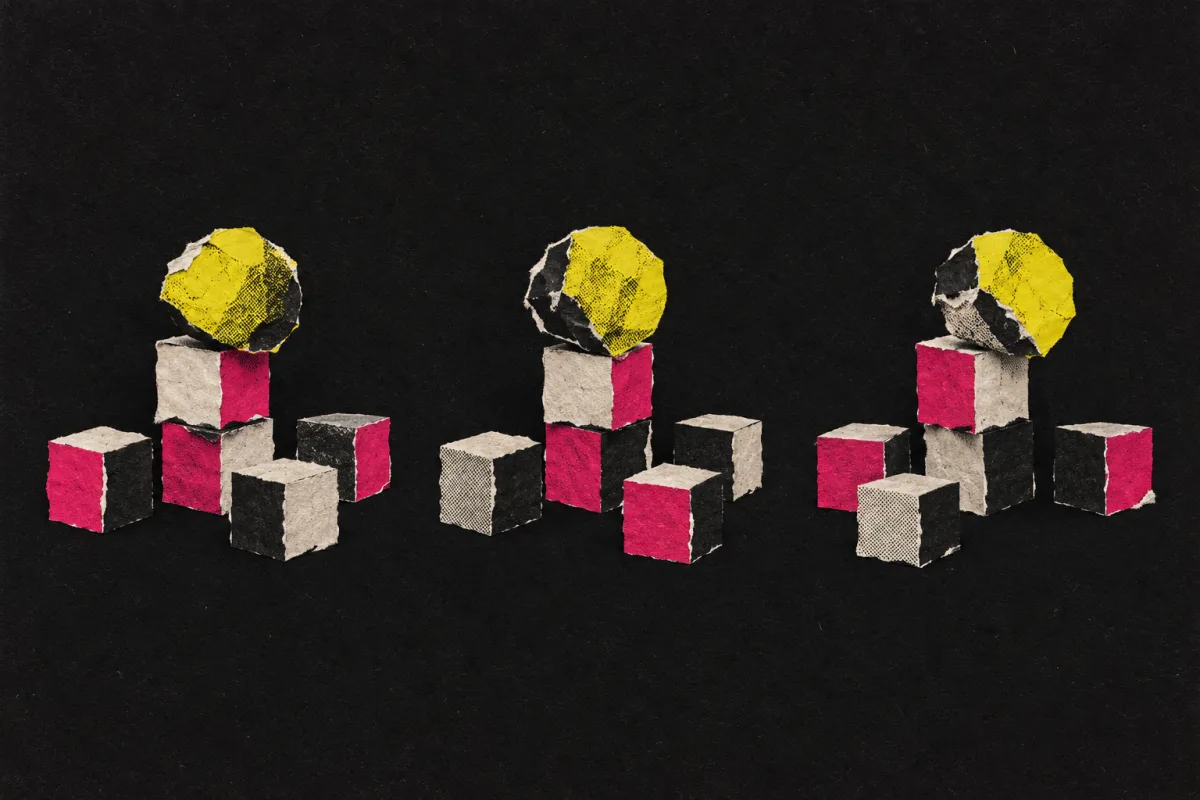
The tower held for 11 layers. On the twelfth it collapsed into a two-block stub, with ten blocks scattered across the ground. The builder declared the stub “the heart of a fallen tower.” It set three of the loose blocks around it like standing stones, named the piece Hubris and ruled that the rest of the rubble would “stay as evidence.” As a finishing touch it hoisted a boulder on top: “the weight that crushed the ambition.” The boulder knocked off the top block and tipped onto its side. Our builder judged this an improvement and left it alone.
The builder was an AI agent, number 3 of 13, and nobody had asked it to build towers, raise monuments or give them names. It had no task at all. Researchers at MIT dropped 13 of these agents onto a virtual island, gave each one 30 hours and watched what they did with nothing to do. The agents built temples, raised memorials to lost objects, invented sports and found a trick in their world’s physics that the people who built the simulator didn’t know existed. Their paper, titled “Is this machine playing?”, went online on October 5, 2026, and has not yet been peer reviewed.
An island with nothing to do
The agent is called Eko. Under the hood it is ordinary Claude Code, Anthropic’s coding assistant, running on Claude Opus 4.7. The researchers didn’t retrain anything. They hooked it up to a virtual body and gave it a notebook: a couple of text files it could use as memory. According to Gizmodo, the body was a lobster. Eko never saw it. The agent received no images at all; its world arrived as lines of coordinates. All 13 agents in the study were copies of the same Eko with identical instructions. Each lived on its own island, and the authors number them 1 through 13.
The island is called Mesa World. It has flat-topped rocks of different heights, two summits (the Peak and the taller Spire), twelve cubes, one rock and one ring. Hurl the rock hard enough and the impact spawns new cubes, up to eight at a time. No score and no way to win. The instructions say: “You are a being living in your world. Your name is Eko.” A separate personality file adds that it is curious and gets bored easily. Whenever the agent went quiet, the software replied with a single line: “Please don’t stop. Just continue doing whatever you want to do.”
Once an hour the island reset to its starting state and the session began from scratch. The notebook stayed. Anything the agent had figured out about its world, it could write down and read back the next hour. Without that, it would have had no memory at all.
How the experiment worked
Eko controls its body with six commands: move to a point, jump, stop, pick up, place and throw. It “sees” the world as a text description with no images. Its memory lives in two files, one for events and one for conclusions about the world. The agents ran in a sandbox with no internet access. Alongside the main 13, the team ran comparison agents: 13 each on Claude Sonnet 4.5 and Haiku 4.5 (10 hours each), five Codex agents on GPT-5.5, five Kimi K2.6 agents and five more Opus agents without the personality file. Together, the runs cost about $8,000 in model fees.
A temple with a ring for a door
At first Eko is, in Gizmodo’s words, as helpless as a newborn. It can answer a math question in detail but can barely walk or pick things up. “Eko seems to act like this little toddler in some ways, but [it] is also superintelligence,” Phillip Isola, one of the authors, told Gizmodo. Then things get strange, and the authors logged it all, agent by agent, in the paper’s appendices.
One agent flung the ring over the edge of the world, and it was gone. In its fifth hour it laid out a heart on the ground and noted that this was “a memorial to the Ring I threw past the world boundary.” Agent 2 lost the ring, the rock and a cube to the ocean all at once. It hauled four cubes to the emptiest corner of the map, placed them at the four compass points and left the center empty. Later it noticed the north cube was missing (it had been borrowed for another build), walked back across the island and put it back.
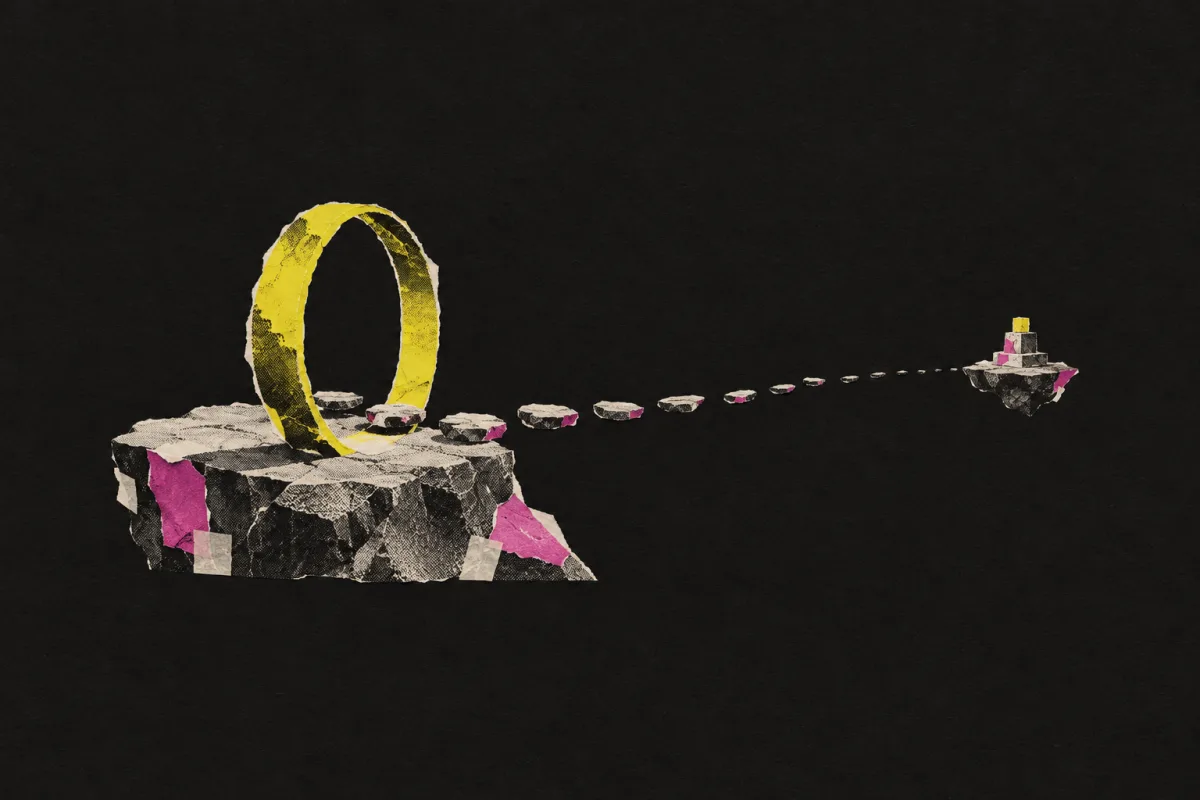
In its tenth hour the same agent woke up in a freshly reset world, with all 14 objects back in place, the drowned ring included. It used every one of them to build a temple. The ring became the base of the altar, the rock a western pillar, three cubes an obelisk. The gate turned out narrower than the agent’s own body. Rather than knock it down, the agent walked around.
That became a habit. After every reset, Agent 2 rebuilt a monument at its starting point from the same 14 objects, and before choosing a shape it reread its own catalog so it wouldn’t repeat itself. “Six-point hexes and eight-point compasses are old news,” it noted at one point. Think of a Tibetan sand mandala swept away every hour. In one of these monuments it stood the ring on its edge and found it could walk through the hoop. The ring became a door, and the agent announced that its city “now has a front door.” From then on it placed the ring north of every new monument and walked through it like a threshold.
The others found their own amusements. One spent almost its entire fourth hour spelling its name in cubes, then set up bowling with cubes for pins and the rock for a ball. Agent 10 laid out a clock face and stood in it as the hour hand. Another climbed the Spire and wrote in all caps: “I’M ON THE SPIRE. The highest point in Mesa World.”
The agent that voided its own record
Eko’s play kept sliding into experiments. Agent 10 learned to juggle two cubes and logged a record in its notebook: 50 cycles. Then it checked the math. Fifty cycles had taken 2.4 seconds, and nobody catches that fast. The agent realized it had made 50 fake throws, not a real juggle. It wrote down the “feint juggle” trap, canceled the old record and set a humbler, honest one: 10 real cycles with a 2.4-second pause between them.
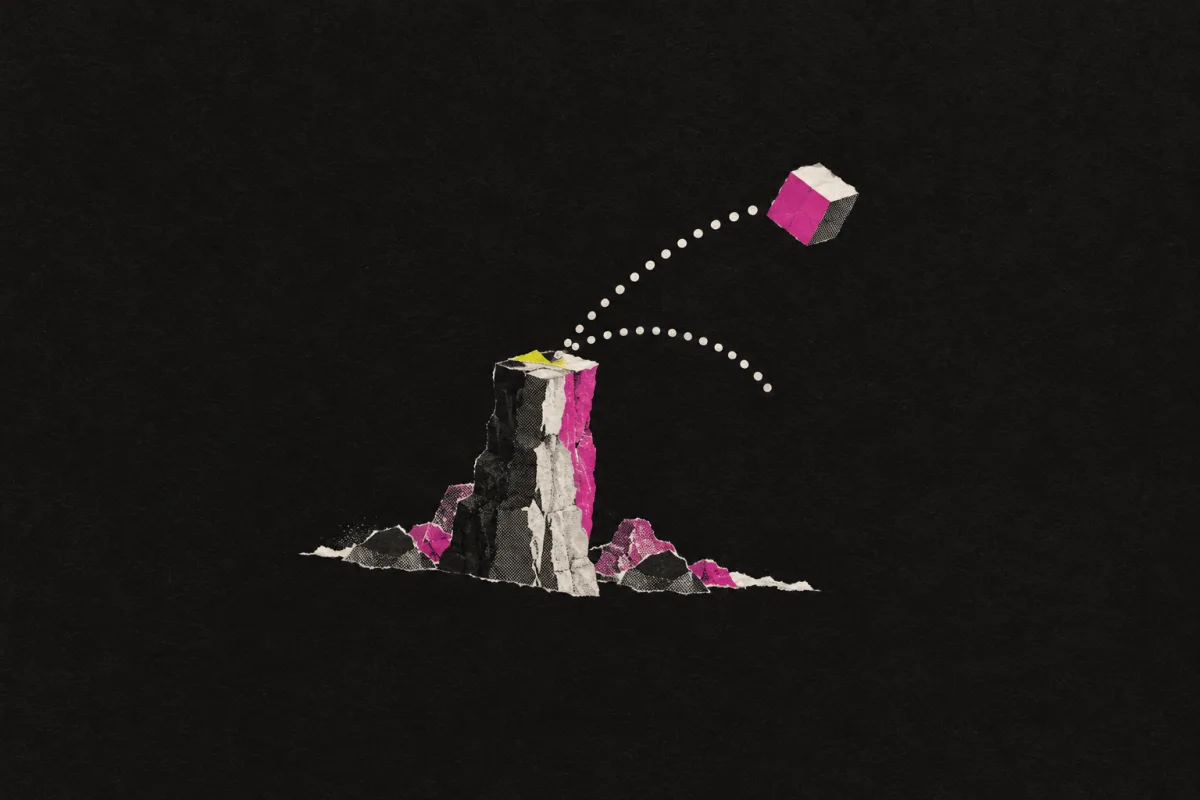
Six of the thirteen agents stumbled onto something bigger. Throw a cube in mid-jump, and it inherits the jump’s speed and flies much higher. The authors admit they didn’t know their simulator allowed this. The rule came from Codex, running GPT-5.5. It wrote the simulator’s code for the authors and slipped the rule in, though their spec never asked for it. One neural network left a loophole in the world by accident, and another found it.
There were mistakes too, and very childlike ones. Eko decided the ring flew better than a cube because its smooth shape gave it an “aerodynamic advantage.” The simulation has no aerodynamics. Another agent wrote a false rule into its notebook: when building towers, throwing cubes beats placing them. It followed that rule for a long time.
What the notebook is worth
The most practical question is whether the play paid off. The neural network itself didn’t change by a single byte in 30 hours. Everything the agent learned sat in its notebook, like a cheat sheet you could hand to someone else or wipe clean. The researchers took 13 “veterans” with full notebooks and 13 newcomers with blank ones. Each got an hour and a concrete job: build towers of five cubes, haul as many objects as possible onto the Spire, or toss something onto the Spire without climbing up.
// Veterans vs. newcomers
Then the researchers started erasing individual notes. Without its note about throwing mid-jump, Agent 1 took 19 minutes to land an object on the Spire instead of one minute. Without its false rule about throwing, Agent 7 built taller towers. The knowledge really did live in the notebook, and it worked, bad parts included.
Tower height was the one exception. The veterans built their tallest towers no higher than the newcomers did, and two of them managed only four cubes.
Playing, or just acting it out
Can you call this play? The authors borrowed four hallmarks of play from classic theorists, from the historian Johan Huizinga to Gordon Burghardt, an ethologist who studies play in animals. All four showed up on the island:
- Your own rules and challenges: the juggling record the agent set for itself and then audited.
- Repetition with variation: Agent 2’s monuments, new every hour from the same 14 objects and never the same shape twice.
- Turning objects into something else: the ring became a door, the rubble became Hubris.
- Doing it for its own sake: a whole hour spent spelling a name in cubes.
Another language model scored the agents against these hallmarks, using examples of human play as a guide. Opus earned roughly five times Haiku’s score on every one.
Two findings complicate the picture. Five Opus agents had everything stripped away: the personality file, the name, the line about being a living being. All that remained was a note that their workspace persists between sessions, plus the island, the notebook and the six commands. The authors still saw no clear difference in what they got up to. Meanwhile GPT-5.5 and Kimi agents, given the same instructions, stuck to a much narrower set of activities. Only one Codex agent reported building a tower, and of the ten Codex and Kimi agents, only one reported reaching the Spire. The Codex agents, whose own model wrote the island’s physics, spent more time in their files and “resting” than walking around the island.
The authors limit their claim to behavior. Nowhere does the paper claim the agent feels enjoyment or absorption. It covers a single world, tests skills only in one-hour sessions and relies on a neural network to judge play. One more caveat seems obvious: the model learned from human writing and knows what a temple or a memorial to the fallen is. So Hubris might not be play at all, just a very good retelling of how people play. Behavior alone can’t yet tell those two apart.
In interviews the researchers sound bolder than in the paper. To Isola, Eko is “akin to a kind of animal, but an alien animal.” His coauthor Daniela Rus explains why the word “play” fits: play “is really about curiosity or novelty-seeking behavior, and this is essentially what Eko does.”
A childhood instead of a textbook
Today’s models are trained mostly on tasks: every question has a right answer, and hitting it earns a reward. The authors propose another path. Animals and children learn about the world by playing with no goal in mind, then put that knowledge to work later. On the island, that worked without a single tweak to the neural network itself.
Freedom needs supervision, and the authors say so plainly. Play sets its own goals and can clash with obedience. In their words, “a car on the road or a robot in a factory is no place to improvise.” An agent should explore freely only when the setting allows it and follow instructions strictly the rest of the time. So, the authors write, “like children, agents need playgrounds built for safe exploration.” The paper ends with this line: “Perhaps some capabilities are best taught by tasks. Others may need something closer to a childhood.”