// Contents
On October 30, 2026, a Google satellite was passing over Svalbard, Norway, when a short poem came down to the ground station. Engineers had asked the language model on board for a haiku about being in space. It answered: “Blue marble below / Data streams in silent grace / Starlight feeds my core.” Then it added a sparkle emoji.
Travis Beals, who leads the project, reported it as the first AI response ever produced in orbit by one of Google’s own data center chips. The satellite is a prototype for Project Suncatcher, Google’s plan to put data centers in space.
The poem came from one chip out of four, and the satellite has only enough power to run it for about 20 minutes at a time. And by Google’s own math, satellites like this replace data centers on the ground only if Starship launches every two days for ten years.
Four chips and one kilowatt
Planet built the satellite, and a SpaceX rideshare mission called Transporter-18 carried it to orbit on October 1. Inside are four TPUs, or tensor processing units — the chips Google designs to run AI in its own data centers. The model on board is Gemma 4, an open model from Google DeepMind.
Its power budget is modest. The solar panels supply up to one kilowatt, less than a typical electric kettle draws. So, TechCrunch reports, only one TPU out of four can run at a time, for about 20 minutes.
The “first” also deserves a footnote. Google calls this the first AI response from a data-center-class TPU in orbit, and the wording is careful. Gemma itself had already been to space. In late 2025 the startup Starcloud launched a satellite with an Nvidia H100 graphics chip, trained a small model on Shakespeare’s plays in orbit, and ran an earlier version of Gemma. Its first message to Earth opened with “Greetings, earthlings.” What is new here is Google’s own chip, the one it wants to build the whole system around.
Why haul a server into space
AI eats more electricity every year, and building data centers on the ground keeps getting harder. In May 2026, a Heatmap News poll cited by CNBC found that seven in 10 Americans would oppose a data center near their home, up from four in 10 a year earlier. Local governments are proposing moratoriums. Residents fight over water and land.
Space has no neighbors, and the sun almost never sets. In its 2025 project outline, Google says a solar panel in the right orbit can produce up to eight times more energy than on Earth. The orbit in question, called dawn-dusk sun-synchronous, rides the line between day and night, so a satellite there rarely passes into Earth’s shadow.
The plan is not one satellite. Google sketches a swarm of 81 spacecraft about 650 km up. The whole cloud is roughly two kilometers wide, and adjacent satellites fly 100 to 200 meters apart, about the distance between houses on neighboring streets. Each would carry dozens of chips, linked by lasers so the swarm computes like one big machine. For now, the prototype flies alone. Google plans to launch two laser-linked spacecraft in 2027.
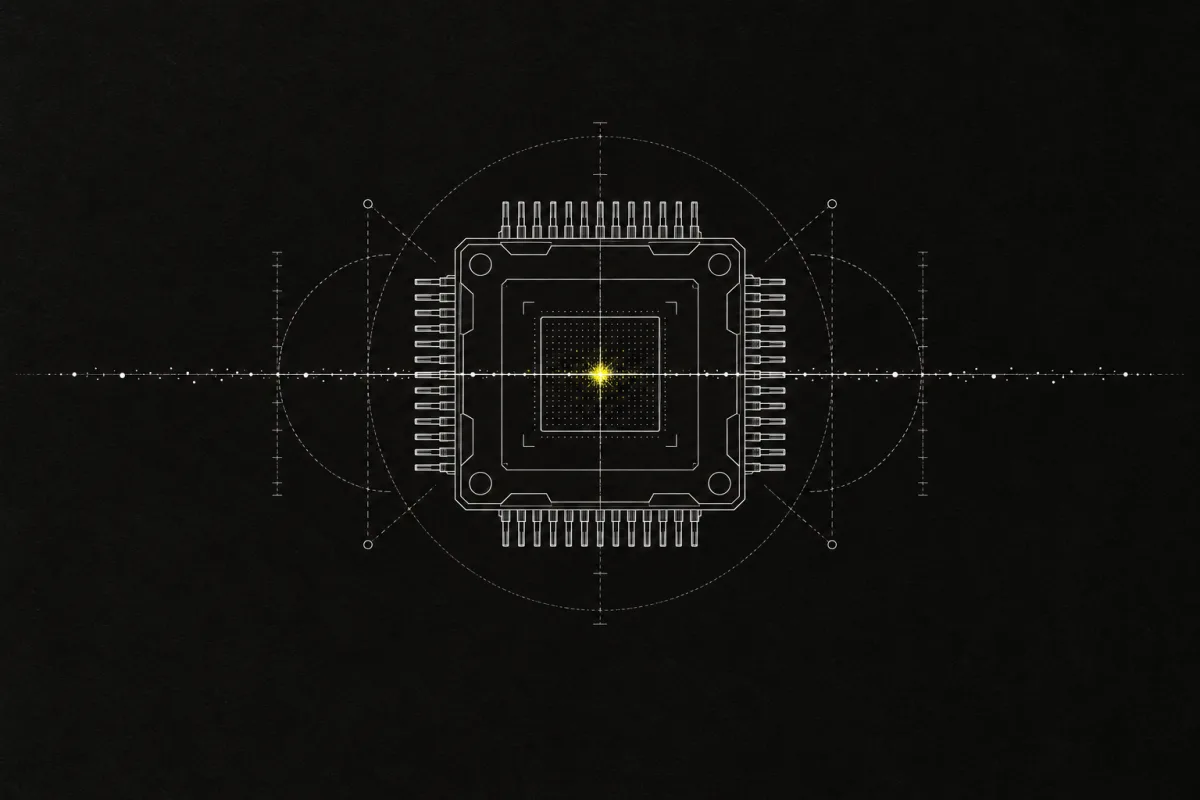
The error nobody notices
Radiation is the main enemy of electronics in orbit. A charged particle can punch through a chip and turn a zero into a one in memory. That sounds harmless, but inside a neural network it can quietly spoil an answer.
Before launch, Google took its Trillium-generation TPUs to a particle accelerator at the University of California, Davis, and fired a proton beam at them. The safety margin turned out to be wide. The most sensitive part, its high-bandwidth memory (HBM), only started to misbehave at nearly three times the dose a shielded chip would absorb in five years in orbit. One chip took 20 times the five-year dose (15 krad versus 750 rad) and still did not fail outright.
Then the engineers realized the test chips had more metal around them than they would in orbit, so they ran the test again. Logic errors went up slightly. For a model answering queries, Beals calls that rate very low: about one error in a million operations. For a giant training run, with thousands of chips working for months, it is already a problem, he says: a corrupted bit can end up in the model itself, not just in one answer. “We’ve done testing on the ground, but you know, there’s no test that’s completely as good as the real thing,” Beals said. The satellite is up there to be the real thing.
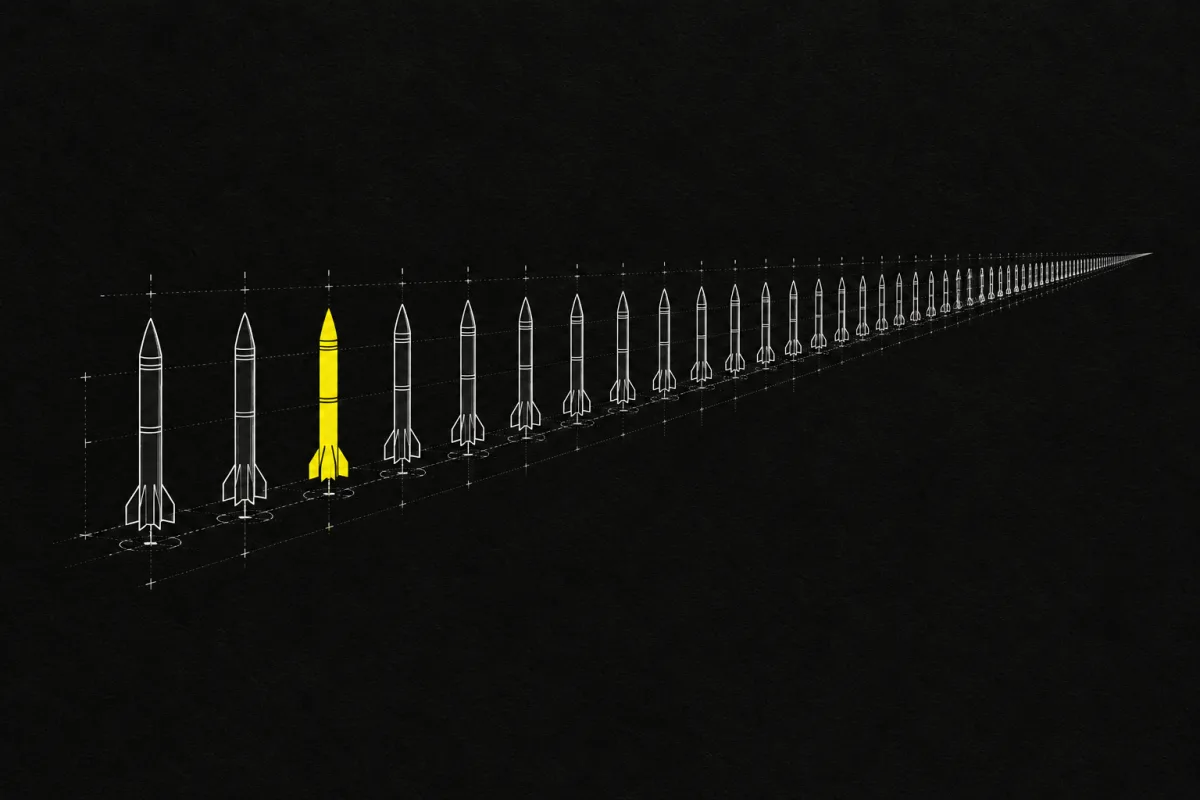
1,800 launches
The hard part of a space data center is not the chips. It is the shipping, and Google did the math itself. If launch prices fall to $200 per kilogram by the mid-2030s, it estimates, an orbital data center would cost about as much per kilowatt as the power bill for the same data center on Earth.
In early October 2026 Google released a peer-reviewed version of the analysis, due out in the journal Joule. It spells out what that price would take. The authors started from how fast launch costs have fallen since the first Falcon 1: roughly 20% a year. Rockets get cheaper the more they fly, like anything mass-produced, so a cheap kilogram has to be earned in flights. For Starship to follow Falcon 9’s path, it would have to lift 370,000 tons to orbit. At 200 tons per trip, that is about 1,800 flights over ten years, or about 180 a year.
SpaceX, the company expected to haul these data centers up, has its own doubts. In January 2026 Elon Musk called orbital data centers a “no brainer.” Yet in its IPO filing, SpaceX warned investors that its orbital AI compute plans “may not achieve commercial viability.” Cautious language is standard in such filings, but the dependence is spelled out: the plan works only if Starship flies at scale. Beals himself promises nothing quick and calls Suncatcher a “long-term moonshot.”
The haiku over Svalbard proved that the link and the chip work. The rest depends on a rocket that would have to fly 180 times a year. Since its first full-stack test flight in April 2023, Starship has never flown more than five times in a year.