// Contents
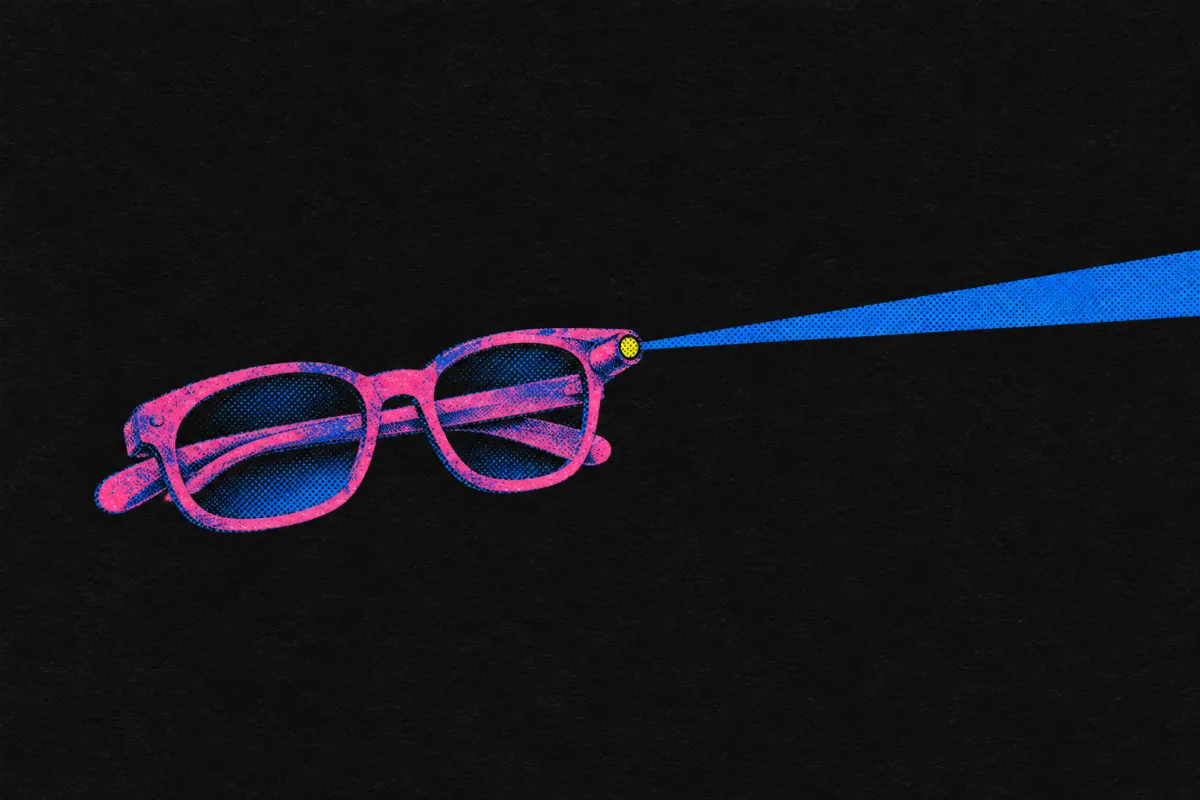
If a strand of hair falls across the little light on the frame of Google’s new glasses, they stop filming. That is how Google describes the bystander protection on its first AI glasses: a small white light glows while the camera records, and sensors make sure nobody covers it. Google’s safety page spells out what counts as covering it: “tape, paint, hair, or anything else.” When that happens, the glasses cut the video short and refuse to take photos.
It sounds like overkill. It isn’t. That little light has spent two years in a war: stickers, a $60 soldering job, three Meta firmware updates and several thousand glasses whose cameras Meta switched off. Google arrives mid-war and adds a second line of defense. Its AI never sees the faces of passersby. The person wearing the glasses sees them just fine.
A light that is thirteen years old
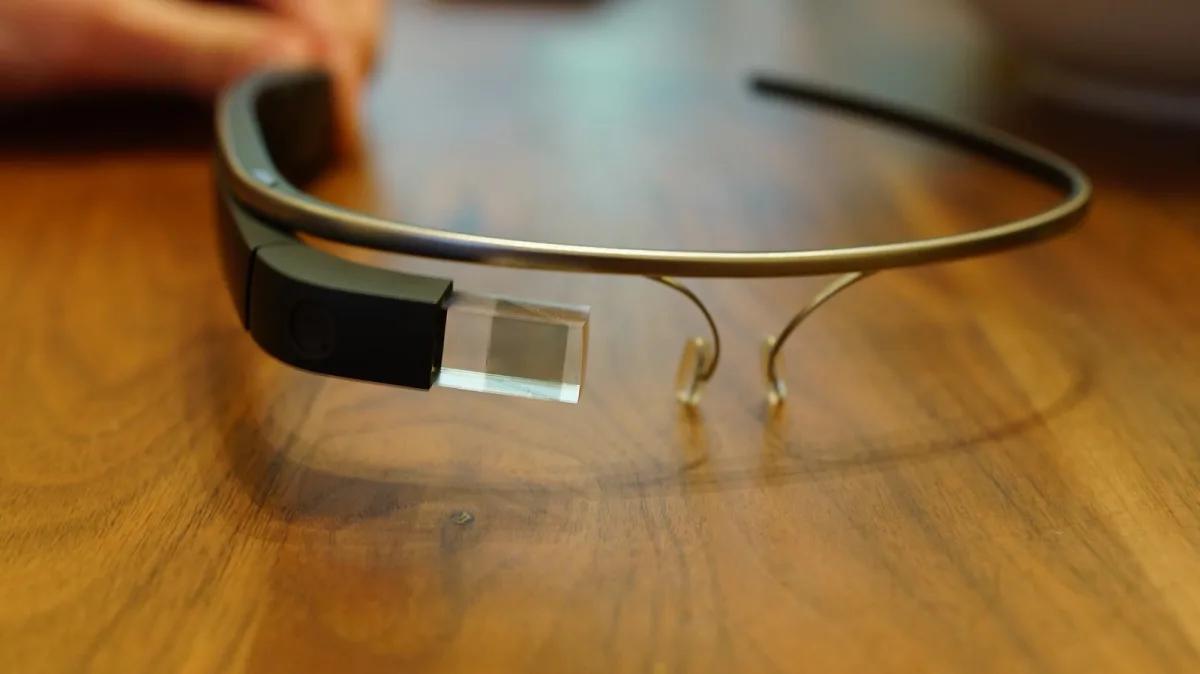
A camera on your nose is an old idea, and so is the light. Back in 2013, Google Glass lit up an indicator while recording. It didn’t help. Wearers were nicknamed “Glassholes.” US movie theaters banned wearable gadgets from screenings, and Las Vegas casinos kept Glass away from gaming tables. In January 2015, Google stopped selling it.
Meta tried next and pulled it off. Ray-Ban Meta glasses became a fashion accessory, with more than 7 million sold in 2025 alone. Popularity brought a question Glass never lived long enough to face: what happens if someone just tapes over the light?
A sticker, a soldering iron and three firmware updates
Meta’s first answer was simple. The glasses checked the light only as a recording started: if it was covered, the camera wouldn’t turn on. The check ran once, and people figured that out fast. Start a video with the light uncovered, slap a sticker on it, and the recording kept going. Analysts at IPVM, a video surveillance research firm, tracked this loophole for almost two years. Meanwhile, purpose-made stickers and clip-on covers sold in bulk on major online marketplaces.
The second method was cruder. In October 2025, 404 Media profiled Bong Kim. The story opens in a workshop with foil bubble-wrap insulation stuck to the walls and ceiling. A shirtless man works over a pair of Ray-Ban Metas with screeching power tools, blasts them with compressed air and squints at a sheet of paper as if checking instructions. After a few tries, the white LED on the frame no longer lights up. The glasses still look new and still record. Kim charged $60 for the job. His clients were spread across the country, the reporters wrote, and the list was growing.
// Timeline
- Meta says tamper detection is built into its glasses: with the light covered, a recording won’t start
- Firmware v12.0 is supposed to catch a light covered mid-recording. In IPVM’s test, it fails on both first- and second-generation glasses
- 404 Media reports on the $60 LED modification
- A mandatory Meta firmware update: if the LED is damaged, the camera shuts off. A sticker applied mid-recording still works
- Meta says it has disabled cameras on thousands of tampered glasses
- Firmware v128: a covered light stops recording within about 5 seconds
- Google unveils glasses whose light is guarded by sensors and whose Gemini doesn’t see bystanders’ faces
In summer 2026, Meta went on the offensive. In September, Alex Himel, Meta’s vice president of wearables, told Semafor that fewer than 0.1% of glasses sold showed signs of tampering. The company cut off recording on thousands of pairs. Their owners were left with what Semafor called “a pair of expensive Bluetooth headphones.”
Around the same time, firmware v128 killed the sticker trick too. In IPVM’s tests, the glasses stopped recording roughly 5 seconds after the light was covered, in daylight and in a dim room alike. Wearing a hat didn’t trigger false stops. “It’s been a little bit of a cat and mouse game,” Himel admitted.
Google starts where Meta ended up
Google unveiled its glasses on November 12, 2026: no screen, just a camera and the Gemini voice assistant, with electronics by Samsung and frames by Warby Parker and Gentle Monster. They go on sale December 10 in the US and South Korea, starting at $395. On bystander protection, Google begins at the point Meta needed two years to reach.
// How the glasses protect bystanders
Meta
- Covered light: a recording won’t start; covering it mid-recording stops filming within about 5 seconds, but only since September 2026
- Damaged LED: the camera is shut off, since July 2026
- Facial recognition: “not something we’re looking to do right now,” Himel says
- Rules: covering the light violates the terms of service
- Covered light: tape, paint or a hair stops recording from day one of sales
- Damaged indicator parts or wiring: photo and video capture shuts off automatically
- Facial recognition: Gemini doesn’t recognize faces, and Google Play apps may not identify people in real time or live-stream from the camera
- Rules: the owner promises not to record without consent or cover the light, or the glasses may be disabled
The most unusual difference is how the glasses show the world to their own AI. When the wearer asks Gemini about what they’re looking at, the glasses redact bystanders’ faces before the image reaches the model. Google also promises that Gemini on the glasses doesn’t recognize faces, and that images sent with these requests never land in Gemini’s history or in model training. Shahram Izadi, who runs Google’s work on augmented and virtual reality glasses and headsets, put the goal this way: personal help shouldn’t come at the expense of anyone’s privacy.
A face the wearer sees but the AI doesn’t
There is a seam in this design, and Google doesn’t hide it. Faces are blurred only in images sent to Gemini. Photos and videos the wearer saves to the gallery stay untouched, as Google confirmed to The Register. Judging by the company’s own description, the light is tied to exactly those shots: it turns on “when you take a photo or video for your gallery.” The company doesn’t say outright whether it glows while Gemini looks at the street to answer a question.
Back in fall 2024, two Harvard students, AnhPhu Nguyen and Caine Ardayfio, showed what glasses can do when paired with face search. They hooked Ray-Ban Meta glasses up to the face search engine PimEyes and other tools. The glasses livestreamed to Instagram, a program watched the stream and identified faces in real time, and the results arrived in a phone app. In their demo video, the students walk up to strangers on public transit and talk to them as if they were acquaintances. The system has already pulled everything they need for the conversation from a single frame of the livestream: a name, home address, phone number and relatives. You can “just go from face to name,” Nguyen said. The students never released the code; they meant the project as a warning.
That is the scenario Google has banned for Google Play apps: identifying people in real time and live-streaming from the camera. But the gallery leaves a slower route open. Take a picture now, run it through a search engine on your phone tonight. The Register flagged exactly that gap.
Nobody outside Google can check the rest yet. The company hasn’t explained how the sensors detect tampering, and independent tests won’t come before December 10, when the glasses go on sale.
The law lost this round
California tried to write the same protection into law. SB 1130, a state bill, would have banned disabling the recording indicator on glasses and other wearable devices. On September 30, 2026, Governor Gavin Newsom vetoed it. He found the definition of a wearable recording device too broad and noted that California already bans recording people without consent in private spaces.
So if you happen to stand near someone else’s glasses, your privacy now rests on the manufacturer’s firmware. The company writes the firmware, decides whose glasses to disable and reports how well it all works. Google launched with rules Meta needed two years to reach, and nobody has seriously tried to break them yet. Himel, who has been playing this game for two years, didn’t promise Semafor it would ever end. “I don’t think we’ll ever be done,” he said. “There’s always new ways to get around the safeguards that are in place.”