// Contents
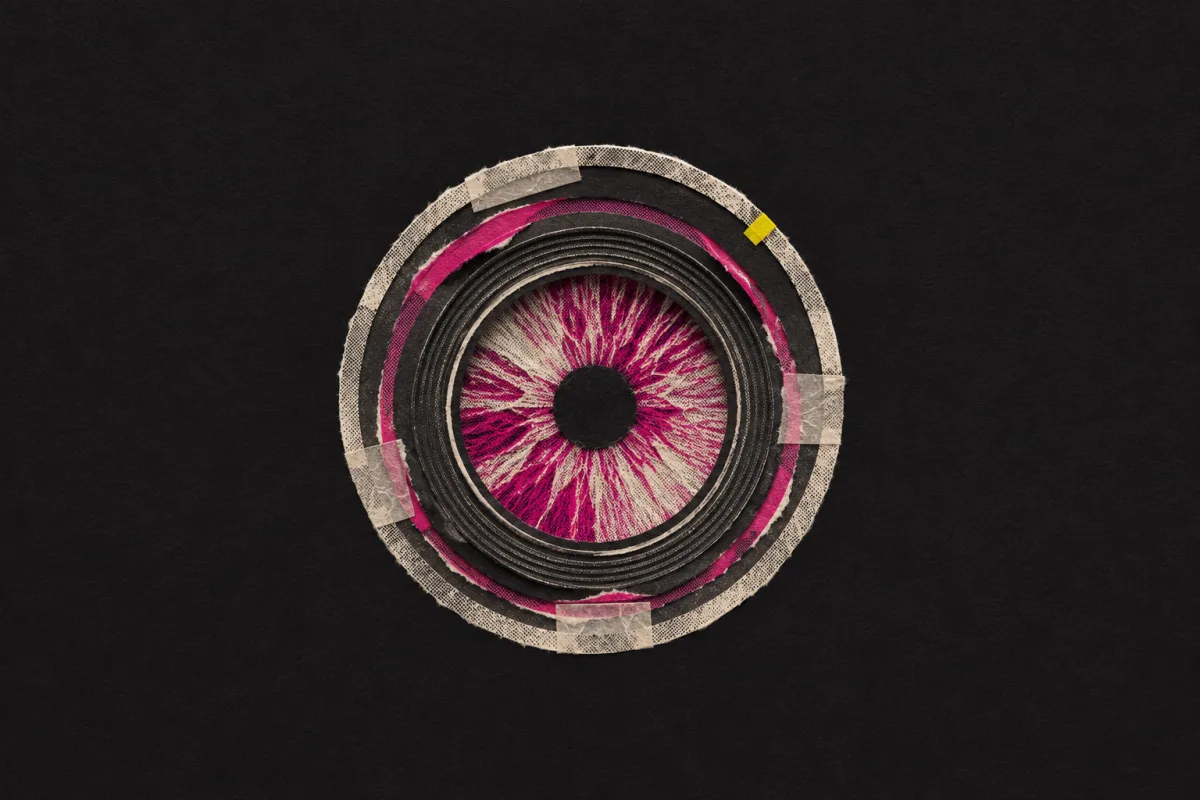
In the artists’ description of Facial Rover, a visitor on a lounger holds a warm controller that feels like skin. On a screen, they can see the pattern of their own iris in close-up. A soft robot seems to breathe near their neck. AI guides the session, and the artists want it to make a portrait of the person in front of the lens.
Blast Theory built the installation with Steve Benford, a professor at the University of Nottingham, and the university’s Somabotics team. The first public test took place at Emirates Towers in Dubai, where visitors tried an early prototype at The Human Within from November 18 to 21, 2026. For that test the researchers described a lounger, a camera on a robotic arm, and a soft controller with a skin-like surface. As visitors explored close-ups of their own faces, AI formed its own interpretation of what it saw.
The subject steers the lens
Somabotics describes a cross between a spa and a photography studio. Computer-controlled cushions fill the lounger. The robot holds the camera, and visitors steer it from the lounger with the soft controller. A screen shows the part of their face the lens is pointing at. That puts some of the photographer’s job in the hands of the person being photographed.
A mirror shows you your whole face at once. On this screen, a single hair or pore can hold your attention. It’s closer to using a magnifying glass, with time to linger over a small detail.
The research team’s account of testing in Brighton describes the conversational guide and the device around the neck. The team used a toolkit called Somaskins to run a wearable massager that marked specific moments in the session. On their project page, the artists describe a sensation like breathing and a reassuring voice. That’s a fair amount to pay attention to while a lens is trained on your face.
Somaskins grew out of Feng Zhou’s research. He builds wearables out of interchangeable components, including pressure pads, tiny pumps and heating patches. The components snap into place. A wireless module lets researchers link them to movement data from a robot or even to a reading from a heart monitor. In the team’s Brighton tests, touch could mark a moment in the session much as a voice or sound might.
Two ways to look at one face
The visitor chooses which part of their face to see. Somabotics says the AI forms its own interpretation of the view. The artists want the result to be a portrait. It remains unclear whether the Dubai prototype produced a finished portrait or whether a visitor saw it.
Somabotics also describes the experience it wants to create. The setting invites you to relax even as a robotic arm moves into your personal space. Its camera turns your attention back toward yourself. You choose what to look at, even as the camera looks at you.
Blast Theory and Benford split control differently in Cat Royale. A robotic arm wielded toys for three cats. After the team scored how readily the cats joined in, the program suggested what to play next. Behind glass, an operator started the game when it was safe and held down a button for as long as the arm was moving. The operator could take over if a toy got tangled or a cat started playing tug-of-war. The footage shows a cat named Clover pulling a toy out of the robot’s grip. Releasing the button stopped the arm. In Facial Rover, the person the camera approaches gets to steer it.
Out of the workshop
In Brighton, the team adjusted the prototype before packing it up for Dubai. The exhibition let the artists and researchers watch people use the controller for the first time. Somabotics collected feedback and observations to refine both the session and the equipment. The team’s account gives no details of how visitors responded.
The artists plan to premiere the finished work in 2027. Before the conversation turns to portraits, there’s a question for the person getting up from the lounger. When did you feel in charge of how you were seen?