// Contents
The plan called for an 8-hour climb to the summit of Mount Shasta. Three novice hikers from Roseville, California, left camp at 3 a.m., reached the top at 7 p.m., and walked off the mountain the next morning with rescuers beside them. The Siskiyou County Sheriff’s Office called their preparation “a critical misstep.” By the hikers’ own account, Google’s Gemini planned their route and packing list, and it told them to bring far less food and water than they needed.
The story traveled as “AI leads hikers astray.” A month later, rescuers in Canada plucked a 16-year-old off a cliff, and the first reports again named a chatbot, this time Claude. Read the rescue reports closely, though, and the evil robot guide starts to fade. Shasta’s lead climbing ranger called Gemini’s advice “not terrible information.” The teenager insists he planned his route on ordinary maps. The trouble isn’t that the bot lies. It answers with total confidence, and a beginner on a mountain has nothing to check that answer against.
Eight hours that stretched to sixteen
Mount Shasta is a 14,179-foot (4,322-meter) volcano in Northern California. The Clear Creek route the trio chose is not technical: no ropes or climbing gear, just stamina and preparation. On Saturday the group camped at about 8,400 feet. At 3 a.m. on Sunday they set off for the summit with daypacks.
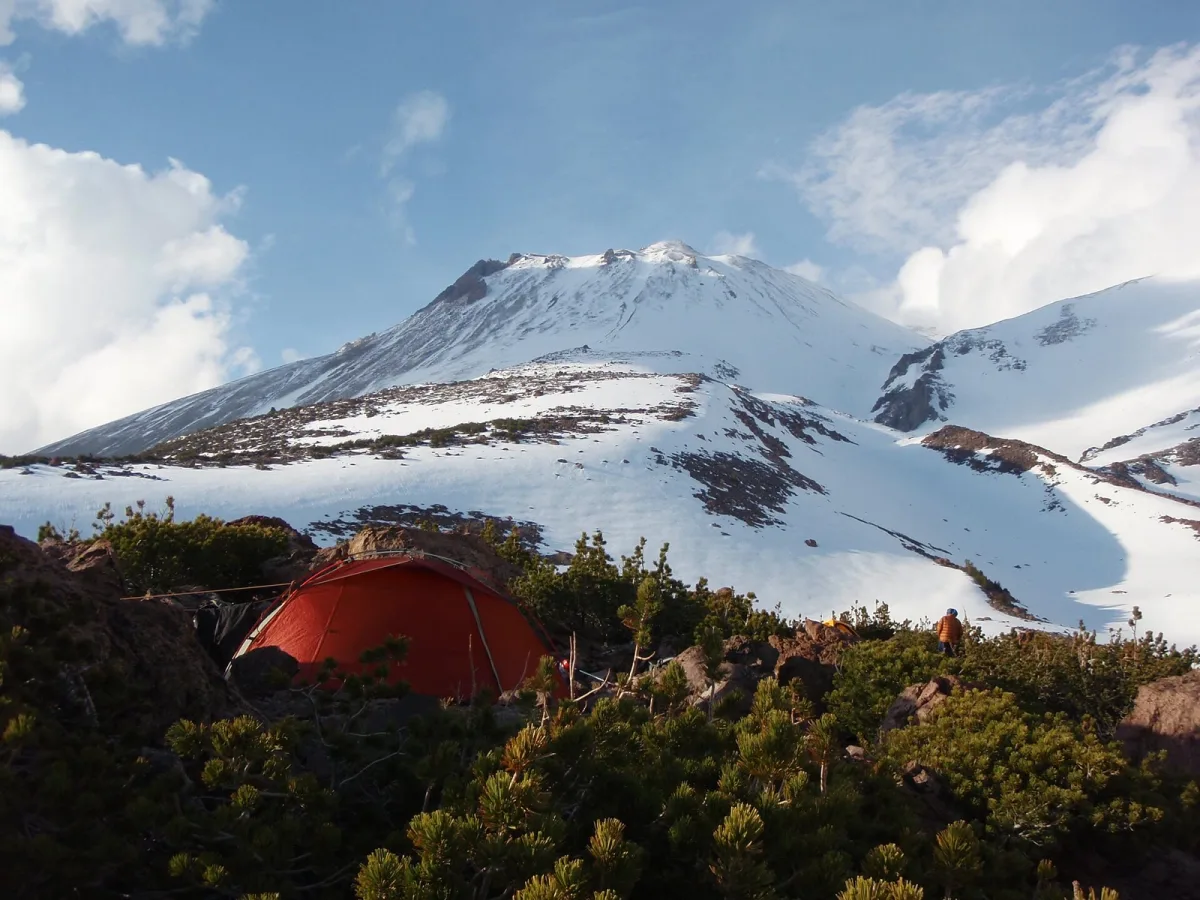
Rangers tell climbers to turn around if they haven’t summited by noon, which leaves enough daylight to get down. By noon the trio had been climbing for nine hours, an hour longer than the whole ascent was supposed to take. The summit was still seven hours away. That was the moment to turn back. They kept going and topped out at 7 p.m.
They descended in the dark, their phones died, and about an hour in they wandered off route into Mud Creek Canyon, some of the most dangerous terrain on the mountain. That night one of them fell and hurt his knee. In the morning, US Forest Service climbing rangers and sheriff’s search and rescue volunteers found them “exhausted, hungry and thirsty.”
The only account of what Gemini said comes from the hikers themselves. They told a deputy they had leaned on the bot for both the route and the packing list. It told them to pack less food and water and to favor simple carbohydrates over fats, which supposedly “take too long to digest.”
“It wasn’t terrible information”
Nick Meyers is the Forest Service’s lead climbing ranger on Shasta and directs the Mount Shasta Avalanche Center. He says 2026 is the first year he has run into visitor incidents involving AI. There were three this season, and only one needed a rescue. In another, a visitor showed up with a map an AI had drawn, which Meyers summed up as “terrible, like really bad.” The third sounds like a joke. A woman pitched her tent where camping is banned and told rangers, “Well, ChatGPT said I could camp here.”
More interesting is what Meyers said about the trio. In his view, Gemini’s advice wasn’t terrible; the group’s real problems were poor mountain sense and bad decisions. Loading up on carbs for a long climb is hardly crazy advice. The gap is elsewhere. The bot handed over a plan but not the rule that matters most: if you’re not on top by noon, you turn back. On a mountain that rule outranks any packing list, and you have to follow it at the exact moment the summit looks close enough to touch.
That’s the crux. A bot answers the question it was asked, and answers it confidently. A beginner doesn’t know which questions to ask and can’t see what the answer leaves out. Meyers warned that AI can give inexperienced people too much confidence. An experienced climber would read the same plan and ask straight away, “Where’s the turnaround time?” A beginner reads it and starts walking.
A mountain Claude has never climbed
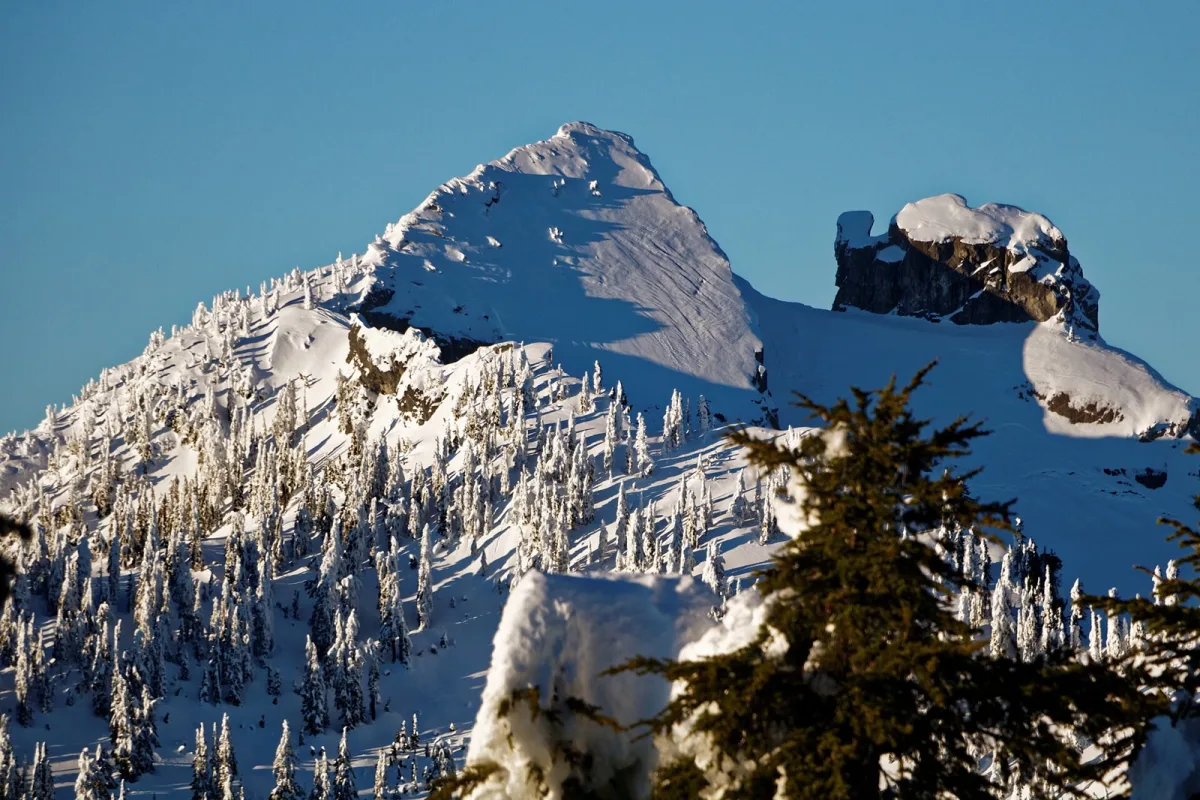
On October 3, 2026, North Shore Rescue pulled 16-year-old Bryce Gowryluk off a cliff on Crown Mountain outside Vancouver. A standard hiking trail leads to the top, but he took Crown Gully, a scramble where in places you have to climb with your hands. Higher up he got stuck at the base of the final headwall of Widowmaker, a rock-climbing route nobody should attempt without a rope and the skills to use it. He couldn’t go up or down, so he called for help.
He was lucky. The rescuers had just finished helicopter training on the same mountain. One of them reached him on a rope and moved him to a spot where the helicopter could pick him up. Search manager Paul Markey said the boy feared for his life and had ended up “in a situation which was beyond his abilities, so things could have gone sideways pretty quickly.”
Markey first told reporters the teen had planned his trip with Claude. Bryce told the CBC, Canada’s public broadcaster, a different story. He built the route on AllTrails and Google Maps, asked Claude what to pack, and used it to double-check a few details about the terrain. He took a wrong turn at an unmarked junction, and once on the climbing route he realized he couldn’t get back down. Even so, the rescuers afterward urged hikers to plan routes not with AI but with mapping tools such as CalTopo, AllTrails and Gaia GPS.
The irony is hard to miss: the teen got lost on a route he had mapped in AllTrails, and the rescuers now recommend AllTrails as the safe alternative to a chatbot.
From the outside, it’s impossible to say who or what was to blame on Crown Mountain. What is clear is how fast the chatbot became the first suspect, even with an ordinary mapping app in the chain. Its name made the headlines before anyone asked what it had actually advised.
Why a confident voice wins
Researchers at the Wharton School, the University of Pennsylvania’s business school, have a name for this. Steven Shaw and Gideon Nave ran three experiments with 1,372 participants. Participants solved seven logic puzzles built as traps: one answer pops into your head instantly and is wrong, while the right one takes deliberate thought. Think of the old riddle “Which is heavier, a pound of feathers or a pound of iron?” Some of them could ask a chatbot for help. The researchers secretly controlled the bot: on some puzzles it was right, on others it was just as confidently wrong.
// Logic puzzles with and without a bot
In other words, people with a wrong bot did worse than people with no bot at all. The bot also made people more confident, whether its hint was right or wrong. Two things helped: money and instant feedback. Without them, people rejected only one bad hint in five. When they earned 20 cents per correct answer and found out immediately how they had done, they rejected 42%, nearly half. Shaw is careful to say these were controlled experiments on puzzles, not a full map of how people use AI in daily life.
Now take that up a mountain. In the lab, a wrong answer cost a participant 20 cents, and the feedback came instantly. On Shasta the feedback arrived at 7 p.m., along with the dark.
What a chatbot doesn’t know about a mountain
Gemini and Claude can search the web, but they can’t see today’s slope, and a fresh conditions report may not be online at all. Nor does a bot know that your experience amounts to two walks in a city park, unless you tell it. And it doesn’t ask. Back in July 2026, Grand Teton National Park in Wyoming warned visitors that AI is fine as a starting point but can serve up outdated information and send people to the wrong trail. “Your safety is your responsibility,” the park wrote.
To be fair, there’s no evidence yet that chatbots have pushed up the number of rescues. People got lost in the mountains long before chatbots. What’s new is something else. A hiker used to stitch a plan together from a dozen sources and couldn’t help comparing them. Now the plan arrives as one smooth, confident answer, packing list included.
After the rescue, the Siskiyou sheriff offered advice that needs no technology at all: call the Mount Shasta ranger station before your trip. Whoever picks up knows what the mountain is doing today, and that’s the person to ask the question the trio never did: what time to turn around.