// Contents
One participant in a study published in 2022 mouthed the word “map” and nodded. The nod swamped the faint trace of jaw movement. A second sensor picked up the nod on its own, so the researchers could subtract that movement and isolate the signal from the jaw.
On November 23, 2026, Stony Brook University announced a project to build a device that recognizes silently mouthed phrases and flags possible mistakes. The US National Science Foundation awarded about $1 million over three years to collaborators at Stony Brook, the University of Massachusetts Amherst, and the University of California, Merced. The project began on August 15, 2026. Stony Brook’s share was $496,999.
Computer scientist Shubham Jain leads the project. A university photo shows her testing the technology with Tanmay Srivastava, a graduate student who ran preliminary experiments. Jain imagines a device that looks like a small hearing aid or a set of headphones that wrap around the ears. The wearer could mouth a request to a digital assistant.
How to subtract a nod
Your jaw shifts near your ear when you form a word. For a prototype called MuteIt, the researchers put one sensor over the jaw joint and mounted another behind the ear. They work on the same principle as the sensors that tell a smartphone when it tilts, but the movements they have to pick up are much smaller.
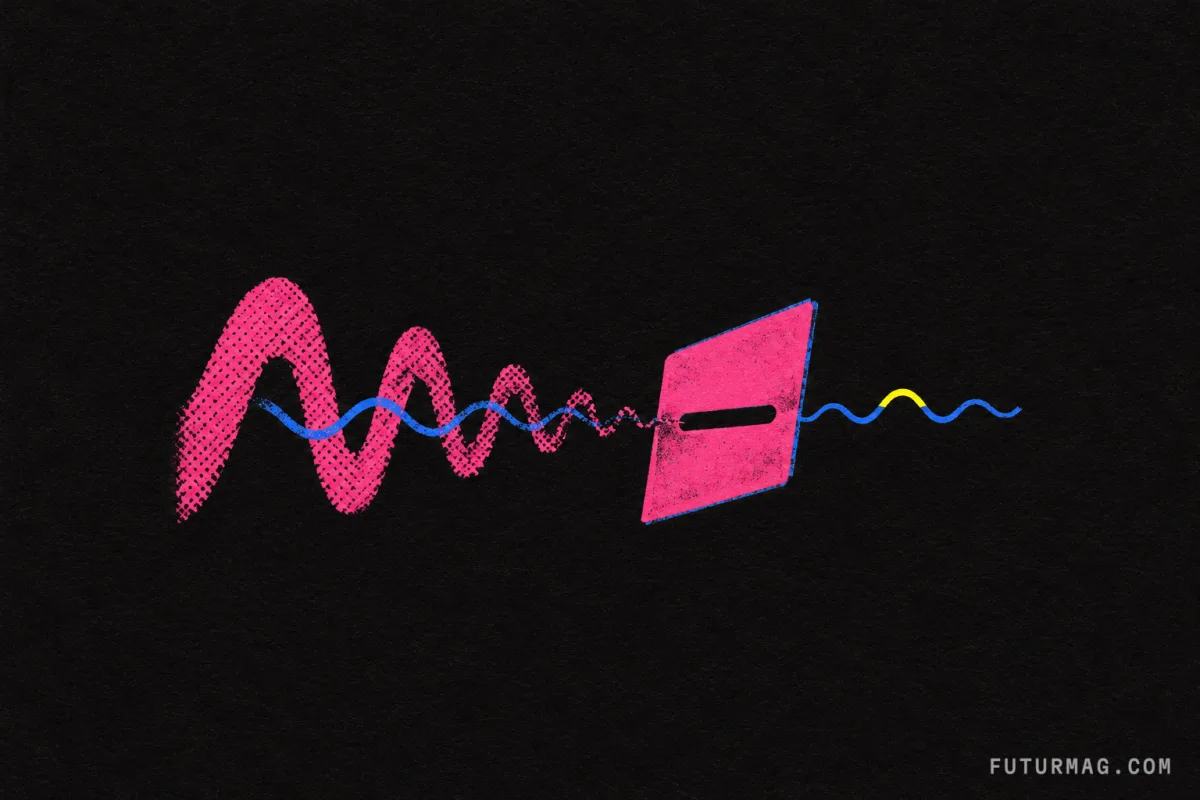
When someone walks, both sensors register the jolt of each step. The software takes the signal from behind the ear and subtracts it from the one at the joint. That makes it easier to tell when the jaw opens or closes, even if the person turns their head in the middle of a word.
In the MuteIt study, 20 people worked through 100 English words commonly used in commands. Each word stood alone. The program looked for signs of syllables and individual speech sounds, then used them to find a match in a dictionary of 1,100 words. In a quiet room where people were asked to move as little as possible, its first guess was right an average of 94.8% of the time.
Filling in a missing word
A sentence was harder. In a preliminary test, a participant mouthed a request to set an alarm for six at what the researchers counted as a normal speaking pace. The earlier recognition method picked up only “alarm” and “six.” A language model couldn’t recover the whole request from those two words.
The team tried a different approach with its next prototype, Unvoiced. A model used the motion data to draw a spectrogram, a picture of the frequencies a voice would produce over time. A standard speech recognizer could read that picture and turn it into text.
The transcript still had gaps. In the researchers’ shopping-list example, the word before “apples” was missing. Adding apples makes sense, and so does taking them off the list. A language model offered several plausible readings. The software then compared them against clues it could still get from the jaw, such as how many syllables the missing word contained.
In the 2024 study, 19 people repeated prepared English phrases across four kinds of tasks. Unvoiced completed more than 94% of the tasks in the main tests. For notes and messages, the transcript had to match word for word. For media and smart-home commands, the researchers passed the result to Siri and checked whether it carried out the requested action.
The team trained a separate model for each participant, using recordings of that person’s voice as part of the training material. During testing, the model interpreted mouthed requests from motion data alone. The volunteers spoke English. The team still needs to test the system with people who have speech impairments.
Giving the assistant a chance to ask
Jain wants the new device to tell wearers when it may have misread them and learn from their corrections over time. Motion sensors can pick up a passenger’s jaw movements without recording the conversations around them. Jain’s team will study how much processing the wearable or a paired phone can handle. That will help determine whether request data can stay on those devices.
In the lab, the researchers knew the phrase in advance. On a train, a single wrong word could change the meaning of a private message. A future assistant could ask what the wearer meant before sending it.