// Contents
$200 a sandwich. That is what Bill Fuchs used to pay a photographer for each item on his menu, and a full day of shooting covered four or five of them. Fuchs, 78, has owned Wagshal’s for more than 35 years, and the deli in Northwest Washington has been around for about a century. Now an AI model draws his menu pictures. The Washington Post told the story on November 1, 2026, and it begins with a customer who never made it inside.
James Biddle saw the fried chicken on the menu board, took a photo and posted it to Reddit. If the front of the business looked like that, he wondered, what did it say about everything else? He wasn’t sure he wanted to go there anymore. One commenter said the chicken looked like “those gourds covered in tumors.”
It would be easy to write this off as one more online pile-on against AI. But psychologists at the University of Duisburg-Essen in Germany have measured the reaction in experiments. Food, they found, has an uncanny valley of its own: an almost-real AI burger puts people off more than an obvious cartoon. In another experiment, people rated some of the AI pictures as more realistic and more appetizing than real photos. A third showed that an “AI-generated” label alone makes the very same dish less appealing.
A vomiting burrito and fries with eyes
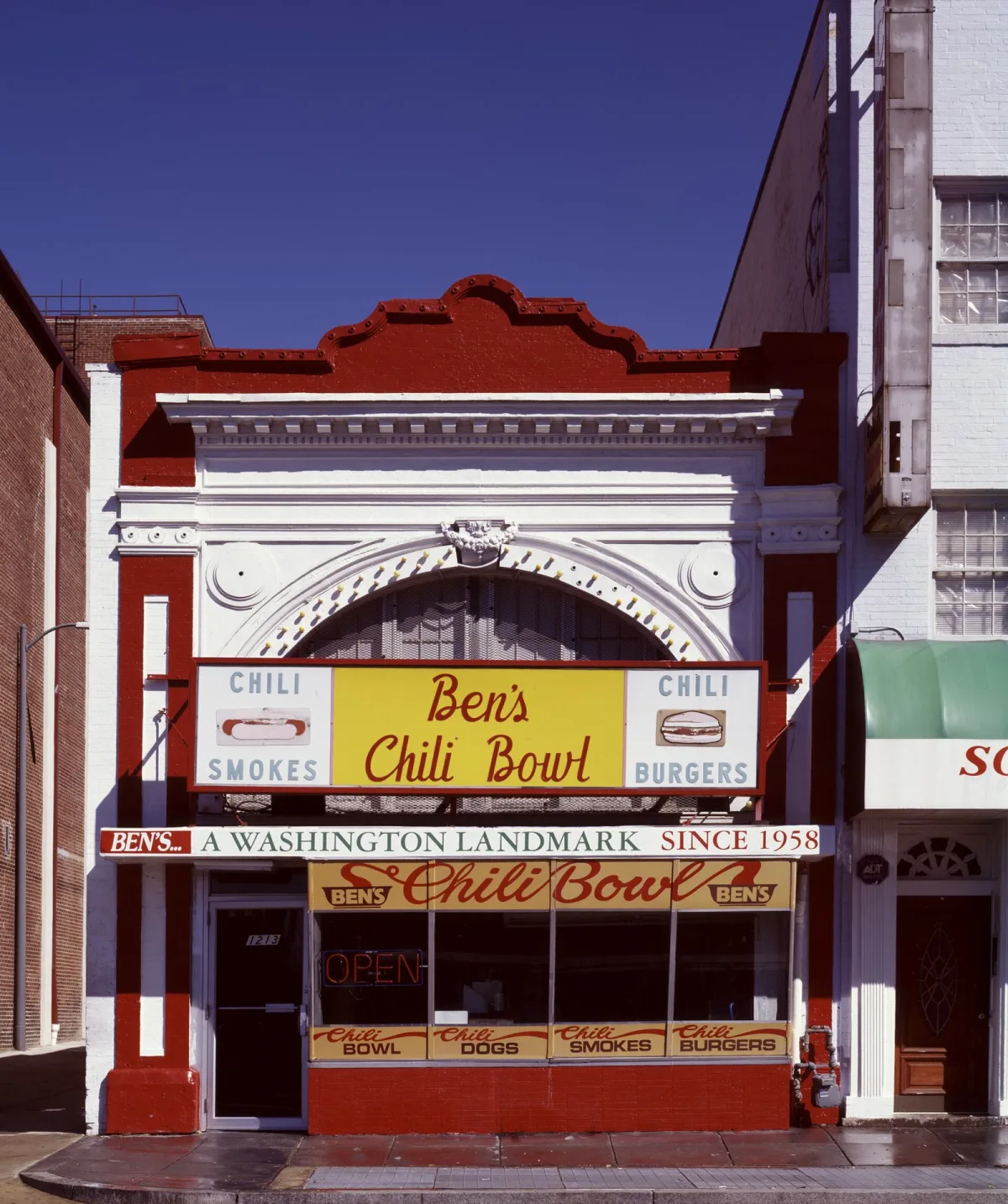
Wagshal’s has company. According to the Post, small businesses around Washington have been getting called out for AI marketing for months. One commenter said a poster from Ben’s Chili Bowl, a local diner, showing a leaking breakfast burrito looked like it was “vomiting on you.” A sidewalk board at a shawarma place on the Wharf, the city’s waterfront, drew chatter about fries with “tiny eyeballs.” A brunch spot’s ad showed a person holding bagels with an arm bent the wrong way.
Bread Furst, a bakery, printed AI posters of sandwiches and pasted them up around town. General manager Scott Auslander later described the team as “just some folks in an office playing with ChatGPT.” After the mockery, the bakery posted photos of employees holding handwritten signs promising no more AI. The apology got more attention than the ads ever did. Charles House, a local video producer, told the Post why: the posts went viral because the signs were written by hand.
Similar stories keep turning up across the US. In San Francisco, graffiti appeared on a cafe that had put AI food photos in its window, and according to NBC News the owners paid hundreds of dollars to remove it. In Wyoming, Jill Winger, co-owner of the Chugwater Soda Fountain, posted a photo of her daughter holding a sign rejecting AI flyers and photos. The post got 119,000 likes.
The uncanny valley on a plate
The psychologist Alexander Diel and his colleagues tested whether the same rule applies to food. Their paper appeared in the journal Appetite in April 2025. They showed 95 participants 38 pictures of food, from deliberately cartoonish to almost photographic, plus photos of rotten food for comparison.
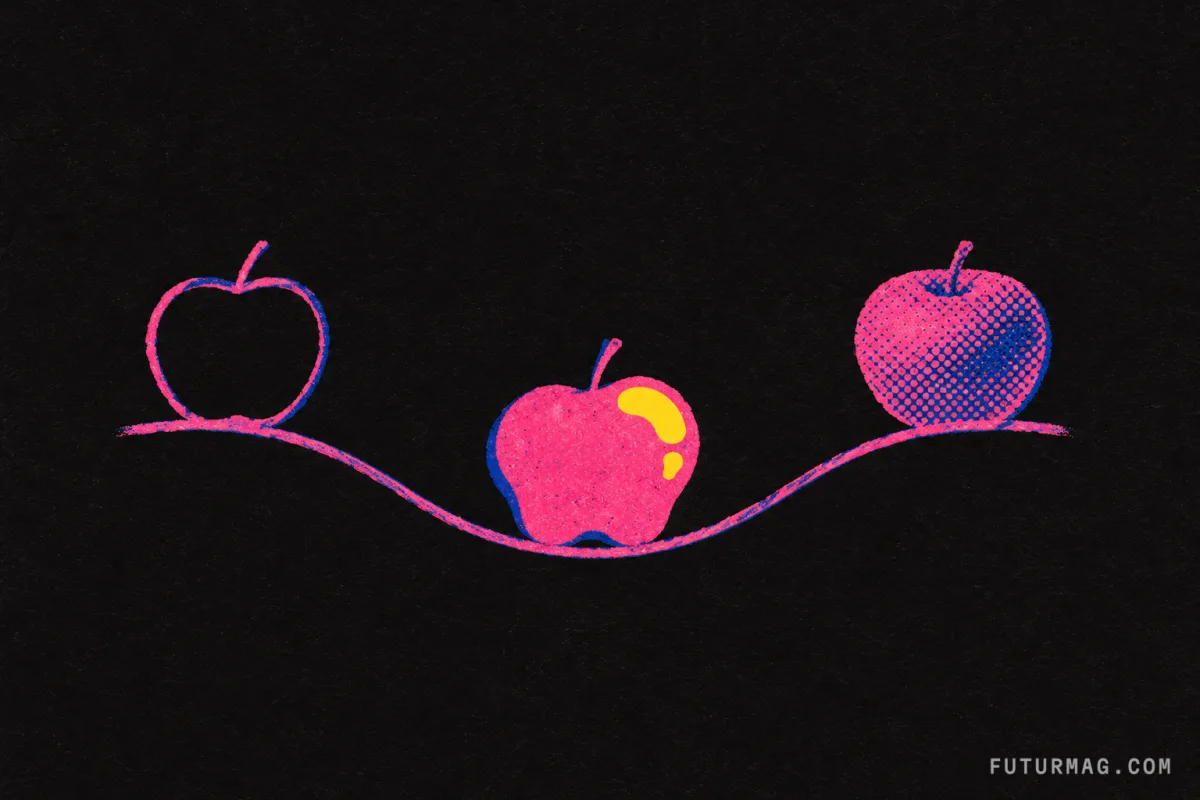
The ratings traced the same curve as the robots. A cartoonish burger frightened nobody. An almost photographic one with distortions came out eeriest and least pleasant, worse than both the drawing and the convincing picture. People with food neophobia, a wariness of unfamiliar foods, reacted more strongly. General disgust sensitivity made no difference.
The authors offer an evolutionary explanation. Humans are finely tuned to signs of spoiled food. The alarm sometimes goes off by mistake, because skipping good food is safer than eating bad food. Cheese that melts the way no cheese ever melts is enough to trip it. Diel put it to CNN this way: people are very sensitive to anything that is even slightly off. The study has limits, though. The sample was small and almost entirely German-speaking, and the authors did not account for how familiar people already were with AI images.
When AI draws tastier food than the camera
For the next experiment, Diel’s group teamed up with colleagues at Maastricht University in the Netherlands. The paper came out in Scientific Reports in August 2026. The 87 participants saw 60 pairs of images. Each pair held a real photo from an existing research set and its twin made by Google’s Gemini 2.5 Flash: the same food, the same calorie level, the same sweet or savory flavor. People rated how realistic each image was, how much they wanted to eat the food, how many calories it had and how healthy it was.
On calories and healthiness, the AI food scored the same as the real thing. It lost on realism and appetite. The appetite gap was modest, about three points out of 100, but it held up statistically.
Now the strange part: almost a quarter of the AI pictures, 14 of the 60, looked more realistic to people than the real photos. For 11 of those, they also wanted the AI version more. In other words, the generator can already climb out the far side of the valley, and food up there tempts people more than a photograph does.
The authors are cautious. They did not deliberately vary realism, so they cannot prove that realism is what drives appetite. Their images were also better than what ends up on the street: the researchers regenerated pictures with obvious flaws and put every image on the same plain gray background. Nobody screened the board outside the shawarma place.
An “AI-generated” tag ruins the taste
There is a second reason, and it has nothing to do with image quality. In three experiments described in the British Food Journal in December 2025, people saw the same photo of a dish, with or without a label saying AI had generated it. With the label, they wanted to order it noticeably less. The chain went like this: buyers decided the seller had made less effort, the picture felt less authentic, and the food seemed less tasty. The pricier the dish, the stronger the effect.
A street menu carries no label, but the picture does the label’s job. A twisted arm or a chicken covered in lumps says the same thing a tag would: someone cut corners here. That is where Biddle’s question about everything else comes from.
Jeff Lee, a marketing professor at American University in Washington, told the Post why small places take the hardest hit. They’re local, you can talk to the owner, they’re human and relatable. When a shop like that turns to AI, it undercuts the very sense of connection people come for.
Why Fuchs won’t back down
The owner of Wagshal’s has his own math. He says he used to spend about $8,000 a month on marketing, platform management and content, and he can’t afford that anymore.
“Do you know how many sandwiches I have to make for that?”
Fuchs calls his pictures “representations” of the food and points out that TV ads are edited and staged too. Lee admits the argument has some weight. Social media rewards posting nearly every day. You can spend five hours on the perfect cereal ad with glue standing in for milk, but not every day. AI scales, and handmade work doesn’t.
Fuchs is betting that customers will make it to the counter. “Image is important,” he says, but in the end the taste decides. Biddle never made it to the counter. Meanwhile, the best advertising in this whole story turned out to be a bakery’s handwritten signs swearing off AI.