// Contents
Between 19 and 27 pages, citing case law and acts of Parliament: that is what a complaint about an unemptied trash bin turns into when a chatbot writes it. It used to fit on one side of a sheet of paper. Deborah Evans, who represents the lawyers working for British local governments, gave those numbers to the BBC. She says most complaints to local councils (Britain’s city and county governments, which among other things collect the trash) are now ten times longer than before chatbots. The longest she knows of runs to about 200 pages.
“Half the emails we receive are some form of AI,” says Hollie Wickens, a senior caseworker in a Labour MP’s office. In 2024, she says, it was a trickle. Now it’s an onslaught.
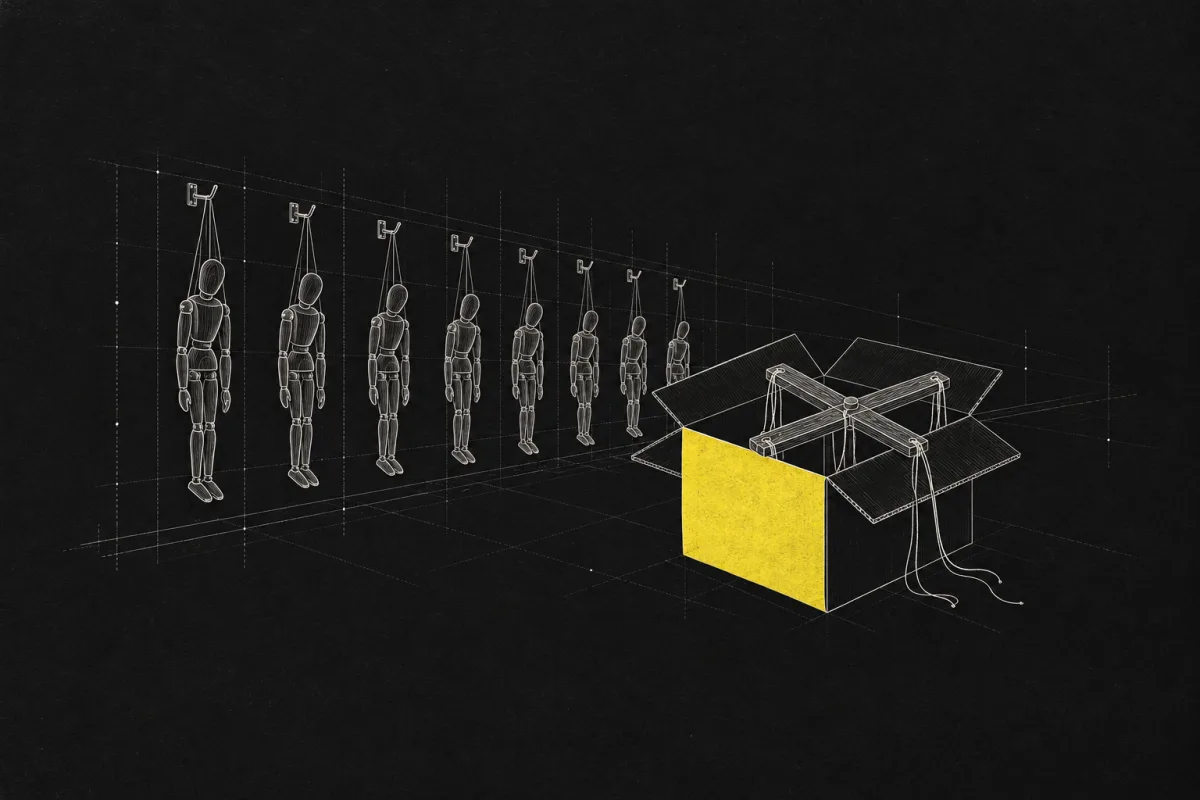
In Britain the problem already has a name: “AI clog.” In New Zealand, a 215-page claim for NZ$40,000 won a tenant NZ$80. Behind these comic numbers sits an uncomfortable idea. Many public services were never protected from overload by clever design. They were protected by effort: writing a competent complaint took time and work.
A free lawyer who agrees with everything
At the start of this decade, complaining about your landlord or objecting to a building project next door took work: finding the right law, striking an official tone, wrestling with the form. Now you can ask ChatGPT or another chatbot to draft something firm. A minute later you have a document that reads like a letter from an attorney.
Evans runs Lawyers in Local Government, which counts 5,600 council lawyers as members. She concedes that AI can make a complaint sound “incredibly professional, very formal.” The trouble is that the model often treats an everyday grievance like a lawsuit. It quotes statutes, pulls in precedents, and doesn’t check which country they apply in. “It might find some great case law from Canada,” Evans says. Sometimes it misquotes the law. Sometimes it simply invents things. Someone at the council then has to untangle each error by hand.
The second problem is subtler. Chatbots tend to agree with whoever they’re talking to. One school governor wrote to BBC radio that AI won’t turn to the complainant and say, actually, I don’t think this is worth it. A friend or a human lawyer might talk someone out of a hopeless claim. The model just helps make it sound scarier.
Jim Moore, an employee relations expert at the consultancy Hamilton Nash, has noticed another quirk. These complaints, he says, are worded to sound intimidating but forget the most important part: what resolution the writer actually wants. Twenty pages of accusations, and not one line about what should be fixed.
A NZ$40,000 claim, an NZ$80 award
The higher the stakes, the thicker the file. In New Zealand, a tenant renting a rural house with her child took her landlord to the Tenancy Tribunal and asked for NZ$40,000. She said the drinking water was unsafe because of its acidity, that her right to quiet enjoyment had been breached, and that the clothes dryer took four weeks to fix. The claim, as RNZ reported, ran to 215 pages, 101 of them a report itemizing the amounts. It took two hearings. In April 2026 the tribunal awarded her NZ$80 for the inconvenience of the broken dryer.
The report on the case doesn’t say outright that a chatbot wrote it. But David Faulkner, who runs property management at the firm Property Brokers, later saw two or three more claims in the same format asking for very large sums. With those, he says, “it just becomes quite clear that it’s AI-generated.”

Elsewhere the numbers differ, but the pattern holds. Some German social courts, which hear disputes over welfare benefits, largely blame AI-generated claims for a 55% jump in their 2025 caseload. Some letters to them ran past 4,000 pages. British employment tribunals saw 28% more single-claimant cases than a year earlier. One startup founder is being taken to a tribunal by an employee who was let go for poor performance. He says he can spot such claims by their wording and expects to spend about £30,000 on lawyers. “Everyone’s got a free lawyer now,” he complains.
A dam made of boring forms
Why so fast? The Hertie School and GovAI paper offers an answer. These services, the authors write, were held together by friction rather than design: forms, deadlines, the need to understand the law. The authors base that claim on 84 potential cases of flooding in 11 jurisdictions, from Australian freedom-of-information requests to Japanese public consultations on energy strategy. In 87% of them the mechanism is the same: a person uses a language model to cheaply produce legally sophisticated text, then pastes it into a form. Autonomous AI agents roaming government websites on their own don’t show up in the data yet.
So the barrier kept out some people with good grounds to push back, along with people who had none. Germany’s courts show how that plays out: people now challenge denials more often because it has become easy, but the authors found no evidence they win more often. The dam held back the right and the wrong alike. The chatbot opened the gates for both.

By the authors’ reckoning, the highest risk is in services where there’s money to be won but the rules are hard to follow: objections to tax valuations, benefit appeals, civil claims. Each such filing is valuable to the person submitting it, and the law requires someone to process it. They are frank about the limits of their data: it shows timing, not proven cause, and most likely undercounts the real number of cases.
A voice for people who struggle to write
It’s tempting to blame the complainers. But both complainers and officials point to another side of the story. Dawn Harverson, who finds writing difficult, explained to the BBC why AI helps people like her: “In the past, you’d be able to pick up the phone and speak to somebody. We’re all pushed down this road to send emails, and so somebody who’s neurodivergent or intimidated by the written word will just simply not complain.”
Evans, too, welcomes AI helping people exercise their right to complain, even if it has also brought more trivial complaints. Vonnie Sandlan, who heads the office of MP Graeme Downie, acknowledges that chatbots help people who couldn’t otherwise put a letter together. Yet her staff, she says, are “exhausted” and working more hours than they’re paid for. So the office has stopped replying to automated “click to email your MP” campaigns, to keep up with real constituents.
Machine writes to machine
Services are working out their defenses on the fly. Some ombudsmen now cap complaint length and move intake to templates that limit attachments. Japanese authorities blocked submissions to a public consultation by IP address, and Australia’s government has weighed bringing back fees for freedom-of-information requests. The flooding paper warns that such measures are quick but hit poorer and less tech-savvy people hardest. In other words, the very people AI was helping.
Every pound spent on dealing with complaints is a pound that’s not being spent on something else.
That is how Evans puts the cost. The other way to save those pounds is tempting: answer AI with AI.

Wiltshire Council is exploring tools that summarize long emails and draft first replies. One BBC listener who works for a global company said they use AI to boil down “50+ page” complaints, themselves AI-generated, into a one-page response. It has proven effective, they said, at closing things down.
Britain’s Information Commissioner’s Office, the country’s data-protection watchdog, points out that even a request that looks AI-drafted and gets things wrong still has to be answered by a human. If councils go further than Wiltshire, the exchange will be a strange one. Twenty-seven pages go one way, a single page comes back, and quite possibly no human reads either in full. The bin itself is the first thing lost in the correspondence.