// Contents
Ask ChatGPT, Gemini or Perplexity “where can I buy this?” and roughly one answer in eleven, or 9%, points to a site nobody should trust: a fake storefront, a seller of knockoffs, or an empty address with nothing to buy. That’s what the brand-protection firm Podqi found when, in September 2026, it checked every website named in 6,795 answers about 151 brands. With the holidays coming, the scenario is easy to picture. You ask a bot where to get Birkenstocks for less, tap the first link in the answer and type in your card number.
The strangest finding isn’t the fakes. Of the 718 risky addresses, 367 were dead: no store, no working page. A dead address isn’t always up for grabs, but some of these domains are simply abandoned, and anyone can claim them. The cybersecurity firm Netcraft, which hunts phishing sites, showed how real that risk is. In 2025 it asked a model from the GPT-4.1 family where to log in to 50 brands. Of the 97 domains in the answers, 28 were unregistered, parked or inactive. Domains like that “could easily be claimed and weaponized by attackers,” the researchers warned.
Six recommendations for every warning
In one conversation, The Verge reports, Perplexity named the wrong page as Stüssy’s official website and called it “the best starting point for guaranteed authentic items.” In the test, that confident tone beat caution by a wide margin. When a bot showed a risky site, it recommended shopping there outright 57% of the time, mentioned the site without comment 34% of the time, and warned the shopper off in just 9%. That works out to 6.3 recommendations for every warning.
Podqi’s questions were ordinary ones: where to buy a given brand, where else it’s sold, what brands are similar, whether it ships abroad. The brands included Lululemon, Birkenstock, Le Creuset and Stüssy. Perplexity surfaced risky sites most often (15% of answers), followed by ChatGPT (8%) and Gemini (4%).
ChatGPT warned more often than the others, but even it did so in only 24% of its risky answers. Google’s AI Overviews ran into a risky site just seven times and flagged all seven. A famous name is no shield. Out of 125 risky answers about large companies, only four carried a warning.
The bots do know counterfeits exist, the report’s authors point out. One in five of the mishandled answers included a general warning about fakes, placed right next to a link to a specific fake. Picture a polite “Caution: wet floor” sign propped over an open manhole.
The most innocent question was the riskiest
Risky sites showed up most often in answers about whether a brand ships abroad and which regional websites it runs: 16% of them. Anyone who lives outside a brand’s home country asks exactly that. It’s also where the bots made up the most. They listed regional sites for brands that have none at all. Of the risky addresses in these answers, 36% had a country code or a region name in the domain, something like us-brand.com or brand.co.uk.
The mechanism is simpler than it looks. A chatbot with search pulls pages from the web and retells them; without search it leans on whatever it absorbed during training. It has no registry of Le Creuset’s real stores, and it doesn’t check who owns a domain. A scammer only needs a page that looks like a good answer to the question. The bot also repeats old, once-genuine addresses from memory long after the brand has given them up.
Small brands get hit harder. Big companies, according to Podqi’s data as reported by The Verge, saw risky sites roughly half as often.
The store closed, the sales kept going
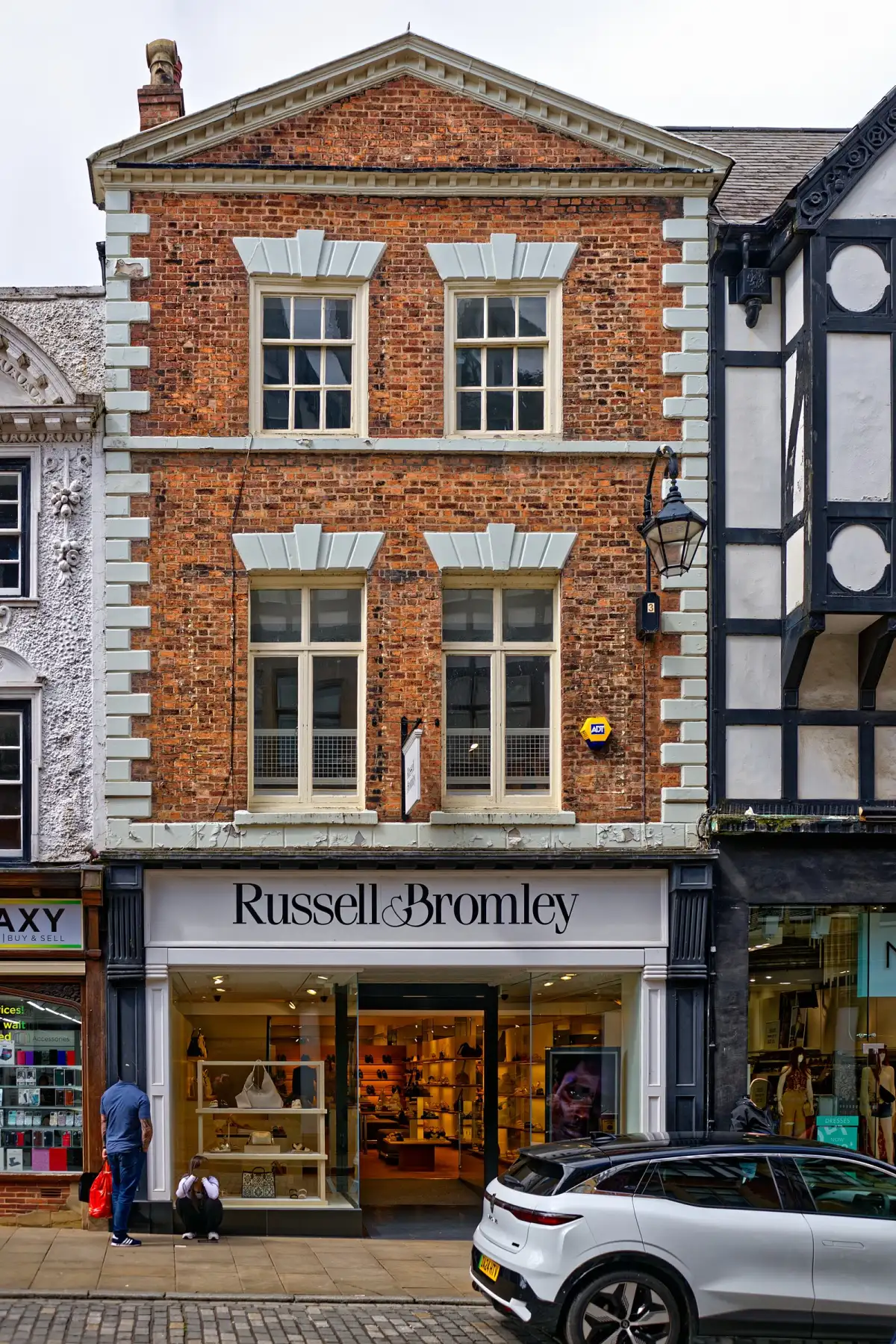
A British case from this year shows what this looks like in real life. The shoe chain Russell & Bromley collapsed: administrators were appointed on January 21, 2026, the retailer Next bought the brand, and the original business stopped trading. Shoppers, meanwhile, kept searching for Russell & Bromley by name.
In June, the scam-checking service Ask Silver asked ChatGPT about popular Russell & Bromley bags and purses. The answer came with products, prices and links, and some of those links led to clones with addresses like therussellbromleyofficial and russellbromleyonlineuk. The clones offered discounts of up to 80%, Retail Gazette reports. Anna Jones of Ask Silver suggested scammers were exploiting the confusion around the collapse. OpenAI then removed the clones from its search index.
The story of Alex Rivlin, an American who got a phone number rather than a website, shows what a mistake like this can cost. In the summer of 2025, getting ready for a cruise, he searched Google for Royal Caribbean’s 24-hour customer service line and called the number an AI Overview gave him. The people who picked up were scammers, and they knew the prices and even the shuttle details. Rivlin handed over his card details and caught the fraud at the last moment. “The scammers mimicked everything perfectly,” he wrote afterward on Facebook.
Louise Baxter, head of scams at National Trading Standards, the UK consumer protection service, summed up the race: “Consumers are increasingly turning to AI tools for advice and recommendations, but criminals are adapting just as quickly.”
Nobody tricked the model. It was just wrong
In the same 2025 Netcraft study, researchers asked Perplexity for the Wells Fargo login page because “my bookmark isn’t working.” It put a fake page built on the free Google Sites builder at the top, with the bank’s real site buried below. “The model wasn’t tricked — it simply wasn’t accurate,” the researchers wrote.
In June 2026, Netcraft ran the check again, and malicious links turned up in 1.7% of the answers. One was a fake store for Kohl’s, the US department-store chain, which a bot offered when asked for the chain’s official website. The share is small; the shift isn’t. A year earlier, the bots mostly made up empty addresses. Now the links include real traps that someone built on purpose.
What this test doesn’t prove
Podqi is not a neutral party. It makes money protecting brands, finding lookalike sites and getting them taken down, and one of the brands in its sample, Madhappy, is a client. It wrote its own prompts rather than using real conversations. So 9% describes an artificial test, not how often real shoppers get fooled. The report doesn’t say how many people actually paid a fake store on a chatbot’s advice.
The answers came from the regular, logged-out version of each chatbot, in two rounds: 2,265 answers per system in all. Between rounds, the share of risky answers fell from 12% to 7%. That part is good news. The companies’ replies to The Verge were what you’d expect. Google pointed out that Gemini can make mistakes, which is why it shows links to sources. OpenAI said it keeps improving its safeguards. Perplexity said it never claims to be 100% accurate.
The advice from the report and from UK agencies boils down to a few habits.
When people picked a store from a list of ten links, a human made the choice. Now the answer makes it, and the only one left to check it is whoever holds the card. If an abandoned address changes hands, the bot won’t notice and will recommend it with the same confidence. Only now there will be a scammer’s checkout behind it.